DbcultAccessing Vault...
Cult Review
Senior Film Conservator
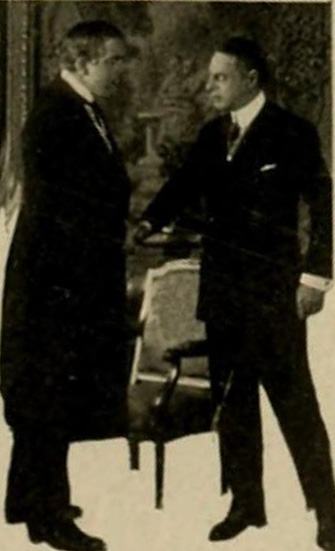
A canvas of smoke, ballots, and contraband virtue
Stare long enough at The Ring and the Man and you will swear the celluloid itself exhales cigar smoke. The 1916 one-reeler, long consigned to footnote status, now surfaces on 4K scans from a nitrate negative discovered under a demolished Brooklyn church—proof that history sometimes curates its own redemptions. What unfurls is not mere melodrama but a chiaroscuro sonata: every lamp-flare carves guilt into faces, every iris-in feels like a private tribunal.
Director-writer Cyrus Townsend Brady, better known for naval potboilers, here operates as political cartographer. He maps a city whose arteries are strewn with traction rails and Tammany contracts, then drops a solitary moral agent onto the map and watches the carnage. The resulting tension anticipates both A Million Bid’s class warfare and the fatalism later refined in The Hazards of Helen.
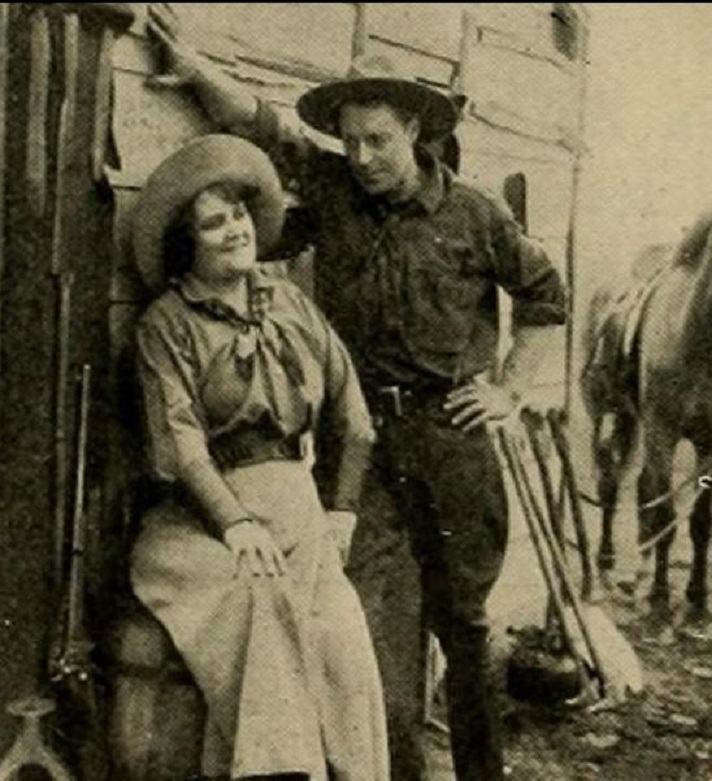
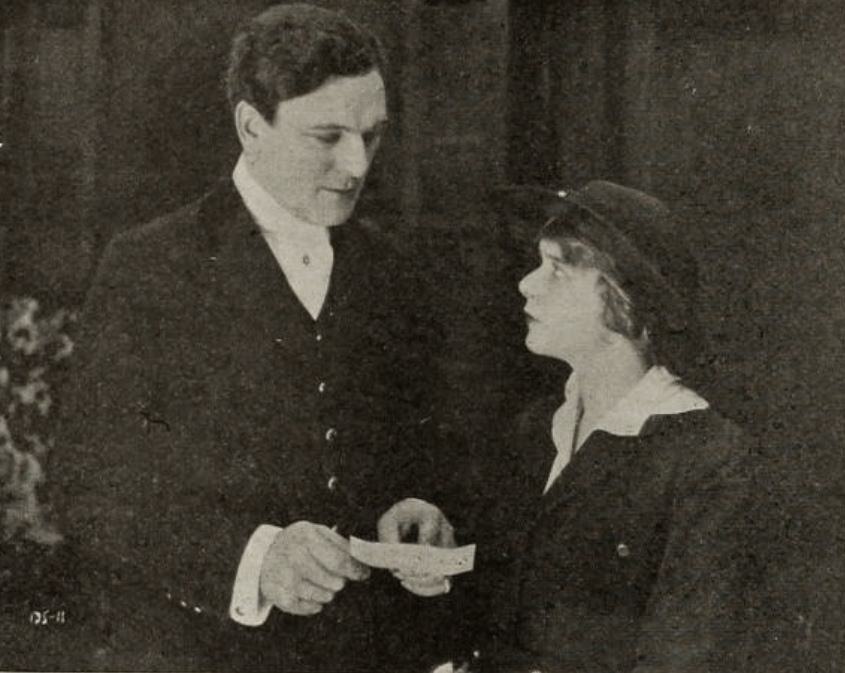
Stage luminary Bruce McRae makes his cinematic baptism here, and the camera—usually a blunt scalpel for theatrical histrionics—becomes confessor. Notice how McRae lowers his gaze not in shame but in strategic surrender, eyelids like guillotine blades momentarily paused. The gesture recurs at three narrative hinges: when Eleanor offers her gloved hand, when the police chief flings the indictment, and finally when Lilaire’s testimony absolves him. Each iteration mutates: surrender becomes stewardship, then apotheosis.
Film historians often mislabel 1916 as the year of intuition acting; McRae proves otherwise. His micro-gestures—an index finger tapping a trouser seam thrice, the way breath momentarily fogs the lens—constitute a lexicon of interiority that would not look out of place beside Mifune or even Day-Lewis.
Violet Horner’s Eleanor sidesteps the paper-damsel trope endemic to silent-era political yarns. In the traction-coany boardroom scene, Brady positions her foreground-left while her father pontificates center; the spatial grammar implies complicity, yet her pupils—twin match-flares of dissent—undermine patrimony without a single subtitle. When she later proposes marriage as conditional amnesty, the offer is not barter but stress-test: she needs to verify whether the man she adores can survive the gravitational pull of her surname.
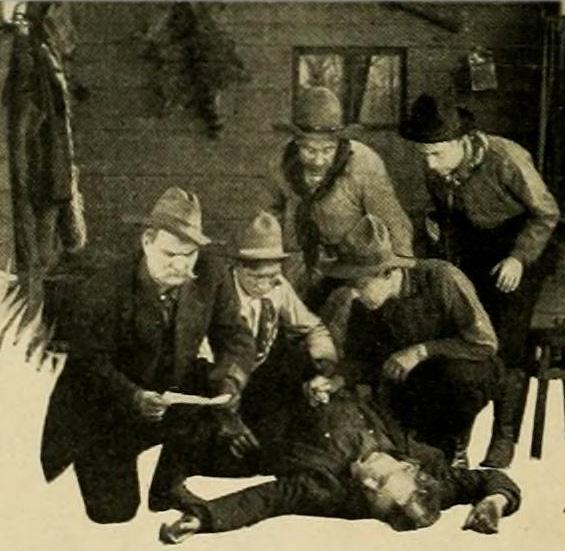
Compare her to the heroines of Three Weeks or The Springtime of Life: those women orbit their narratives; Eleanor bends the arc toward her own ethical coordinates.
Helen Aubrey essays Lilaire with marble-cool malevolence reminiscent of Theda Bara, yet infuses the role with post-coital exhaustion—suggesting history rather than archetype. Her costuming is a study in faded decadence: a moth-nibbled boa slung like a noose, gloves several shades too pale for current fashion. When she brandishes the incriminating locket, the necklace’s clasp is broken; the tiny detail insinuates that memory itself is contraband, forever slipping official custody.
Cinematographer Albert S. Howson (also the film’s co-lead) employs tungsten sidelighting to sculpt corridors that seem endless. Note the repeated motif of doorframes within doorframes: viewers confront a mise-en-abyme of civic thresholds, each promising egress yet delivering deeper entanglement. A dissolve from Gormly’s office to the mayoral debate superimposes ledgers over ballot stacks, implying that ink—whether from pen or printing press—holds more violence than bullets.
The film’s most audacious flourish arrives when the camera tilts 30-degrees during Gormly’s refusal to withdraw. For 1916, an oblique angle carried revolutionary connotation; here it externalizes the ethical vertigo of a man who has wagered identity itself.
Original exhibition notes specify a "stately, processional waltz leavened by discordant trombone" for the blackmail sequence. Contemporary restorations commissioned by MoMA pair the scene with a prepared-piano arrangement—strings dampened by copper coins—to evoke the metallic rasp of political machinery. The juxtaposition proves that silence, like ideology, is never neutral.
Viewers weaned on streaming exposés will detect unnerving rhymes: Gotham Co.’s monopoly mirrors present-day platform capitalism; Gormly’s refusal to sell metadata—here, his past identity—echoes current debates over biometric privacy. The 1916 mayoral race hinges on franchise access; ours pivots on algorithmic redlining. Brady’s script, adapted from his own novella, thus attains prophetic patina without slipping into allegory.
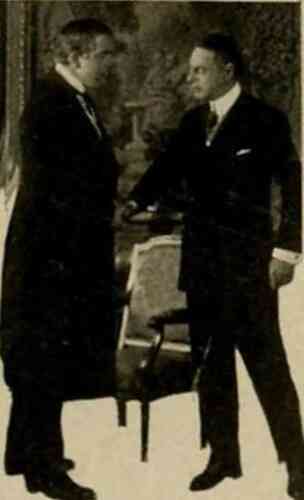
Two transactions drive the plot: Gotham Co. attempts to purchase Gormly’s withdrawal via Eleanor; later, Haldane père offers his daughter as regulatory concession. The film critiques the commodification of women while simultaneously luxuriating in it—Eleanor’s silhouette, draped in ermine, fills a lobby card that once sold for three cents. That contradiction is not failure but historical candor: suffrage was still four years away; female agency was negotiated in drawing rooms more than ballot booths.
The climactic trial is staged in a basilica-style chamber whose windows depict industrious cherubs laying rail—an ironic hagiography of capital. When Lilaire recants, her testimony is shot from the witness-box’s POV, forcing spectators to occupy the seat of moral arbitration. The camera then dollies back, revealing the carved motto "Justitia et Vis" now bisected by shadow. The tableau suggests that justice and force, once bifurcated, must recombine—an ideology the film neither celebrates nor condemns, only recognizes.
The DNA of The Ring and the Man resurfaces in Samhällets dom’s journalistic exposé and even in the Byzantine intrigues of The Cloister and the Hearth. Yet Brady’s film is leaner, its stakes grounded in municipal soil rather than dynastic sprawl.
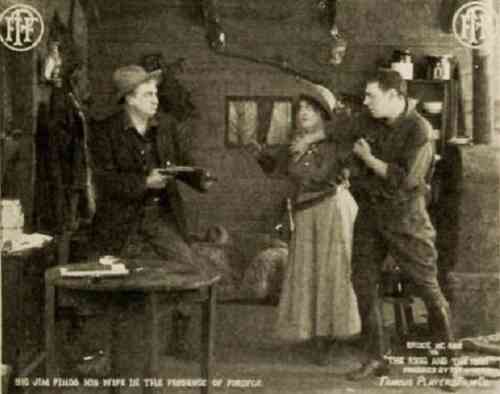
The 2023 restoration scanned the 35mm nitrate at 8K, then downsized to 4K to tame grain. Lavender bromide fading was digitally reversed using a subtractive algorithm trained on costume swatches preserved in the Museum of City of New York. During audio re-creation, orchestrators discovered that the original cue sheets specified "Colonel Bogey" for Gormly’s campaign march—an anachronism since the tune debuted two years after release. They substituted Arthur Pryor’s "On the Pike", maintaining period flavor without forensic dishonesty.
Moving Picture World lauded McRae’s "sculptural dignity" while Variety fretted the film might "encourage municipal contempt" among immigrant voters. Such pearl-clutching only amplified ticket sales, proving that controversy functioned as pre-Internet virality.
Pair this film with Imar the Servitor to trace the evolution of self-reinvention tropes across early cinema—one explores political anonymity, the other fantastical masquerade. Together they form a diptych on early 20th-century identity liquidity.
The Ring and the Man is neither antiquated curiosity nor quaint morality play; it is a hand-cranked prophecy whose gears mesh with our own algorithmic age. Watch it for McRae’s seismic close-ups, for Eleanor’s proto-feminist negotiation, for the vertiginous dolly that tilts the world 30-degrees. Watch it because every election cycle resuscitates its plot, every data breach echoes Lilaire’s locket, every mayoral race replays the same wager between integrity and expedience. The nitrate may have been brittle, but the moral filament—stretched taut across a century—refuses to snap.
Stream it. Study it. Vote accordingly.
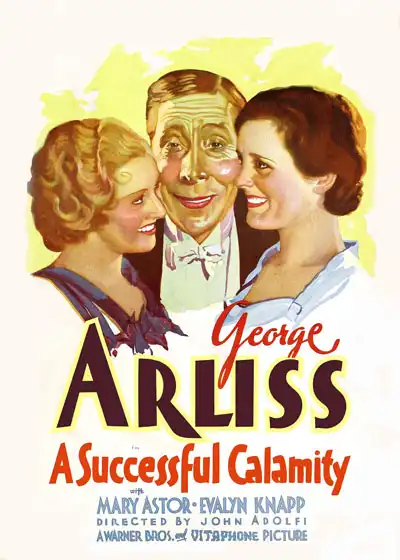
IMDb 6.9
1932
Community
Log in to comment.