DbcultAccessing Vault...
Cult Review
Senior Film Conservator
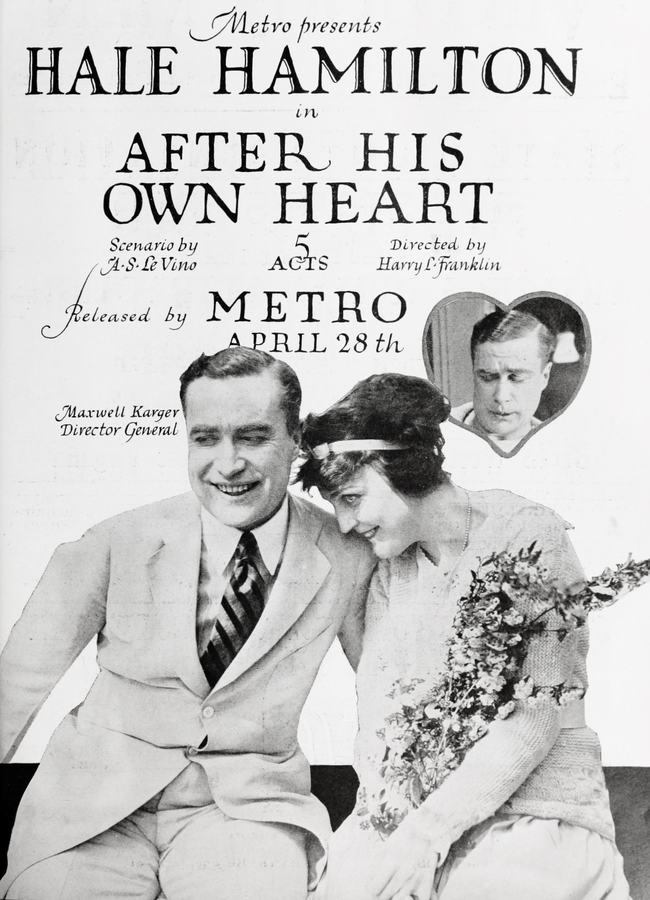
In the annals of early cinema, few narratives capture the whimsical yet profound anxieties of their era quite like After His Own Heart. This silent-era marvel, penned by Ben Ames Williams and Albert S. Le Vino, presents a fascinating moral quandary wrapped in a darkly comedic package. It’s a film that, despite its age, resonates with timeless themes of desperation, love, and the often-absurd lengths to which individuals will go to secure their future, or indeed, their very existence. The premise itself is a masterclass in escalating stakes, beginning with a familiar fall from grace and spiraling into a truly outlandish proposition.
Our protagonist, Thomas Wentworth Duncan, is introduced as a man of considerable means, a socialite whose life is presumably a tapestry of leisure and refined indulgence. The sudden, brutal erosion of his fortune, absconded by a faithless trustee, serves as the initial tremor in his carefully constructed world. This immediate shift from affluence to penury is a classic cinematic trope, often used to strip characters of their superficial comforts and expose their true mettle. For Duncan, this financial precipice is not merely an inconvenience; it threatens the very fabric of his rekindled romance with Sally Reeves. Their reunion, presumably born of an enduring affection, is immediately overshadowed by the harsh realities of Duncan’s diminished capacity to provide for her in the opulent style she expects, or perhaps, deserves. This dilemma—the clash between love and lucre—is the engine that drives Duncan towards a decision of monumental, even grotesque, consequence.
The offer of $250,000, a princely sum in any era, particularly then, arrives as a tempting, almost insidious, solution. Duncan, blinded by the immediate relief it promises for his financial woes and the preservation of his relationship with Sally, impulsively accepts. It is a decision made in haste, born of a desperate scramble to reclaim a semblance of his former life and secure Sally’s future. However, the true cost of this sudden windfall is revealed with a chilling, almost theatrical flourish: he has sold his heart. Not metaphorically, not his emotional core, but his literal, beating organ, to the enigmatic and clearly unhinged Dr. Spleen. This is where the film veers from a social drama into the realm of speculative, even fantastical, horror-comedy, demonstrating a bold narrative ambition for its time.
Dr. Spleen, whose very name conjures images of ill humor and dark physiological obsessions, emerges as the story’s eccentric antagonist. His plan is audacious to the point of madness: to transplant Duncan’s youthful heart into Sally’s aging uncle, Judah P. Corpus, under the delusion that it will restore the old man’s vigor and youth. This bizarre scientific endeavor speaks volumes about the early 20th century’s fascination with medical breakthroughs, often tinged with a healthy dose of ethical ambiguity and fear of the unknown. The notion of organ transplantation itself was revolutionary, almost unthinkable, and presenting it in such a dramatic, albeit ludicrous, context would have undoubtedly captivated audiences. The film taps into a primal fear: the violation of the body, the commodification of life itself.
Duncan’s dawning horror upon discovering the true nature of his bargain is palpable, even in the silent medium. The revelation that Dr. Spleen’s experimental surgery has a 100% mortality rate, having been attempted only twice before on dogs, neither of which survived, ignites a desperate struggle for self-preservation. This detail is crucial, transforming Duncan’s initial desperation for wealth into a frantic fight for his very life. The island sanitarium, a classic trope for isolating characters in a macabre setting, becomes his prison. A huge attendant, a silent, imposing figure, ensures his confinement, amplifying the sense of dread and helplessness. The tension builds masterfully as Duncan, trapped and facing an imminent, almost certain death, grapples with the consequences of his impulsive decision. It’s a stark reminder that some bargains, once struck, are not easily undone, and the price of desperation can be unimaginably high.
The film, however, is not content to merely wallow in existential dread. It possesses a keen sense of irony and a willingness to embrace the absurd. Just as the blade of fate seems poised to descend, destiny intervenes with a flourish of dark humor. Dr. Spleen, the architect of this bizarre medical conspiracy, succumbs not to a heroic struggle or a comeuppance delivered by Duncan, but to the sheer, overwhelming excitement of his own impending surgical triumph. This sudden, almost farcical demise of the villain is a stroke of narrative genius, injecting a much-needed dose of levity and unexpected resolution. It’s a testament to the film’s clever writing, allowing for a resolution that is both satisfyingly ironic and utterly unpredictable. Duncan is left unscathed, his heart still beating in his chest, and his newfound wealth miraculously legitimate. The universe, it seems, has a strange way of balancing its scales, sometimes with a wink and a nudge.
The resolution of Duncan and Sally’s story is equally charming in its simplicity and irony. They marry, presumably embarking on a life of comfort and happiness, their future secured by the very quarter-million dollars that almost cost Duncan his life. The ultimate comedic flourish, however, belongs to Uncle Judah P. Corpus. Unaware of the true machinations that almost transpired, he remains convinced that the operation, which never occurred, was a resounding success, believing himself restored to youth and vigor. This delightful self-delusion serves as a perfect capstone, highlighting the film’s underlying commentary on perception versus reality, and the human capacity for believing what one wishes to be true. It’s a subtle jab at vanity and the placebo effect, delivered with a gentle, knowing smile.
The performances, even through the lens of silent film, would have been crucial in conveying the nuanced emotional shifts of the characters. Hale Hamilton, likely portraying Thomas Wentworth Duncan, would have needed to navigate the character’s journey from detached socialite to desperate lover, then to terrified captive, and finally to relieved husband, all through exaggerated gestures and facial expressions characteristic of the era. Naomi Childers as Sally Reeves would embody the romantic interest, perhaps serving as both catalyst and motivation for Duncan’s extreme actions. William V. Mong as Dr. Spleen would undoubtedly have brought a theatrical madness to the role, embodying the stereotypical mad scientist with a blend of sinister intent and comedic eccentricity. The supporting cast, including Mrs. Louis, Harry Carter, Herbert Prior, and Frank Hayes, would fill out the world, with Tiny Sandford likely playing the imposing attendant, a silent but physically dominant force of obstruction.
The film’s thematic depth extends beyond its immediate plot. It implicitly critiques the societal pressures of wealth and status, demonstrating how quickly one’s identity can unravel when stripped of financial security. Duncan’s willingness to sell a vital organ for money speaks to a desperation that transcends mere material desire; it's a fight for his perceived place in the world and his ability to sustain a relationship. This resonates with films like The Quitter, which often explore characters grappling with self-worth and societal expectations in the face of adversity. Similarly, the dramatic shift in fortune and the moral compromises made for love or survival can be seen in the vein of A Wife's Sacrifice, where characters are pushed to extreme measures to protect those they care about, albeit with different outcomes.
Moreover, After His Own Heart touches upon the burgeoning anxieties surrounding scientific progress. Dr. Spleen’s reckless experimentation, driven by a desire to conquer aging, reflects a societal fascination with extending life and defying natural limitations, a theme still prevalent in modern cinema. This kind of hubris, where scientific ambition outstrips ethical consideration, finds echoes in other early genre pieces, though perhaps rarely with such a direct, literal sale of a body part. The film uses this fantastical element to highlight the inherent dangers of unchecked ambition, even if its resolution is more whimsical than cautionary. It's a precursor to countless 'mad scientist' narratives, but with a unique, almost Chaplinesque twist in its resolution.
The visual language of silent film would have been crucial in conveying the story’s emotional beats. Intertitles would have provided dialogue and exposition, but the true power would lie in the actors' expressions, body language, and the director's use of camera angles and editing to build tension or elicit laughter. Imagine the dramatic close-ups on Duncan's face as he processes the horrific truth, or the wide shots of the isolated island sanitarium emphasizing his entrapment. The frantic energy of his attempts to escape, contrasted with the stoic immobility of the huge attendant, would have created a compelling visual dynamic. The film's ability to blend suspense with outright farce is a testament to the skill of its creators in manipulating the unique grammar of silent cinema.
Comparing it to other works, one might draw parallels with the moral dilemmas explored in The Passing of the Third Floor Back, though that film leans more heavily into spiritual and ethical transformation rather than outright bodily commerce. However, the core idea of a character facing a profound choice that alters their very being, whether physically or morally, connects them. The sheer bizarre nature of Spleen's scheme also aligns with a nascent tradition of the fantastical in cinema, where the boundaries of reality were often stretched for dramatic or comedic effect. It's a film that asks us to suspend our disbelief not just for the sake of the plot, but to engage with the deeper questions it poses about the value of life, love, and what we are truly willing to sacrifice.
In essence, After His Own Heart is more than just a relic of early cinema; it's a vibrant, imaginative piece that dared to explore the darker corners of human motivation with a surprising lightness of touch. Its unique blend of melodrama, scientific absurdity, and situational comedy ensures its enduring appeal. The narrative arc, from financial ruin to a literal brush with death and ultimately to a happy, if ironically achieved, ending, is a testament to the power of storytelling that prioritizes character and unexpected twists. It’s a reminder that sometimes, the most outlandish scenarios can reveal the most profound truths about the human condition, all without uttering a single spoken word. The film's ability to navigate such a complex, almost surreal plot with clarity and engaging narrative momentum speaks volumes about the artistry of its creators. It manages to be both a cautionary tale about impulsive decisions and a celebration of serendipitous good fortune, all while maintaining a consistent tone of dark whimsy.
The character of Dr. Spleen, though ultimately a catalyst for Duncan's predicament, is a memorable figure. His singular focus on his bizarre medical experiment, devoid of ethical qualms and fueled by an almost childlike excitement, paints him as a quintessential 'mad scientist' archetype. Yet, his demise, brought about by his own uncontrollable enthusiasm, elevates him beyond a simple villain. It transforms him into a figure of comedic tragedy, a victim of his own hubris and passion. This unexpected end subverts the typical heroic rescue or villain's defeat, making the film's climax all the more distinctive. It underscores the film's commitment to its unique, almost surreal brand of humor, where even the most dire situations can resolve in the most unexpected and ironically satisfying ways. The film is a fascinating study in how early filmmakers used minimal resources and specific stylistic choices to create compelling and memorable cinematic experiences, leaving audiences with a lingering sense of both wonder and amusement.
Ultimately, After His Own Heart stands as a testament to the inventive spirit of its era. It's a film that doesn't shy away from dark themes but chooses to resolve them with a clever, unexpected twist that leaves the audience with a smile rather than a shudder. It's a story about the heart, in more ways than one: the heart of a man desperate for love and money, the heart of a madman obsessed with scientific conquest, and the metaphorical heart of a narrative that beats with originality and wit. Its enduring charm lies in its audacious premise and its masterful execution of a plot that could easily have spiraled into pure melodrama, but instead finds its footing in a delightful blend of suspense and comedic irony. It's a rare gem that reminds us of the power of silent film to tell complex, engaging stories that resonate across generations, proving that a good story, well told, never truly loses its beat.
IMDb 5.4
1934
Community
Log in to comment.