DbcultAccessing Vault...
Cult Review
Senior Film Conservator
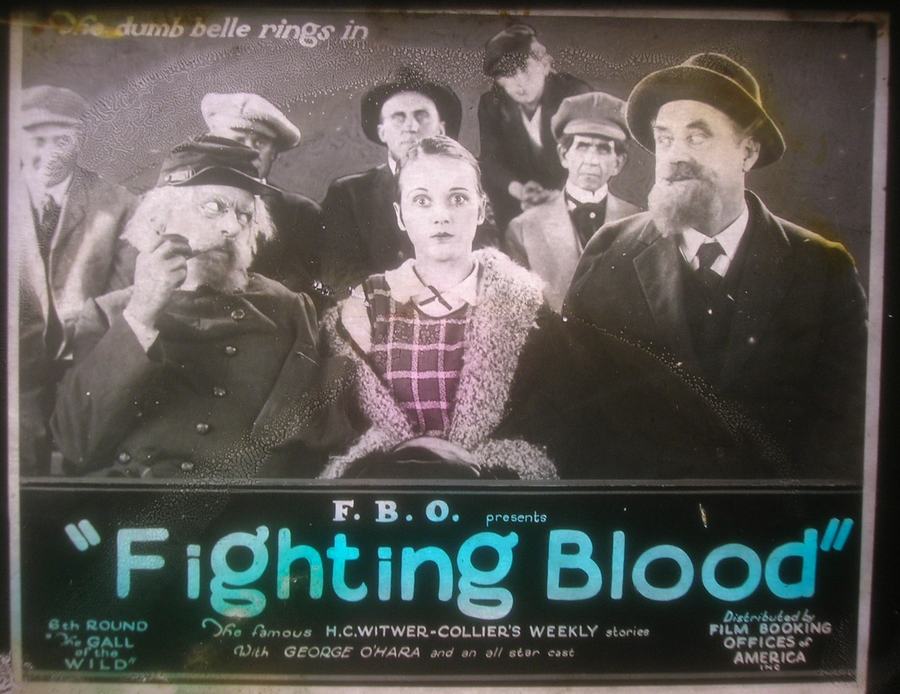
To witness Gall of the Wild in its surviving fragments is to touch the raw, unpolished nerve of 1924 American cinema. This isn't the sanitized, choreographed nostalgia often associated with the silent era; rather, it is a sweating, panting, and bruising artifact of the 'Fighting Blood' series. At its heart lies a collaborative alchemy between the legendary Darryl F. Zanuck and the street-smart prose of H.C. Witwer, a pairing that injected a much-needed dose of proletarian realism into the flickering shadows of the silver screen.
The 1920s were a decade of explosive transition, a period where the primitive energy of the early nickelodeons began to fuse with the sophisticated narrative structures of modern drama. Gall of the Wild stands as a testament to this evolution. Unlike the sweeping historical epics like The Life and Death of King Richard III, which sought legitimacy through theatrical lineage, this film finds its soul in the gutters and gymnasiums of the urban landscape. It is a film that understands the weight of a punch and the even heavier weight of a broken dream.
George O'Hara, playing the central figure Gale Galen, embodies a specific type of silent-era masculinity—vulnerable yet physically imposing. His performance is a masterclass in kinetic storytelling. In an era without synchronized sound, the tilt of a shoulder or the furrow of a brow had to convey the entire internal monologue of a man facing down both a literal opponent and the metaphorical weight of poverty. When compared to the stylized, almost hyper-real performances found in modern homages like The Artist, O'Hara’s work feels startlingly contemporary. There is no pantomime here; there is only the exhaustion of the athlete.
"The script by Zanuck and Witwer doesn't just outline a plot; it captures the cadence of the street. It is a blueprint for the gritty realism that would eventually define the Warner Bros. house style of the 1930s."
One cannot overstate the importance of the writing team. Darryl F. Zanuck, long before he became the mogul of 20th Century Fox, was a writer of immense dexterity. In Gall of the Wild, we see the early flashes of his ability to weave social commentary into populist entertainment. He takes the episodic nature of Witwer's stories—originally published in Collier’s—and imbues them with a cinematic drive that was rare for the time. The film avoids the sluggishness found in some contemporary dramas like Within the Law (1923), opting instead for a rapid-fire pacing that mirrors the staccato rhythm of a sparring session.
The inclusion of real-life pugilists like Leach Cross and Ad Wolgast adds a layer of documentary-like authenticity. These men weren't actors playing at war; they were veterans of the ring, and their presence lends the fight sequences a terrifying legitimacy. When they square off against Kit Guard or Joe Rivers, the screen crackles with a tension that cannot be faked. This intersection of reality and fiction is a hallmark of Malcolm St. Clair’s direction. St. Clair, who would go on to be a master of the 'Lubitsch touch' in comedy, here displays a surprisingly firm hand with action and atmosphere.
Visually, the film utilizes the limited technology of 1924 to create a world of stark contrasts. The gymnasiums are caverns of shadow, illuminated by harsh, overhead lights that bleach the skin of the fighters and leave the spectators in a murky, voyeuristic darkness. This chiaroscuro effect isn't just an aesthetic choice; it’s a thematic one. It highlights the isolation of the fighter—the 'wild' element that must be tamed or unleashed to survive. This visual language is far more evocative than the straightforward documentary style of Britain Prepared, which, while historically significant, lacks the psychological depth found in St. Clair’s framing.
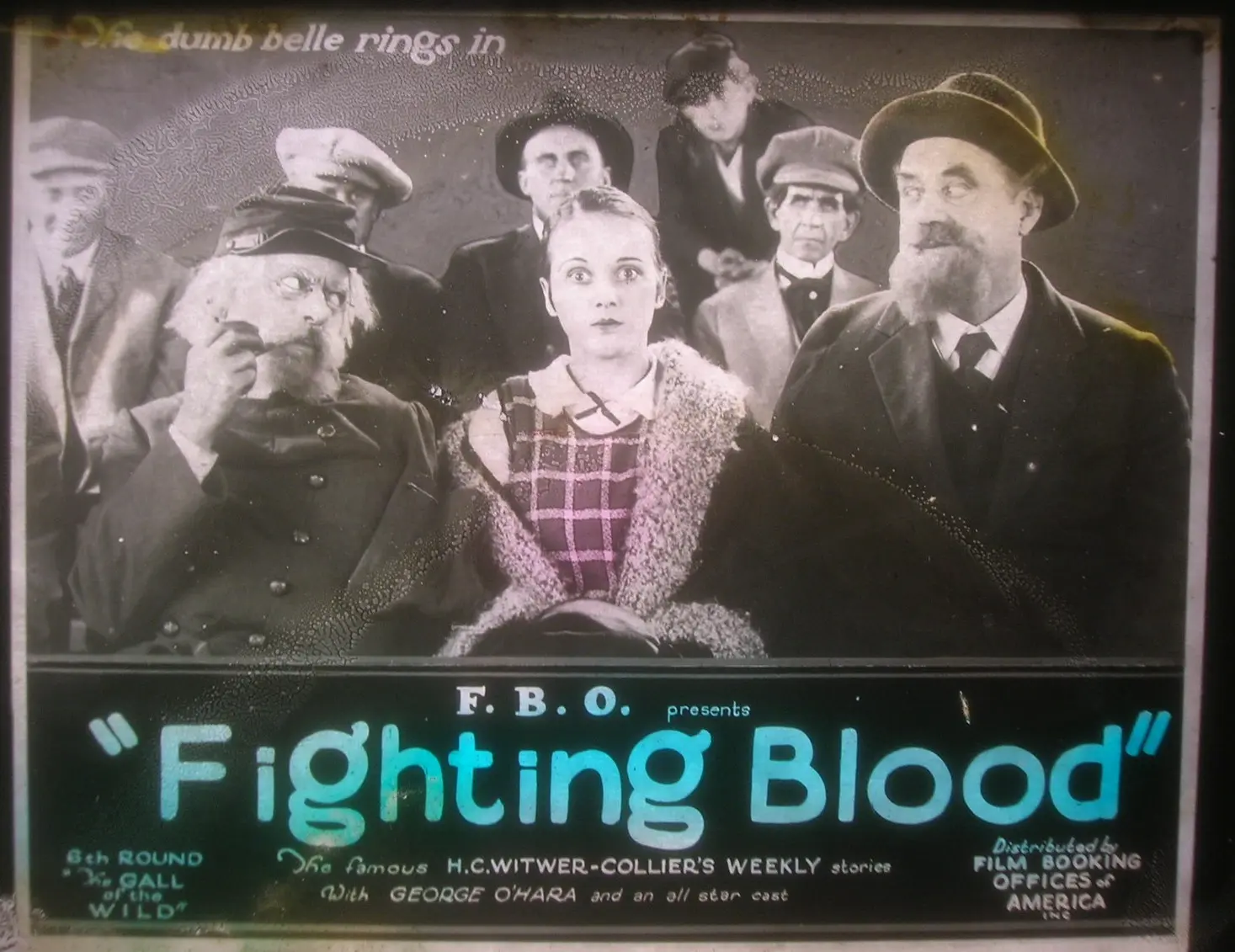
The editing, too, deserves scrutiny. While silent films are often criticized for their static nature, Gall of the Wild employs a sophisticated sense of montage during the climactic bouts. The cuts between the sweating faces of the crowd, the frantic coaching in the corner, and the dizzying exchange of blows create a sensory experience that predates the innovative editing of the 1970s boxing renaissance. It is a precursor to the kineticism of *Raging Bull*, albeit confined to the technical limitations of its birth year.
In the midst of this masculine maelstrom, Clara Horton provides a necessary emotional anchor. Her role could have easily devolved into the 'waiting woman' trope, yet she brings a quiet strength to the character of the love interest. Her interactions with O'Hara are the only moments where the film slows down, allowing the audience to breathe. These scenes provide the motivation for the violence; the 'gall' is not just for the sake of the win, but for the sake of the life that the win will buy. This domestic subtext elevates the film above mere sports reportage, placing it in the same league of character-driven drama as The Runaway.
Furthermore, the supporting cast, including Al Cooke and Phil Salvadore, flesh out the world with a variety of character types that would become staples of the genre. From the cynical manager to the wide-eyed newcomer, every character feels lived-in. This ensemble work is reminiscent of the detailed character tapestries found in Where D'Ye Get That Stuff?, another entry in the Witwer cinematic universe that shares this film's DNA.
It is important to remember that Gall of the Wild was part of a series. In the 1920s, the 'short feature' or 'two-reeler' was the backbone of the theater experience. These films had to be economical in their storytelling, a constraint that forced directors and writers to be exceptionally inventive. There is no room for the sprawling, often unfocused narratives found in early experimental works like Zudora. Instead, every shot in Gall of the Wild serves a purpose. It is lean, mean, and entirely focused on its objective.
The film also offers a fascinating glimpse into the social mores of the time. The boxing ring was one of the few places where different social classes and ethnicities collided. While the film primarily focuses on the white working class, the presence of various boxing legends hints at a broader, more complex world outside the frame. It lacks the overt political messaging of something like Escaped from Siberia, yet its very existence is a political statement about the value of the individual in an increasingly mechanized society.
To watch Gall of the Wild today is to engage in a form of cinematic archaeology. We are looking at the foundational blocks of the American sports film. The themes explored here—the struggle for dignity, the corruptive influence of money, and the redemptive power of physical discipline—would be echoed for decades to come. It possesses a raw vitality that many modern blockbusters, with their sanitized CGI and focus-grouped scripts, utterly fail to capture.
While it may not have the surrealist beauty of Ein Gruss aus der Tiefe or the delicate naturalism of Germoglio, it has something perhaps more enduring: a heartbeat. It is a film that refuses to go down without a fight. In the pantheon of 1924, Gall of the Wild is the underdog that surprised everyone, a scrappy, intelligent, and deeply moving piece of work that deserves to be remembered not just as a historical curiosity, but as a genuine piece of art. It reminds us that even in the silent era, the roar of the crowd and the impact of the glove could be felt through the screen, vibrating in the bones of the audience long after the lights came up.
Critic's Note: For those interested in the evolution of the genre, compare this with the more melodramatic Le revenant au baiser mortel to see how American realism was diverging from European stylization at the time.
IMDb —
1936
Community
Log in to comment.