DbcultAccessing Vault...
6.1/10
Senior Film Conservator
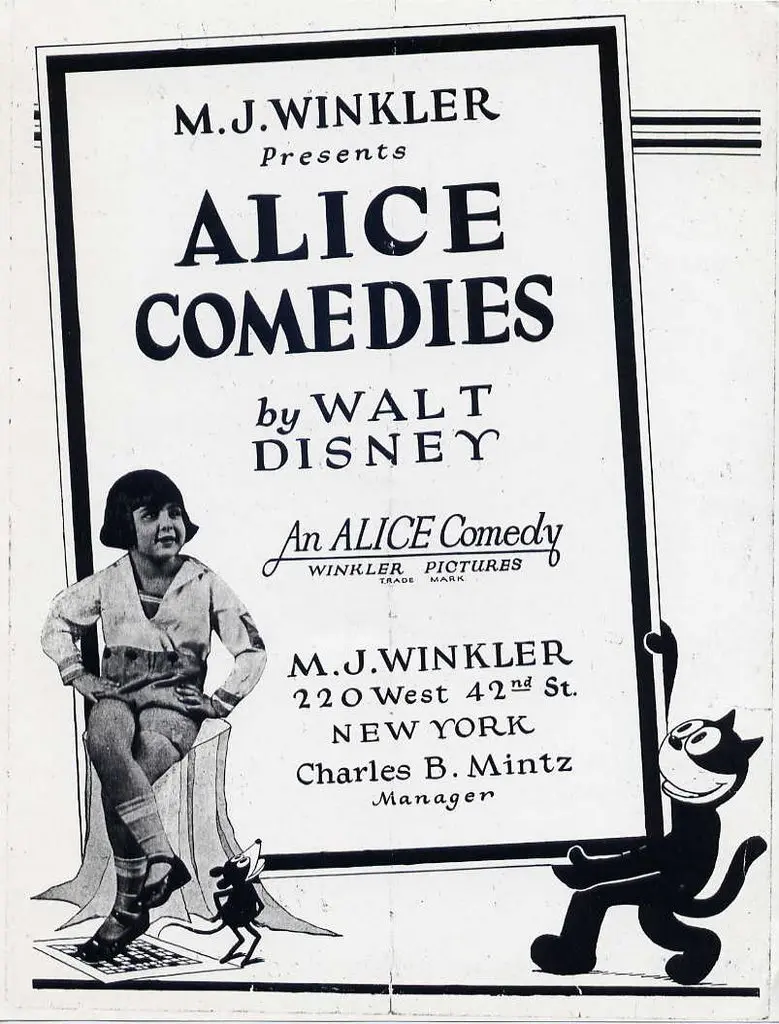
A definitive 6.1/10 rating for a film that redefined the boundaries of cult cinema. Alice Charms the Fish remains a cornerstone of transgressive art.
Is 'Alice Charms the Fish' worth watching today? Short answer: absolutely, but with a significant asterisk. This pioneering piece of animation, a relic from Walt Disney's formative years, serves less as pure entertainment for a modern audience and more as an invaluable historical artifact. It's an essential watch for animation historians, serious Disney enthusiasts, and anyone curious about the nascent stages of cinematic art, but it's likely to test the patience of those seeking contemporary narrative thrills or sophisticated humor.
It’s a foundational text, a testament to the boundless creativity that blossomed even amidst rudimentary technology. This film isn't for passive consumption; it demands an active, appreciative gaze, understanding its place in a lineage stretching from its humble frames to today's CGI blockbusters.
This film works because of its undeniable historical significance, its charmingly primitive animation, and its early demonstration of Walt Disney's innovative spirit, blending live-action with cartoons. It provides a crucial window into the origins of a global entertainment empire.
This film fails because its simplistic plot, dated humor, and slow pacing — by modern standards — make it a challenging watch for casual viewers. Its technical limitations, while historically fascinating, can feel jarring.
You should watch it if you are an animation student, a film historian, a devout Disney fan, or simply someone who appreciates understanding the roots of popular culture. It's a masterclass in early cinematic experimentation.
'Alice Charms the Fish', released in 1926 as part of the 'Alice Comedies' series, stands as a fascinating document of early cinematic ambition. It predates Mickey Mouse by two years, showcasing a period when Walt Disney and Ub Iwerks were still experimenting with the very language of animation. The premise itself is deceptively simple: a young girl, Alice (played by the live-action Margie Gay), and her animated cat, Julius, go fishing. Yet, within this simplicity lies a profound exploration of what was possible when celluloid met imagination.
The film’s central conceit – Alice using a flute to charm fish ashore – is a delightful, almost surreal twist on the mundane act of fishing. It immediately signals a world where natural laws are bent by whimsy, a hallmark that would later define much of Disney's output. This isn't just about catching dinner; it's about the magic of persuasion, the power of music, and the triumph of ingenuity over brute force.
One of the most striking aspects is the blend of live-action and animation. Margie Gay, as Alice, interacts with the animated Julius and the cartoon fish with a surprising degree of seamlessness for the era. This technical feat, while rudimentary by today's standards, was revolutionary. It allowed for a dynamic interplay that felt fresh and innovative, pushing the boundaries of what audiences expected from a moving picture.
The film, much like its contemporaries such as Body and Soul or Penrod and Sam, despite their vastly different genres, shared a common challenge: captivating an audience with limited technical means. 'Alice Charms the Fish' succeeded by leaning into its fantastical elements, offering pure escapism.
The animation style of 'Alice Charms the Fish' is a vibrant example of the 'rubber hose' era. Characters are fluid, almost boneless, capable of exaggerated movements that defy physics. Julius, in particular, embodies this style, stretching and squashing with comedic abandon. His frustration with conventional fishing methods, contrasted with Alice's effortless charm, provides much of the film's visual humor.
The fish themselves are marvels of early character design. They don't just swim; they express, they react, and most importantly, they dance. The sequence where they are entranced by Alice's flute is a masterclass in visual storytelling, conveying enchantment purely through motion and simple, expressive faces. It's a bold choice to make the fish themselves active participants rather than mere objects of pursuit.
Cinematography, in the traditional sense, is limited by the static camera setups typical of the period. However, the 'directing' comes through in the staging of the action within the frame. Disney and Iwerks understood how to use depth and foreground elements to create a sense of space, even if the camera itself remained fixed. The close-ups on Alice’s face as she plays the flute, for instance, draw the viewer into her magical act.
The pacing, by modern metrics, is deliberate. It allows the gags to breathe, the animation to unfold, and the audience to absorb the novelty of the live-action/animation hybrid. This slower rhythm, while potentially challenging for contemporary viewers accustomed to rapid-fire editing, was standard for the era and encourages a more contemplative viewing experience. It's a film that asks you to slow down and appreciate the craft.
Margie Gay, as Alice, is the anchor of the film. Her live-action performance grounds the fantastical elements, providing a relatable human connection amidst the cartoon antics. Her expressions, particularly her focused concentration while playing the flute, are genuinely endearing. She carries the film with an innocent charm that is utterly captivating.
While 'acting' in a traditional sense is limited by the format, Gay's ability to react convincingly to invisible animated characters is crucial. She doesn't just share the screen; she actively engages with Julius and the fish, making the fantastical seem real. This interaction is the heart of the 'Alice Comedies' and Gay's performance here is a prime example of why the series worked. Her naturalism contrasts wonderfully with the exaggerated movements of Julius, creating a dynamic duo.
It’s easy to overlook the skill required for such a role in the 1920s. Imagine performing against a blank backdrop, visualizing characters that don't yet exist. Gay's performance, though understated, is a testament to her talent and the pioneering spirit of early filmmakers. She makes you believe in the magic.
The film's pacing is characteristic of early animated shorts: unhurried and focused on developing a few key gags. There’s no rush to a grand climax; the joy is in the journey, in watching the charming absurdity unfold. The tone is lighthearted and whimsical, never straying into genuine peril or dark themes. It's pure, unadulterated fun, designed to bring a smile to the audience's face.
The sequence where Julius struggles with his fishing rod, only to be outdone by Alice's flute, perfectly illustrates this tone. His exaggerated frustration is comedic, not tragic. Alice's success isn't about superiority but about a different, more harmonious approach. This gentle humor, often relying on visual gags and character reactions, is a defining feature of the era. It's a simple narrative, elegantly executed.
The sound design, or lack thereof in the silent era, relies on a musical score (often improvised or live) to convey emotion and pace. One must imagine the film accompanied by a live pianist or orchestra, whose interpretation would have added another layer of depth to the visual storytelling. Without that context, modern viewers might find the silence stark, but it also allows the visuals to speak for themselves.
Yes, but with specific expectations. It's a foundational piece of animation history. Its value lies in its historical context and pioneering techniques. It showcases the early genius of Walt Disney. It's a short, charming glimpse into a bygone era. Don't expect modern storytelling or pacing. Do expect a masterclass in early cinematic innovation.
The 'Alice Comedies' were crucial stepping stones for Walt Disney. They allowed him to refine his craft, experiment with animation techniques, and build the foundation for what would become a global empire. 'Alice Charms the Fish' is more than just a quaint short; it's a testament to the power of persistence and creative problem-solving. It's a reminder that even the grandest ventures begin with humble, yet audacious, experiments.
Its influence might not be immediately obvious in every modern cartoon, but the DNA of Disney's storytelling — the blend of fantasy, humor, and memorable characters — is clearly present. The idea of music possessing magical qualities, for instance, would become a recurring motif throughout Disney's animated features, from 'Snow White' to 'Fantasia' and beyond. It works. But it’s flawed. This film is a direct ancestor to every singing princess and musical animal sidekick.
To truly appreciate this film, one must shed modern expectations and embrace it as a historical artifact, a snapshot of a moment when cinema itself was still finding its voice. It’s not just a film; it’s a lesson. And lessons, while sometimes challenging, are always worth learning.
While 'Alice Charms the Fish' may not offer the immediate gratification of a contemporary blockbuster, its historical value and pioneering spirit make it an essential viewing experience for specific audiences. It’s a delightful, if dated, piece of early animation that showcases the burgeoning talent of Walt Disney and his collaborators. For those willing to approach it with an appreciation for cinematic history, it offers a charming glimpse into the roots of an art form. It's a time capsule. Nothing more, nothing less, and everything in between.
IMDb 6.3
1928
Community
Log in to comment.