DbcultAccessing Vault...
Cult Review
Senior Film Conservator
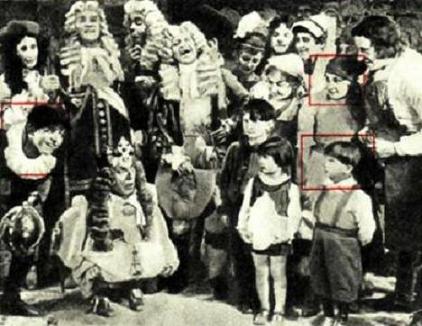
The enduring power of Hans Christian Andersen's 'The Emperor's New Clothes' lies not merely in its simple narrative but in its profound, almost surgical, dissection of human vanity, collective delusion, and the perilous costs of societal sycophancy. 'Novoye platye korolya,' a cinematic interpretation of this timeless fable, transcends its origins to become a vital piece of socio-political commentary, reflecting anxieties and truths that reverberate across epochs. It’s a film that, regardless of its specific release era, speaks to the very core of human interaction and the often-fragile edifice of power. To approach this film is to engage with a narrative that, on its surface, appears whimsical, yet beneath, pulsates with a sharp, critical intelligence. The genius of Andersen, adapted here by Yuri Zhelyabuzhsky, is in crafting a scenario where the absurd becomes the accepted reality, solely because no one dares to challenge the emperor's decree or their own perceived intellectual inadequacy.
At its heart, 'Novoye platye korolya' is a meticulous study in the architecture of deception. The film meticulously builds the world of an Emperor (likely portrayed with a blend of pomp and insecurity by Anatoli Nelidov), a ruler so consumed by superficiality that his kingdom's resources and the very attention of his court are perpetually diverted to matters of attire. This exaggerated focus on externals sets the stage for the arrival of two cunning swindlers, characters whose brilliance lies not in their weaving skills, but in their acute understanding of human psychology. They don't just sell an invisible cloth; they sell an invisible virtue, a test of intelligence and worthiness that no one in power dares to fail. The film, in its unfolding, becomes a masterclass in how fear – fear of appearing foolish, fear of losing favor, fear of challenging authority – can warp perception and silence dissent. Each scene where a courtier (perhaps Mariya Malysheva or Dimitri Gundurov) feigns admiration for the non-existent fabric is not just comedic; it's a chilling demonstration of how easily an entire institution can fall prey to a shared delusion, maintained by mutual, unspoken agreement. This societal blindness to an obvious truth shares thematic echoes with films like The Law That Failed, where institutional shortcomings are exposed, or even Evidence, where the perception of truth is meticulously manipulated. The narrative isn't just about an emperor's folly; it's a mirror held up to any society where appearances trump reality and genuine critique is stifled.
While specific performance nuances of Anatoli Nelidov, Mariya Malysheva, Dimitri Gundurov, Vitali Lazarenko, and Vladimir Ryabtsev might be lost to the mists of time for many, the roles they inhabit are archetypal and demand a particular kind of theatricality. Nelidov as the Emperor must embody a delicate balance of regal authority and profound, almost childish, vanity. His portrayal would likely hinge on exaggerated gestures and facial expressions, typical of early cinema, to convey his self-absorption and later, his mortification. Malysheva and Gundurov, perhaps as the Emperor's advisors or courtiers, would need to convey the internal conflict between their innate perception of the truth and the overwhelming pressure to conform. Their performances would be a study in subtle shifts of discomfort, forced smiles, and over-enthusiastic praise for nothingness. Lazarenko and Ryabtsev, potentially as the cunning swindlers, would need to exude an air of convincing artistry and mischievous confidence, their eyes betraying their inner amusement at the unfolding charade. The film’s success relies heavily on these actors' abilities to make the invisible tangible through their reactions, to sell the illusion not just to the Emperor, but to the audience, before it is inevitably shattered. Their commitment to the absurdity of the premise is what ultimately elevates the satire from mere farce to poignant social commentary. The skill required to portray such nuanced deception and self-deception, particularly in an era of filmmaking that often favored broader strokes, is commendable and central to the film's enduring impact.
Given the likely era of its production, 'Novoye platye korolya' would have relied heavily on visual storytelling to convey its biting satire. The opulent sets and costumes (for the existing clothes, not the 'new' ones) would have been crucial in establishing the Emperor's world of excessive luxury and superficiality. The contrast between this tangible grandeur and the complete absence of the 'new clothes' would have been a powerful visual metaphor. Director Yuri Zhelyabuzhsky, working from Andersen's original narrative, would have faced the unique challenge of depicting something that isn't there. This would necessitate clever camera work, precise blocking, and the actors' unwavering commitment to reacting to an absence. Imagine the close-ups on the faces of courtiers, their eyes widening in feigned admiration, or the Emperor's proud strut, oblivious to his nakedness, all rendered with the dramatic flair of early cinema. The film's visual language would, by necessity, become a character in itself, guiding the audience through the layers of pretense. This visual ingenuity, in making the invisible visible through reaction, parallels the thematic depth found in films like A Naked Soul, where inner truths are laid bare, or even the subtle psychological manipulations seen in Black Orchids, albeit through vastly different narrative forms. The film's enduring relevance stems from its ability to transcend its specific setting and speak to universal human tendencies. It's not just a critique of a vain monarch; it's a broader commentary on the dangers of unchecked power, the perils of groupthink, and the ultimate necessity of genuine honesty, however uncomfortable it may be.
The pivotal moment in 'Novoye platye korolya,' and indeed in Andersen's original tale, is the innocent declaration by a child: "But he hasn't got anything on!" This single, unadulterated statement functions as a narrative earthquake, shattering the elaborate illusion that the entire court and populace have conspired to maintain. The child, unburdened by social conditioning, political ambition, or the fear of appearing unintelligent, possesses the clarity of vision that adults have sacrificed at the altar of conformity. This character is not merely a plot device; they represent the purest form of truth, an uncorrupted perspective that cuts through layers of pretense. The film, in depicting this moment, must carefully build the tension, allowing the collective delusion to reach its peak before introducing this stark reality. The child's voice, whether literal or metaphorical in a silent film, becomes the voice of reason, the crack in the dam of shared falsehood. This moment of innocent revelation finds echoes in films like Wit Wins, where simple honesty or cleverness triumphs over more complex deceptions, or even Johanna Enlists, where a protagonist's fresh perspective challenges established norms. The subsequent ripple effect – the murmurs growing into a roar of recognition – is a powerful testament to the fragility of lies when confronted with undeniable truth. It's a moment that celebrates the courage of unvarnished honesty and exposes the profound vulnerability of those who build their authority on illusion. The film, through this crucial juncture, reminds us that sometimes, the most profound wisdom comes from the least expected, and often, the least powerful, among us.
'Novoye platye korolya' is far more than a charming children's story brought to the screen; it's a potent and enduring social critique. It interrogates the very nature of power, exposing how easily it can be manipulated when vanity and insecurity are its foundational pillars. The film's exploration of collective delusion resonates deeply in any era where public opinion can be swayed by manufactured realities or where fear dictates public discourse. It challenges viewers to question authority, to trust their own perceptions, and to find the courage to speak uncomfortable truths. The film's themes are universal, touching upon the human need for acceptance, the fear of ostracization, and the dangerous allure of maintaining a comfortable lie over confronting a harsh reality. One might draw parallels to the subtle societal pressures explored in Caprice of the Mountains, where community expectations shape individual actions, or the broader societal commentary inherent in The Landloper, which often critiques established social structures. The genius of Yuri Zhelyabuzhsky's adaptation lies in its ability to translate Andersen's incisive commentary into a visual medium, making the abstract concept of 'invisible clothes' feel palpable and the ensuing societal embarrassment acutely felt. The film invites us to reflect on our own complicity in maintaining collective fictions, whether in personal relationships, professional environments, or broader political landscapes. It forces an uncomfortable introspection: how often do we, too, pretend to see the emperor's new clothes, simply to avoid being seen as foolish or out of step? This introspective quality is what secures 'Novoye platye korolya' its place not just as a classic adaptation, but as a perennial reminder of the importance of critical thinking and integrity.
The legacy of 'Novoye platye korolya' is intrinsically tied to the timelessness of its source material, yet it carves out its own niche through its cinematic interpretation. It serves as a powerful reminder of early Russian cinema's capacity for nuanced storytelling and social satire. The film, even without explicit details of its exact production context, stands as a testament to the universal appeal of Andersen's fable and its adaptability across cultures and artistic mediums. It is a work that, like all great art, holds a mirror to human nature, reflecting both our absurdities and our potential for clarity. Its message, delivered through the simple yet profound revelation of a child, continues to resonate, urging audiences to look beyond superficial appearances and to question the narratives presented by those in power. It encourages a healthy skepticism and a valorization of truth, even when unpopular. In an increasingly complex world, where information can be distorted and realities manufactured, the clarity and courage embodied in 'Novoye platye korolya' remain profoundly relevant. It is a cinematic experience that, despite its potential age, speaks with startling contemporary urgency, inviting continuous re-evaluation and discussion. The film’s power lies in its ability to strip away pretense, much like the child stripped the Emperor of his illusory garments, leaving behind a stark, undeniable truth that continues to challenge, provoke, and ultimately, enlighten audiences across generations. Its brilliance, like the emperor's new clothes, is something one must truly see with the eyes of critical thought and an open mind, rather than with the eyes of blind acceptance.
IMDb —
1915
Community
Log in to comment.