DbcultAccessing Vault...
6.6/10
Senior Film Conservator
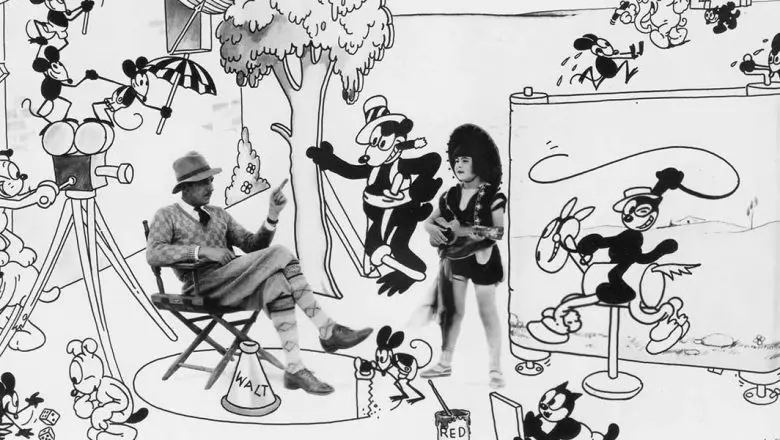
A definitive 6.6/10 rating for a film that redefined the boundaries of cult cinema. Alice's Channel Swim remains a cornerstone of transgressive art.
Is 'Alice's Channel Swim' worth your time in the modern era? Short answer: yes, but with significant caveats that pivot on your cinematic interests. This early film, a product of a nascent industry, offers a unique window into the foundational elements of storytelling and spectacle that would come to define cinema. It's an indispensable artifact for film historians, silent film enthusiasts, and anyone curious about the origins of narrative filmmaking, offering insights into how simple premises were brought to life without dialogue.
However, this film is decidedly not for the casual viewer seeking contemporary entertainment values, complex character arcs, or high-octane action. Its charms are subtle, residing in its historical context and the implied ingenuity of its creation. Those accustomed to modern pacing, intricate plots, and sound design will find its brevity and silent presentation a challenging adjustment. Consider it less an entertainment offering and more a historical document to be studied and appreciated.
This film works because: It distills the essence of competition and human endurance into a remarkably simple yet compelling narrative, showcasing early cinema's power to engage through action and clear stakes.
This film fails because: Its brevity and the inherent limitations of early filmmaking mean it lacks the depth, character development, and intricate visual language that modern audiences expect, making it feel more like a curiosity than a fully realized story.
You should watch it if: You are a film student, a historian, or possess a genuine fascination with the evolution of cinema and appreciate the historical significance of early shorts, particularly those featuring pioneering figures like Lois Hardwick.
To truly appreciate 'Alice's Channel Swim,' one must first shed the expectations ingrained by a century of cinematic evolution. This isn't just a film; it's a snapshot of an era when the language of moving pictures was still being invented. In the early 20th century, films were often short subjects, exhibited in nickelodeons, and valued for their novelty and ability to tell a story in a concise, accessible manner. The English Channel swim itself was a contemporary marvel, a feat of daring that captivated the public imagination, making it ripe for cinematic adaptation.
The choice of a channel swim as a narrative backbone for a silent film is ingenious in its simplicity. It's a concept universally understood: a race, a challenge, a clear objective. This allowed filmmakers to focus on visual storytelling, relying on action, physical exertion, and perhaps some rudimentary special effects or clever editing to convey the drama. Such films served as a cultural mirror, reflecting public fascination with athletic prowess and the spirit of adventure.
Lois Hardwick, credited in the cast, was a notable child actor of the silent era. Her presence as Alice, the referee, adds a fascinating layer. It suggests that even in these early shorts, there was an understanding of how a recognizable face, even a young one, could anchor a film and provide a point of human connection amidst the spectacle. Her role as an impartial arbiter is crucial, providing a narrative structure and a sense of fairness to the competition.
These early shorts were often experiments in form and content. They were not bound by the conventions of later feature films, allowing for a freedom in narrative approach that could range from slapstick comedy to poignant drama, or, in this case, a sporting event. 'Alice's Channel Swim' likely existed somewhere between an actuality film – documenting a real event – and a fictional narrative, blurring the lines in a way that was common for the period. It's a testament to the versatility of the medium, even in its infancy.
The plot of 'Alice's Channel Swim' is deceptively simple: two men, Julius and Pete, race across the English Channel, with Alice observing. Yet, within this barebones premise lies a profound understanding of narrative economy. In an era without spoken dialogue, clarity was paramount. A channel swim provides an immediate, visual goal, and the inherent obstacles – the vastness of the water, the physical toll – are self-evident. This allows the film to communicate its stakes without complex exposition.
The role of Alice as referee is particularly interesting. She isn't just a passive observer; she's the embodiment of the rules, the fair play, and the ultimate arbiter of success. Her presence elevates the contest from a mere swim to a formalized event, adding a layer of dramatic tension. One can imagine shots of her consulting a stopwatch, perhaps signaling to the swimmers, or reacting to their progress, thereby guiding the audience's understanding of the race's ebb and flow. This is a subtle yet effective way to build narrative momentum in a silent context.
The film's focus on a direct competition taps into a primal human fascination with contests and achievements. It's a story as old as time, repackaged for a new medium. Without elaborate backstories for Julius and Pete, the audience is invited to project their own understanding of ambition and struggle onto these figures. They become archetypes, representing the universal drive to overcome challenges. This universality is a key reason why such a simple plot could resonate with diverse audiences of the time.
In its conciseness, 'Alice's Channel Swim' offers a masterclass in 'show, don't tell.' Every frame, every gesture, every visual cue would have been critical in conveying the narrative. The struggle of the swimmers, the vastness of the sea, the focused intensity of Alice – these elements, presented purely visually, had to carry the entire weight of the story. It's a challenge that, when met successfully, results in a powerful and direct form of storytelling that can feel surprisingly impactful even today, if viewed with the right mindset.
In silent cinema, acting was a highly stylized art form, often relying on exaggerated facial expressions and grandiose gestures to convey emotion and intent. For 'Alice's Channel Swim,' the performances of Julius and Pete would have been largely physical. Their acting would manifest in their stroke, their visible exhaustion, the determination etched on their faces. One can easily picture close-ups on strained muscles, gasping breaths (implied), and the relentless rhythm of their arms cutting through the water. This physical authenticity, or at least the convincing portrayal of it, would have been paramount.
Lois Hardwick, as Alice, would have had a different challenge. As a child actor, her expressions might have been more naturalistic, or perhaps she would have adopted a serious, almost adult demeanor to emphasize her role as referee. A quick glance at the watch, a focused gaze across the water, or a decisive hand signal would have been key to her performance. Her presence grounds the competition, providing a focal point for the audience's attention beyond just the swimmers themselves. It's an interesting choice to have a child in such a responsible, authoritative role, possibly adding a touch of charm or unexpected gravity to the film.
The pacing of early shorts like this was typically brisk. There was little time for lingering shots or drawn-out sequences. The narrative had to move forward efficiently, driven by the action. For a channel swim, this would likely translate into a montage of swimming shots, intercut with Alice's observations and perhaps wider shots establishing the vastness of the sea. The tension would build not through slow reveals, but through the relentless forward motion of the swimmers and the ticking clock (real or implied).
The emotional arc, while simple, would be clear: the struggle, the perseverance, and the eventual outcome. The lack of dialogue forces a reliance on universal human expressions and actions, making the film's emotional beats accessible across cultural divides. It's a raw, unvarnished form of performance that, when done well, can be incredibly compelling. The challenge for modern viewers is to adjust to this different rhythm and appreciate the artistry in conveying so much with so little overt communication.
The cinematography of 'Alice's Channel Swim' would have presented significant technical hurdles for its time. Filming on open water, especially capturing swimmers in motion, was no small feat. It's reasonable to assume that much of the film would have been shot from accompanying boats or from the shore, utilizing long shots to establish the scale of the challenge and closer shots to convey the effort of the swimmers. The visual composition would likely prioritize clarity and the sense of endless expanse.
One can imagine the use of natural light, which would have been the primary source, creating stark contrasts between the glistening water and the figures battling against it. The choppy waves, the distant horizon, and the sheer isolation of the swimmers would all contribute to the visual narrative. While elaborate camera movements might have been limited, the strategic placement of the camera to capture key moments – a swimmer faltering, Alice's decisive gesture – would have been crucial for building tension and maintaining audience engagement. The focus would be on capturing the raw, untamed beauty and brutality of the natural environment.
The visual storytelling would have relied heavily on establishing shots to orient the audience, followed by tighter shots to focus on the human element. The interplay between the vast, indifferent ocean and the determined individuals would be a recurring visual motif, emphasizing the scale of the challenge. The success of the film's visuals would lie in its ability to make the audience feel the chill of the water, the strain of the swim, and the unwavering resolve of the competitors, all without a single spoken word.
'Alice's Channel Swim' might not be a household name today, but its historical significance is undeniable. As an early silent short, it represents a crucial step in the evolution of cinematic narrative. It demonstrates how filmmakers, with limited technology and nascent techniques, could craft compelling stories from simple, relatable concepts. The film's focus on a sporting contest also places it within a lineage of sports-themed cinema, a genre that continues to thrive today.
Moreover, the involvement of Lois Hardwick highlights the role of child actors in early Hollywood and the professionalization of the industry. Her presence suggests a deliberate casting choice, indicating that even in short subjects, there was an effort to bring familiar faces to the screen. It also provides a fascinating glimpse into the roles available to young performers during this formative period of cinema. One could argue that this film, in its own small way, contributed to the development of early star systems.
The film's very existence, centered around a channel swim, speaks volumes about the cultural preoccupations of its time. It reflects an era fascinated by feats of endurance, exploration, and the pushing of human limits. In a sense, it's a precursor to modern reality television, documenting a contest with clear rules and outcomes, albeit without the intrusive cameras and confessionals. It’s a surprisingly modern concept for such an early film, making it an unconventional observation of its inherent forward-thinking nature.
Studying films like 'Alice's Channel Swim' allows us to trace the origins of techniques we now take for granted: how to build suspense without dialogue, how to convey emotion through physicality, and how to use environment as a character. It's a foundational text, perhaps not as grand as Tol'able David or as influential as Underworld, but no less important in illustrating the building blocks of cinematic language. It works. But it’s flawed. Its legacy lies not in its spectacle, but in its quiet testament to the enduring power of simple, human stories told through the magic of moving images.
Ultimately, 'Alice's Channel Swim' is less a film to be passively enjoyed and more a historical document to be actively engaged with. It's a vital piece of the cinematic puzzle, showcasing the foundational elements that would eventually build the sprawling edifice of modern film. For those willing to adjust their expectations and immerse themselves in the context of early cinema, it offers a fascinating, albeit brief, journey into a bygone era of storytelling. It reminds us that even the simplest premises, when approached with ingenuity and a clear vision, can lay the groundwork for a revolutionary art form. Its value is academic and historical, profound in its implications, even if its entertainment factor is niche. See it if you dare to dive deep into cinema's past; skip it if you're merely looking for a casual watch. Its place in history is secure, its appeal remains selective.

IMDb 6.3
1933
Community
Log in to comment.