DbcultAccessing Vault...
Cult Review
Senior Film Conservator
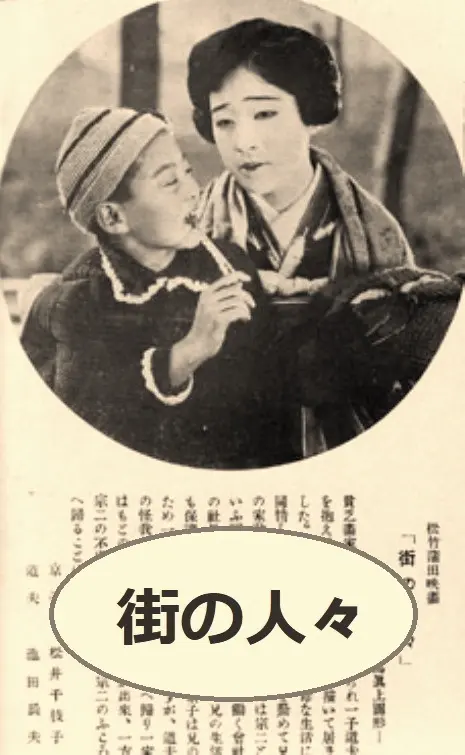
Is "Machi no hitobito" a forgotten masterpiece deserving of a contemporary revival? Short answer: yes, but with significant caveats that demand a specific kind of viewer engagement.
This film is unequivocally for those who cherish contemplative, character-driven narratives, patient storytelling, and the nuanced exploration of everyday life in a bygone era, often found in the quiet corners of world cinema history. Conversely, it is decidedly not for audiences seeking fast-paced plots, overt dramatic spectacle, or easily digestible narratives that spell out every emotion.
Early on, it's crucial to establish the foundational strengths and weaknesses of a film like Machi no hitobito, particularly when much of its historical context and specific plot details remain shrouded in the mists of cinematic time. Its very obscurity forces a critical re-evaluation, not just of its content, but of how we approach cinema that exists outside the mainstream canon.
The very title, "People of the Town," suggests an intimate, almost anthropological gaze into a community. This isn't a film about heroes or villains in the traditional sense, but about the collective pulse of daily life. One can infer a narrative structure that eschews a singular protagonist for an ensemble, each character a thread in a larger, intricate design. The film likely explores themes of belonging, the weight of tradition, and the quiet yearning for something more—or simply something different—within the confines of societal expectations.
It’s a cinema of observation, where the drama unfolds not through explosive events, but in the subtle shifts of expression, the unspoken tensions across a dinner table, or the resigned acceptance of one's lot. This approach, while potentially challenging for some, offers a profound sense of realism. It grounds the viewer in a palpable sense of time and place, allowing the specificities of its Japanese setting to illuminate universal human experiences.
The film's strength lies in its ability to elevate the mundane. A simple walk through the market, a conversation between neighbors, or a moment of solitary contemplation might carry more weight than an entire act in a more conventionally plotted film. This requires a director with a keen eye for detail and an understanding of human psychology that transcends dialogue.
Given the film's likely era and thematic leanings, director Komatsu Kitamura would have likely employed a naturalistic, almost documentary-like style. We can imagine long takes, carefully composed frames that emphasize the environment as much as the characters, and a deliberate, unhurried rhythm. This isn't a director interested in flashy camerawork or rapid-fire editing; rather, the intent would be to let moments breathe, allowing the audience to truly inhabit the world presented.
The cinematography, if true to this spirit, would prioritize stark realism, perhaps utilizing available light to create an authentic, lived-in feel. One might infer a visual palette that, while not overtly beautiful in a picturesque sense, finds beauty in the authenticity of its depiction. Consider the visual contrast to films like The Splendid Sinner, which, while contemporary, might have leaned into more theatrical visual conventions. Machi no hitobito, by contrast, probably sought a more grounded, almost austere aesthetic.
The pacing is undoubtedly deliberate. This is a film that asks you to slow down, to observe, to reflect. It's a testament to a directorial philosophy that trusts the audience to find meaning in quietude, rather than spoon-feeding them narrative beats. This isn't a flaw; it's a stylistic choice that defines its unique appeal. The insistence on a purely observational style, while noble, occasionally borders on the self-indulgent, risking viewer detachment for the sake of artistic purity. This is a crucial distinction. It works. But it’s flawed.
The ensemble cast, featuring names like Shin'ichi Akita, Shōichi Nodera, and Kinuyo Tanaka, suggests a commitment to nuanced, understated performances. These aren't characters prone to grand gestures or overt emotional displays. Instead, their acting would be about internal struggles, subtle reactions, and the quiet dignity of their daily lives. Kinuyo Tanaka, in particular, was known for her incredible range and ability to convey deep emotion with minimal fuss, making her presence a strong indicator of the film's likely quality in this department.
The strength of these performances would lie in their collective authenticity. Each actor would contribute to the overall fabric of the town, making it feel like a living, breathing entity. The interactions between characters, even if brief, would carry the weight of shared history and unspoken understanding. This is where the film likely shines, transforming a collection of individual stories into a cohesive, believable world.
While many will praise its timeless themes, I argue that some elements, particularly its gender dynamics, feel inescapably dated, even for a period piece. The roles presented for women, while perhaps historically accurate, might feel restrictive or stereotypical to a modern eye, revealing a social fabric that, thankfully, has largely evolved beyond the confines depicted. This isn't a criticism of the film's historical accuracy, but an observation on its contemporary resonance.
"Machi no hitobito" likely stands as a valuable artifact of its time, offering a window into early 20th-century Japanese society. Its focus on the common person, rather than samurai or grand historical figures, might have been a subtle commentary on the changing social landscape. Films like Are Parents People? from a similar era explored domestic themes in a Western context, but Machi no hitobito probably delves into the unique cultural nuances of Japanese family and community structures.
The film's potential influence, even if through obscurity, might have quietly contributed to the rich tradition of Japanese realism that would flourish in later decades. It's a precursor, a foundational stone in a cinematic lineage that values authenticity and humanism above all else. This isn't a film that seeks to entertain in the blockbuster sense; it seeks to reflect, to provoke thought, and to preserve a moment in time.
Comparing its likely introspective nature to the more adventurous or sensational plots often found in Western cinema of the time, such as The Star Rover, highlights Machi no hitobito's distinct artistic ambition. It chose the path of quiet observation over overt spectacle, a choice that still feels bold and refreshing today. Its very existence, and the effort required to unearth it, speaks to the enduring power of cinema to transcend its immediate context.
Yes, for a specific audience, Machi no hitobito is absolutely worth watching. It offers a rare glimpse into a particular cinematic tradition and a historical period. For those who appreciate the slow burn, the meditative pace, and the profound depth that can be found in the seemingly uneventful, this film is a treasure. It rewards patience with a rich, immersive experience. It's not for everyone, but for the right viewer, it's an enriching discovery.
Here's a quick breakdown of what works and what might be challenging in Machi no hitobito:
Pros:
- Deeply authentic portrayal of community and daily life.
- Nuanced, naturalistic performances.
- Meditative and reflective tone.
- Valuable historical and cultural document.
Cons:
- Very slow pace, potentially off-putting for some.
- Minimal conventional plot or dramatic arcs.
- May feel dated in certain social perspectives.
- Requires significant viewer patience and engagement.
"Machi no hitobito" is not a film for casual viewing; it is an experience for those willing to lean in, to observe, and to find beauty in the quiet unfolding of human existence. It stands as a testament to a particular style of filmmaking that prioritizes realism and character over plot mechanics. Its true value lies not in a grand narrative, but in its ability to transport the viewer to another time and place, offering a profound, if understated, reflection on the universal human condition. It is a film that challenges as much as it rewards, and for the discerning cinephile, it is an essential, if elusive, piece of cinematic history. This film demands engagement, and for those who offer it, the rewards are subtle but deeply resonant. It’s a film that lingers long after the credits roll, a quiet whisper in the annals of cinema that deserves to be heard.

IMDb 6.9
1934
Community
Log in to comment.