DbcultAccessing Vault...
5.3/10
Senior Film Conservator
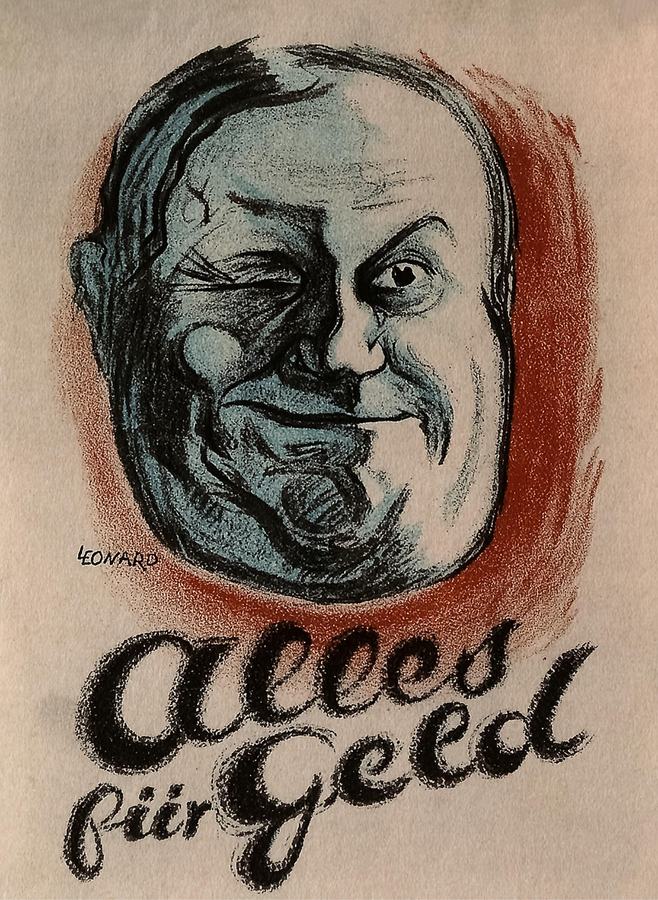
A definitive 5.3/10 rating for a film that redefined the boundaries of cult cinema. All for Money remains a cornerstone of transgressive art.
All for Money stands as a testament to the restless fervor of post‑war German cinema, weaving together themes of greed, love, and mechanized modernity with a narrative cadence that feels both operatic and grounded. The film opens on Rupp (Emil Jannings), a former butcher whose ascent to affluence in the meat‑packing industry mirrors the chaotic redistribution of wealth after the Great War. His coarse speech and unrefined manners render him a figure of both admiration and revulsion, a man whose success is as much a product of opportunism as it is of brute force.
The familial core of the story is anchored by his son, Fred (Reinhold Schünzel), an automobile enthusiast whose passion for speed serves as a metaphor for the era’s rapid industrial acceleration. Fred’s devotion to his father is palpable, yet it is tinged with a quiet yearning for personal identity beyond the shadow of Rupp’s domineering presence.
Enter Helen (Dagny Servaes), a once‑privileged aristocrat now reduced to pawn‑shop transactions, her aristocratic poise frayed by the exigencies of caring for a gravely ill mother. The film deftly portrays her desperation through lingering close‑ups of trembling hands and the glint of a tarnished heirloom she reluctantly parts with. Rupp’s proposal, framed as a benevolent rescue, is laced with self‑interest; his motives are as opaque as the smoky back‑rooms where deals are struck.
Platen (Curt Goetz), Helen’s former lover, re‑enters the narrative as a spectral reminder of past grievances. His warning to Helen—delivered in a hushed, conspiratorial tone—underscores the film’s recurring motif of deception. Platen’s history with Rupp is steeped in personal vendetta: he was dismissed after defending a chorus girl from Rupp’s predatory advances, a subplot that adds a layer of moral complexity and highlights the gender dynamics of the period.
The subplot involving Graf (Max Kronert), a conniving financier, introduces the corporate machinations that propel the story toward its climactic race. Graf’s acquisition of the near‑bankrupt automobile firm Phoenix is executed with a sleight‑of‑hand that leaves Rupp enriched while Graf receives a paltry sum, sowing the seeds of future retribution. This maneuver is visually represented through sharp, angular set designs that evoke the cold efficiency of early 20th‑century capitalism.
A pivotal scene unfolds when Fred, having overheard Helen’s pleas to Platen, confronts his father. The misinterpretation here is crucial: Rupp perceives his son’s intervention as a direct challenge to his own romantic conquest, prompting an emotional exile that severs their bond. The camera lingers on Rupp’s clenched jaw, a visual echo of his internal conflict between paternal affection and possessive desire.
The final act erupts on the racetrack, a kinetic tableau where the film’s thematic threads converge. Fred, under the veil of anonymity, pilots a rival’s automobile, while Platen dons the colors of Phoenix, the very company that Graf has maneuvered into Rupp’s grasp. The race itself is filmed with a kinetic energy reminiscent of the exhilarating sequences found in The Ghost of the Canyon, employing rapid cuts and dynamic camera angles that immerse the viewer in the throes of competition.
Rupp’s underhanded bribery of Graf to sabotage his rival’s chances adds a layer of moral decay that pervades the film’s denouement. The aftermath of the race—smoke, shattered glass, and the silent stare of a father watching his son’s triumph from the sidelines—encapsulates the tragedy of a man whose pursuit of wealth ultimately alienates the very individuals he claims to love.
From a cinematic standpoint, the film’s use of chiaroscuro lighting accentuates the moral ambiguities of its characters. Shadows loom over Rupp’s opulent mansion, while the bright, almost blinding glare of the racetrack reflects the fleeting nature of glory. The director’s choice to juxtapose the bleakness of Helen’s pawn shop with the flamboyant extravagance of Rupp’s banquet hall underscores the stark socioeconomic divides that the narrative critiques.
The performances are a study in contrast. Emil Jannings delivers a towering presence, his physicality conveying Rupp’s brute strength, while Dagny Servaes imbues Helen with a fragile resilience that never fully succumbs to victimhood. Reinhold Schünzel’s portrayal of Fred balances youthful exuberance with a lingering melancholy, a duality that resonates deeply in the film’s closing moments.
Comparatively, the film’s exploration of class tension and industrial ambition aligns with the thematic concerns of At Your Service, yet it distinguishes itself through its focus on automotive innovation as a metaphor for societal acceleration. The auto race, a spectacle of speed and danger, mirrors the frantic pace at which post‑war Europe sought to rebuild and redefine itself.
The screenplay, penned by Hanns Kräly and Rudolf Stratz, is peppered with sharp dialogue that oscillates between sardonic wit and earnest confession. The line where Rupp declares, “Money is the only true engine of progress,” is delivered with a sneer that reverberates throughout the narrative, echoing the film’s central thesis.
In terms of production design, the film excels in its meticulous recreation of early 1920s Berlin. From the soot‑stained streets surrounding the pawn shop to the gleaming chrome of the Phoenix factory, every frame is saturated with period‑accurate detail, inviting the audience to inhabit a world on the cusp of modernity.
The film’s pacing, while deliberate in its early acts, accelerates dramatically during the race, a structural choice that mirrors the characters’ own escalating desperation. This shift is reminiscent of the narrative rhythm found in Sunshine and Gold, where the climax propels the story into a feverish crescendo.
Ultimately, All for Money is a richly layered work that interrogates the corrosive power of wealth, the fragility of love under economic strain, and the relentless march of technological progress. Its enduring relevance lies in its ability to portray timeless human conflicts through the lens of a specific historical moment, making it a compelling study for both cinephiles and scholars of early 20th‑century culture.
For those seeking a comparative analysis, the film’s treatment of familial estrangement echoes the emotional turbulence of Wild Primrose, while its critique of capitalist exploitation resonates with the thematic undercurrents of Satan's Rhapsody. Each of these works, when viewed alongside All for Money, enriches the discourse surrounding the moral complexities of ambition and the human cost of relentless pursuit of profit.
In conclusion, the film remains a masterful amalgamation of narrative ambition, visual ingenuity, and thematic depth. Its legacy endures not merely as a relic of silent cinema but as a poignant reminder that the quest for wealth, when untempered by empathy, inevitably leads to personal ruin.
IMDb 6.8
1929
Community
Log in to comment.