DbcultAccessing Vault...
4.7/10
Senior Film Conservator
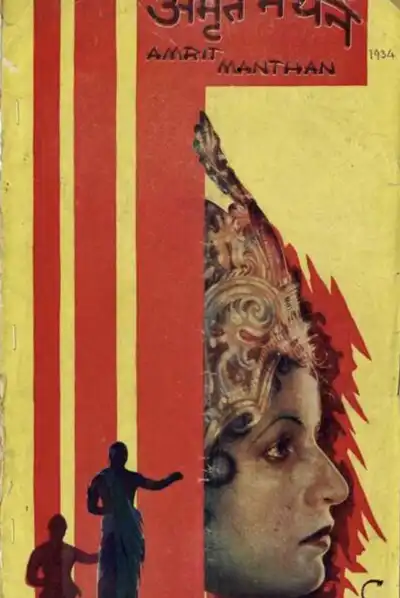
A definitive 4.7/10 rating for a film that redefined the boundaries of cult cinema. Amrit Manthan remains a cornerstone of transgressive art.
Okay, so Amrit Manthan from 1934. Is it worth digging up today? Absolutely, if you're into old-school cinema that really tries to do something visually wild. Folks who appreciate silent film techniques mixed with early sound era ambition will find a lot to chew on here. But if you need fast pacing and clear-cut good guys from minute one, this might feel a bit slow, maybe even a little confusing sometimes with its old-timey storytelling.
That opening shot, man. A low-angle circular track through a shadowy dungeon with flickering lights – it just grabs you. You immediately know this isn't just another talky stage play on film. This cult, the Chandika followers, they're intense, all about sacrifices. You see it, the mood is set right there.
The high priest character, played by Chandramohan or Date, he's just... icy. The way he manipulates Vishwagupta to kill the king. It’s a classic setup, sure, but the film doesn't rush it. You feel the weight of that order.
King Krantivarma, he's the voice of reason. Banning sacrifices? Good move. But it really ticks off the cult. That's where the real trouble starts, doesn't it? Vishwagupta, poor guy, he kills the king and then gets immediately thrown under the bus by the priest. Classic villain move, but still stings to watch.
His son, Madhavgupta, and daughter Sumitra, they're left to pick up the pieces. And the princess too. This part feels very much like a story about how power changes hands, and not always for the better. The whole thing with Vishwagupta's betrayal, his reaction shots felt oddly muted, like he already knew his fate. It gives you pause.
The 'churning of the seas' legend, told twice? That's a bold choice. The first time, the priest uses it to justify getting rid of 'evil.' Very manipulative. Then a 'good general' later flips it on its head, saying demons often *look* like gods. That really stuck with me. It’s a clever bit of writing, making you question what you just heard. Like, which version do we believe? 🤔
You don't often see early films put such a clear emphasis on the people's revolt. It’s not just about heroes, but about a community taking back control. That's a pretty powerful idea, even now. The crowd scenes have this oddly empty feeling, like half the extras wandered off, but the sentiment still comes through.
The film eventually builds to Madhavgupta almost becoming a sacrifice himself. But then, a twist! Divine intervention, yeah, but it quickly shifts. The people, they've had enough. You see them rise up. It's a strong political message for its time, maybe even *ahead* of its time, really, about the common folk pushing back.
The way the light plays in those dungeon scenes. Seriously, it’s beautiful. You can almost feel the movie trying to convince you this moment matters. And it does. It sticks with you, the shadow and the flicker.
It’s an OK movie in the grand scheme of early cinema. Just OK, but mind you, that’s still better than most of the roster. It doesn't quite nail every emotion, but it sure tries hard.

IMDb —
1920
Community
Log in to comment.