DbcultAccessing Vault...
Cult Review
Senior Film Conservator
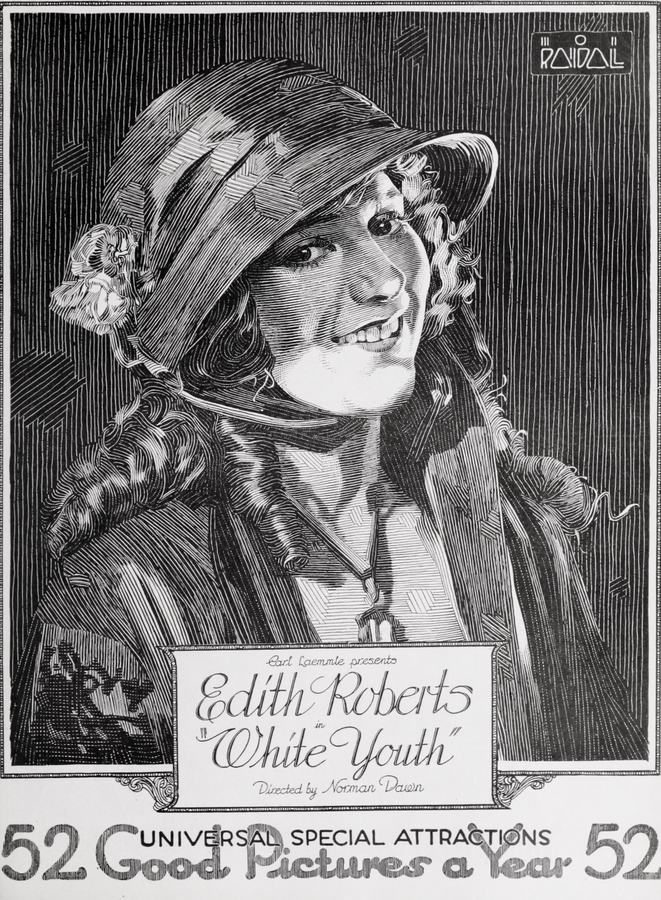
Ah, the silent era! A time when stories unfolded through gesture, expression, and the sheer power of narrative, often with a theatrical flair that modern cinema sometimes struggles to recapture. Among these gems, a film like 'White Youth' emerges, not just as a historical artifact, but as a vibrant, surprisingly modern exploration of agency, love, and the often-absurd machinations of patriarchal control. Penned by the collaborative genius of Clara Beranger, Forrest Halsey, and George C. Hull, this picture delivers a potent concoction of romance, rebellion, and a delightful dash of comedic irony that belies its dramatic setup.
From its very first frames, the film establishes a compelling dichotomy. We meet Aline Ann Belame, portrayed with a captivating blend of innocence and burgeoning spirit by Gertrude Pedlar. Her world, initially confined within the tranquil, predictable walls of a convent, is suddenly, dramatically upended by a missive from a grandfather she’s never known, General Belame. This letter, a harbinger of a new life, promises a home, a family, and, most significantly, a husband chosen by the General himself. For a young woman of her background, this proposition likely felt like a grand adventure, a release into a world she’d only dreamed of. The prospect of an arranged marriage, while perhaps jarring to contemporary sensibilities, was a common societal norm, often viewed as a pragmatic pathway to security and status.
The journey to the General’s sprawling plantation is imbued with Aline's buoyant anticipation, a sentiment that rapidly dissipates upon her arrival. The grand reveal of her intended, Monsieur Cayetane, is a masterstroke of dramatic deflation. Instead of the dashing figure a young woman might envision, Cayetane is presented as a withered, aged man, a stark contrast to Aline's youthful vitality. It’s a moment that resonates with a quiet, yet profound, horror. The dream of domestic bliss, of a loving companion, shatters against the harsh rock of reality. This pivotal scene, handled with a delicate touch, showcases the film's ability to convey deep emotional shifts without a single spoken word. Aline's refusal of the match is not merely an act of defiance but a primal assertion of self, a refusal to be a pawn in her grandfather's dynastic games. One might draw parallels here to films like The Seven Sisters, where similar societal pressures and the expectations placed upon young women to marry for convenience, rather than love, often form the core of the narrative.
It is amidst this personal turmoil that another figure enters Aline’s orbit: Burton Striker. Thomas Jefferson, embodying Striker, brings a rugged, grounded presence that immediately contrasts with the aristocratic, yet sterile, atmosphere of the General’s estate. Striker, a craftsman installing a vault door on the General's wine cellar, represents a different kind of man – one of skill, independence, and an unspoken strength. His very profession, securing valuables, ironically sets the stage for him to become the protector of something far more precious: Aline’s heart and her freedom. Their blossoming romance is a classic tale of forbidden love, a passionate defiance against the rigidity of tradition. The film deftly portrays the stolen glances, the hushed conversations, and the growing intimacy between them, building a palpable sense of romantic tension that propels the narrative forward.
The inevitable discovery of their clandestine plans sets off a chain of events that culminate in a most unexpected duel. Monsieur Cayetane, his pride wounded and his patriarchal claim challenged, issues a challenge to Burton. Duels, a cinematic staple of the era, often symbolized a clash of honor, a dramatic resolution to intractable conflicts. However, 'White Youth' subverts this expectation with a stroke of brilliant, almost farcical, irony. Cayetane's bullet, rather than finding its mark in Burton, goes comically astray, shattering General Belame’s prized pipe. This moment is pure genius. The General, a man who had been prepared to sacrifice his granddaughter's happiness for tradition, is suddenly confronted with a trivial, yet deeply personal, loss. The broken pipe, a symbol of his comfort and perhaps his control, proves to be the catalyst for a sudden, pragmatic shift in his stance. This incident immediately brings to mind the kind of unexpected, almost slapstick, resolutions seen in films like Squabs and Squabbles, where the dramatic is often undercut by the absurd.
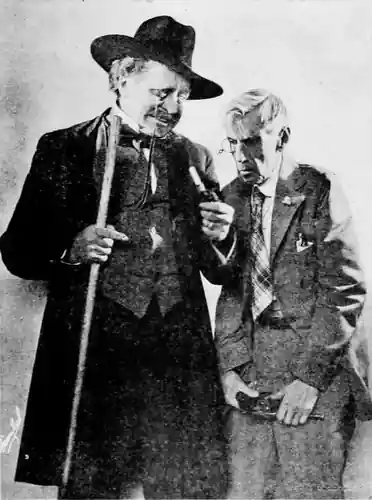
Prompted by this minor catastrophe, the General breaks his granddaughter’s engagement to Cayetane. A victory for love, one might think, but the General, ever the autocrat, still withholds his blessings for Aline and Burton's union. It is here that Burton Striker, the unassuming craftsman, reveals his true strategic prowess. He retaliates by withholding the combination to the newly installed vault. This is a brilliant narrative twist, elevating the conflict from a mere romantic entanglement to a subtle, yet powerful, battle of wills between the young, resourceful protagonist and the entrenched, authoritarian patriarch. The vault, initially a symbol of the General's wealth and security, transforms into a potent weapon in Burton's hands, a leverage point that perfectly encapsulates the shift in power dynamics. The General, faced with the prospect of his precious wine cellar being forever inaccessible, is forced to graciously concede defeat. It’s a resolution that champions intellect and ingenuity over brute force or inherited authority, a refreshing departure from typical romantic climaxes.
The performances throughout 'White Youth' are uniformly strong, a testament to the talent pool of the silent film era. Gertrude Pedlar's portrayal of Aline is particularly noteworthy. She navigates the character's arc from convent-bred naiveté to defiant womanhood with nuanced grace. Her expressions convey a full spectrum of emotions – the initial elation, the crushing disappointment, the tentative hope of new love, and finally, the steely resolve to fight for her own happiness. Thomas Jefferson, as Burton Striker, perfectly embodies the archetypal strong, silent hero, his actions speaking louder than any dialogue could. His quiet confidence and strategic mind make him a formidable, yet endearing, romantic lead. The supporting cast, including Phyllis Allen, Alida B. Jones, and Lucas C. Luke, contribute significantly to the film's rich tapestry, each bringing their characters to life with distinct mannerisms and presence, even in fleeting moments.
The screenplay, crafted by Clara Beranger, Forrest Halsey, and George C. Hull, is remarkably tight and well-structured. They masterfully build tension, introduce conflict, and deliver a satisfying, albeit unconventional, resolution. The pacing is excellent, allowing the emotional beats to land effectively while keeping the narrative momentum flowing. The writers understand the power of visual storytelling, relying on clear character motivations and actions to convey plot points and emotional states. This is a hallmark of truly effective silent filmmaking, where every gesture, every set piece, and every intertitle must contribute meaningfully to the overarching story. The film’s themes resonate beyond its historical context. The struggle for individual autonomy against societal expectations, the clash between tradition and modern desires, and the assertion of personal choice in matters of the heart are universal. In an era where women's roles were often rigidly defined, Aline's journey is a quiet, yet powerful, statement about female agency. This theme echoes in other films of the period, such as The Eternal Grind or Man's Woman, which often explored the challenges and triumphs of women navigating restrictive social landscapes.
From a technical perspective, while specific directorial credits are not always prominently highlighted for films of this vintage in the same way they are today, the visual composition and storytelling are effective. The use of close-ups to capture emotional nuances, the framing of scenes to emphasize power dynamics (e.g., General Belame often positioned above others), and the overall clarity of the narrative through visual cues speak to a thoughtful cinematic approach. The plantation setting provides a lush backdrop, contrasting with the emotional confinement Aline initially experiences. The costumes and sets, while perhaps not as grand as some epic productions, are entirely appropriate and help to immerse the viewer in the period.
What makes 'White Youth' truly stand out is its cleverness. It doesn't just present a straightforward romance; it injects wit and a subtle critique of old-world values. The resolution, where the General's pride is undone not by a grand act of heroism but by the inconvenience of an inaccessible wine cellar, is a wonderfully human touch. It suggests that even the most formidable figures can be swayed by practical considerations, and that sometimes, the most effective forms of rebellion are not violent but strategic and intelligent. This kind of nuanced resolution is often missing in more melodramatic fare and gives the film a lasting charm.
In conclusion, 'White Youth' is far more than a simple silent film romance. It’s a compelling narrative woven with threads of defiance, wit, and unexpected turns. It challenges expectations, celebrates individual choice, and delivers a satisfying conclusion that is both emotionally resonant and refreshingly clever. For those who appreciate the artistry of early cinema and stories that champion the human spirit, this film is an absolute must-see. It reminds us that even in an era without spoken dialogue, powerful stories can be told with enduring impact, proving that the language of cinema is truly universal and timeless. It’s a captivating piece that continues to engage and entertain, a testament to the enduring power of classic storytelling.
IMDb 5
1918
Community
Log in to comment.