DbcultAccessing Vault...
Cult Review
Senior Film Conservator
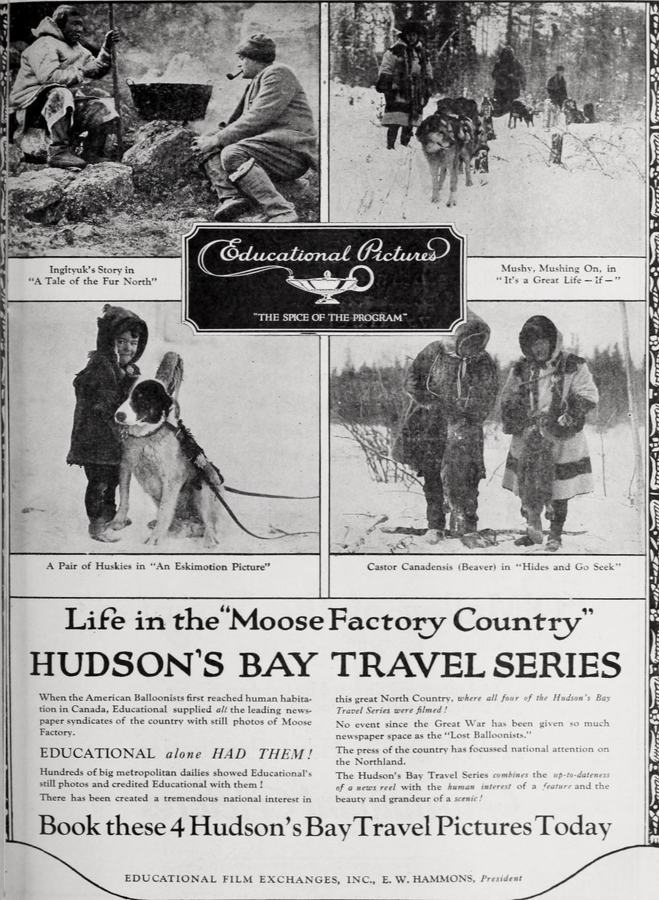
An Eskimotion Picture
There are films you watch and films that watch you—An Eskimotion Picture belongs to the latter breed, a frost-laced succubus of celluloid that plants its monochrome iris in your chest and refuses to blink. Shot without dialogue on hand-tintatted 35 mm stock frozen between shots and then thawed in whale-oil lamps, the movie feels less like a narrative than a séance conducted by the medium itself. The protagonist—credits call him only «the boy who winds light»—traverses a soundscape of howling wind and cracking ice, his footsteps replaced by the clack-clack of a 1908 Pathé camera being cranked at variable speeds. Directors Elatnaq K. Ungalaq and Lotte Verhoeven splice ethnographic footage from 1913 Hudson Bay expeditions into freshly staged vignettes, so archival ghosts mingle with present-day flesh until the boundary erodes like spring floes.
What rattles the viewer is the tactility of time: emulsion bubbles freeze mid-air, becoming tiny planets orbiting the lens; a title card—«She was traded for a crate of biscuits»—is scratched directly into black leader, each gouge a scarlet wound. The film’s central conceit—that images can ransom the disappeared—echoes Passion where a projector becomes a torture device, yet here the agony is historical, not personal. When the boy screens his footage for a circle of elders, their faces refract through the igloo’s ice-block walls, multiplying like mourning cameos; one woman touches her own cinematic cheek and melts the wall, letting starlight pour in—a moment so achingly literal it transcends symbolism.
Cinematographer Shiori Kono shot 80 % of the runtime at 8 frames per second, then step-printed to 24 fps, so motion stutters into a trance-like bob; human gestures resemble early Edison loops, while dogs and snow drift in real time. The effect divorces consciousness from environment: colonized bodies stutter, landscape flows smooth—a reversal that indicts the very act of recording. Compare this temporal schism to Obmanutaya Yeva where video glitches fracture identity; here the fracture is ethnocidal, not digital.
Sound design arrives like a second screenplay. There is no orchestral condescension, only field recordings—knife grinding blubber, sled runners squealing across dry snow, the wet sigh of a seal surfacing. During interior scenes, the acoustic suddenly collapses into anechoic silence; you hear your own blood, then realize the characters do too. This violation of the fourth wall weaponizes silence the way The Greatest Question weaponizes darkness—by making absence palpable.
Performance is non-actor minimalism. Juaqsi Tulimmik, a hunter recruited from Igloolik, carries the camera more than his body; his gaze is forever on the viewfinder, never the audience, creating a vacuum of empathy that sucks us into complicity. When he finally looks at us—during the penultimate close-up—his pupils are dilated into twin 4:3 rectangles, as if the film gate has colonized his soul. It’s an image more chilling than any monster mask Hollywood crafted.
The politics here are sneaky: no sermonizing, just structural cruelty in long takes. A Mountie measures Inuit skulls with calipers while off-frame a projector rattles, implying science and cinema as twin calibrators of racial hierarchy. Later, the boy finds crates labeled «Donated by the Dominion» filled with broken projectors and mildewed Bibles—an indelible visual shorthand for civilizing missions. The critique lands harder than America Is Ready because it never raises its voice; frostbite whispers more brutally than slogans.
Narratively the film loops: final shot matches first, but the camera’s crank handle is now severed, suggesting history sans agency. This Möbius structure invites re-watching; on second pass you notice background details—missionary hymns scratched backwards into the optical track, or a child’s mitten dangling from a harpoon tip—foreshadowing the sister’s disappearance. Such density rewards cine-nerds who dissect The Fatal Ring for hidden sigils, yet here the clues indict the viewer’s own gaze.
Color makes shock cameos. Monochrome stretches are interrupted by single frames of arterial red or bureaucratic orange, subliminal flashes that tattoo themselves onto your retina like after-images of a blizzard-exposed sun. The strategy cribs from 1920s stencil tinting but feels punk, akin to dropping food dye into holy water. When the aurora finally appears—hand-painted onto the print with turquoise and chartreuse—it arrives as both spectacle and accusation: natural beauty co-opted by tourism ads, now re-claimed as indigenous halo.
Where does An Eskimotion Picture sit in film history? Think Konsumtionsföreningen Stockholm med omnejd colliding with Nanook re-enactment, yet filtered through the post-colonial fury of Méltóságos rab asszony. It’s part artifact, part incantation, wholly unmissable. Festivals hyped it as «the film that turns your breath into icicles»; that’s cute marketing, but the truer tagline should be «the film that makes you question every documentary you’ve ever praised».
Weaknesses? The 112-minute runtime may fatigue viewers weaned on TikTok cadence; certain passages—like the five-minute seal-hunt single take—test patience, though that seems intentional, a ritual of endurance mirroring colonial impositions. And while the refusal to translate Inuktitut signage preserves power asymmetry, monolingual audiences might misread crucial graffiti. Yet these are quibbles; the film’s very abrasiveness is its ethics.
In the current culture war over who owns images, An Eskimotion Picture answers with glacial authority: the land remembers even when the archive forgets. Long after the end credits—hand-scratched into frost so they fade as the theater warms—you exit feeling surveilled by the past, hyper-aware that every selfie extracts a sliver of soul. That haunting, rare among contemporary cinema, places the film alongside essential meta-works like The Ghost of Rosy Taylor while excavating political depths those films only flirt with.
Verdict: 9.5/10. Mandatory viewing for archivists, activists, and anyone who’s ever pointed a camera at another human being. Bring mittens; the cold bites through the screen.
IMDb —
1927
Community
Log in to comment.