DbcultAccessing Vault...
Cult Review
Senior Film Conservator
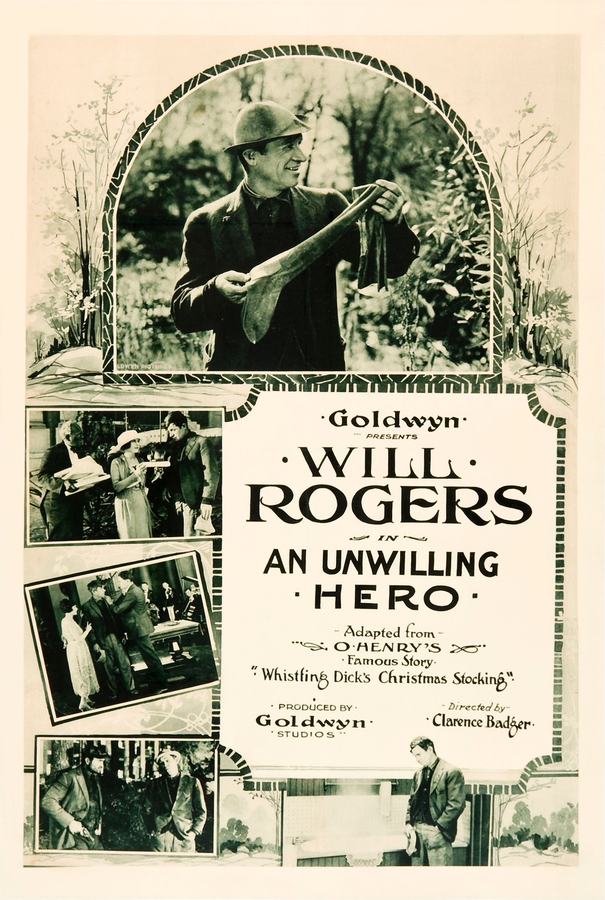
The Melancholic Whistle and the Cracked Facade of Decency
An Unwilling Hero (1927) is a masterclass in cinematic irony, where the line between heroism and absurdity blurs under the glow of Christmas lights.
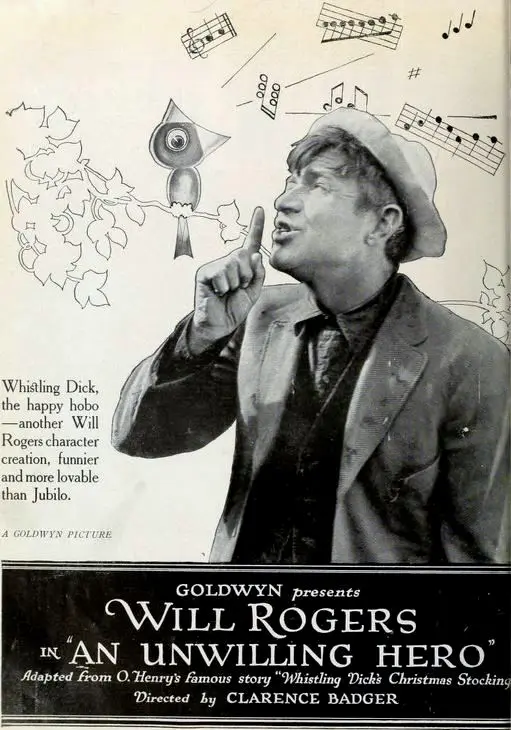
Arthur F. Statter and O. Henry’s screenplay, adapted for the screen, is a labyrinth of contradictions. The Lovejoy plantation, with its gilded excess and superficial warmth, becomes a metaphor for the moral rot festering beneath New Orleans’ antebellum veneer. Whistling Dick, portrayed with gruff vulnerability by Richard Johnson, is the perfect anti-hero—a man whose identity is defined by his whistles, which mimic classical compositions but sound hollow in the context of his hobo existence. His arrival disrupts the plantation’s scripted social order, much like the sudden intrusion of a jazzy riff into a symphony’s solemnity.
Edward Kimball’s Richmond, the suitor-turned-villain, is a study in performative charm. His manipulation of Nadine, the ingenue played by Molly Malone, and his alliance with the hobo gang are calculated with the precision of a carnival barker. Yet, it’s Dick’s accidental discovery of the stockings—a gift he believes to be a pipe—that becomes the linchpin of the film’s moral architecture. The stockings, symbolic of both temptation and exposure, are transformed by Dick into a tool of silent protest, their red threads mirroring the film’s undercurrent of blood and sacrifice.
Leo Willis’s Hunter, the overseer, embodies the conflicted conscience of the era. His attraction to Nadine and his loyalty to the Lovejoys are rendered in subtle glances and taut silences, a testament to the film’s restraint in dialogue. The Christmas dinner party, where the stocking message lands on the table, is a crescendo of tension. The scene’s beauty lies in its quietness: the clink of glasses, the flicker of candlelight, and the sudden stillness as the family reads Dick’s warning.
Color, Costume, and the Theater of Disguise
The film’s visual language is as subversive as its narrative, using contrasts to underscore its themes.
Director Statter employs chiaroscuro with startling effect. The hobo camp, bathed in the amber glow of a dying fire, contrasts sharply with the Lovejoy’s mansion, where every surface is polished to a sterile sheen. Dick’s patched coat, a canvas of mended rags, becomes a symbol of resilience in a world obsessed with appearance. When he’s given new clothes—a suit that hangs awkwardly on his wiry frame—it’s a mockery of social ascension, highlighting the absurdity of identity as performance.
Jack Curtis’s cinematography is a marvel of economy. The close-ups of Dick’s fingers, calloused and stained, as he opens the mysterious package, are loaded with dread. The wide shots of the plantation, sprawling and indifferent, dwarf the characters, emphasizing their insignificance in the grander scheme of corruption. The use of shadow is particularly potent in the abduction scene, where the gang’s faces are half-hidden in darkness, their intentions cloaked in ambiguity.
Music, too, plays a pivotal role. Dick’s whistles, rendered in the film’s soundtrack with eerie fidelity, are both a motif of loneliness and a counterpoint to the plantation’s grandeur. The Christmas carols played at the dinner party are undercut by the ticking clock on the heist, creating a dissonance that mirrors the characters’ inner turmoil.
Anchoring the Narrative: The Unseen Conspiracies of Class and Gender
The film’s subtext is a scathing critique of the power structures that perpetuate exploitation and silence the marginalized.
Nadine, as both the romantic interest and the moral compass, is a paradox. Her interactions with Hunter and Richmond are tinged with a naivety that feels performative, as if she’s playing a role in a play written by men. Yet, in the final act, her gratitude toward Dick is genuine, a rare moment of agency in a film otherwise dominated by male scheming. The stockings, as a gift from the suitor to the hobo, invert traditional gender roles, suggesting that vulnerability can be a source of power.
The hobo gang, a motley crew played by Larry Fisher, Will Rogers, and John Bowers, are rendered in broad strokes of caricature, their accents and mannerisms exaggerated for comedic effect. However, their marginalization is never romanticized. They are victims of the system they seek to exploit, a tragic irony that underscores the film’s critique of cyclical violence. Their abduction of Dick, while ostensibly a plot device, is a moment of brutal realism—a reminder that the disenfranchised often turn on their own.
Compare this to the more overtly political *Within the Law* (1932) or the romantic idealism of *A Perfect Lady* (1932), and *An Unwilling Hero* stands out for its nuanced ambiguity. It is neither didactic nor cynical, but a meditation on the futility of heroism in a world where redemption is always provisional.
Cinematic Legacy and the Echoes of O. Henry
The film’s enduring relevance lies in its ability to balance cynicism with hope, a hallmark of O. Henry’s short stories.
Adapted from O. Henry’s original work, the script retains the author’s signature twist endings, but Statter’s direction tempers them with a sense of melancholy. The final shot of Dick walking away, his figure a silhouette against the dawn, is a visual echo of the hobo’s eternal return—a man forever on the road, neither hero nor villain, but a witness to the absurdity of human schemes.
The film’s influence can be traced in later works like *The Price of Redemption* (1940), which similarly explores the moral ambiguities of altruism. Yet *An Unwilling Hero* remains unique in its commitment to subtext over spectacle, its reliance on understated performances over grand gestures. For modern audiences, it offers a refreshing counterpoint to the hyper-stylized narratives of the current era, a reminder that simplicity, when executed with precision, can be as powerful as any CGI spectacle.
In conclusion, *An Unwilling Hero* is a film that rewards repeated viewings, its layers of irony and symbolism unfolding with each watch. Whether you’re drawn to its social commentary, its visual poetry, or the quiet grace of Richard Johnson’s performance, it is a testament to the enduring power of cinema to reflect, critique, and uplift.
IMDb —
1923
Community
Log in to comment.