DbcultAccessing Vault...
6.1/10
Senior Film Conservator
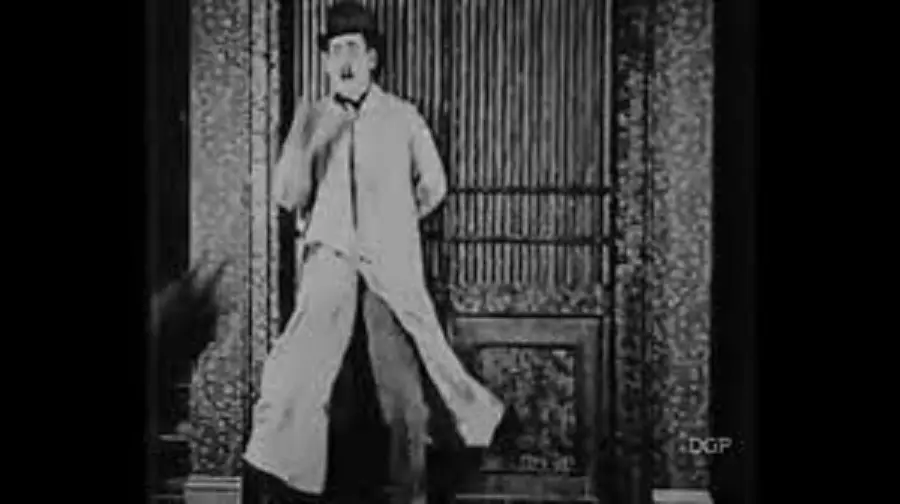
A definitive 6.1/10 rating for a film that redefined the boundaries of cult cinema. Watch Your Wife remains a cornerstone of transgressive art.
The year 1921 stands as a pivotal meridian in the evolution of the American short comedy. Amidst the burgeoning industrialization of the Hollywood studio system, the Hal Roach factory was refining a specific brand of kinetic storytelling that prioritized physical geometry over mere narrative exposition. Watch Your Wife, starring the perpetually underrated James Parrott, serves as a quintessential specimen of this era. It is a film that weaponizes the concept of the 'unseen' to generate a palpable sense of domestic vertigo. While contemporary audiences might view the premise of a husband hiring a detective to shadow his spouse as an archaic relic of patriarchal insecurity, the film cleverly subverts these stakes by pivoting into a realm of pure, unadulterated absurdity.
James Parrott, performing under his 'Paul Parrott' persona, brings a unique, rubber-limbed desperation to the role of the investigator. Unlike the more stoic or pathologically driven characters seen in The North Wind's Malice, Parrott’s Paul is a creature of immediate reaction. He is a man caught in the cogs of a machine he doesn't fully understand, making him the perfect vessel for a story about mistaken identities and the illusory nature of guilt. The film’s opening movements are deceptively slow, establishing a rhythm that mirrors the mundane surveillance it purports to document, only to shatter that calm with the sudden, jarring return of the husband.
One cannot discuss this era of comedy without acknowledging the luminous presence of Jobyna Ralston. Often remembered as Harold Lloyd’s quintessential leading lady, Ralston’s work in this short demonstrates her innate ability to anchor a scene with genuine human emotion amidst the surrounding slapstick carnage. In Watch Your Wife, she represents the eye of the hurricane. Her performance is a masterclass in reactionary acting; she isn't just a prop for the men to fight over, but a character whose perceived 'aloneness' is the very catalyst for the film's structural collapse. Her presence offers a stark contrast to the more melodramatic presentations found in films like The One Woman, where female agency is often buried under layers of moralizing Victorian prose.
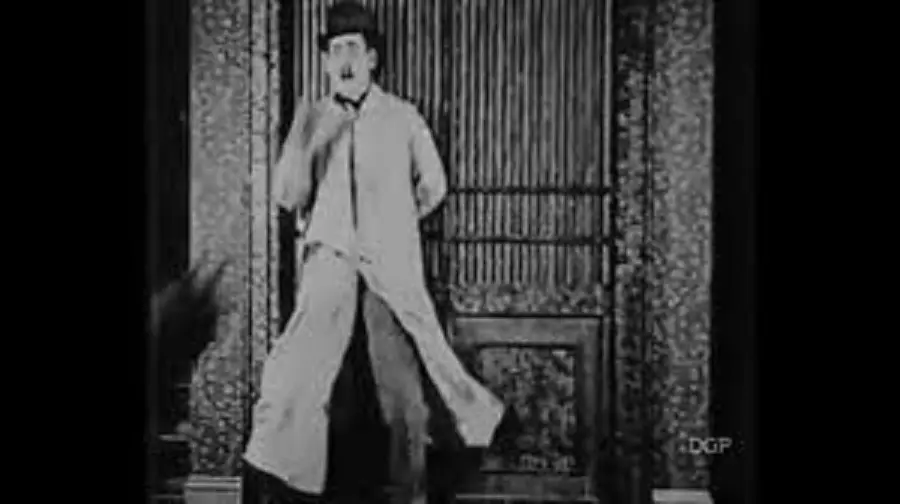
The supporting cast, featuring stalwarts like George Rowe and Eddie Baker, operates with the precision of a Swiss watch. These actors were the backbone of the Roach lot, capable of executing complex physical gags with a nonchalance that belied the danger involved. The interaction between Parrott and the husband—played with a wonderful, simmering intensity—creates a friction that fuels the film’s second half. When the two men finally collide, the film transcends its domestic drama roots and enters the territory of the 'thrill comedy,' a genre perhaps best exemplified by the high-speed antics of Burn 'Em Up Barnes.
The brilliance of Watch Your Wife lies in its central conceit: the hunt for a man who does not exist. This existential twist elevates the film above the standard 'husband-wife-lover' triangle tropes seen in contemporary works like The Sex Lure or the more whimsical The Love Trail. By having the protagonist and the antagonist mistake each other for the 'mysterious stranger,' the narrative explores the fallibility of human perception. It is a cinematic manifestation of the 'Othello syndrome,' where the evidence is manufactured by the observer's own bias.
The chase sequence that dominates the final act is a marvel of spatial editing. The characters move through the domestic space—and eventually the exterior world—with a fluidity that suggests a choreographed dance. This isn't just running for the sake of movement; it is a frantic search for a truth that remains perpetually out of reach. The pacing here is reminiscent of the rhythmic intensity found in Throbs and Thrills, yet it maintains a groundedness that keeps the stakes feeling personal. The use of the environment—doors, windows, fences—as obstacles creates a visual language of entrapment that mirrors the characters' mental states.
Technically, the film utilizes the flat, high-key lighting typical of early 1920s comedies, yet there is a sophistication in the framing that points toward the future. The camera placements during the surveillance scenes create a sense of voyeurism that is surprisingly modern. Unlike the static, stage-like presentations of L'Arlésienne, there is a dynamic energy in how the frames are composed to allow for sudden entrances and exits. This 'in-and-out' comedy requires a level of directorial precision that is often overlooked in silent shorts.
The editing, likely handled by the Roach house editors, is sharp and unforgiving. There is no wasted space. Every cut serves to heighten the confusion of the characters while maintaining total clarity for the audience. This irony—the audience knowing everything while the characters know nothing—is the engine of the farce. It’s a technique that was being refined in various ways across the globe, from the Danish sensibilities of Balleteusens hævn to the more somber, atmospheric depths of Der Teufelswalzer. However, Roach’s team mastered the 'American' style of comedy: fast, punchy, and relentlessly optimistic even in its chaos.
When placing Watch Your Wife alongside its peers, its unique blend of domestic paranoia and physical comedy becomes even more apparent. While The Fighting Lover deals with romantic rivalry through a more traditional heroic lens, Parrott’s film chooses to mock the very idea of the hero. Paul is not a savior; he is a bumbling catalyst for disaster. Similarly, where The Lottery Man uses a high-concept premise to drive its plot, Watch Your Wife finds its humor in the most mundane of situations: a husband coming home early.
Even when compared to the more 'serious' cinematic efforts of the time, such as the epic scale of The Battle of Jutland or the nautical tension of Breakers Ahead, there is a technical rigor in the comedy that demands respect. The timing required to make a 'mistaken identity' chase work is arguably more complex than the broad strokes of a historical reenactment. The film also shares a certain DNA with the 'youthful investigation' subgenre seen in Young Sherlocks, though it swaps the childhood innocence for adult cynicism and marital anxiety.
As the film reaches its conclusion, with the exhaustive explanation that the 'stranger' was a figment of mutual misunderstanding, the audience is left with a profound sense of the era's social anxieties. The 1920s was a time of shifting domestic roles, and Watch Your Wife captures that unease with a laugh. It’s a film that doesn't just want to entertain; it wants to show us the absurdity of our own suspicions. It’s much lighter than the cynical 'pet' culture explored in Ladies' Pets, yet it carries a sharp edge.
Ultimately, James Parrott's performance remains the film's greatest asset. His ability to convey a spectrum of emotion—from smug confidence to sheer terror—without a single spoken word is a testament to the power of the silent medium. Watch Your Wife is not just a footnote in the Roach filmography; it is a vibrant, breathing example of how comedy can turn the mirror on the viewer, asking us to laugh at the phantoms we create in our own lives. It is a masterclass in the economy of storytelling, proving that with a simple premise and a talented cast, one can create a timeless piece of art that resonates across a century.
A definitive 8/10 for any connoisseur of silent-era kineticism.
IMDb 7.4
1918
Community
Log in to comment.