DbcultAccessing Vault...
Cult Review
Senior Film Conservator
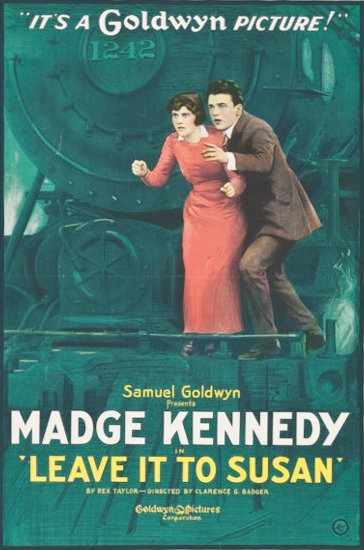
Stepping back into the cinematic landscape of 1919, one encounters a fascinating array of narratives, many of which grappled with the evolving social dynamics of a nation rapidly modernizing. Amidst this vibrant tapestry, 'Leave It to Susan' emerges as a particularly spirited entry, a film that, at its core, delights in upending expectations. It's a testament to the era's burgeoning creativity, delivering a story that, while seemingly straightforward on the surface, reveals layers of character and comedic ingenuity upon closer inspection. This isn't just another tale of a damsel in distress; it's a vibrant exploration of agency, wit, and the delightful chaos that ensues when an unyielding personality collides with an unsuspecting world.
The premise, crafted by the astute minds of Irma Taylor and Rex Taylor, is deceptively simple: Susan, a young woman of considerable means from the East, finds her carefully planned journey westward spectacularly derailed. A mishap, a momentary separation from her train, propels her from the relative safety of a passenger car into the perilous, untamed expanse of the American West. Here, she becomes an unwitting captive of a gang of bandits, a scenario that, in many other films of the period, would swiftly descend into predictable melodrama. Yet, 'Leave It to Susan' veers sharply from this well-trodden path. The bandits, expecting an easy mark, a fragile flower to be intimidated and exploited, are instead confronted with a force of nature in a silk dress. This fundamental miscalculation forms the comedic and narrative backbone of the entire picture, transforming a potentially grim situation into a lively battle of wills.
At the heart of 'Leave It to Susan' is the effervescent Madge Kennedy, whose portrayal of the titular Susan is nothing short of captivating. Kennedy, a prominent star of the silent era, brings a vivacity and intelligence to the role that elevates it far beyond mere caricature. She doesn't play Susan as a helpless victim; rather, she imbues her with an innate resilience, a quick wit, and an almost audacious self-possession that is both charming and formidable. One can see why the bandits are so utterly flummoxed by her. Her Susan is not merely surviving; she's actively engaging with her predicament, turning the tables, and subtly, yet effectively, orchestrating her own destiny. This portrayal is a masterclass in silent film acting, where facial expressions, body language, and subtle gestures convey a wealth of emotion and intention. Kennedy's ability to command the screen, even without uttering a single word, is truly remarkable, solidifying her status as a compelling leading lady of her time.
Her performance is a delightful counterpoint to the rough-and-tumble world of the bandits. Instead of cowering, Susan observes, analyzes, and, most importantly, acts. Whether she's subtly sowing discord among her captors or finding ingenious ways to communicate her plight, Kennedy's Susan is always one step ahead, or at least, refusing to be two steps behind. This spirited defiance echoes similar themes of female agency seen in contemporary films like 'The Spreading Dawn' or even the episodic adventures of 'Beatrice Fairfax Episode 13: The Ringer', where strong female characters navigate complex situations with their intellect and courage. Kennedy's Susan is a proto-feminist icon, perhaps without explicitly intending to be, simply by virtue of her refusal to be defined by her circumstances or by the expectations of her male captors.
While Kennedy shines brightest, the supporting cast provides a sturdy and often humorous foundation for the narrative. The bandits, portrayed by actors like Walter Cameron, Tom London, and Bill Patton, are not simply faceless antagonists. Each brings a distinct flavor to their role, from the gruff leader to the bumbling henchman. Their collective bewilderment at Susan's presence is a running gag that never wears thin, highlighting the excellent comedic timing inherent in the direction. Anna Dodge and Walter Hiers, though perhaps in less prominent roles, contribute to the broader tapestry of characters, grounding the film in its period setting.
The dynamic between Susan and her captors is particularly engaging. It's not a purely adversarial relationship; hints of grudging respect, exasperated tolerance, and even a touch of paternalistic concern occasionally surface from the bandits. This nuanced portrayal prevents the film from becoming a simplistic good-versus-evil confrontation, instead leaning into the more interesting territory of human interaction under duress. One might draw a parallel to the nuanced portrayals of outlaws and their unexpected interactions in films like 'The Vigilantes', though 'Leave It to Susan' injects a far greater dose of levity into its proceedings. The casting choices, from the stern countenances of the bandit leaders to the more expressive faces of their underlings, were clearly made with an eye for dramatic range and comedic potential.
The direction, while not attributed in the provided details, deftly navigates the film's comedic and adventurous elements. The pacing is brisk, a common characteristic of silent films designed to hold the audience's attention without the benefit of spoken dialogue. Scenes transition smoothly, building suspense and comedic tension effectively. The use of intertitles is judicious, providing necessary exposition and character dialogue without overwhelming the visual storytelling. The cinematography captures the stark beauty and potential dangers of the Western landscape, contrasting it sharply with Susan's refined Eastern sensibilities. The visual language of the film is articulate, allowing the actors' performances and the unfolding events to speak volumes.
One notices a particular skill in how the film establishes Susan's intelligence and adaptability. Rather than relying on overt declarations, the narrative shows her problem-solving in action. This 'show, don't tell' approach is a hallmark of good silent filmmaking, and 'Leave It to Susan' employs it to great effect. The escalating series of predicaments and Susan's increasingly clever responses create a satisfying dramatic arc. The film avoids sluggish moments, maintaining a lively tempo that keeps the viewer invested in Susan's fate and the bandits' growing consternation. This energetic storytelling distinguishes it from some of its more plodding contemporaries, ensuring its enduring watchability.
Beyond its surface-level adventure and comedy, 'Leave It to Susan' subtly explores several compelling themes pertinent to its era. The most obvious is the clash of cultures: the refined, educated East meeting the rugged, lawless West. Susan's wealth and upbringing, initially perceived as vulnerabilities, quickly become assets. Her sophisticated understanding of human nature, her social graces, and even her sheer stubbornness are tools she wields with surprising efficacy against her less refined captors. This dynamic is reminiscent of other 'fish out of water' narratives, where an outsider's perspective exposes the absurdities or weaknesses of an established order. One might consider the societal critiques present in films like 'Rich Man, Poor Man', which, while different in tone, also delves into the stark contrasts between different social strata.
Furthermore, the film offers a nuanced perspective on gender roles. Susan is not merely a passive object of male desire or protection; she is an active agent in her own rescue and, arguably, in the eventual humbling of her captors. Her character challenges the patriarchal assumptions prevalent in many narratives of the time. She embodies a nascent form of female empowerment, demonstrating that strength and intelligence are not exclusive to one gender. This portrayal aligns with a broader cultural shift, as women were increasingly asserting their independence in various spheres of life, a theme occasionally explored in films like 'Mary Moreland', which also featured strong female protagonists navigating societal challenges. Susan's journey is not just a physical one across the country, but a symbolic one, traversing the boundaries of expected female behavior.
The untamed frontier itself acts as a character, testing Susan's mettle and providing the backdrop for her transformation. It strips away the comforts and conventions of her Eastern life, forcing her to rely on her innate capabilities. This element of wilderness challenging civilization is a recurring motif in American cinema, and 'Leave It to Susan' uses it to highlight the resilience of the human spirit, especially when confronted with the unexpected.
For modern audiences, 'Leave It to Susan' offers more than just a glimpse into early 20th-century filmmaking. It provides a delightful and surprisingly fresh narrative that holds up well, thanks largely to Madge Kennedy's compelling performance and the sharp writing by Irma Taylor and Rex Taylor. The film's humor is often derived from character rather than slapstick, giving it a timeless quality. The escalating frustration of the bandits, contrasted with Susan's unwavering composure, is a comedic goldmine that transcends the decades.
In an era where many films focused on grand historical epics like 'The Spirit of '76' or dramatic morality plays such as 'The Devil's Needle', 'Leave It to Susan' chose a path of lighthearted adventure with a strong, intelligent female lead. It's a reminder that silent cinema was incredibly diverse, capable of producing sophisticated comedies and character studies alongside its more overt dramas. The film's ability to entertain, provoke thought about societal roles, and showcase stellar acting makes it a valuable watch for anyone interested in the foundational years of Hollywood.
The legacy of 'Leave It to Susan' lies in its quiet but firm assertion of female capability. Susan isn't a superhero, nor is she an overtly political figure. She is simply a woman who refuses to be intimidated, who uses her innate intelligence and social acumen to navigate a dangerous situation. Her journey is one of self-discovery and empowerment, wrapped in an entertaining package of Western adventure and comedic mishap. It's a film that leaves you with a smile, and a renewed appreciation for the often-underestimated power of a strong personality, proving that even a wealthy Easterner, accidentally separated from her train, can turn the tables on a gang of hardened bandits with nothing more than her wits and an unshakeable spirit.
Ultimately, 'Leave It to Susan' stands as a charming relic of its time, a film that, through its clever writing and outstanding lead performance, managed to inject a fresh perspective into established tropes. It’s a testament to the enduring appeal of a well-told story, executed with skill and a keen understanding of character. For those seeking to delve into the rich archives of silent cinema, this film is not merely a historical artifact but a genuinely enjoyable viewing experience that resonates even today.
IMDb —
1927
Community
Log in to comment.