DbcultAccessing Vault...
Cult Review
Senior Film Conservator
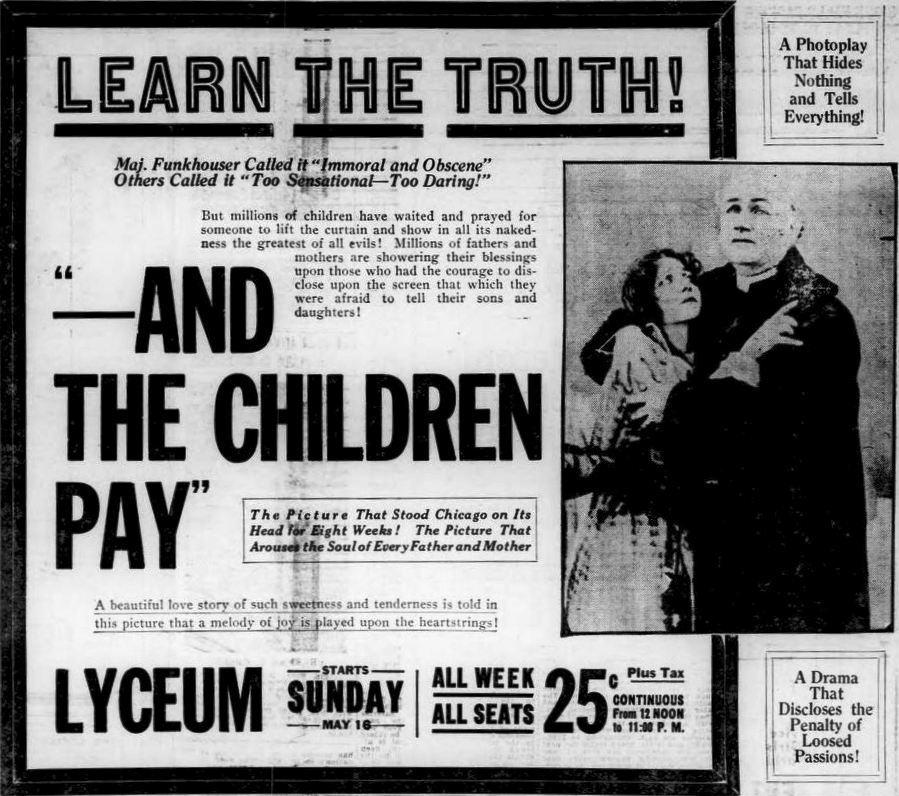
The silent film era, often dismissed as quaint or simplistic, frequently delivered narratives of profound moral complexity and searing social commentary. Among these, 'And the Children Pay' (1918) stands as a stark, uncompromising testament to the devastating ripple effects of patriarchal misguidance and societal hypocrisy. It’s a cinematic sermon, delivered not from a pulpit but through the stark, expressive visages of its players and the unfolding tragedy of its plot. The film doesn't merely tell a story; it dissects the very fabric of early 20th-century morality, exposing the brutal double standards imposed upon men and women, and the catastrophic consequences when innocence collides with calculated depravity.
At its core, the narrative is ignited by a father’s profoundly misguided act. William Clark, perhaps believing he is imparting some esoteric wisdom on the 'necessary evils' of life, sends his son, Billy, to a brothel on the eve of his departure for college. This scene, though brief, is the original sin of the narrative, a paternal endorsement of moral compromise that irrevocably taints Billy’s burgeoning manhood. It’s a chilling initiation, not into adulthood, but into a world where moral boundaries are fluid and consequences, selectively applied. This initial transgression sets a precedent for a life of casual cruelty and emotional negligence, laying the groundwork for the ensuing heartbreak that will ripple through multiple lives. The film immediately establishes a tone of somber realism, hinting at the societal permissiveness for male indiscretion that contrasts so sharply with the harsh judgment awaiting women.
Upon his return for Christmas holiday, Billy, having fallen in with a 'fast crowd' – a euphemism for a life of self-indulgence and moral laxity – encounters Margery Reynolds, his childhood sweetheart. Margery, depicted with an almost ethereal innocence by Bliss Milford, represents the purity and potential that Billy so carelessly squanders. The scene where he persuades her to drink wine, then takes the intoxicated girl to a hotel, is a masterclass in silent film's ability to convey profound violation without uttering a single word. The camera, one imagines, would linger on Margery's vulnerability, her trust betrayed by the very person she held dear. This act isn't merely a lapse in judgment; it’s a calculated exploitation, a direct consequence of the moral compass that his father so carelessly reset. It underscores the insidious nature of the lesson William Clark believed he was teaching, illustrating how the acceptance of 'necessary evils' can quickly devolve into the creation of unnecessary suffering. The film expertly crafts a sense of escalating dread, each choice building upon the last with an almost Greek tragic inevitability.
The immediate fallout for Margery is devastating and, crucially, solitary. Back at college, Billy refuses to marry the pregnant girl, demonstrating a callous disregard for the life he has irrevocably altered. Margery, unable to confide in her father, a minister, embodies the terrible isolation faced by women in such predicaments during this era. The minister, a figure of moral authority, becomes an ironic symbol of her inability to seek solace or justice within her own family. Her flight to Chicago, a city often portrayed in early cinema as a crucible of both opportunity and despair (not unlike the urban plight depicted in A Child of the Paris Streets), marks her descent into anonymity and hardship. The birth of her child, blind and crippled, is a moment of profound, almost biblical, tragedy. It's a visceral manifestation of the film's title, a stark visual metaphor for the innocent suffering the consequences of others' transgressions. This child's affliction is not merely a plot device; it serves as a relentless, physical reminder of Billy's moral bankruptcy and the societal structures that allowed him to evade accountability.
Margery's subsequent forced entry into prostitution to survive is the film’s most searing indictment of societal double standards. The very path William Clark introduced his son to as a 'necessary evil' becomes Margery's unavoidable hell. The fateful encounter where she recognizes Billy at a brothel is a moment of dramatic irony so potent it transcends the silent screen. It's a collision of worlds, a brutal mirroring of their respective trajectories. Billy's arrest and the meager $550 fine for child support highlight the paltry value society placed on a woman's ruined life and a child's welfare, especially when compared to the profound damage inflicted. The legal system, meant to uphold justice, is exposed as woefully inadequate, offering a slap on the wrist for a life-altering crime. This aspect of social critique resonates with the themes of injustice and exploitation found in films like Germinal; or, The Toll of Labor, which similarly explores the crushing weight of societal forces on the individual.
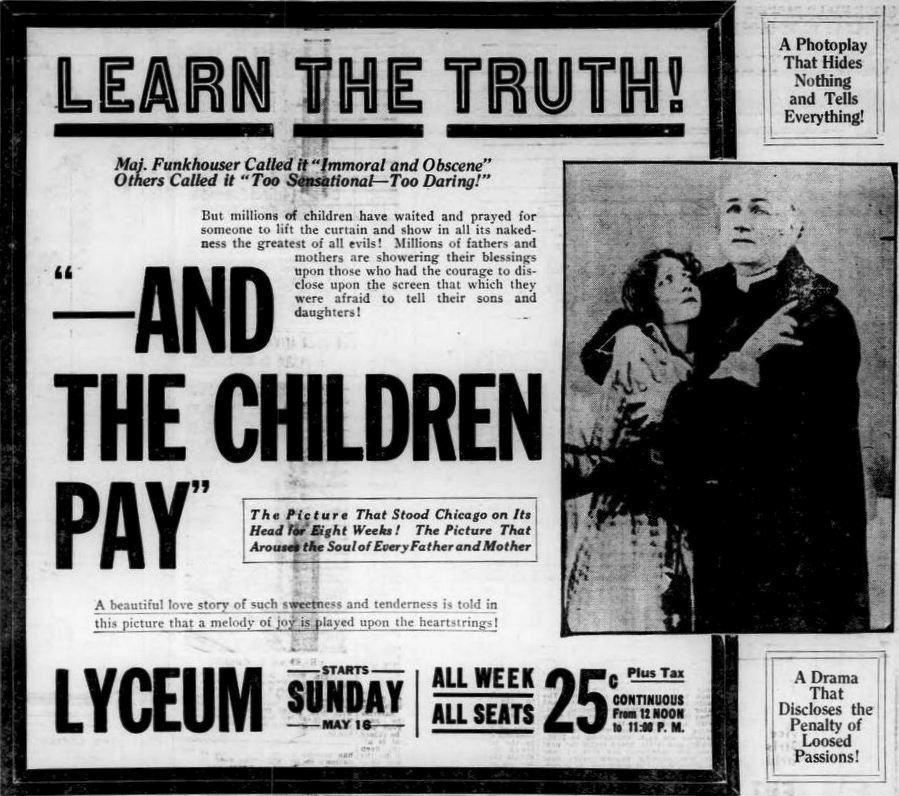
The baby's death in court, a moment of unbearable pathos, serves as a tragic release from a life of suffering, yet offers Billy a hollow, undeserved reprieve. For Margery, however, there is no such escape. She is taken to Kate Addams' Coulter House for 'fallen women,' an institution that, while perhaps offering shelter, simultaneously brands and segregates women who have deviated from rigid societal norms. This fate, a societal purgatory, stands in stark contrast to Billy's return home, where he faces no immediate social ostracization. The film implicitly critiques these institutions, not necessarily for their existence, but for the selective justice that funnels women into them while men often walk free. The portrayal of 'fallen women' was a common trope in silent cinema, explored in various forms, but 'And the Children Pay' imbues it with a particular bitterness, underscoring the lack of agency and choice for women like Margery.
The narrative then shifts to Billy's father, who, with an almost astonishing lack of introspection, attempts to salvage his son’s reputation through an arranged marriage. This act reveals the pervasive concern for appearances and social standing over genuine morality, a prevalent theme in many dramas of the era, where reputation often trumped character. However, the truth, as it always does in such morally charged dramas, refuses to remain buried. Rev. Reynolds, Margery's father, whose wife has tragically died of grief – a collateral casualty of Billy’s actions – learns of Billy's betrayal. His public denunciation from the altar is the film's climactic moment of moral reckoning. It is a powerful, cathartic explosion of righteous anger, shattering the carefully constructed facade of respectability. The image of a man of God, his personal tragedy fueling his public condemnation, would have resonated deeply with contemporary audiences, representing a societal conscience finally awakened. This scene is a powerful echo of the moral outrage found in other social dramas, where the truth eventually emerges, often with devastating consequences for the guilty party.
Billy, taken ill, dies in his mother's arms, a final, poignant scene that brings the cycle of suffering to a close, at least for him. His death is not presented as heroic or redemptive, but rather as the inevitable endpoint of a life built on moral compromise and the suffering of others. It’s a quiet, almost anticlimactic end for a character whose actions unleashed so much chaos, yet it serves as the ultimate fulfillment of the film's title. The children, indeed, pay – not just Margery's child, but Billy himself, and his mother, who watches her son’s life extinguish, a victim of his father’s initial folly and his own subsequent moral failings. This conclusion, while tragic, offers a form of poetic justice, ensuring that no one truly escapes the consequences of their actions, even if the scales of justice are heavily weighted against some.
The performances, particularly from Bliss Milford as Margery, must have been incredibly compelling, relying on nuanced facial expressions and body language to convey the profound emotional journey from innocence to despair. Gareth Hughes, as Billy, likely portrayed a blend of youthful recklessness and eventual, though perhaps too late, remorse. Ellen Mortemer as Billy's mother would have anchored the final scene with a sorrow that transcends dialogue, a universal image of maternal grief. The film, by avoiding explicit grandstanding, allows the narrative to speak for itself, relying on the audience's empathy and moral compass to interpret the unfolding tragedy. It’s a powerful example of how silent cinema, through its unique visual language, could tackle complex social issues with unflinching honesty.
Winifred Dunn's writing is particularly noteworthy for its unflinching portrayal of consequences. The narrative doesn't shy away from the brutal realities of its time, nor does it offer easy solutions or saccharine endings. Instead, it presents a stark reflection of a society grappling with changing moral landscapes, where the traditional roles of men and women were beginning to be questioned, albeit slowly and painfully. The film’s lasting resonance lies in its timeless themes: the corrupting influence of power and privilege, the vulnerability of the innocent, and the inescapable truth that actions, however small, can have monumental and tragic repercussions. It's a reminder that true justice often extends beyond legal rulings, encompassing the moral and emotional debts that accrue over a lifetime. This deep dive into human fallibility and societal failing makes 'And the Children Pay' a profound work, one that continues to provoke thought and discussion about personal responsibility and the systemic issues that perpetuate injustice.
In an era when films often served as moral parables, 'And the Children Pay' does not preach so much as it presents a meticulously constructed argument, allowing the audience to witness the devastating chain reaction initiated by a single, ill-conceived parental decision. It forces introspection, challenging viewers to consider their own roles in upholding or dismantling societal double standards. The film’s enduring power is a testament to its courage in confronting uncomfortable truths, solidifying its place as a significant work within the pantheon of early American cinema that dared to critique the very society it reflected. Its narrative echoes the somber realism found in other films exploring the darker facets of human nature and societal pressures, making it a compelling piece for historical and cinematic analysis. For those interested in the social dramas of the early 20th century, this film offers a sobering yet essential viewing experience, a testament to the enduring power of silent storytelling to convey profound human truths.
IMDb —
1920
Community
Log in to comment.