DbcultAccessing Vault...
Cult Review
Senior Film Conservator
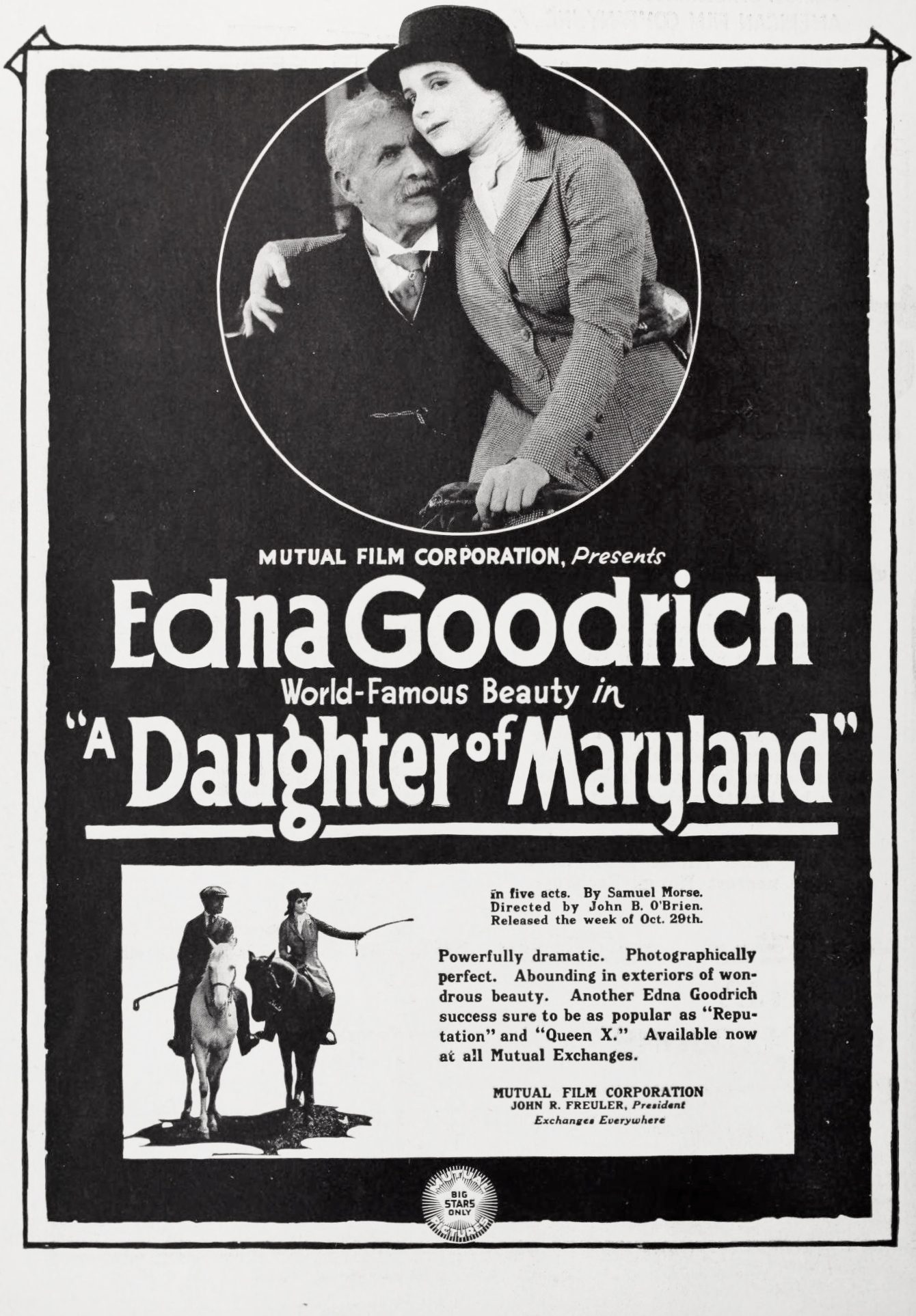
The first image Sam Morse and Joseph F. Poland hurl at us is a plantation façade dissolving into its own reflection on brackish water—an omen that everything solid in Daughter of Maryland will liquefy before reel five. Released in the bruised spring of 1917, while Europe cannibalized its youth and America teetered on the brink, this six-reel silent arrives like a dare: watch gentility cannibalize itself faster than any world war could.
Headland Hall is no Tara caricature; it is a wound gilded in stucco. Cinematographer Charles Martin lets the camera loiter on sagging porticoes where paint flakes drift like dandruff across the mise-en-scène. Each frame is marinated in rot, yet the rot is perversely photogenic—think East Lynne drained of Victorian piety and injected with Chesapeake humidity.
Enter John Standish—Frederick Truesdell plays him with the contained energy of a coiled surveyor’s tape. He wields a spade the way a poet fingers a stanza: every soil slice a rebuke to the agrarian myth. Watch him sketch parterres on vellum while Beth (Myra Brooks) watches from a balcony, her fan snapping shut like a guillotine. Their meet-hostile crackles because the film refuses soft-focus Cupid clichés; antagonism here is a contact sport played on terrain already salted by post-bellum resentment.
The hermit’s conflagration arrives at reel two, a blaze painted by double-exposure and crimson tinting. Haskell—played by Morgan Thorpe with the feral sorrow of a man who has misplaced God—becomes a scorched offering. Standish’s rescue is staged in one unbroken take: he vaults through flames, shirt crisping like parchment, muscles etched by guttering light. Martin’s camera then pirouettes 180 degrees to reveal Beth, skirts hitched, hair unloosed, crossing the gender Rubicon without a lantern. The moment she presses linen to Standish’s blistered shoulder, the film performs its most subversive alchemy: the belle becomes surgeon, the Yankee gardener turns sacramental body, and the South’s cult of fragile femininity is kneed in the groin.
Carlton Brickert’s Rippley deserves a place in the rogues’ gallery between Hargraves and the mustache-twirling banker of The Evil Thereof. He enters each scene as if tipped from a mold marked “seductive liability”: hair slicker than oyster liquor, smile a cracked porcelain affair. Yet the script gifts him a pulse—witness his panic when Dorothy recites Leviticus at him, her voice trembling like a chapel bell in a storm. The seduction sequence is shot through a warped mirror; Dorothy’s reflection elongates into a martyr, Rippley’s into gargoyle. Misogyny, the film whispers, is its own distorted glass.
Beth’s revenge—tricking Rippley into matrimony—could have played as drawing-room farce. Instead, Brooks plays it like a chess master who sacrifices her queen to expose the king. She offers Rippley a goblet, the camera lingering on her pulse thrumming at the throat: we half expect poison. What she serves is social arsenic—public matrimony, the one shackle a libertine cannot pick.
Major Treadway’s murder is framed in chiaroscuro that would make later noir cinematographers weep. Carleton’s patriarch dons night attire striped like prison bars—a sartorial death warrant. Rippley’s intrusion is shot from the safe’s perspective: the iron door yawns like a mausoleum, banknotes flapping like trapped ravens. The inkwell blow lands off-camera; we see only ink splattering across a portrait of Robert E. Lee, black seeping into gray eyes, the Old South literally defaced.
Subsequent sequences splice Expressionist shadows with Maryland fog. Rippley’s dash through the topiary maze becomes a mini Caligari: hedges loom like appellate judges, moonlight scrawls verdicts across his cheekbones. When Standish’s bullet finds him, the film cuts to the victim’s Panama hat spiraling into a koi pond—an aquatic full-stop that feels oddly elegiac, as though villainy itself were just another migrant returning to the primal soup.
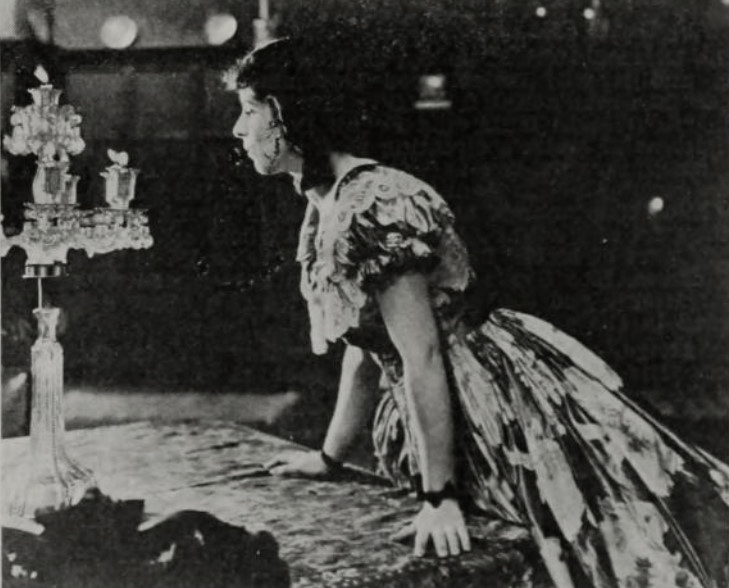
Myra Brooks, largely forgotten outside academic footnotes, gives Beth the ferocity of a meteor caught in corsetry. Watch her pupils dilate when she absorbs news of Dorothy’s ruin: the iris consumes the azure, a solar eclipse of empathy. She modulates between drawl and staccato—every syllable a barbed olive branch.
Frederick Truesdell’s Standish risks woodenness—he is, after all, a landscape architect in 1917. Yet he seeds reticence with flickers of thaw: a half-smile when Beth calls horticulture “Yankee vandalism,” a tremor in his gloved hand as he lights a cigarette beside the corpse. The performance is a masterclass in calibrated minimalism, the inverse of Brickert’s theatrical venality.
Among supporting players, Edna Goodrich’s Dorothy deserves plaudits for refusing victim cliché. Her final scene—refusing Rippley’s coffin-shrouded hand—plays like a muted feminist manifesto. She clutches not a Bible but a hymnal open to “Amazing Grace,” suggesting salvation is communal, not ecclesiastical.
Clocking barely 72 minutes at sound speed, the narrative sprints where contemporaries such as Beneath the Czar dawdle in vodka-soaked exposition. Morse and Poland prune subplot fat, trusting visual shorthand—e.g., Rippley’s gambling IOUs flutter from a breach-pocket like Morse code of damnation. Intertitles are sparse, aphoristic: “Debt is a ghost that pays no social calls.” The brevity courts modern pacing, yet preserves melodrama’s operatic highs.
Tinting alternates between cobalt night, amber lamplight, and crimson conflagration. The palette anticipates the symbolic color design of later European art films—think Pesn Torzhestvuyushchey Lyubvi but stripped of Soviet montage hysteria. The Chesapeake itself becomes character: fog rolls in like revenant armies, sunrise bleeds over tobacco fields like fiscal hemorrhage.
Post-Civil-War Maryland is a tinderbox: indentured servitude morphs into sharecrop penury, bellehood into speculative asset. Beth’s arc dramatizes the region’s vexed negotiation between patrician nostalgia and capitalist reckoning. By film’s end, she mounts no steed into Lost-Cause sunset; instead she strides toward a Northern rail depot, carpetbag stuffed with both land deeds and her dead aunt’s rosary—a fusion of fiduciary realism and sacramental memory.
Unlike A Bit o’ Heaven, where innocence is currency, or Miss Nobody, which punishes female ambition, Daughter of Maryland lets its heroine transgress, err, and still claim a future. Its moral cosmos is closer to Lone Star: violence refracts through regional identity, yet individual agency survives the crucible.
The courtroom coda—though brief—leans on coincidental pajama fiber, a deus ex fibra that undercuts the film’s forensic modernity. Also, the racial subtext is evasive: Black tenant farmers appear in backdrop, eyes averted, as if slavery’s ghost were banished by mere editing. One wishes for a Das Laster-level interrogation of systemic rot. Still, condemning a 1917 Southern production for timidity on race is like faulting a phonograph for not streaming Spotify.
Daughter of Maryland is a tarnished tiara dug from archive loam: imperfect, yes, but facets still glitter with subversive fire. It anticipates the Southern Gothic flares of Faulkner, the moral ambiguity of noir, the proto-feminist gauntlet hurled by post-war cinema. Seek it out if you crave pre-1920 storytelling that bruises as it beguiles. And when Beth Treadway, wind whipping her unbobbed hair, steps onto that northbound train, you’ll taste salt, smoke, and something dangerously akin to hope.
IMDb 6.4
1917
Community
Log in to comment.