DbcultAccessing Vault...
7.3/10
Senior Film Conservator
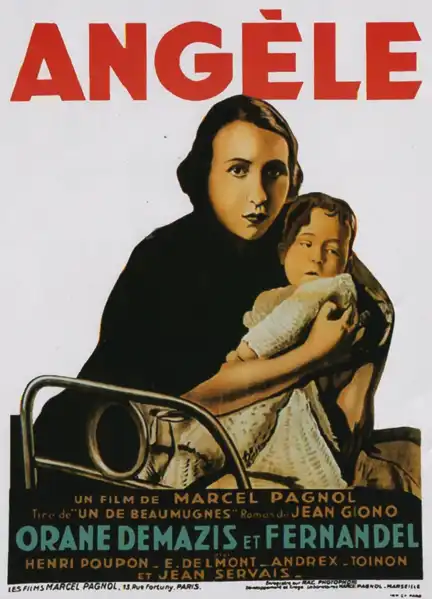
A definitive 7.3/10 rating for a film that redefined the boundaries of cult cinema. Angele remains a cornerstone of transgressive art.
Honestly, yes, but only if you have a long afternoon and a lot of patience.
If you like movies that feel like you’re eavesdropping on a family's private tragedy, you’ll love this. It's very raw.
If you hate old movies where people talk for ten minutes about a single piece of bread, stay far away. 🥖
I watched this last night on a whim and I'm still thinking about how quiet the farmhouse felt. It’s a Marcel Pagnol movie, so you know there’s going to be a lot of talking, but the silences are what got me.
So, Angele is this young girl living on a farm. She’s played by Orane Demazis, who has this very specific, slightly trembling voice that makes her seem even more fragile than she probably is.
She meets this guy from the city, and you can just tell he's trouble from the second he opens his mouth. He’s got that greasy city-slicker vibe that was a huge trope back then.
She runs off with him to Marseille. It’s not a spoiler to say it goes terribly because that's the whole point of the story.
She ends up working as a street-walker. The movie doesn't show much of that—it’s 1934, after all—but you can feel the grime of the city compared to the hills of Provence.
I usually think of Fernandel as a goofy guy with a big smile, like in some of his later comedies. But here, he plays Saturnin, the farm hand.
He is so loyal. It’s almost painful to watch how much he cares about Angele without ever really asking for anything in return.
There is this one scene where he goes to the city to find her. He’s standing in this dark hallway, and he looks so out of place with his big, honest face.
It’s way more moving than the stuff in A Blonde Dream. That movie is fine, but it doesn't have this kind of heart.
Saturnin is the one who basically rescues her. He doesn't judge her, which is more than you can say for her own father.
The dad, César, is played by Henri Poupon. He’s terrifying in a very quiet, stubborn way.
When Angele comes back with a baby, he doesn't hit her or scream. He just... hides her.
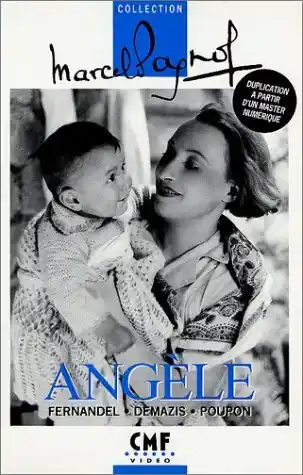
He puts her and the baby in the cellar so the neighbors won't see his shame. It’s incredibly dark if you think about it for more than a second.
The scenes in the cellar are some of the best in the movie. The lighting is all shadows and dust.
You can tell they didn't have a huge budget, but they used the shadows perfectly. It feels suffocating.
It reminds me of the social pressure you see in When a Girl Loves, but everything in Angele feels heavier because of the dirt and the farming tools everywhere.
One thing that felt weird was the pacing. The movie is nearly three hours long! 🕒
Some scenes just go on and on. There is a conversation between two of the men that feels like it was filmed in real-time without any edits.
But then, something happens—like a look between the mother and the daughter—and you’re sucked back in.
The mother is a very quiet character. She doesn't say much, but her eyes are always moving, checking to see if the husband is looking.
She’s the one who sneaks food to the cellar. It’s those small, human moments that make the movie work for me.
People say it is. I don't know if I'd go that far, but it's definitely something that stays with you.
It’s not a fun watch. It’s a bit of a slog in the middle if I'm being honest.
But the ending is... well, it’s not a happy ending, exactly. It’s more of a relief ending. Everything isn't fixed, but people are finally being honest with each other.
If you're tired of movies where everything is cleaned up and perfect, give this a shot. Just make sure you have a glass of wine ready. 🍷
I think I missed some of the slang because the Provence accent is so thick, even in the subtitles. But you get the gist of it from the way they wave their hands around.
Anyway, it's a good one. Just long. Very long.

IMDb 6.5
1929
Community
Log in to comment.