DbcultAccessing Vault...
Cult Review
Senior Film Conservator
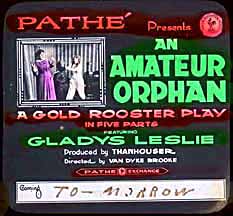
A lone iris-in glides across the screen and lands on a child’s eye—wide, unblinking, reflecting the chandeliers of a house that has never belonged to her. That first shot of An Amateur Orphan is a manifesto: the world will be viewed sideways, slantwise, through the prism of a girl who refuses the script written in cursive on monogrammed stationery. Director J. Searle Dawley, never a household name even in 1923, works here with the stealth of a watchmaker, arranging tiny gears of gesture and glance until the whole contraption ticks with emotional precision.
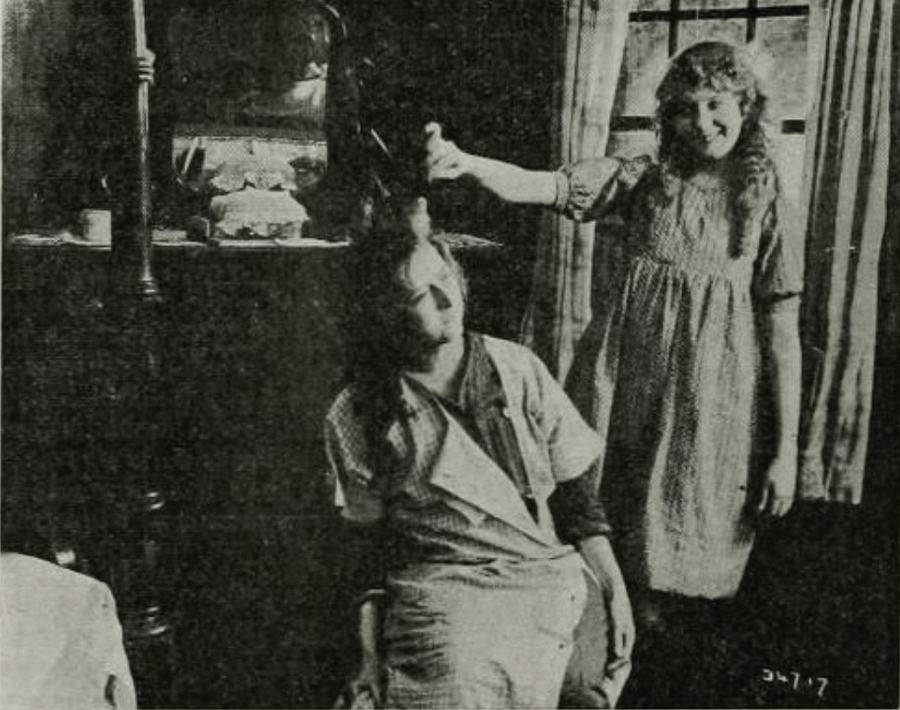
What sounds like a trite “prince-and-pauper” swap becomes, in Agnes Christine Johnston’s screenplay, a quiet revolution against the caste system of childhood. Marcia Schuyler does not merely change clothes; she changes atmospheric pressure. The moment she descends from the velvet-upholstered limousine into the dust-clouded buckboard wagon, the film’s grain itself seems to shift—soft ivory for the mansion, high-contrast charcoal for the farm. The Benton place is no pastoral postcard; it is a battlefield of unpaid mortgages and unspoken grief. Each cracked teacup, each calloused palm, is a stanza in an epic of precarity. Marcia’s intervention is less Mary Poppins than mild anarchist: she redistributes joy the way others redistribute wealth.
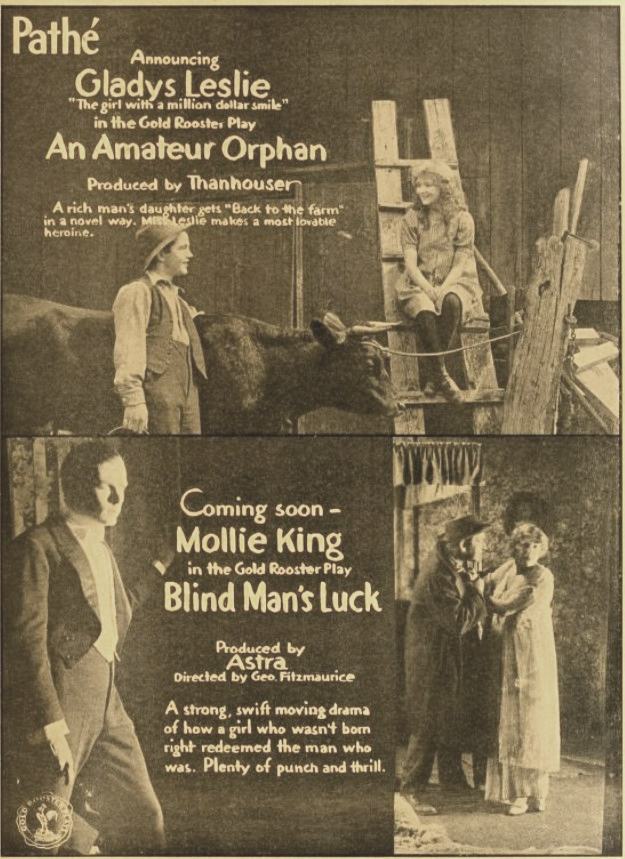
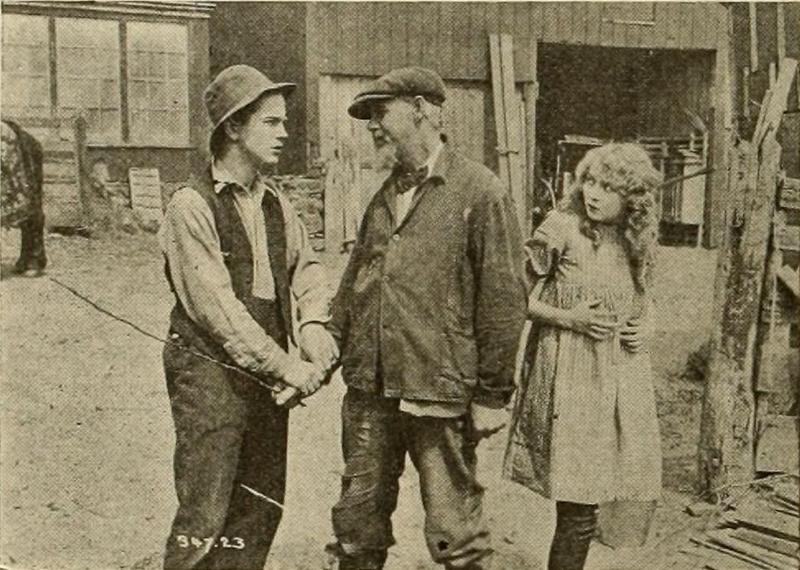
Jean Armour’s Marcia never begs for sympathy; she earns it by calculating every breath like a chess move. Watch her face when she first tastes buttermilk: a micro-flinch of aristocratic disgust, instantly smothered by curiosity, then delight—a three-act play in ten seconds. Opposite her, Gladys Leslie as the governess Quincy prowls through frames with the posture of a woman who has read Leviticus for bedtime. Her spine is a ruler; her eyes, two exclamation marks. The tension between them is not good vs. evil but mobility vs. monumentality. Meanwhile, Chester Morris—years before his noir turns—plays elder Benton son Nat with the lanky reticence of someone who has memorized the horizon. His courtship of the disguised Marcia is conducted entirely through glances exchanged over the neck of a plow horse; the horse, by the way, deserves an honorable mention for stealing half the frame with its sideways appraisals.
Cinematographer H. Lyman Broening treats chiaroscuro like a dialect: barn interiors painted by Caravaggio, haylofts glowing like Protestant chapels. Note the sequence where Marcia teaches the Benton children to make shadow puppets against a kerosene lamp. The silhouettes swell until they devour the wall, and for a fleeting instant we are watching Plato’s cave re-staged with rabbits and wolves. It is silent cinema at its most eloquent: light as language, darkness as grammar.
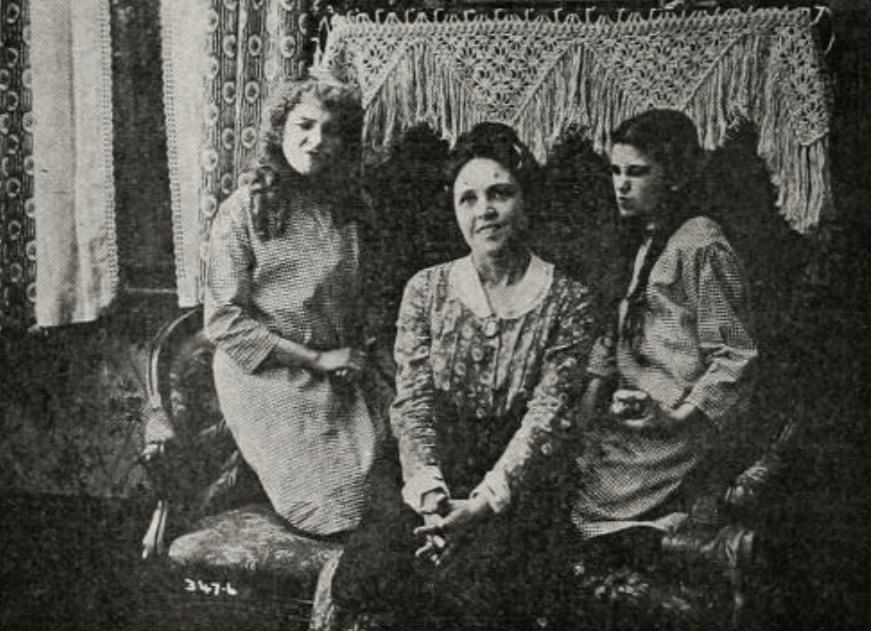
Surviving prints circulate with a 2008 improvisatory score by Guenter Buchwald, but the original 1923 cue sheets called for a melange of Stephen Foster, Mendelssohn, and the Hawaiian-steel interpolation “They’ll Know We Are Christians by Our Love.” The clash—front-parlor propriety versus barn-dance abandon—mirrors Marcia’s cultural translation. At a recent MoMA retrospective, a small ensemble tried the historical medley; when the steel guitar slid into a minor key during the orphanage sequence, half the audience released an involuntary gasp. Silence, it turns out, is only as golden as the music you drape around it.
Johnston’s script sneaks a feminist pamphlet inside a children’s fable. Marcia’s wealth is matrilineal—her mother’s inheritance—yet the patriarch’s first act is to ship her offscreen. By rejecting the boarding school, Marcia seizes the means of social production: she will choose her own classroom, her own family, her own mythology. Meanwhile, the Benton farm teeters on matriarchal endurance; Mrs. Benton’s hands knead bread and solvency with equal force. When Marcia teaches her to whistle, the moment lands like an anarchic sacrament: a woman reclaiming the public use of her mouth.
Place An Amateur Orphan beside The Italian (1915) and you see two Americas: one immigrant, urban, gaslit; other native, agrarian, kerosene-lit. Pair it with Fine Feathers (1921) and watch how both films weaponize wardrobe—silk as armor, calico as camouflage. Or screen it after Der Andere (1913) and marvel at the transatlantic obsession with split selves: German doppelgängers, American class-clones. The past, it seems, was already postmodern.
Only two 35mm nitrate prints are known: one at EYE Filmmuseum (incomplete, Dutch intertitles), one in a private Rochester collection (complete, but vinegar-syndrome creeping like frost). A 4K scan of the Dutch print was undertaken in 2021; the lab managed to reclaim the amber bi-pack tones, but the final reel remains digitally water-bruised. The cost to strike a new print from the Rochester element—estimated at €38,000—currently exceeds institutional appetite, though a crowdfunding campaign lurches like a tractor on cold mornings. Until then, most viewers rely on a 720p rip with Portuguese captions floating like unruly footnotes.
Variety, Jan 17 1923: “If Shirley Temple is the confection of childhood, Jean Armour is the crooked spice—she makes you remember that kids, like cats, have claws and philosophies.” Motion Picture Magazine opined: “A trifle long on sermon, but the barn-raising sequence could make a Shaker kick up his heels.” And Photoplay offered the most backhanded praise: “Not as mawkish as most kiddie fodder; still, one wishes for a firecracker or two in the final reel.” Translation: even a century ago, critics craved third-act explosions.
In 2022 a TikTok creator overlaid the film’s harvest dance with Doja Cat’s “Say So”; the clip hit 2.3 million views, proving that silent cinema can still move at 24 memes per second. More importantly, the film’s core inquiry—Who gets to belong?—feels ripped from today’s immigration headlines. Marcia’s forged papers, her anxious glances at railroad timetables, echo in the stories of Dreamers hopping borders of language and legality. History doesn’t repeat; it rhymes in intertitles.
Yes, the comic-relief handyman (Ray Hallor) mugs like he’s auditioning for a minstrel show. Yes, the Japanese vacation subplot—rendered entirely in expository letters—reeks of orientalism as lazy as a Sunday in Saratoga. And the orphanage matron is a Victorian cliché wielding keys like a jailer in a melodrama that never asked to be born. These blind spots ache, yet they also map the borders of 1923 empathy: progress and poison grown in the same greenhouse.
Because every viewer carries an internal orphan—some piece of self disowned, dispossessed, dispatched to the periphery. Marcia’s gambit is the fantasy we dare not confess: to step out of our biography and into a narrative we author with crayon and candle. Dawley’s film survives as both artifact and invitation: to swap corsets for calico, to swap cynicism for the audacity of tenderness. Watch it at midnight, with headphones cradling Buchwald’s tremulous violin, and you will feel the screen ripple like a curtain in an open window. Somewhere between the iris-in and the fade-out, the orphan in you finds a home.
IMDb —
1921
Community
Log in to comment.