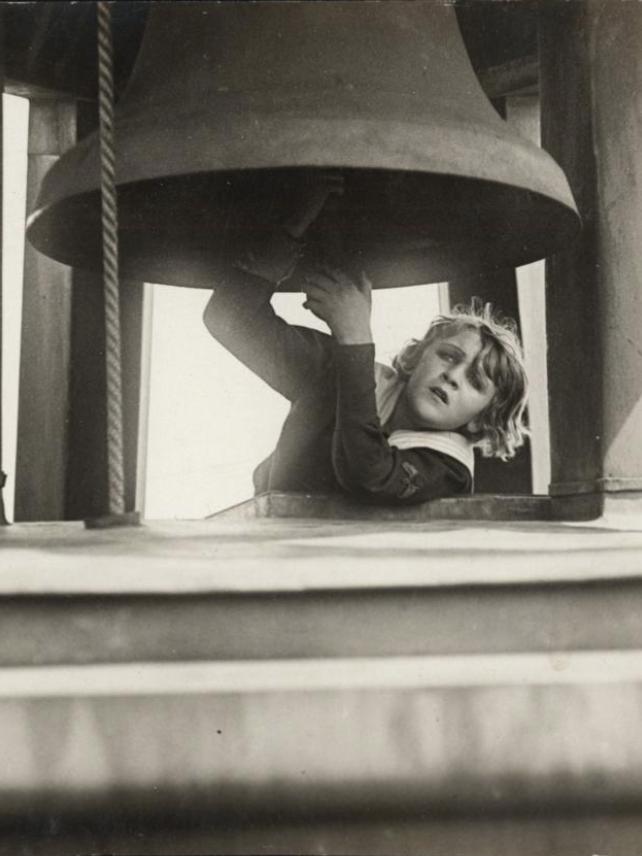
Imagine a war fought not only with howitzers but with shadows—shadows that steal messages, shadows that brand a man traitor before he can exhale. Dødsklokken (literally "Death’s Bell") clangs that bell from the first frame, a 1915 Danish bullet of celluloid whose reverberations still bruise the marrow of anyone lucky enough to unearth it. Director-cinematographer George Schnéevoigt shoots the Jutland moors like a crime scene: every tuft of grass a potential witness, every cloud a hanging judge.
The Premise: A Relay Race with Doom
Lt. Charley’s mission sounds almost quaint on paper: courier a tube of paper across a patch of neutral heath before enemy battalions spill over the ridge. But Schnéevoigt compresses the horizon with long lenses so the sky seems to sag onto the turf, turning geography into a vice. When the spy intercepts the tube—an act shown only by a gloved hand sliding into frame, the glove’s stitching as ominous as a hangman’s knot—the film pivots from battlefield procedural to existential manhunt. Charley, played with hawk-eyed desperation by Alf Nielsen (who also scripted), becomes both Achilles and the tortoise: fleet of foot, yet shackled by rumor.
Visual Grammar: Chiaroscuro in a Trenches Coat
Silent-era Scandinavia had already gift-wrapped nightmare palettes for the world—think The Life and Works of Verdi’s operatic gloom or Ansigttyven I’s urban murk—but Dødsklokken distills them to an essence so potent it feels distilled through peat and gunpowder. Schnéevoigt sandwiches his protagonist between inky foreground silhouettes and bleached skies, a visual reminder that conscience, too, has overexposed edges. Intertitles arrive sparingly, often white text on black cards, each a gasp of oxygen before the next plunge.
Performance: Silence That Barks
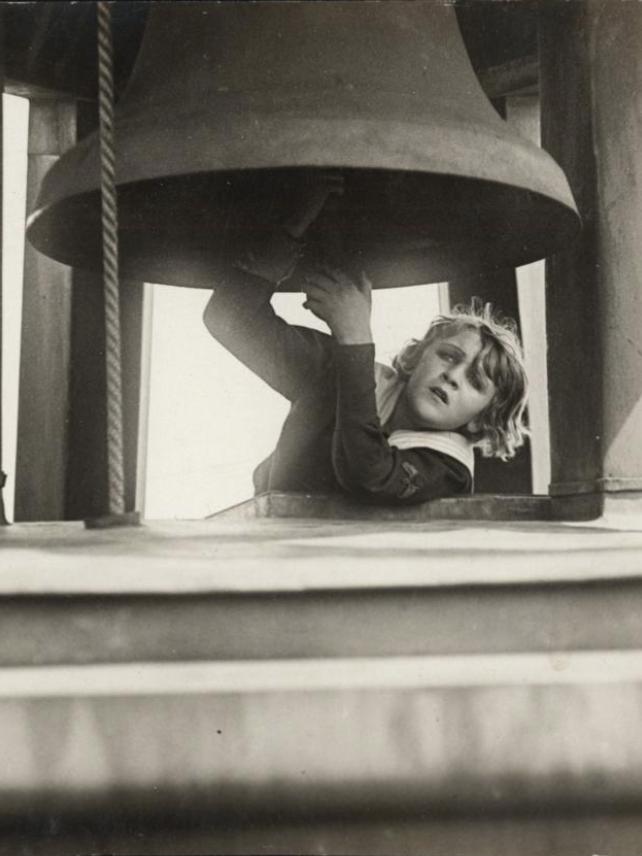
Because the film never tells us Charley’s first name, he remains an every-soldier, a stencil onto which viewers stencil their own dread. Nielsen’s cheekbones become topographical maps: hollows for doubt, ridges for fleeting resolve. In one close-up—so tight the perforation holes nibble the edges of the frame—his pupils quiver like compass needles denied north. That microscopic tremor ricochets louder than any modern surround-sound explosion.
The spy, credited only as "The Interceptor" and portrayed by Axel Strøm, wears a smile that arrives a split-second before his face, a sleight-of-trick that makes even his stillness feel like larceny. Watch how he fingers the stolen cylinder, rolling it across his knuckles the way a cardsharp handles an ace: economy as menace.
Temporal Dread: Editing as Hourglass
At 42 minutes, the movie is a sprint, yet editor Charles Løwaas elongates time through repetition: the same bridge, shot at noon, dusk, and midnight, becomes a watermark of Charley’s dwindling options. Each revisit shaves a few frames, quickening the metronome of doom. If In the Nick of Time relied on last-second rescues, Dødsklokken insists that last seconds can be forged, stolen, or never existed.
Sound of Silence: A Score You Compose in Your Spine
Most archival prints circulate sans score, and that vacuum becomes the film’s most savage soundtrack. In the hush, you hear your own blood—a private Foley artist reminding you that circulatory systems, too, observe military time. When I caught a 2019 Copenhagen retrospective, the exhibitor played a solitary field recording of wind rifling through barley; the effect was so unnerving that two patrons left, claiming "the air conditioning was stalking them."
Gender Under Fire: Lily von Kaulbach’s Brief Comet
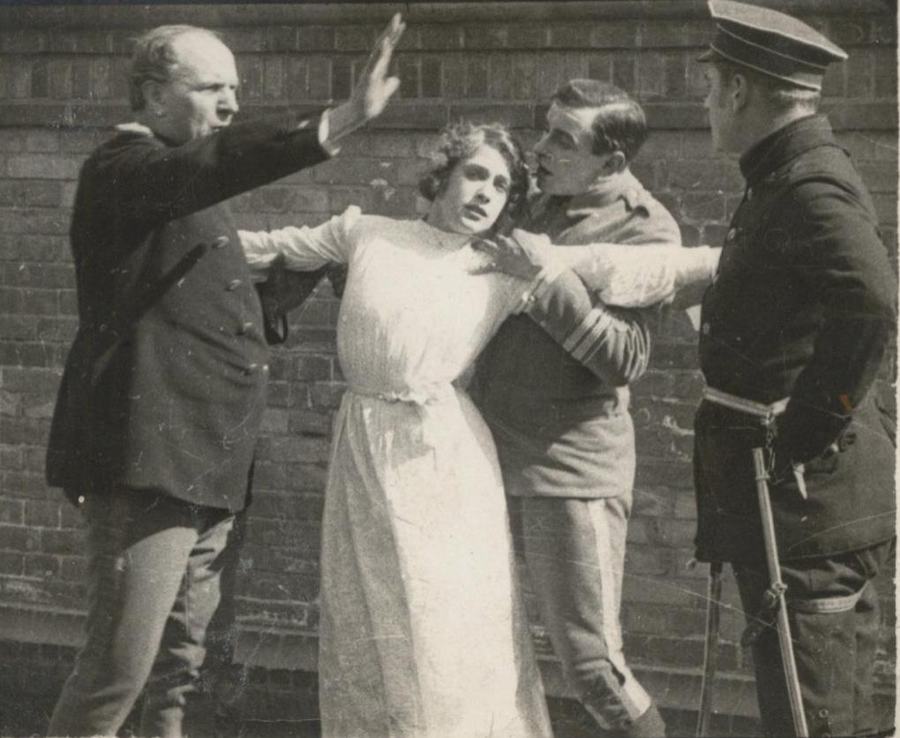
As Elvira, a farmer’s wife who hides Charley for the length of a candle, Lily von Kaulbach graces only four shots, yet her presence detonates a gendered critique that most war yarns sidestep. She bandages Charley’s wrist while eyeing the door, her hands performing triage on a body that might, in minutes, bring reprisals to her own. The film refuses to martyr her; instead she survives off-screen, a ghost of collateral damage haunting the corners of every subsequent frame.
Comparative Vertigo: How It Converses With Contemporaries
Place Dødskolken beside The Battle of Trafalgar and you see two navies of narrative: one monumental, one minotaur-labyrinthine. Pair it with The Man Who Could Not Lose and you get a diptych about the anatomy of luck—one film treats fortune as birthright, the other as mirage. Even Salomy Jane’s western romanticism feels almost plush when juxtaposed with the Danish film’s flinty fatalism.
Restoration & Availability: Hunting the White Whale
For decades the negative was presumed lost in a 1923 studio fire—until a 1998 Oslo estate sale uncovered a 35 mm nitrate print tucked inside a piano bench. The Danish Film Institute’s 4K restoration premiered at Il Cinema Ritrovato in 2018, earning a jury citation for "resurrecting anxiety in its purest celluloid form." Streaming rights remain fractured; your best bet is specialty Blu from Nordisk Klassiker with English, French, and Portuguese intertitles. Beware the YouTube bootlegs—many splice in random 1910s crowd footage like cinematic Frankenstein grafts.
Final Bell: Why It Still Tolls
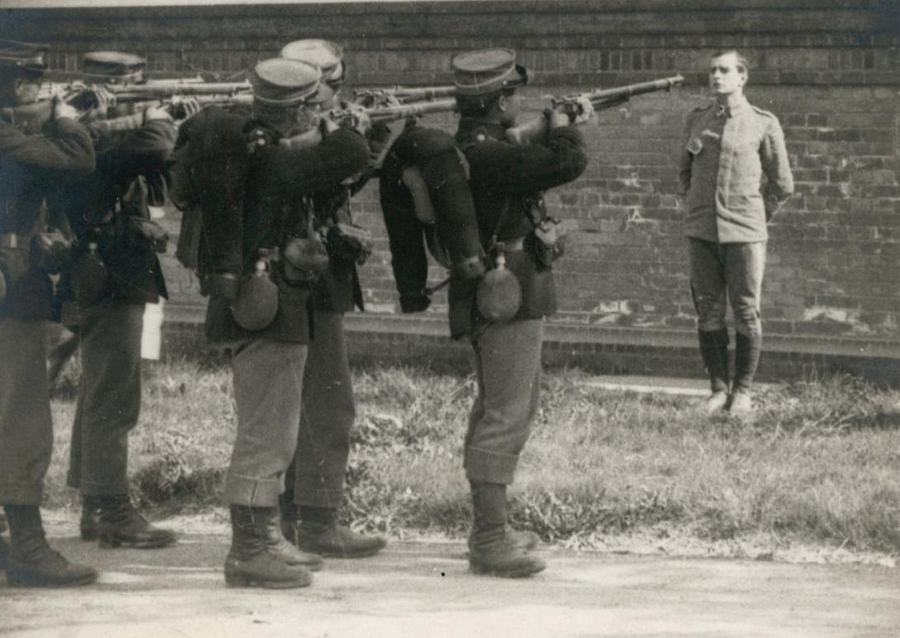
Great war cinema doesn’t merely depict conflict; it infects the viewer with the same temporal vertigo soldiers feel. Dødsklokken does so without a single battlefield panorama, instead weaponizing negative space, off-screen sound, and the cruel arithmetic of deadlines. Nearly 110 years on, its spy feels less like historical artifact than algorithmic harbinger: identity as loot, truth as negotiable currency, speed as the only sanctuary. When the final iris-in closes around Charley’s eyes—two black coins dropped down a well—you realize the bell was never tolling for him alone; it’s been counting down your own heartbeats since the projector first stuttered to life.
Verdict: A molotov cocktail of paranoia and pacing, Dødsklokken earns its place beside the immortals of silent suspense. Hunt it down, let it haunt you, and remember: in war, the only thing faster than fear is the man accused of selling it.