DbcultAccessing Vault...
5.8/10
Senior Film Conservator
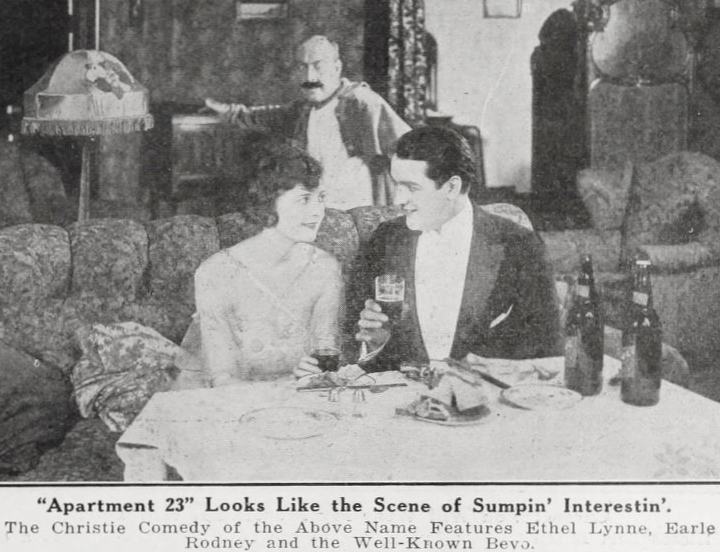
A definitive 5.8/10 rating for a film that redefined the boundaries of cult cinema. Apartment 23 remains a cornerstone of transgressive art.
Before David Lynch twisted suburban facades or Hitchcock weaponized voyeurism, there was Apartment 23—a 1923 silent marvel that crawls under the skin with the persistence of a dripping faucet in a vacant room. Director Arthur Chesney crafts an architectural nightmare where brick and mortar breathe with malevolent intent. Unlike the flamboyant expressionism permeating German cinema of the period, Chesney opts for claustrophobic realism, transforming a mundane New York tenement into an oppressive psychological labyrinth. The film’s genius lies not in grandiose gestures but in the unsettling accumulation of minutiae—a warped doorframe here, a strategically placed stain resembling a weeping eye there—visual cues that whisper of decayed minds behind locked doors.
Earle Rodney’s Julian Thorne exists in a perpetual twilight between artistic sensitivity and pathological fixation. Watch how his fingers—elongated, spider-like—hover over his violin strings during the film’s pivotal practice scene, the bow trembling not from musical passion but from suppressed obsession. His physicality evolves with terrifying subtlety: initial upright posture collapsing into a predatory stoop, eyes transforming from weary melancholy to feverish hunger. This isn’t overplayed melodrama but an autopsy of deteriorating sanity. When he presses his ear against the floral wallpaper dividing him from Eleanor’s apartment, Rodney’s entire body thrums like a tuning fork—a masterclass in silent-era physical acting that rivals Lon Chaney’s transformative work in The Guilty Man.
"Lynne doesn’t merely act haunted—she becomes architecture made flesh, a gothic column swaying under invisible burdens."
Ethel Lynne’s Eleanor Vance operates on an entirely different spectral frequency. Where Rodney externalizes decay, Lynne implodes. Her movements possess the glacial precision of a sleepwalker navigating a minefield. In the harrowing sequence where she unpacks her husband’s pocket watch—its shattered face reflecting her own fractured psyche—Lynne’s hands move with ritualistic slowness, the trembling visible only in her ring finger. This is grief weaponized into performance. The way light catches her hollowed cheeks during the candlelit séance scene creates living Through the Wall-esque portraiture, echoing that film’s exploration of domestic entrapment while carving its own disturbing emotional caverns.
Chesney and cinematographer Harold Rosson pioneer what would become noir’s visual lexicon decades before the term existed. Consider the staircase sequences—not the expressionist diagonals of Caligari, but steep, narrow wells of shadow swallowing characters whole. Rosson drapes corridors in velvety darkness punctuated by gas jets that sputter like dying stars, their amber glow (hand-tinted in surviving prints with sickly yellow) illuminating faces in grotesque fragments. The recurring motif of distorted reflections—in rain-slicked windows, tarnished mirrors, even soup spoons—creates a funhouse of fractured identities. This technique reaches its zenith when Julian spies Eleanor through a fishbowl, her face warping into an aquatic nightmare that prefigures The Seal of Silence’s liquid hallucinations.
That infernal music box—an intricate rosewood monstrosity—serves as the film’s arrhythmic heart. Its recurring jangle, represented by jarring title cards (“PLINK... PLINK... PLUNK”), functions as both plot device and neurological assault. The dissonant melody (reportedly transcribed from a Polish funeral dirge) infiltrates Julian’s compositions, manifesting visually as discordant notes scribbled violently across sheet music. This sonic corruption echoes narrative devices later seen in The Grell Mystery, though Chesney deploys it with more visceral psychological intent. When Eleanor finally unlocks the box during the climax, the revealed contents—a coiled lock of hair nestled beside a tiny pistol—deliver symbolic payoff worthy of Chekhov’s ghost.
Apartment 23 transcends setting to become organic prison. Production designer William Cameron Menzies (years before his Gone With the Wind triumph) crafts interiors that breathe menace. Peeling wallpaper patterns resemble Rorschach blots of despair, while doorways frame characters like portraits in a cursed gallery. The building’s layout defies logic—hallways dead-end at bricked-up windows, staircases lead to identical landings, creating an M.C. Escher nightmare of urban confinement. This spatial disorientation mirrors Julian’s crumbling mental state more effectively than any performance could. Menzies’ genius surfaces in Eleanor’s apartment, where furniture placement creates subconscious barriers—a strategically positioned armchair becomes a fortress, a dining table a battleground. Compare this to the oppressive domestic spaces in When It Strikes Home, yet here the environment actively collaborates with the characters’ pathologies.
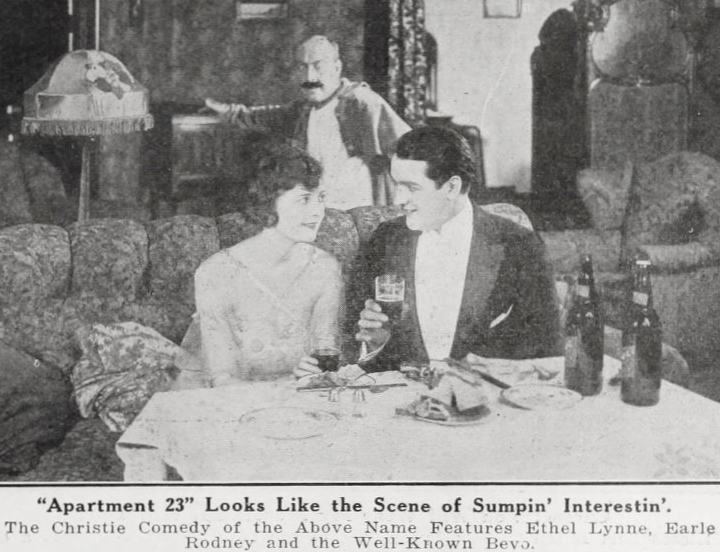
Modern audiences conditioned to dialogue may underestimate silent cinema’s emotional artillery. Chesney weaponizes silence like a scalpel. Witness the prolonged sequence where Julian observes Eleanor through a keyhole—no title cards for eight agonizing minutes. We read tension through the pulsing vein on Rodney’s temple, the incremental moistening of Lynne’s lips as she senses observation. The film’s sound design exists in the imagination: the imagined creak of floorboards, the phantom drip of a leaky tap, the oppressive weight of unsaid accusations. This sensory deprivation makes the eventual cacophony—shattering glass, a choked scream, the music box’s final metallic shriek—land with seismic impact. The approach shares DNA with the nerve-shredding quietude of The Secret Seven, though Chesney pushes further into the realm of physiological unease.
The infamous “mad waltz” climax remains one of silent cinema’s most unnerving set pieces. As Julian forces Eleanor into a grotesque dance amidst upturned furniture, Chesney employs rapid-cut close-ups: Lynne’s terrified eyes reflecting candle flames, Rodney’s saliva-flecked lips curled in a rictus grin, their feet moving in nightmarish slow motion while torsos jerk spasmodically. The sequence’s power derives from its perversion of elegance—a dance macabre underscored by the music box’s distorted waltz. The choreography mirrors the psychological entanglement; neither predator nor prey leads, both trapped in a spiral of mutual destruction. This dizzying collapse of sanity prefigures the psychological duels in La revanche, yet surpasses them in sheer visceral terror. The final image—a shattered mirror reflecting two figures frozen mid-step—becomes an indelible tableau of shared psychosis.
Rosson’s camera lingers on ocular close-ups with hypnotic intensity. Julian’s dilated pupils during his nocturnal prowls resemble black holes absorbing light, while Eleanor’s darting irises become blue-rimmed pools of paranoia. In the séance scene, Chesney cross-cuts between eight pairs of tenant eyes watching through cracks—a chilling mosaic of communal voyeurism. This ocular obsession transforms the audience into fellow peepers, implicating us in Julian’s transgression.
Menzies populates frames with symbolically charged props. Julian’s violin, initially an extension of artistry, becomes a surveillance tool pressed against walls. Eleanor’s collection of preserved roses behind glass evokes mummified emotions. Most potent is the recurring pocket watch—its hands perpetually stuck at 2:23, the hour of her husband’s death. These objects whisper subtext louder than any intertitle.
Beneath its thriller mechanics, Apartment 23 smuggles radical gender commentary. Eleanor’s perceived fragility masks astonishing agency. Her final confrontation with Julian isn’t passive victimhood but calculated psychological warfare—she weaponizes his obsession against him. The film’s original script (reportedly penned by female scenarist Eleanor Gates under pseudonym) positions Eleanor’s “madness” as societal performance, a shield against patriarchal intrusion. This nuanced portrayal stands in stark contrast to the hysteric caricatures prevalent in contemporaries like The Stranglers of Paris. Lynne’s performance whispers volumes about the exhausting performance of widowhood—every stiff-backed posture, every politely folded handkerchief, a battle against collapse.
To watch Apartment 23 today is to trace the DNA of psychological horror. Polanski’s apartment trilogy (Repulsion, Rosemary’s Baby, The Tenant) feels like direct descendants, inheriting its spatial dread and voyeuristic tension. De Palma’s split diopter shots find their progenitor in Chesney’s deep-focus compositions where foreground torment and background threat coexist. Even Lynch’s Eraserhead owes debts to its industrial soundscape and domestic surrealism. Yet the film’s greatest innovation remains its ambient malevolence—the understanding that true horror resides not in monsters, but in the quiet unraveling of minds within ordinary walls. Unlike the overt theatrics of Mr. Wu or colonial exoticism of The Bushman’s Bride, Chesney locates terror in the familiar—a neighbor’s cough through plaster, the way moonlight stripes a disordered bed, the terrifying intimacy of shared plumbing.
"The apartment breathes. The floorboards sing confessions. The walls watch. Chesney didn’t make a horror film—he diagnosed the sickness inherent in urban coexistence."
What lingers isn’t the gothic climax but quieter moments: Eleanor methodically scrubbing a phantom bloodstain from her rug at 3 AM; Julian composing love letters he’ll never send using coffee grounds as ink; the super’s child playing jacks on the stoop, oblivious to the suffocating dramas overhead. Apartment 23 understands that madness isn’t an event but an environment—a slow seepage through cracked plaster. Its restoration in 2018 revealed previously censored frames: an ambiguous gesture suggesting Eleanor may have manipulated Julian from the start, that the music box held more than macabre souvenirs. This revelation transforms the film from tragedy into something more unsettling—a dance of mutually assured psychological destruction. Nearly a century later, its shadows still stretch long, reminding us that the most terrifying mysteries aren’t locked in safes, but in the apartment next door.
IMDb 6.3
1916
Community
Log in to comment.