DbcultAccessing Vault...
Cult Review
Senior Film Conservator
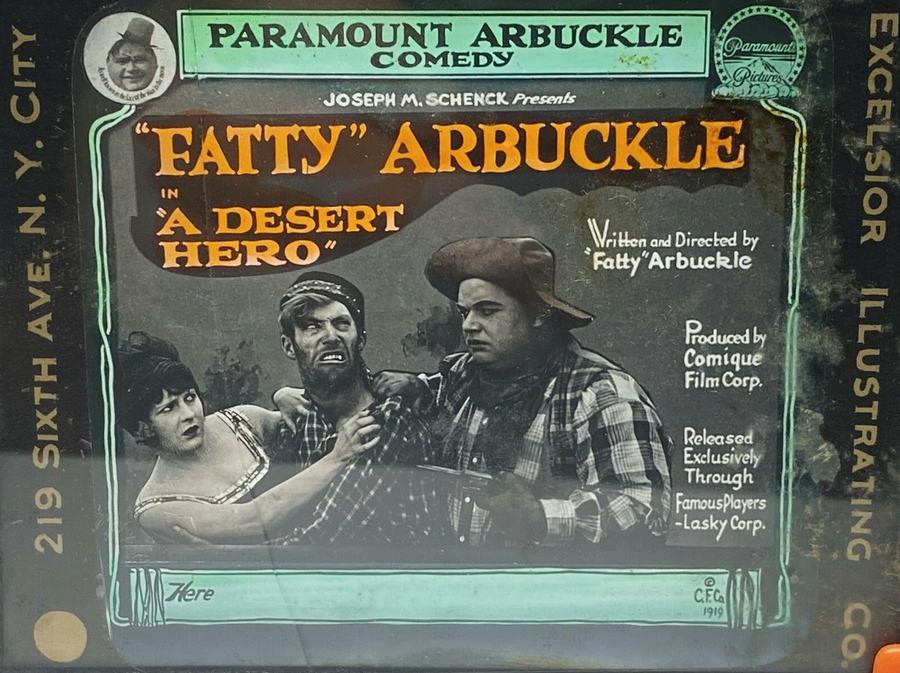
Stepping into the world of early 20th-century cinema, one often finds themselves navigating a landscape rich with experimentation, nascent storytelling techniques, and the burgeoning genius of pioneers. Among these, Roscoe 'Fatty' Arbuckle stands as an undeniable titan, a comedic force whose influence, though sometimes overshadowed by personal tragedy, remains indelible. His 1919 short, 'A Desert Hero,' is a vibrant testament to his unique blend of physical comedy, ingenious gags, and surprisingly intricate narrative construction for its era. It's a film that, despite its brevity, encapsulates a moment in cinematic history when the rules were still being written, and innovation was the only constant.
At the core of 'A Desert Hero' is, naturally, its titular character: a Sheriff portrayed with an almost mythic aura of invincibility and preternatural skill. This isn't merely a lawman; he's a force of nature, an individual whose very presence seems to bend the laws of probability. In a genre often defined by gritty realism and the harsh consequences of frontier life, Arbuckle, both as writer and likely uncredited director, crafts a protagonist who exists in a delightful state of comedic hyperbole. The Sheriff’s uncanny ability to emerge from the most intense gunfights without a single scratch is not just a running gag; it's a fundamental aspect of his character, elevating him from a mere mortal to a figure of legend. This exaggerated luck serves as a perfect foil to the chaotic violence surrounding him, creating a dissonance that fuels much of the film's humor. It's a playful subversion of the Western archetype, where the hero isn't just brave, but impossibly, hilariously fortunate.
His marksmanship, too, transcends mere proficiency, bordering on the supernatural. The scene where he targets a cuckoo in a clock, causing it to fall precisely into a glass of beer, instantly transforming it into an impromptu 'cocktail,' is a stroke of comedic genius. This gag is not just funny; it’s a masterclass in visual storytelling, demonstrating Arbuckle’s keen understanding of cause and effect in comedy. It’s the kind of meticulous setup and payoff that would become a hallmark of silent-era slapstick, requiring precise timing and execution. This level of inventive absurdity sets the tone for the entire film, assuring the audience that they are in for a ride where the unexpected is the norm and the impossible is merely a preamble to the next laugh.
Roscoe 'Fatty' Arbuckle's signature style is evident throughout 'A Desert Hero.' As one of the film's credited writers, his fingerprints are all over the narrative's structure and the individual gags. Arbuckle possessed an extraordinary grace and agility for a man of his size, an attribute he skillfully deployed to amplify the comedic effect of his physical performances. He was not merely a large man; he was a dancer, a gymnast, and a surprisingly delicate performer, capable of intricate movements that defied expectations. This physical prowess allowed him to execute complex stunts and nuanced expressions that transcended simple slapstick. His collaborations with other comedic talents, such as Buster Keaton and Charlie Chaplin, often highlighted his ability to be both the anchor and the instigator of comedic sequences, a skill that shines through even in a solo vehicle like this.
The film's pacing is relentless, a rapid-fire succession of escalating conflicts and ingenious resolutions. Arbuckle understood that silent comedy thrived on visual dynamism and a constant forward momentum. There’s little room for exposition; the story unfolds through action, gesture, and expertly timed reactions. This kinetic energy is a hallmark of many of his films, including others like The Garage, where the sheer volume of gags and physical comedy keeps the audience perpetually engaged. The specific narrative beats—thwarting villains, foiling plots, rescuing the persecuted maiden—are stock elements of the Western genre, but Arbuckle injects them with a fresh, anarchic spirit. He takes these tropes and twists them, not just for parody, but to create entirely new comedic possibilities.
While Arbuckle is undoubtedly the gravitational center of 'A Desert Hero,' the supporting cast plays a crucial role in enhancing the comedic landscape. Alice Lake, a frequent collaborator with Arbuckle, brings a spirited presence as the persecuted maiden. Her ability to convey distress and delight with expressive facial work and physical reactions is essential to grounding the Sheriff’s exaggerated heroism. Monte Collins and Al St. John, both veterans of silent comedy, populate the villainous ranks with a tangible menace that is frequently undercut by the Sheriff's effortless superiority. St. John, in particular, was known for his acrobatic villainy, often providing a perfect physical foil to Arbuckle's character. Molly Malone and Jack Coogan Sr. round out the ensemble, each contributing to the bustling, often chaotic atmosphere of the frontier town.
The chemistry among these performers, many of whom worked together repeatedly in various Arbuckle shorts, is palpable. They understand the rhythm of silent comedy, the importance of clear sight gags, and the necessity of reacting with conviction, even to the most absurd circumstances. This collective understanding allows the comedic scenarios to unfold with a natural flow, despite their inherent outlandishness. The cast’s commitment to the bit, from the villains’ exaggerated sneers to the townsfolk's wide-eyed astonishment, is what makes the film’s fantastical elements land with such comedic impact.
Beneath the veneer of slapstick and outlandish heroism, 'A Desert Hero' harbors a surprisingly potent vein of social commentary and moral messaging. The Sheriff's actions extend far beyond simply apprehending criminals; he embarks on a wholesale societal reformation. His destruction of the local bar and the closure of the dance hall are not merely acts of law enforcement but symbolic gestures against perceived dens of iniquity. This reflects a broader cultural anxiety of the era, where temperance movements and moral crusades were gaining significant traction. Arbuckle, through his comedic lens, taps into these societal currents, presenting a protagonist who is not just a lawman but a moral reformer.
The most striking and perhaps most unexpected element of the film's narrative is the Sheriff's ability to convert a 'long line of hardened gunmen to lives of usefulness as members of the Salvation Army.' This resolution is a remarkable departure from typical Western narratives, which usually culminate in shootouts or captures. Instead, Arbuckle offers a vision of redemption and rehabilitation, albeit one filtered through a comedic, almost surreal, lens. The image of former desperadoes, now clad in Salvation Army uniforms, playing brass instruments and marching with newfound purpose, is both genuinely funny and surprisingly poignant. It suggests a belief in the transformative power of moral guidance, even for the most incorrigible characters.
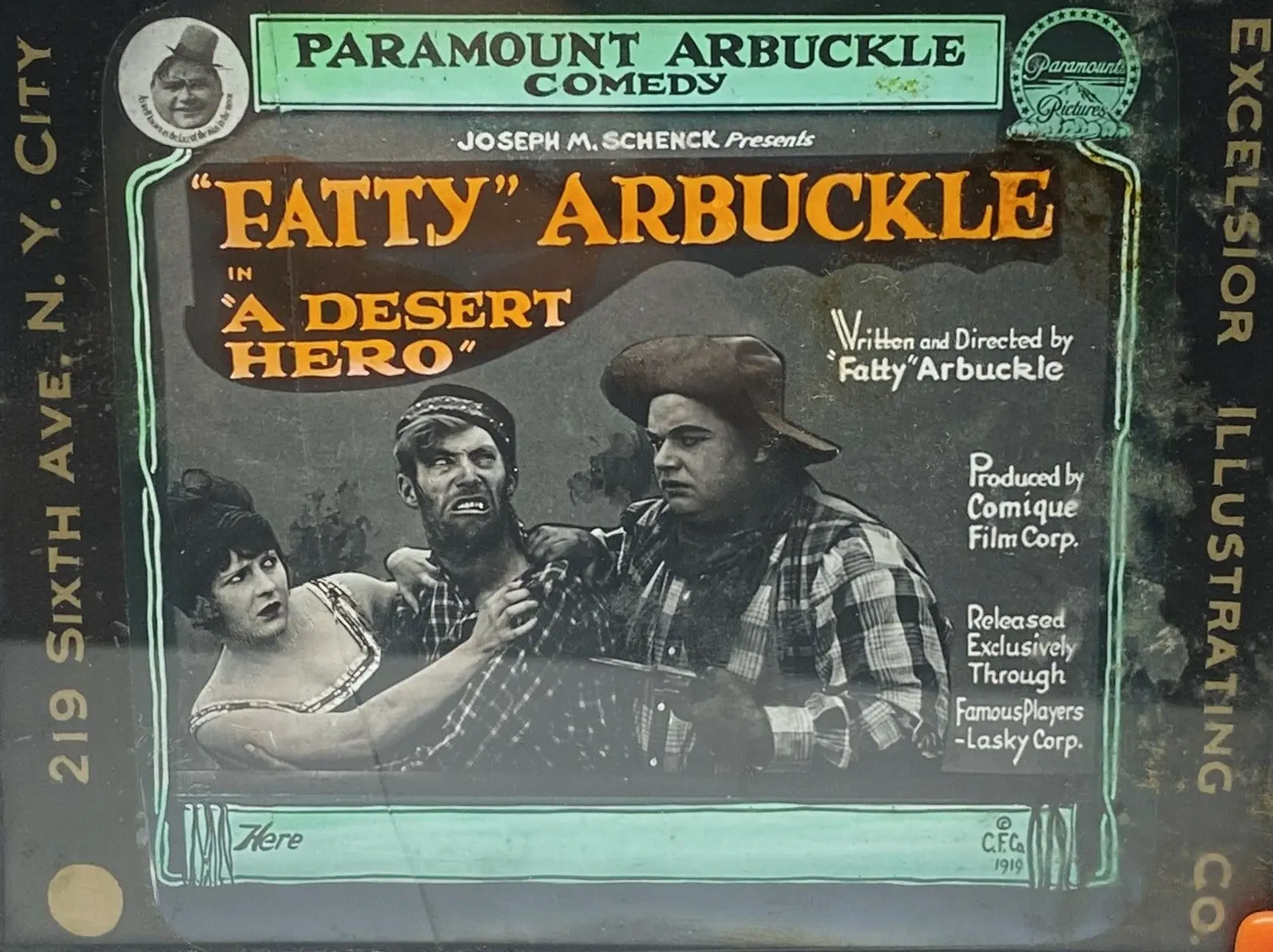
This comedic take on moral reformation echoes certain themes found in other contemporary works, where societal ills were often tackled with a blend of humor and earnestness. While Arbuckle’s approach is firmly rooted in comedy, the underlying message about rehabilitation and finding a 'useful' life resonates. It’s a testament to his writing that he could weave such a profound, if lightly handled, message into a film primarily designed for laughs. This aspect elevates 'A Desert Hero' beyond mere entertainment, giving it a subtle layer of social commentary that rewards closer inspection.
'A Desert Hero' stands as a significant, if often overlooked, piece in the vast mosaic of silent cinema. It showcases the burgeoning sophistication of comedic filmmaking during a period of rapid evolution. The use of visual gags, the mastery of physical comedy, and the ingenious narrative twists demonstrate the creative ferment of the time. This film, like many of Arbuckle's shorts, contributed significantly to the vocabulary of comedic cinema, influencing subsequent generations of filmmakers and comedians. His pioneering work in developing complex sight gags and integrating them seamlessly into a narrative structure paved the way for the likes of Buster Keaton and Charlie Chaplin to further refine the art form.
In an era dominated by shorts, 'A Desert Hero' exemplifies the potential of the format. These brief cinematic excursions were often laboratories for experimentation, allowing filmmakers to hone their craft and test new ideas without the financial pressures of feature-length productions. Arbuckle, having honed his skills in vaudeville and earlier shorts, was a master of this concise storytelling. He understood how to pack maximum impact into a limited runtime, ensuring that every gag, every character beat, and every plot development served a purpose. The constraint of brevity often forced a heightened creativity, leading to some of the most memorable and enduring comedic sequences in film history.
Comparing it to other shorts of the period, one can see shared DNA in the rapid-fire gags and character-driven humor. While not as overtly narrative as some of the dramatic shorts like The Heritage or Beneath the Czar, 'A Desert Hero' shares their commitment to clear, engaging storytelling, albeit through a comedic lens. It's a testament to the versatility of early cinema that such diverse narratives could coexist and thrive within the short film format.
Roscoe 'Fatty' Arbuckle's contribution to comedy is immense. His work, including 'A Desert Hero,' served as a blueprint for many who followed. He was instrumental in establishing the visual language of cinematic comedy, demonstrating how physical action, exaggerated reactions, and clever staging could elicit uproarious laughter. His ability to blend slapstick with character-driven humor, and even a touch of social commentary, was remarkably sophisticated for its time. He understood the power of the unexpected, the joy of absurdity, and the universal appeal of a hero who, despite all odds, always prevails, often in the most unconventional ways.
The film's comedic set pieces, such as the elaborate bar destruction or the chaotic dance hall closure, are executed with a precision that belies their apparent spontaneity. Arbuckle was a meticulous craftsman, planning his gags with an engineer's eye for detail. This attention to detail is what makes his comedy so effective and enduring. Even today, watching 'A Desert Hero,' one can appreciate the inventiveness and the sheer joy of performance that radiates from the screen. It’s a reminder that true comedic genius transcends time and changing tastes.
'A Desert Hero' is more than just a historical artifact; it's a vibrant, entertaining piece of comedic filmmaking that continues to delight audiences. It showcases Roscoe 'Fatty' Arbuckle at the peak of his powers, delivering a performance that is both physically demanding and subtly nuanced. The film's ingenious gags, its relentless pacing, and its surprisingly thoughtful undertones make it a compelling watch for anyone interested in the origins of cinematic comedy or simply in need of a good laugh. It stands as a testament to the enduring power of silent film to tell stories, evoke emotions, and, most importantly, entertain.
For those who appreciate the foundational works of comedy, 'A Desert Hero' offers a rich experience. It provides a window into the creative mind of one of cinema's most important early figures and demonstrates how even seemingly simple premises can be elevated to high art through masterful execution. The film's ability to blend slapstick with a unique brand of hyperbolic heroism, culminating in a genuinely unexpected moral transformation, ensures its place as a distinctive and memorable entry in the canon of silent-era shorts. It’s a delightful, chaotic, and ultimately uplifting journey into a comedic Wild West where even hardened criminals can find redemption, thanks to a Sheriff who's truly a hero, in every sense of the word.
The meticulous craftsmanship in 'A Desert Hero' is evident in every frame, from the careful staging of the chaotic bar fight to the precise timing of the cuckoo clock gag. Arbuckle's understanding of visual storytelling allowed him to communicate complex ideas and rapid-fire jokes without the aid of dialogue, relying entirely on physical action, expressive performances, and inventive camera work. This mastery of the medium is what truly sets his work apart and makes films like 'A Desert Hero' not just entertaining, but also historically significant. It’s a masterclass in how to construct effective silent comedy, a lesson that continues to influence filmmakers today, whether they realize it or not. The film's innovative spirit and its sheer comedic energy make it a vital piece of cinematic heritage, reminding us of the boundless creativity that defined the early days of filmmaking.
IMDb 6.2
1936
Community
Log in to comment.