DbcultAccessing Vault...
Cult Review
Senior Film Conservator
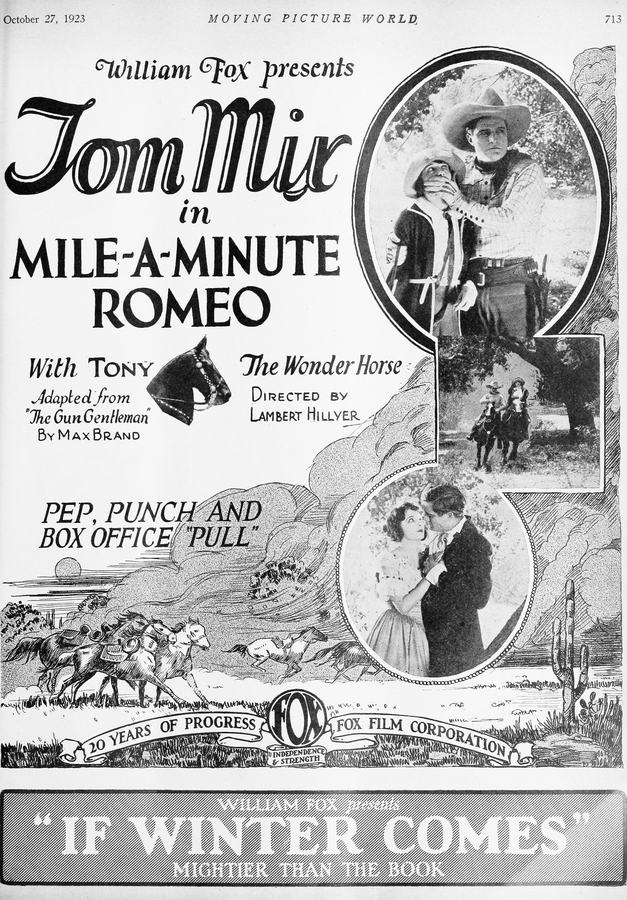
In the annals of early cinematic history, few names resonate with the sheer, unadulterated thrill of the Western genre quite like Tom Mix. His films were not merely entertainment; they were grand spectacles, a vibrant tapestry woven with breathtaking stunts, earnest heroism, and a dash of romantic idealism. Among these gems, Mile-a-Minute Romeo (1923) stands as a quintessential testament to Mix’s enduring appeal, a rollicking adventure that encapsulates the very essence of silent-era cowboy cinema. This isn't just a film; it's a window into a bygone era of storytelling, where the visceral excitement of a galloping horse and the clear-eyed determination of its rider could ignite the imaginations of millions.
At its core, Mile-a-Minute Romeo unfurls a narrative as old as time, yet rendered fresh through the dynamic lens of the Western. We are introduced to pretty Molly, a character who, despite the limited screen time for deep psychological exploration typical of the era, radiates an undeniable charm that makes her the irresistible object of affection for no less than three distinct frontiersmen. This romantic triangulation forms the central engine of the plot, propelling the story forward with a delightful blend of rivalry and chivalry. Lucky Bill, brought to life with unparalleled charisma by Tom Mix, emerges as the protagonist, a figure defined by his extraordinary equestrian prowess and an almost stubborn tenacity. His rivals, Landry and Morgan, are not mere cardboard cutouts; they embody different facets of the frontier ethos, providing foils that highlight Bill’s unique blend of daring and integrity. Landry, perhaps the more overtly antagonistic, challenges Bill’s dominance, while Morgan represents a different kind of suitor, a more grounded, perhaps less flamboyant contender. The film masterfully builds tension around this romantic contest, ensuring that Molly's ultimate choice feels earned, not merely given.
The screenwriters, Max Brand and Robert N. Lee, understood the potent allure of a good chase and a hard-won victory. Brand, a prolific writer whose Western tales captivated readers for decades, injects the narrative with a sense of authentic frontier drama, even if simplified for the screen. Lee's adaptation focuses on visual storytelling, relying heavily on action and expressive performances to convey emotion and intent. Their collaboration ensures that the plot, while straightforward, is never simplistic. It’s a finely tuned machine designed to showcase Mix’s talents, particularly his legendary horsemanship. Every gallop, every leap, every daring maneuver performed by Lucky Bill is not just a stunt; it's an articulation of his character, a visual metaphor for his unwavering commitment to winning Molly's heart. The film suggests that true love, much like mastering the wild horse, requires both skill and an indomitable spirit. This thematic resonance elevates it beyond mere escapism, offering a commentary on the virtues prized in the nascent American West.
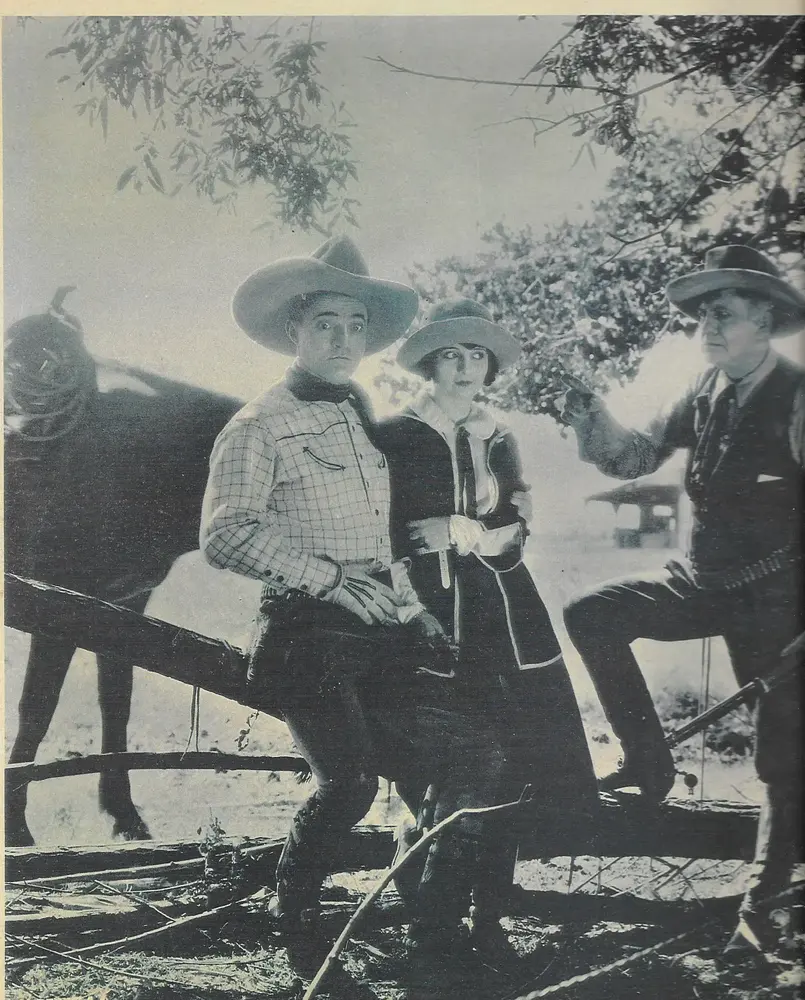
Tom Mix was more than an actor; he was an icon, a living embodiment of the cowboy ideal, and Mile-a-Minute Romeo serves as a prime example of why. His screen presence is electrifying, a potent blend of rugged good looks, athletic grace, and a genuine warmth that shines through the silent medium. Mix didn't just play a cowboy; he lived the role, having honed his skills as a real-life ranch hand, rodeo rider, and even a Texas Ranger. This authenticity is palpable in every frame, lending an undeniable credibility to his portrayal of Lucky Bill. When Mix rides, it's not just a man on a horse; it's a master and his steed moving as one, a ballet of raw power and precision. His relationship with Tony the Horse, his magnificent equine co-star, is legendary, and their synergy is a highlight of this film, as it was in so many of Mix’s productions. Tony is not merely a prop but an active participant, a character in his own right, often executing stunts that would make modern audiences gasp.
The sheer physicality of Mix’s performance is staggering. In an era before sophisticated special effects, every stunt was real, every jump a genuine risk. This commitment to verisimilitude is what set Mix apart and cemented his status as a superstar. He was the original action hero, performing feats that would inspire generations of stunt performers. While other Western stars existed, few could match the dynamism and sheer daredevilry that Mix brought to the screen. His films, including this one, were often built around a series of spectacular action sequences, each designed to push the boundaries of what was possible in cinema. The "dogged determination" mentioned in the plot summary isn't just a character trait; it's a reflection of Mix's own approach to filmmaking, a relentless pursuit of cinematic excitement.
While Tom Mix undeniably commands the screen, the supporting cast provides crucial texture to the unfolding drama. Betty Jewel, as the coveted Molly, delivers a performance that, though constrained by the conventions of silent cinema, conveys a spirited independence and a genuine appeal. Her reactions, expressions, and gestures are key to selling the emotional stakes of the love triangle. She isn't merely a passive object; she's an active participant, making her own choices and responding to the advances of her suitors. J. Gordon Russell as Landry and Jim Mason as Morgan skillfully embody their roles as rivals. Russell, often cast as villains or antagonists, brings a certain menace and competitive edge to Landry, making him a credible threat to Bill's romantic aspirations. Mason, on the other hand, offers a more nuanced portrayal, perhaps representing the 'gentleman'
IMDb —
1918
Community
Log in to comment.