DbcultAccessing Vault...
Cult Review
Senior Film Conservator
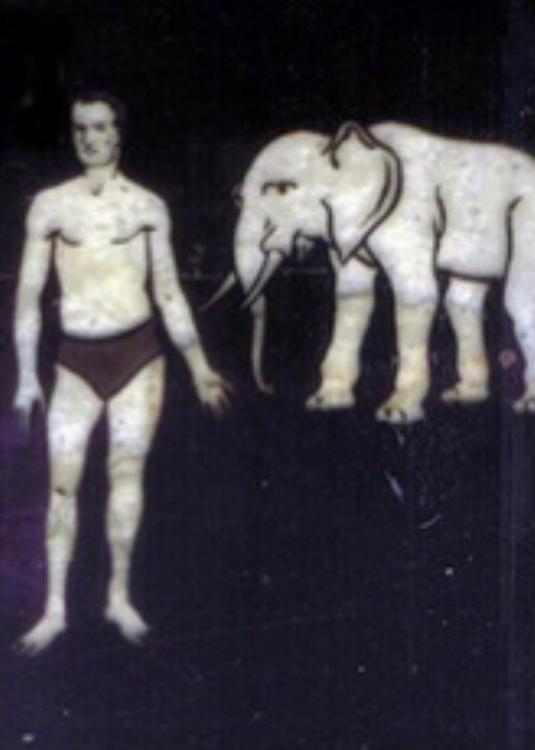
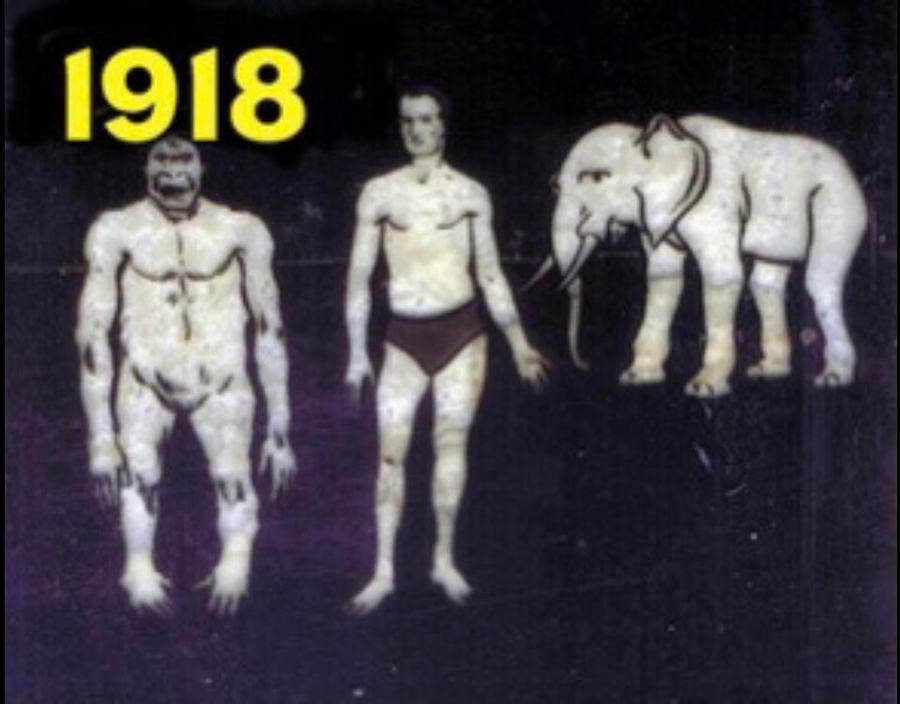
The moment the opening frame flickers to life, a whisper of charcoal strokes coalesces into a ribcage that is simultaneously human and cetacean. The animation does not merely illustrate; it interrogates the very notion of what a bone is, turning each cortical plate into a character with its own narrative arc. This approach feels like stepping into a museum where the specimens breathe, where the femur of a kangaroo leaps across the screen in tandem with the thigh of a marathon runner, each movement choreographed to a subtle, throbbing score that mimics the pulse of life itself.
What distinguishes 'Our Bone Relations' from conventional nature documentaries is its refusal to rely on voice‑over exposition. Instead, the film trusts the viewer's curiosity, allowing the visual grammar of line, shade, and motion to convey complex phylogenetic concepts. The absence of narration is a bold editorial decision that pays off spectacularly: the audience becomes an active participant, piecing together the evolutionary puzzle as the camera pans from the delicate ossicles of a bat's ear to the massive, weight‑bearing pelvis of an elephant.
The hand‑drawn aesthetic is not a nostalgic gimmick; it is a deliberate homage to the scientific illustrations of the 19th century, yet rendered with a kinetic energy that feels unmistakably contemporary. Each sketch is rendered in a palette that respects the film's dark backdrop: the bone whites are softened by subtle greys, while accents of dark orange #C2410C highlight articulations, and splashes of sea blue #0E7490 trace vascular pathways. This chromatic strategy not only guides the eye but also reinforces the thematic undercurrent of interconnectedness.
A particularly arresting sequence juxtaposes the vertebral column of a human child with that of a juvenile sea turtle. The camera glides along the curvature of each spine, revealing how the same series of interlocking bones adapts to vastly different locomotor demands. The child's spine arches gently, a testament to bipedal balance, while the turtle's vertebrae are arranged to support a streamlined, aquatic form. The visual metaphor here is unmistakable: evolution repurposes a common blueprint to meet divergent ecological challenges.
When the film turns its attention to the forelimbs of a chimpanzee and the wings of a hawk, the comparison becomes a study in functional morphology. The chimp's hand, with its opposable thumb, is rendered in fluid strokes that emphasize dexterity, whereas the hawk's wing is depicted as a lattice of elongated phalanges, each feather anchored to a precise skeletal hinge. The animation subtly underscores the principle that the same basic bone structures can be co‑opted for grasping, perching, or soaring, depending on selective pressures.
The film's pacing mirrors the rhythm of a scientific lecture without ever sounding didactic. Transitions are orchestrated through morphing shapes: a rib transforms into a leaf, a vertebra becomes a musical note, a pelvis dissolves into a mountain range. These visual puns keep the viewer engaged, preventing the dense subject matter from feeling oppressive. The occasional use of bright yellow #EAB308 to highlight growth plates or ossification centers adds a playful touch, reminding us that bones are living tissue, constantly remodeling.
Comparatively, the film shares a kinesthetic curiosity with The Mating of Marcella, which also employs animation to dissect human behavior, yet 'Our Bone Relations' expands the scope to a planetary scale. It also echoes the meticulous visual storytelling of Don Quixote, where the line work becomes a character in its own right, guiding the audience through a labyrinth of ideas without the crutch of exposition.
The soundtrack, a minimalist tapestry of ambient drones and occasional percussive clicks, mirrors the film's visual restraint. It never overwhelms; instead, it punctuates moments of revelation—such as the revelation that the hyoid bone of a human shares a structural lineage with the elongated hyoid of a giraffe, enabling both speech and the giraffe's remarkable neck extension.
A noteworthy segment delves into the evolutionary origins of the clavicle. The animation traces its presence from early tetrapods, where it served as a brace for limb movement, to its modern incarnation as a delicate strut supporting the shoulder girdle in humans. The visual narrative is enriched by a brief interlude that references the ancient fish Tiktaalik, whose pectoral fins hint at the nascent stages of the clavicle's development. This historical depth adds gravitas, positioning the film as both an artistic endeavor and a scholarly resource.
The film does not shy away from the macabre. In a stark, monochrome vignette, the skeletal remains of a dinosaur are juxtaposed with a modern human skeleton, underscoring the inevitability of decay while celebrating the continuity of form. The use of negative space here is masterful; the empty voids between bones become as expressive as the bones themselves, evoking a sense of reverence for the fossil record.
While the documentary excels in visual storytelling, it also offers subtle nods to contemporary scientific discourse. References to recent genomic studies that map the regulatory genes governing bone development appear as fleeting text overlays, rendered in sea blue #0E7490 to differentiate them from the primary illustration. This integration of cutting‑edge research ensures the film remains relevant to both lay audiences and academic viewers.
The thematic resonance of 'Our Bone Relations' extends beyond biology; it touches on philosophical questions of identity and belonging. By revealing that the same calcium phosphate crystals that shape a human femur also construct the leg of a giraffe, the film invites contemplation of our place within the broader tapestry of life. This existential layer aligns the work with the contemplative tone of Reaching for the Moon, where visual metaphor serves as a conduit for deeper reflection.
The editing rhythm is deliberately measured, allowing each anatomical comparison to linger just long enough for the viewer to internalize the connection. There is no rush, no sensationalism; the film respects the intelligence of its audience, trusting that curiosity will sustain engagement. This restraint is reminiscent of the pacing found in The Vampires: Satanas, where tension is built through patient visual exposition rather than rapid cuts.
A particularly effective visual metaphor appears when the film illustrates the evolution of the vertebral column through a series of interlocking puzzle pieces. Each piece, rendered in a gradient from ivory to deep amber, snaps into place, forming a continuous spine that stretches from a primitive amphibian to a modern human. The metaphor underscores the incremental nature of evolutionary change, a concept often lost in more sensationalist portrayals of natural history.
The film's conclusion does not tie up loose ends with a tidy summary; instead, it fades into a single, lingering shot of a child's hand grasping a fossilized bone, the darkness of the background swallowing the frame. The final image is both hopeful and ambiguous, leaving the audience to ponder the continuity of discovery across generations. This open‑ended finish aligns with the ethos of educational cinema that values inquiry over certainty.
From a technical standpoint, the animation pipeline appears to have combined traditional pencil work with digital in‑king, preserving the tactile quality of hand‑drawn lines while allowing for precise compositional control. The seamless integration of these techniques results in a visual texture that feels both nostalgic and avant‑garde, a duality that mirrors the film's thematic exploration of ancient structures within modern contexts.
In terms of audience reach, the film's lack of dialogue makes it universally accessible, transcending language barriers and appealing to visual learners worldwide. The strategic use of color—dark orange for emphasis, yellow for highlights, sea blue for scientific annotations—creates a visual hierarchy that guides comprehension without the need for subtitles.
The educational value of 'Our Bone Relations' is amplified by its potential as a teaching tool. Educators could pair the film with hands‑on activities, such as constructing comparative skeletal models, thereby reinforcing the visual lessons with tactile experience. The film's structure, which moves from simple to complex anatomical relationships, mirrors pedagogical best practices for scaffolding knowledge.
When placed alongside other comparative anatomy works, such as the classic textbook illustrations of Gray's Anatomy, this film stands out for its narrative fluidity. It transforms static diagrams into a living story, where each bone is a protagonist in an evolutionary saga. This narrative quality is reminiscent of the storytelling prowess seen in Schools and Schools, where educational content is woven into an engaging plot.
The film's commitment to scientific accuracy is evident in its attention to detail: the curvature of the human lumbar spine is rendered with exacting precision, while the elongated ribs of a bat are proportionally accurate, reflecting the animal's need for wing flexibility. Such fidelity ensures that the film can be cited in academic contexts without compromising artistic integrity.
A subtle yet powerful motif recurs throughout the documentary: the silhouette of a bone casting a shadow that morphs into the outline of a different species. This visual echo reinforces the central thesis that all vertebrates share a common skeletal heritage, a concept that resonates with the philosophical underpinnings of works like Whither Thou Goest, where the interplay of form and meaning is explored.
The film's distribution strategy, favoring streaming platforms with high-definition capabilities, ensures that the intricate line work and subtle color gradients are displayed in their full glory. Viewers with 4K displays can appreciate the minute cross‑hatching that gives depth to each bone, a detail that would be lost on lower‑resolution screens.
Overall, 'Our Bone Relations' succeeds in marrying scientific rigor with artistic elegance. It invites repeated viewings, each time revealing a new layer of insight—whether it be a previously unnoticed similarity between the scapula of a dolphin and that of a human, or a fresh appreciation for the elegance of the vertebral articulation. The film stands as a testament to the power of animation to illuminate complex concepts without sacrificing aesthetic pleasure.
IMDb 5
1935
Community
Log in to comment.