DbcultAccessing Vault...
Cult Review
Senior Film Conservator
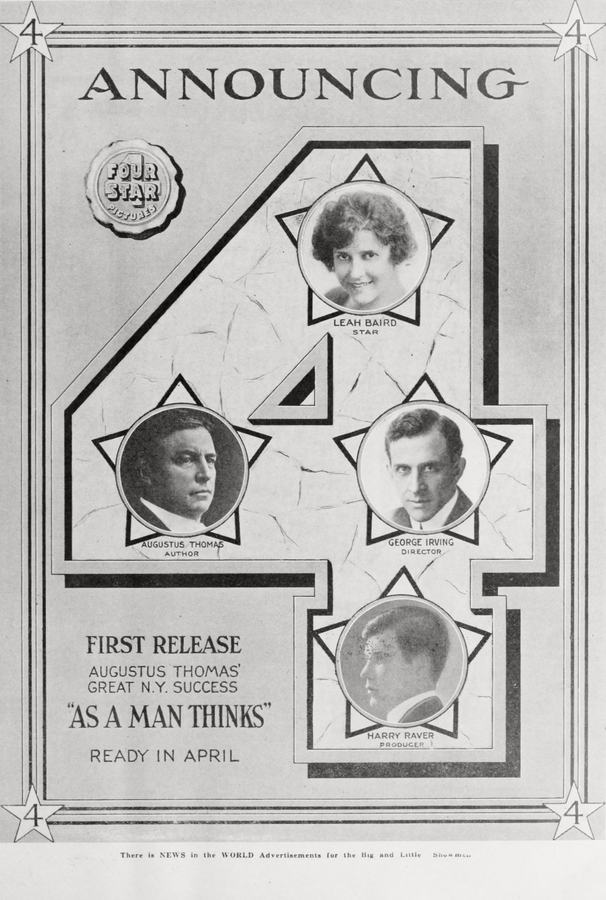
The cinematic landscape, particularly in its nascent years, often served as a potent mirror reflecting the prevailing societal anxieties and moral quandaries of its time. Augustus Thomas's 'As a Man Thinks' (1919) stands as a compelling testament to this, delving into the treacherous waters of marital fidelity, the intoxicating allure of forbidden desire, and the profound reverberations of personal choices. This film, a nuanced exploration of human frailty, transports us to an era where the sanctity of marriage was paramount, yet the temptations of the world, especially in an exotic locale, were undeniably potent.
Our narrative commences with Frank Clayton, a prominent New York magazine publisher, portrayed with a certain gravitas by Warburton Gamble, embarking on a seemingly idyllic European sojourn. Accompanied by his wife, Elinor (Leah Baird), and their young son, Dick (Baby Ivy Ward), the family’s arrival in Paris promises cultural enrichment and familial bonding. Yet, beneath the veneer of this respectable domesticity, a simmering restlessness in Frank's character hints at vulnerabilities waiting to be exploited. The city itself, with its reputation for romance and artistic liberation, becomes an unwitting accomplice in his impending moral dilemma.
Benjamin De Lota (Charles Brandt), an art critic and a contributor to Clayton's esteemed publication, assumes the role of Virgil, guiding Frank through the labyrinthine artistic circles of Paris. It is within this bohemian milieu that Frank's path intersects with Mimi Chardenet (Betty Howe), a model whose youthful beauty and uninhibited spirit cast an immediate, almost hypnotic, spell upon him. The film subtly, yet effectively, portrays the rapid descent into infatuation. It's not a sudden, explosive passion, but rather a gradual, insidious encroachment of desire, chipping away at Frank's marital vows and his self-perceived rectitude. The affair that blossoms between Frank and Mimi is depicted with a delicate balance, avoiding overt sensationalism while conveying the dangerous intimacy that develops.
The narrative deftly builds tension as Elinor, Frank's unsuspecting wife, inadvertently stumbles upon her husband and Mimi together. The scene is pregnant with unspoken anxieties, a moment where the domestic tranquility of the Claytons hangs precariously in the balance. Frank's quick-witted, albeit deceitful, introduction of Mimi as a new writer for his magazine serves as a temporary reprieve, a fragile bandage over a gaping wound. This moment underscores the societal pressures of the era, where maintaining appearances often superseded the painful truth. The facade of respectability, particularly for men of Frank's stature, was paramount, and a public scandal could be ruinous.
The true reckoning, however, awaits them across the Atlantic. Upon their return to New York, the truth, as it invariably does, begins to surface. Elinor, perhaps sensing a shift in her husband's demeanor or piecing together subtle clues, eventually uncovers the extent of his Parisian fling. Leah Baird's portrayal of Elinor is particularly poignant here, conveying a woman whose world is irrevocably shaken, not just by betrayal, but by the shattering of trust. Her quiet dignity in the face of such a profound revelation speaks volumes, highlighting the strength and resilience often demanded of women in such predicaments during that period.
'As a Man Thinks' is more than just a tale of infidelity; it's a profound meditation on the psychological landscape of its characters. The title itself, derived from a biblical proverb, suggests an exploration of internal thought processes shaping external reality and moral character. Frank's actions are not merely impulsive; they are a manifestation of deeper desires, perhaps a yearning for a freedom or excitement absent in his established life. The film invites us to ponder the complexities of human motivation, questioning whether his transgression is a momentary lapse or symptomatic of a deeper dissatisfaction.
The complications that ensue upon Elinor's discovery are not melodramatic; rather, they are presented as the natural, painful consequences of deceit. The film avoids easy answers, instead opting for a more realistic portrayal of marital strife and the arduous path towards potential reconciliation or separation. It delves into the emotional toll on all parties involved – Frank's guilt, Elinor's heartbreak, and Mimi's potentially fleeting involvement. This aspect of the narrative resonates with other films of the era that grappled with similar moral dilemmas, such as The Supreme Temptation, which also explored the perilous nature of desire and its societal repercussions.
The portrayal of gender roles is also noteworthy. Frank, as the male protagonist, is afforded a certain societal leniency, yet he still faces the moral burden of his actions. Elinor, on the other hand, embodies the societal expectation of the wronged wife, navigating her pain with an inner strength that belies her vulnerability. The film implicitly critiques the double standards of the time, even as it operates within them. Compare this to the more explicit societal critiques found in films like The Unwelcome Mrs. Hatch, which often explored the plight of women ostracized by society for perceived moral failings.
The performances, typical of the silent era, rely heavily on exaggerated expressions and body language to convey emotion. Warburton Gamble as Frank Clayton manages to convey a man torn between his desires and his conscience, his initial bravado slowly giving way to regret. Leah Baird's Elinor is a study in quiet suffering and burgeoning strength, her eyes often communicating more than any intertitle could. Betty Howe's Mimi Chardenet, while a catalyst, is not painted as a villainess but rather as a young woman caught in a complex web of emotions, perhaps a victim of circumstance as much as an instigator.
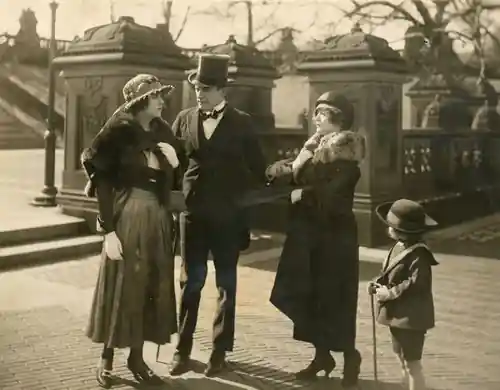
The film's pacing, while perhaps deliberate by early cinema standards, allows for a thorough exploration of the characters' internal struggles. It eschews rapid-fire cuts for longer takes, inviting the audience to linger on facial expressions and subtle gestures. This deliberate tempo, far from being a flaw, contributes to the film's meditative quality, allowing the emotional weight of the narrative to fully sink in. The use of intertitles, while necessary, is judicious, letting the visual storytelling take precedence where possible.
While 'As a Man Thinks' may not possess the grand scale or sensationalism of some of its contemporaries, its strength lies in its intimate and psychologically astute portrayal of human relationships. It serves as a valuable artifact for understanding the moral fabric of early 20th-century American society and the evolving cinematic techniques used to explore complex themes. The film's enduring message about the consequences of one's actions and the profound impact of infidelity on the family unit remains remarkably relevant even today.
The exploration of Frank's internal world, the titular 'thinking,' is particularly compelling. It prompts viewers to consider the battle between impulse and reason, between immediate gratification and long-term consequences. This internal conflict is a universal human experience, making the film's narrative transcend its specific historical context. It’s a compelling reminder that the human heart, with all its desires and weaknesses, has remained largely unchanged despite the passage of time and technological advancements.
In an era where films like Misfits and Matrimony might have offered a lighter, perhaps more comedic, take on marital dilemmas, 'As a Man Thinks' leans into the dramatic weight of its subject matter. It doesn't shy away from the pain and complexity, making it a more profound and thought-provoking experience. The film also stands in contrast to adventure epics or thrillers of the period, such as The Lair of the Wolf or The Millionaire Pirate, by focusing squarely on the internal dramas of its characters rather than external conflicts.
Ultimately, 'As a Man Thinks' serves as a stark, yet empathetic, portrayal of a man's journey through temptation, deception, and the arduous path toward self-awareness. It underscores the fragility of trust and the devastating ripple effects of personal choices on those closest to us. The film's conclusion, while not explicitly detailed in the plot summary, undoubtedly forces Frank to confront the man he has become and the man he wishes to be. This internal struggle, the wrestling with one's conscience, is the true heart of the narrative.
The film's exploration of Parisian allure as a catalyst for moral compromise is particularly evocative. Paris, often romanticized, here becomes a crucible for Frank's character, a place where the boundaries of his conventional life are tested. This geographical shift, from the structured world of New York publishing to the more liberated atmosphere of Parisian art, is instrumental in setting the stage for his transgression. The contrast between these two worlds, one of duty and the other of desire, is a subtle yet powerful undercurrent throughout the film.
The supporting cast, including Jane Jennings and A.J. Herbert, contribute to the tapestry of the narrative, providing the social context and additional perspectives on the unfolding drama. Their presence, though perhaps brief, helps to ground the story in a believable social reality. The film, in its quiet power, reminds us that even in the absence of spoken dialogue, the human condition, with all its complexities and contradictions, can be profoundly explored.
The enduring legacy of 'As a Man Thinks' lies in its ability to spark introspection. It asks us to consider the choices we make, the temptations we face, and the ultimate responsibility we bear for the consequences. It’s a compelling piece of early cinema that, despite its age, continues to speak to the timeless struggles of the human spirit. The film, much like its title suggests, is a powerful reminder that our thoughts, both conscious and unconscious, ultimately forge our destiny and define our character.
The emotional landscape painted by the actors, particularly Gamble and Baird, is rich with nuance. Their non-verbal communication conveys the intricate dance of love, betrayal, and forgiveness (or the struggle for it). The film's power lies not in grand gestures but in the subtle shifts in their expressions, the averted gazes, and the hesitant touches. It's a masterclass in how early filmmakers used the tools at their disposal to tell deeply human stories. The film also serves as a fascinating historical document, reflecting the societal norms and expectations regarding marriage and morality at the time of its release. It offers a window into a past where such transgressions were often met with severe social censure, yet the human propensity for desire remained a constant, challenging these rigid structures.
In conclusion, this cinematic endeavor transcends a simple plot of infidelity, evolving into a poignant character study. It is a film that demands reflection, encouraging its audience to look inward and consider the intricate workings of the human mind and heart. Its themes are as relevant today as they were over a century ago, proving that some aspects of the human experience are truly eternal. The compelling performances, coupled with a narrative that refuses to shy away from the difficult truths of relationships, solidify its place as a significant work in early American cinema.
IMDb —
1919
Community
Log in to comment.