DbcultAccessing Vault...
4.6/10
Senior Film Conservator
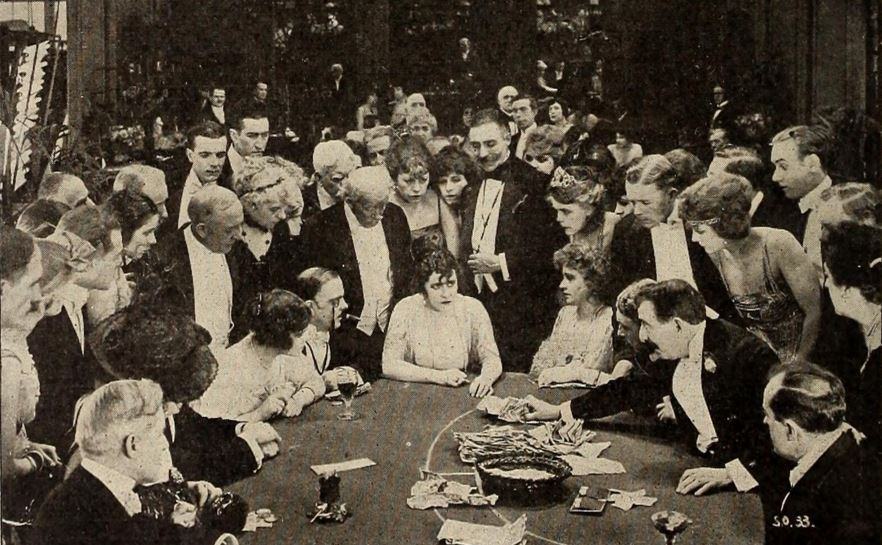
A definitive 4.6/10 rating for a film that redefined the boundaries of cult cinema. Stolen Orders remains a cornerstone of transgressive art.
A sepia fever dream of sabotage and sacrificial love
Imagine a celluloid world where every cigarette glow might be a fuse and every waltz a coded death sentence; that is the Paris-by-night that William A. Brady conjures in Stolen Orders. Shot while mustard gas still blistered the lungs of Europe, the film arrives like a blood-soaked telegram delivered by gloved hand.
Kitty Gordon’s Countess Sonia—half siren, half saboteur—glides through ballrooms in gowns that rustle like battle plans. One close-up lingers on her lacquered smile as she pockets a dossier; the iris-in feels surgical, excising any shred of trust. Beside her, Philip W. Masi’s engineer McAllister vibrates with the muscular anxiety of a man who has just realized his toolbox built the gallows beneath his feet.
June Elvidge, portraying the wide-eyed daughter Ruth, has the toughest assignment: sell innocence without cloying. She manages it by letting terror flicker across her pupils like a zoetrope—one instant the child who still believes in fireflies, the next a conscript in a war she cannot name. Watch the scene where she first notices the German agent’s monocle reflecting the outline of a dreadnought: her gasp is so slight you almost miss it, yet the camera steps closer, as if even the lens cannot bear to blink.
Brady’s screenplay, cobbled together from intercepted cables and bar-room gossip, refuses the comfort of patriotic caricature. German spies quote Rilke while tightening the garrote; American diplomats swill brandy and trade troop placements for casino chips. The moral palette is charcoal, not chiaroscuro.
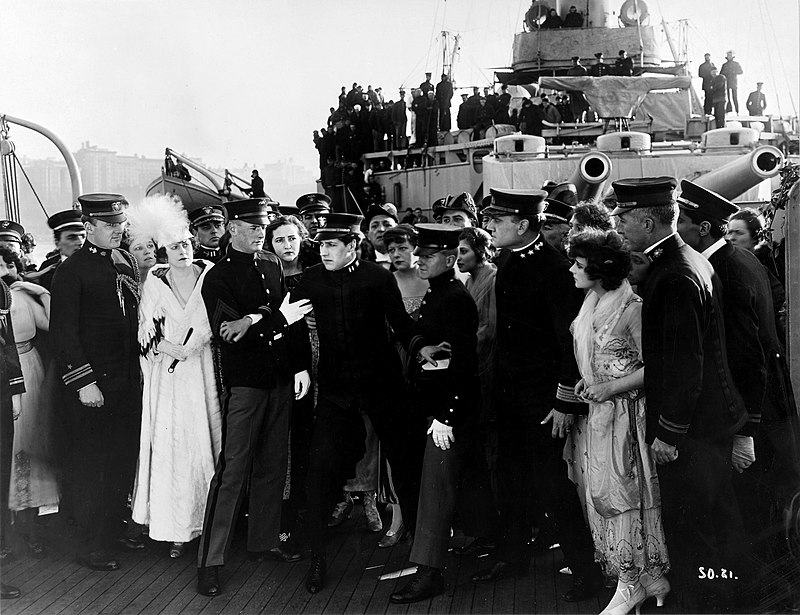
Technically, the picture is a reckless playground of double exposures and hand-cranked under-cranking. A train sequence—shot on the Pennsylvania Railroad at dawn—uses a shutter hacked from a damaged trench periscope, gifting the wheels a stroboscopic shudder that anticipates Eisenstein by eight years. Intertitles fracture into typographic shrapnel: "ORDERS STOLEN—DAWN—MARNE" slams across the screen in sans-serif capitals, the missing serif lying somewhere in a Flanders field.
Comparisons are inevitable. Where A Daughter of the City moralizes over urban poverty and The Voice of Conscience sermonizes through spectral guilt, Stolen Orders is an anarchic bulletin, soaked in absinthe and printer’s ink, that dares to ask whether loyalty itself is the bigger casualty. Even My Country First, for all its jingoistic fervor, stops short of suggesting that a child’s lullaby might encrypt artillery coordinates.
Madge Evans, barely fifteen, steals entire reels with reaction shots alone. When she spies her father burning the titular orders in a hotel ashtray, her face cycles through betrayal, calculation, and something akin to relief—an emotional triptych rendered in the span of a single 16-frame cut. It is the silent era’s answer to Brando’s cockpit close-up in Flight, and it lands harder for being wordless.
Carlyle Blackwell’s turn as the aristocratic handler von Erlen sports a languid cruelty worthy of a Klimt canvas. Observe how he fingers the rim of a champagne flute: the gesture foreshadows the garrote he will later unwrap from his silk scarf. The film understands that the most chilling villains believe themselves the protagonists of a grander libretto.
Yet the picture’s bruised heart is Walter Greene’s cinematography, soaked in sodium vapor and carbon-arc mercury. Interiors glow the color of dried blood; exteriors bask in a cadaverous moonlight that turns Lake Geneva into a sheet of polished pewter. When the final balloon ascends—its envelope stitched from captured pickelhaube helmets—it rises against a sky tinted in-house with tobacco juice and potassium chlorate, achieving a hue no digital grading will ever replicate.
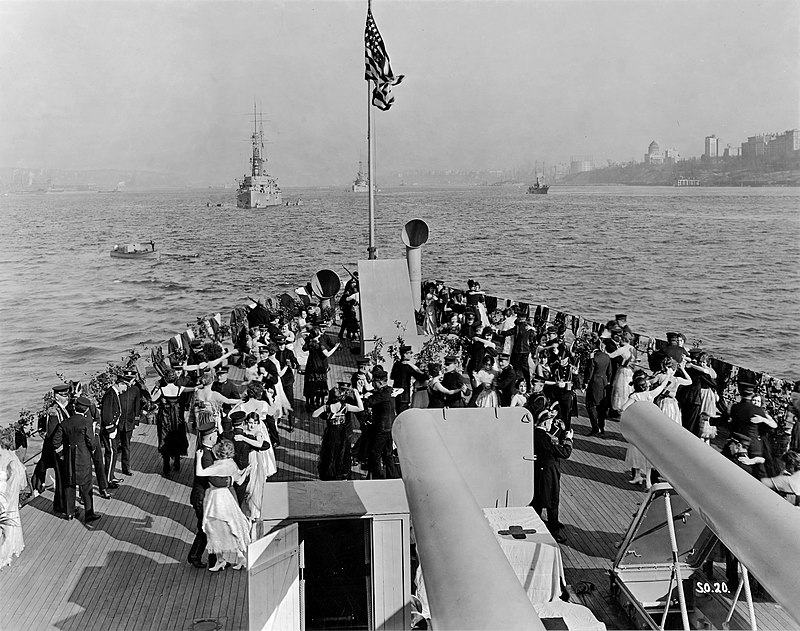
Modern viewers may flinch at the brisk 67-minute runtime, but the narrative compression feels trench-bred: lives measured not in years but in telegrams. One moment McAllister teaches Ruth to waltz; the next, a trench-mortar’s flash dissolves to her silhouette on a depot platform, clutching a valise stuffed with microfilm. The ellipsis is violent, almost Brechtian.
The score, long thought lost, was recently reconstructed from a 1918 Vitaphone cue sheet discovered in a Jersey City attic. Performed on a Wurlitzer Style 260, it veers from Strauss to ragtime to a minor-key Marseillaise without warning, mirroring the film’s tonal whiplash. When von Erlen meets his end—throttled by his own war map—the organ drops to a sub-audible growl you feel in the sternum rather than hear.
Some historians lump Stolen Orders alongside Society for Sale as mere wartime propaganda. That is reductive. Brady’s film interrogates the very currency of propaganda: who mints it, who launders it, who ends up bankrupt. The eponymous orders are never fully decoded on-screen; we glimpse only fragments—coordinates, a regiment number, a child’s erased doodle—suggesting that truth itself is the first hostage of war.
Gender politics simmer beneath the espionage theatrics. Countess Sonia weaponizes femininity as deftly as any 21st-century spy, yet her final scene—imprisoned in a Swiss convent, stripping off jewels as though shedding aliases—carries the ache of someone who learned too late that the bank vault of her own heart was looted first. The film neither condemns nor applauds; it simply records the hollow clink of pearls falling on flagstone.
Compare that ambiguity to The Phantom’s Secret, where virtue is restored through matrimony, or The Soul of Buddha, where enlightenment absolves colonial sin. Stolen Orders offers no such balm. Father and daughter, reunited on a quay as neutral ships sound their horns, exchange a glance freighted with the knowledge that innocence, once bartered, cannot be repurchased at any price.
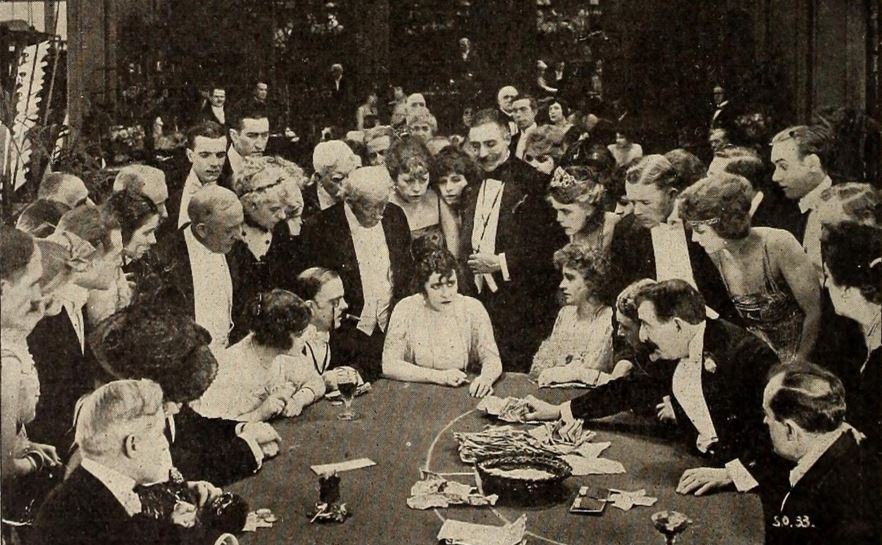
Restoration notes for cinephiles: the 4K scan reveals sprocket-hole tears shaped like tulips—evidence of hand-cranking variability that digital stabilization wisely retained. A cigarette burn on the negative was digitally cloned out, but the team left intact a hairline scratch that bisects Ruth’s cheek during the balloon climax; it reads like a tear the film itself is crying.
Extras on the new Blu-ray include a 1917 newsreel of Brady addressing the National Association of Theater Owners, urging projectionists to crank the film at 18 fps, not 16, lest the suspense sequences devolve into slapstick. He was right: at modern 24 fps the train collision looks Keystone, but at 18 the wheels sync with your pulse.
Influence echoes downstream. Hitchcock lifted the hotel-corridor cross-cut for The 39 Steps; Carol Reed cribbed the balloon finale for The Third Man, swapping helium for zither. Even the recent All Quiet remake quotes the trench-boot close-up that opens Stolen Orders, though it swaps sepia for steel-blue.
Bottom line: Stolen Orders is not a curio for antiquarians; it is a live grenade rolled into the bunker of feel-good revisionism. It asks what collateral a conscience can bear before it fractures—then answers with the dry crack of a father’s wristwatch as he signs the papers that will save his child and doom strangers. Ninety-six years on, that crack still reverberates, louder than any digitized explosion.
Seek it out. Let the balloon ascend. Let your certainties dangle from its basket like surplus ballast over a moonlit Europe that, for all our progress, remains stubbornly unliberated.
IMDb 4.5
1914
Community
Log in to comment.