DbcultAccessing Vault...
Cult Review
Senior Film Conservator
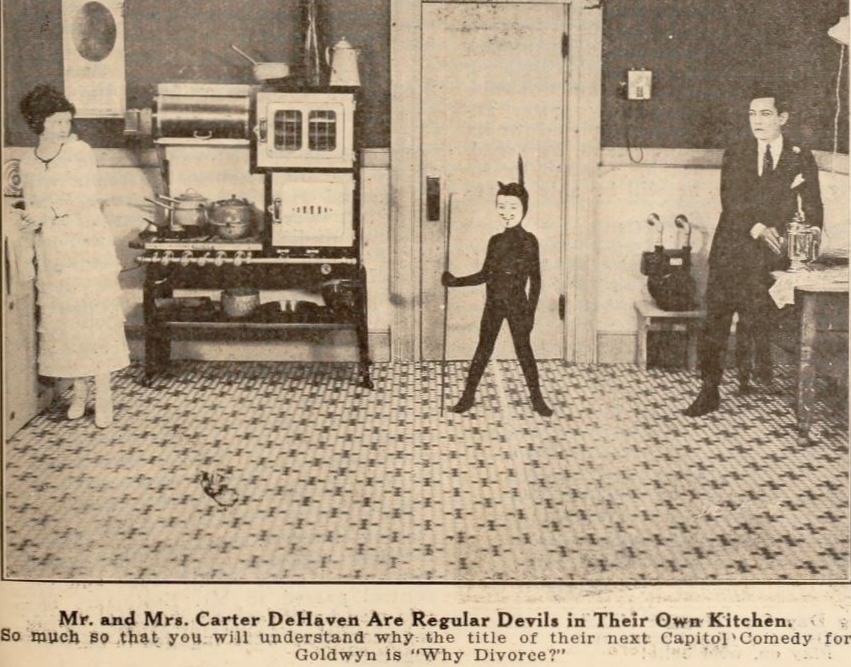
There are films that merely narrate a story, and then there are those that dissect a universal human condition with such audacious originality that they transcend their era. Bertie Badger Moyers' 'Why Divorce?', a silent era gem from 1919, unequivocally belongs to the latter category. It is not merely a cinematic artifact; it is a profound, albeit whimsically presented, psychological study of marital friction, rendered with an allegorical depth that remains strikingly relevant over a century later. In an age when cinema was still finding its voice, Moyers dared to explore the very architecture of a relationship in crisis, transforming a domestic spat into a grand, symbolic theater.
At its core, 'Why Divorce?' presents us with a seemingly ordinary young couple, played by the real-life husband and wife team of Flora Parker DeHaven and Carter DeHaven. Their dynamic on screen is an intricate dance of affection and antagonism, a testament to their genuine chemistry and comedic timing. We witness them embroiled in the kind of petty quarrels that plague even the most devoted partnerships, followed by the inevitable, tender reconciliations that promise a fresh start. Yet, the cycle persists, an emotional pendulum swinging between tenderness and exasperation. It's a portrayal that feels acutely observed, capturing the exasperating yet often endearing irrationality of human emotions within a committed relationship.
The true genius of Moyers' narrative unfurls when the couple, weary of their incessant bickering and desperate to avert the social ignominy of divorce, concocts an extraordinary scheme: a physical partition of their home. A simple white tape, unassuming yet laden with symbolic weight, is stretched through their living space, delineating two distinct territories. Each section becomes exclusively sacred to one spouse, an inviolable zone of personal autonomy. This isn't merely a quirky plot device; it's a brilliant visual metaphor for the emotional walls we erect within relationships, the psychological boundaries we draw when communication fails and understanding falters. It speaks volumes about the human tendency to seek control and distance when intimacy becomes overwhelming or painful. This literal division of space mirrors the figurative division of their hearts, a desperate attempt to manage conflict by separating rather than resolving.
The white tape, stark against the domestic backdrop, serves as a constant, tangible reminder of their fractured state. It's a silent character in itself, observing their interactions, or lack thereof, with an almost judgmental presence. While other films of the era might have tackled marital discord through dramatic confrontations or tearful pleas, as seen in the more melodramatic strains of Saffo or the complex domestic struggles in Lady Audley's Secret, 'Why Divorce?' opts for a uniquely visual and allegorical approach. It transforms a private struggle into a public spectacle within the confines of their own home, making the audience privy to the absurdity and pathos of their chosen solution.
Adding another layer of fascinating complexity to this domestic drama are the almost invisible, ethereal figures that hover around the couple: a benevolent Cupid and a mischievous Mephisto. This ingenious inclusion elevates the film from a mere slice of life to a profound allegorical exploration of the forces that shape human relationships. Cupid, a spectral presence, flits about with an air of gentle concern, perpetually attempting to placate the sparring spouses, to rekindle the embers of their affection. He represents the inherent desire for harmony, the lingering love, and the potential for reconciliation that often persists even amidst the most bitter disputes. His efforts, though often thwarted, are a poignant reminder of the enduring power of connection.
Conversely, a diminutive Mephisto, armed with a comically menacing pitchfork, embodies the darker impulses, the temptations towards discord, the petty grievances that fester and grow into full-blown conflicts. He delights in prodding the couple towards further troubles, a personification of the destructive forces of ego, stubbornness, and misunderstanding that can sabotage even the strongest bonds. This Mephistophelean figure adds a layer of dark comedy and a subtle commentary on the internal demons we battle in our relationships. The interplay between these two mythical beings, unseen by the characters yet palpably influencing their actions, transforms the marital conflict into a universal struggle between the forces of love and discord, good and evil, within the human psyche. It's a sophisticated conceptual framework that few films, even today, manage to articulate with such elegant simplicity.
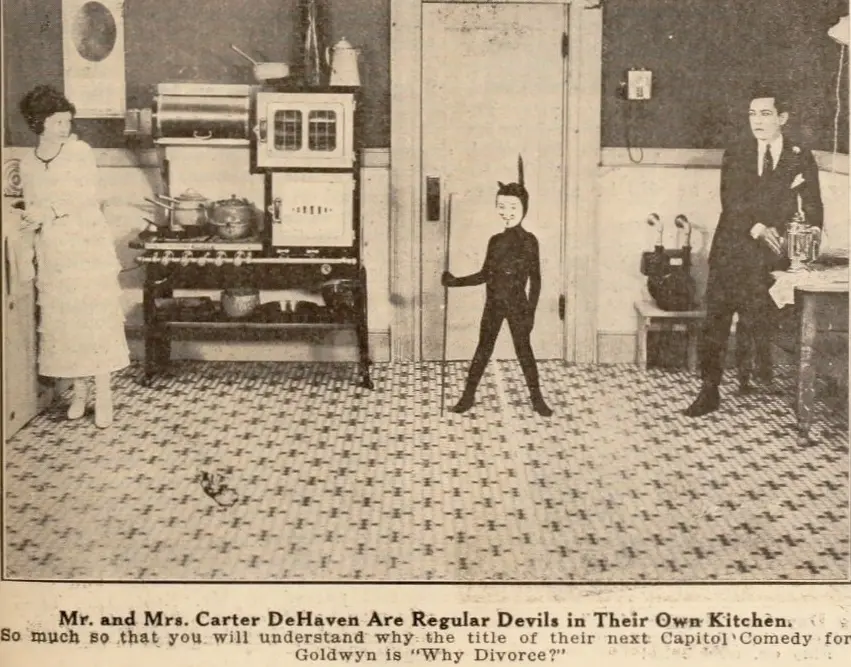
Flora Parker DeHaven and Carter DeHaven, as the embattled couple, deliver performances that are both nuanced and highly expressive, a hallmark of skilled silent film acting. Their ability to convey a wide spectrum of emotions — from exasperation and anger to moments of fleeting tenderness and longing — without spoken dialogue is remarkable. Flora Parker DeHaven, with her expressive eyes and gestures, masterfully portrays the wife's fluctuating moods, her weariness with the conflict, and her underlying affection for her husband. Carter DeHaven, equally adept, brings a relatable blend of stubbornness and charm to his role, making his character both frustrating and sympathetic. Their on-screen chemistry, undoubtedly amplified by their real-life marital status, lends an authenticity to their squabbles and reconciliations. They navigate the absurdities of their situation with a comedic grace that prevents the film from descending into mere farce, grounding it in genuine human emotion. Unlike some of the more overtly theatrical performances seen in films like The Siren's Song, the DeHavens manage to imbue their characters with a sense of intimate realism, despite the allegorical framework.
Bertie Badger Moyers, as the writer, deserves immense credit for crafting a narrative that is both conceptually daring and emotionally resonant. The screenplay for 'Why Divorce?' demonstrates an astute understanding of human psychology and the dynamics of interpersonal relationships. Moyers doesn't shy away from the ugliness of conflict, but frames it within a creative, almost whimsical, structure that invites contemplation rather than judgment. The decision to personify the forces of harmony and discord through Cupid and Mephisto is a stroke of genius, transforming an intimate domestic struggle into a universal human allegory. This kind of nuanced storytelling, which blends realism with fantastical elements to explore deeper truths, was quite progressive for its time. It contrasts sharply with the more straightforward dramatic narratives often found in films like The Nation's Peril, which focused on grander, external conflicts. Moyers instead delves into the intricate battlefield of the human heart, demonstrating that the most profound dramas often unfold behind closed doors.
What makes 'Why Divorce?' truly remarkable is its timelessness. The central question posed by its title, and explored through its narrative, remains as pertinent today as it was over a century ago. Why do relationships falter? What are the internal and external pressures that lead to their dissolution? The film doesn't offer simplistic answers, but rather a rich tapestry of observation and allegory that encourages viewers to ponder these complex questions for themselves. The white tape, a symbol of desperate measures to preserve a façade, speaks to the compromises and contortions individuals sometimes undertake to avoid confronting deeper issues. It's a fascinating counterpoint to the more overt expressions of desire and conflict seen in films like The Market of Vain Desire, where motivations are often more transparent. Here, the struggle is internal, almost existential.
The film's exploration of domesticity and the challenges inherent in cohabitation resonates deeply. Every couple, at some point, grapples with the tension between individual space and shared life. 'Why Divorce?' exaggerates this tension to an almost farcical degree, yet in doing so, it illuminates a fundamental truth about human relationships. It reminds us that sometimes, the very act of trying to separate can paradoxically highlight the unbreakable bonds that tie us together. The film's light touch, despite its serious subject matter, is also a testament to its charm. It never feels preachy or overly dramatic, maintaining a delicate balance between comedy and poignant observation. This makes it a more accessible and enjoyable exploration of marital dynamics compared to the starker realities often depicted in films like Her Man, which focused on harsher social conditions impacting relationships.
In the grand tapestry of silent cinema, 'Why Divorce?' stands out as a unique and innovative piece. It showcases the creative ingenuity of filmmakers during an era when they were constantly experimenting with visual storytelling and narrative techniques. The use of allegorical figures and symbolic props was not new, but Moyers' application of them to such an intimate, relatable subject matter was particularly effective. It represents a sophisticated understanding of how cinema could not only entertain but also provoke thought and offer metaphorical insights into the human condition. While films like Daddy-Long-Legs explored relationships through more conventional romantic drama, 'Why Divorce?' took a bold, conceptual leap. It reminds us that the silent era was far from a primitive stage of filmmaking; it was a period of profound artistic exploration and groundbreaking narrative invention.
The film's clever premise and its execution ensure its place as more than just a historical curiosity. It's a vibrant, engaging, and remarkably insightful piece of cinema that continues to speak to the universal complexities of love, marriage, and the delicate art of coexistence. For anyone interested in the evolution of storytelling, the power of visual metaphor, or simply a charming and thought-provoking exploration of marital dynamics, 'Why Divorce?' is an absolute must-see. It's a reminder that sometimes, the most profound questions are best asked in silence, allowing the imagery and the allegories to provide their own eloquent answers. It champions the idea that even in the face of division, there's always a lingering hope for connection, a whisper of Cupid's influence against Mephisto's prodding, and the potential for the white tape to eventually be rolled away.
IMDb —
1918
Community
Log in to comment.