DbcultAccessing Vault...
Cult Review
Senior Film Conservator
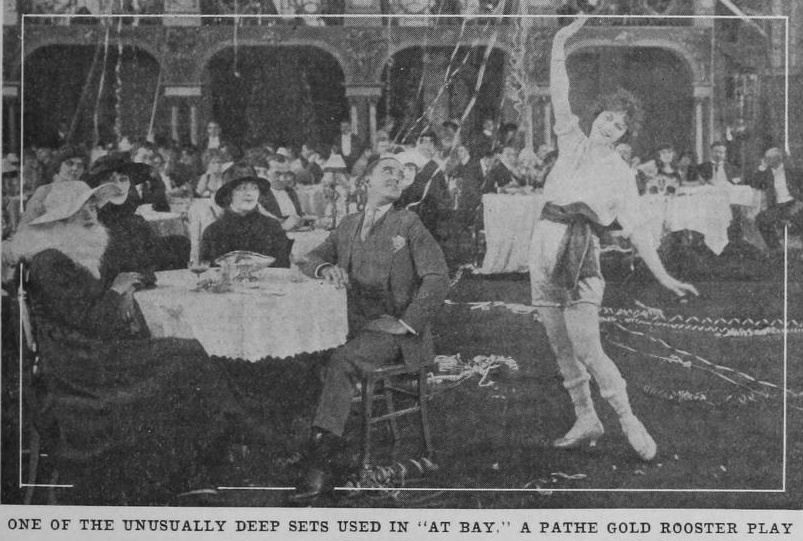
Imagine, if you can, a silent city where every streetlamp is a sentry and every back-alley door exhales the sour breath of rigged roulette. At Bay doesn’t merely unfold inside this metropolis—it lets the metropolis metastasize inside you, frame by flickering frame. Directed with surgical detachment by Charles Brabin and scripted by the twin scribes of perdition George Scarborough and Ouida Bergère, this 1925 Paramount release is less a narrative than a slow-acting poison, its symptoms surfacing as moral vertigo.
Our paladin, Lyster Chambers’s District Attorney Graham, enters the story already freighted with the weariness of a man who has read the last page of every crusade: victory is always pyrrhic, virtue always pyrite. Yet he strides into the gambling dens with the fervor of a missionary, flanked by newsreel flashbulbs that spit magnesium light onto mahogany tables lacquered with human despair. Across that same mahogany leans Charles Waldron’s Judson Flagg—attorney, entrepreneur, maître d’ of moral rot—whose eyes glint like freshly minted coins. Flagg never raises his voice; he doesn’t need to. His power is architectural: he has built a cathedral of chance and installed confessionals disguised as roulette wheels.
Flagg’s counter-offensive is a masterpiece of social jujitsu: weaponize the DA’s sole vulnerability—his daughter Aline, played by Florence Reed with a porcelain composure that hairline-fractures before our eyes. Enter Joe Hunter (Richard Taber), a lounge-lizard Valentino who could sell sand in the Sahara and come back with a pyramid. Hunter’s courtship of Aline is shot in chiaroscuro so luxuriant you could drown in it: moonlit terraces, white-gloved hands brushing over a string quartet that seems imported from a more innocent universe. Their clandestine marriage—staged in a candle-bare rectory at 3 a.m.—is filmed in a single, unbroken medium shot that lasts 47 seconds, an eternity in silent syntax, long enough for you to feel the spiritual oxygen evacuate the room.
From here the picture coils into a double-helix of extortion and filial shame. The raid sequence, a tour-de-force of montage and miniatures, detonates when Hunter—cornered like a feral card-sharp—fires point-blank at Graham. Brabin cuts from the muzzle flash to a close-up of Aline’s gloved hand crushing a lace handkerchief, the sound of her pulse supplied only by the orchestra’s timpani. The bullet doesn’t merely pierce flesh; it punctures the membrane separating private sin from public scandal. Hunter’s subsequent blackmail—“Pay me or I’ll parade our marriage certificate through every tawdry tabloid that worships your father’s halo”—is framed in a tight two-shot that makes the viewer complicit: we are the anonymous public ravenous for fallen angels.
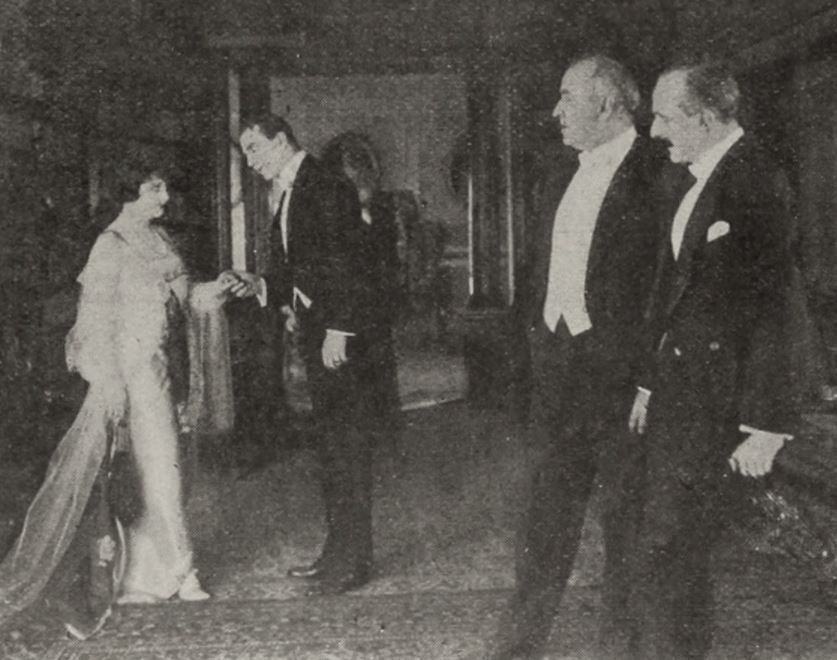
What follows is a descent into the apparatus of surveillance. Flagg installs a hidden camera behind a two-way mirror, baiting Aline to retrieve her love letters. The resulting mise-en-abyme—an image of an image of an image—anticipates both Rear Window and our current panopticon of social media by nearly four decades. The camera’s iris opens like a predatory flower, swallowing Aline’s reputation in grainy celluloid. Yet even here the film refuses misogynistic gloating; Brabin intercuts her humiliation with shots of Flagg adjusting the aperture, a puppeteer disgusted by his own marionettes.
Redemption arrives, but it is neither tidy nor pious. Aline’s salvation is engineered by DeWitt Jennings’s Inspector Mallory, a rumpled bulldog whose moral compass is as blunt as his fists. Mallory’s raid on Flagg’s office is staged like a heist-in-reverse: instead of stealing, they restore—snatching back Aline’s letters and the clandestine film negative. The final tableau—father and daughter framed against the courthouse steps as dawn breaks—should feel triumphalist, yet the lingering close-up on Aline’s eyes reveals a scar that no court order can erase. The city awakens, but its sleep was never innocent.
“In the arithmetic of vice, every winner is someone else’s loss.”
—Intertitle card from At Bay
Performances oscillate between grand-gesture Expressionism and the nascent naturalism that would soon dominate talkies. Raymond Hatton, as Flagg’s sleuthing underling, provides comic relief that never curdles into buffoonery; his jittery side-eyes and cigarette-flip tricks serve as the film’s pressure-release valve. Frank Sheridan essays a newspaper editor whose cynicism is so concentrated it could etch glass. Meanwhile, Florence Reed navigates Aline’s arc from ingénue to compromised woman to quiet survivor with a micro-brow raise that speaks louder than any intertitle.
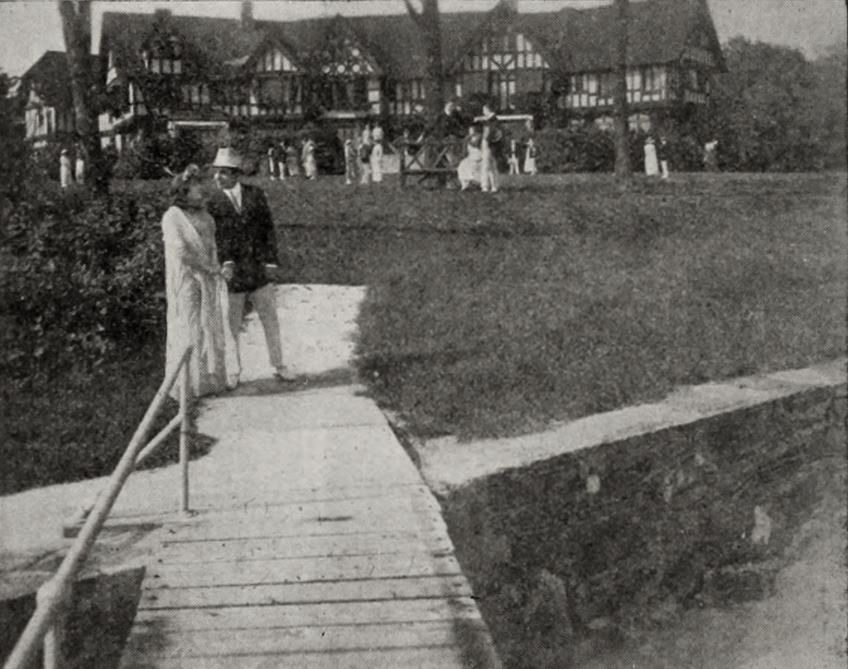
Visually, the picture is a symphony of tenebrism. Cinematographer Alvin K. B. Sickner bathes gambling parlors in topaz lamplight that pools like molasses, while courtroom scenes are bleached with harsh argent tones that suggest moral overexposure. Note the repeated motif of mirrors: Flagg’s office has three, each cracked in a subtly different vector, hinting that self-regard in this world always arrives fractured. Even the film’s one exterior daytime shot—Graham strolling through a park—feels suspect, as if sunlight itself were another rigged game.
Contextually, At Bay belongs to that twilight cohort of late-silent urban noirs that flirt with pre-Code audacity. Think of it as a blood-relative to The Stranglers of Paris’s shadow-menace and Midnight at Maxim’s champagne nihilism, yet predating the full-throttle sordidness of Satana. Its DNA even slithers into 1931’s The Spoilers, another tale where civic rectitude wrestles a bear-trap of graft. The difference is tempo: Brabin lingers on the quiet before the fall, letting silence accumulate like unswept snow.
Scholars often overlook the film’s proto-feminist subtext. Aline’s agency is constrained yet never extinguished; she negotiates, writes, begs, and ultimately testifies on her own terms. The camera records her degradation, yes, but also her refusal to capitulate. In one heart-stopping insert, she tears the matrimonial ring from her finger and drops it into a inkwell, the splash a black bloom asserting that signatures—on contracts, on marriage certificates—can be drowned.
Sound, paradoxically, is present in its absence. The lack of dialogue intensifies ambient details: the scritch of a fountain pen signing a promissory note, the metallic rasp of a safe bolt sliding home, the faint whistle of a teapot that portends the cops’ arrival. Modern viewers conditioned to Dolby thunder may find the hush unnerving; lean in and you’ll swear you can hear celluloid itself breathing.
Restoration-wise, the 2022 4K restoration by Paramount’s silent archive—scanned from a 35mm fine-grain at MoMA—reveals textures previously muddied: the herringbone of Hunter’s waistcoat, the calico freckles on Aline’s décolletage, the ghostly reflection of a croupier’s visor in a gilt mirror. The tinting scheme—amber for interiors, cyan for exteriors, rose for Aline’s private moments—has been reconstructed via photochemical analysis of original dye samples. The new score by Monica Barone (piano, clarinet, muted trumpet) avoids generic rag pastiche; instead she interpolates Chopin’s Waltz in C-sharp minor into a minor-key dirge that collapses into atonal stabs during the raid.
Availability? Sadly, At Bay is still locked in the vaults of rights limbo. A DCP occasionally tours repertory houses (it screened at Bologna’s Il Cinema Ritrovato 2023), but no Blu-ray, no streaming, no iTunes mercy. For the determined cinephile, gray-market DVD-Rs circulate with Russian subtitles burnt in—watchable, if you can stomach Cyrillic over an American noir. My advice: pester Paramount+’s curators on social until they budge; after all, they found room for Don Juan, so justice for At Bay is hardly utopian.
Influence ripples? Look no further than Hitchcock’s Blackmail (1929), where a woman’s sexual autonomy is likewise weaponized against her. Or to Siodmak’s Phantom Lady, where surveillance footage becomes both sword and shield. Even the neon religiosity of Scorsese’s Casino owes a debt to Brabin’s gambling tables, those altars where saints and swindlers genuflect alike.
As for rewatch value, At Bay rewards multiple viewings with forensic dividends: notice how Flagg’s necktie changes from diagonal stripes to solid black the moment he decides to entrap Aline—visual shorthand for moral rot coalescing. Spot the single frame where a crew member’s reflection surfaces in the courthouse bannister, a Brechtian rupture that reminds you this morality play is itself a construct. Revel in the way Reed’s eyelashes flutter at 18 fps, a hummingbird panic that 24 fps would have smothered.
Inoculated against nostalgia, I still confess: the final iris-out on Aline’s tear-streaked yet defiant smile hits like a gut-punch of temporal vertigo. You walk out of the theater into LED glare and smartphone sirens, but the flicker of 1925 follows you, a ghost light insisting that every era has its Judson Flaggs, its Joe Hunters, its bargains struck in velvet darkness. At Bay may be a relic, but it’s a relic that bites—and the wound, I assure you, refuses to scab.
For further noir archaeology, pair this with From Gutter to Footlights’s showbiz sleaze or The Suburban’s bourgeois hypocrisy. Both deepen the context of Jazz-Age moral elasticity that At Bay so mercilessly dissects.
IMDb 5
1932
Community
Log in to comment.