DbcultAccessing Vault...
Cult Review
Senior Film Conservator
Stepping into the flickering glow of George Fitzmaurice’s 1915 silent gem, Who’s Who in Society, one is immediately struck by its surprisingly incisive social commentary, draped in the guise of a domestic drama with a thrilling undercurrent of mystery. This isn't merely a period piece; it's a vibrant, often humorous, and ultimately suspenseful dissection of class aspiration, deception, and the true meaning of societal standing. Fitzmaurice, a director whose prolific output in the silent era often explored nuanced human relationships and moral quandaries, here crafts a narrative that feels both timeless and acutely reflective of its specific cultural moment. The film opens by introducing us to the O'Brien household, a microcosm of burgeoning American ambition and its inherent contradictions.
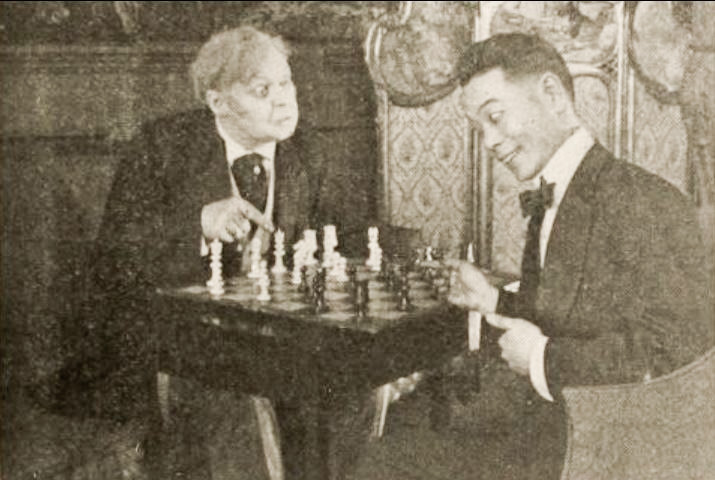
At the heart of this domestic tableau is Mrs. O'Brien, brought to life with a delightful blend of vanity and earnestness by Kate Sergeantson. Her character is a magnificent study in the anxieties of the newly affluent. Possessing a fortune but lacking the coveted patina of old money, Mrs. O'Brien embarks on a relentless, almost desperate, quest for social prominence. Her every gesture, every pronouncement, is geared towards ascending the slippery slopes of the social ladder. This ambition, however, stands in stark contrast to the grounded, unpretentious nature of her husband, Mr. O'Brien, portrayed with quiet dignity by William H. Power. He finds his contentment not in the superficial posturing of society, but in the cerebral engagement of a chess game, a man wholly at peace with his own identity, unburdened by the need for external validation. This fundamental divergence in their aspirations forms the initial comedic and dramatic tension of the film, a familiar trope in early cinema that Fitzmaurice manages to imbue with fresh relevance.
Their charming daughter, Mary Ellen (Della Connor), represents a more innocent, less corrupted facet of the family. Her youthful idealism and genuine warmth stand as a quiet counterpoint to her mother's mercenary social machinations. The household is further rounded out by a Japanese butler, a figure common in period dramas, whose presence, while potentially problematic through a modern lens, serves to highlight the O'Briens' aspirations to an 'exotic' touch of class. The narrative truly ignites when Mrs. O'Brien dispatches invitations for a grand party, only to be met with humiliating rejections from the city's entrenched aristocracy – the Van Dusens and Van Astorbilts. This public snub, a crushing blow to her fragile ego, plunges her into a state of despair. It's a moment that resonates with anyone who has ever felt the sting of social exclusion, regardless of their wealth.
Just as Mrs. O'Brien wallows in her perceived social failure, destiny, or perhaps a more calculated machination, intervenes. An automobile, seemingly by chance, breaks down directly in front of their stately home. From it emerges a slender, impeccably dressed young man who introduces himself as Lord Algernon Ste. Clair (Edward Lester), an embodiment of aristocratic charm and sophistication. For Mrs. O'Brien, this is nothing short of a divine intervention, a providential offering. Scenting not just a noble guest, but a potential noble match for her daughter, and thus an undeniable ascent for her family into the echelons of society, she promptly extends an invitation for him to stay for her ill-fated party. Lord Algy, with his polished manners and aristocratic lineage, immediately becomes the focal point of Mrs. O'Brien's social redemption project. This sudden appearance of a 'Lord' out of thin air, crashing into the lives of the socially ambitious, is a classic device, echoing similar themes of mistaken identity and class aspiration found in films like The Magic Skin, where external appearances often mask deeper realities or desires.
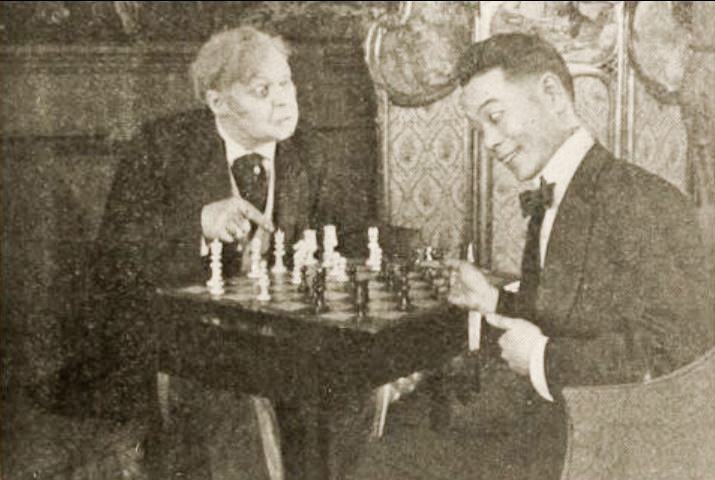
However, the plot thickens with the simultaneous introduction of another enigmatic figure. A rough-looking character, whose initial appearance is anything but refined, alights from a different automobile and, after a meticulous reconnaissance of the O'Brien residence, vanishes. An hour later, this same individual, now immaculately groomed and radiating an understated confidence, materializes in the very club where Mr. O'Brien habitually seeks refuge in his solitary chess games. This transformation, both physical and social, is a brilliant piece of visual storytelling, immediately signaling that appearances are deceiving and that a deeper game is afoot. The stranger, with a keen eye for opportunity and a shared passion for the game, offers himself as a partner to the lonesome Irishman. This seemingly innocuous encounter serves as his ingenious entrée into the O'Brien household and, crucially, into Mary Ellen's party. This subtle infiltration, built on a shared interest rather than overt social climbing, establishes a fascinating contrast with Mrs. O'Brien's more blunt approach.
The party itself, an event Mrs. O'Brien had hoped would be a glittering showcase of her newfound status, instead becomes a rather eclectic affair. The guest list, notably devoid of the desired Van Dusens and Van Astorbilts, includes the good-hearted but distinctly un-aristocratic Flanagans and their two children, alongside the two enigmatic suitors: Lord Algy and the 'stranger.' This motley assembly provides ample opportunity for both comedic friction and dramatic tension. Immediately, a vigorous romantic suit commences for the hand of pretty Mary Ellen. Lord Algy, with his aristocratic veneer, presents himself as the obvious choice for Mrs. O'Brien's social ambitions. Yet, Mary Ellen, with an instinct that transcends her mother's superficial desires, shows a distinct preference for the enigmatic 'stranger.' This romantic triangle forms the emotional core of the film, allowing Fitzmaurice to explore the age-old conflict between love and social obligation, a theme often explored in melodramas like Hearts of Oak or The Broken Promise.
As the evening progresses, the atmosphere shifts from social satire to palpable suspense. The film expertly transitions into a thrilling mystery, a testament to Fitzmaurice's versatile storytelling. The 'stranger,' having been invited to spend the night, slips into the library, a space traditionally associated with quiet contemplation, only to become an unwitting witness to a bizarre and unsettling event. Mr. O'Brien, in a state of agitated excitement, observes a disembodied white hand deftly poking through the portieres, seemingly in search of an electric switch. This moment, executed with a classic silent film flair for visual suspense, immediately raises the stakes. The 'stranger,' demonstrating remarkable quick thinking and physical prowess, throws Mr. O'Brien to the floor, shielding him from potential harm. In another instant, Lord Algy, now brandishing a gun, stands over them, his aristocratic facade cracking to reveal a darker, more dangerous persona. The ensuing scuffle is brief but intense, culminating with the 'stranger' making a dramatic exit through the French window, gun in hand, leaving behind a bewildered Mr. O'Brien and a now thoroughly compromised Lord Algy.
The mystery deepens an hour later. Lord Algy, now in the privacy of his room, cautiously draws a string of pearls from his pocket, a clear indication of his nefarious activities. This moment of illicit triumph is abruptly shattered as the 'stranger,' having seemingly vanished, raises his head from behind Lord Algy's bed, gun once again in hand. This reveal is masterfully staged, a classic cinematic jump scare that works even in the silent medium, building on the tension that has been steadily accumulating. The subsequent explanations are swift and revelatory: the 'stranger' is, in fact, a government secret service agent, a long-term operative on the trail of the notorious crook known as Lord Algy. This twist, while perhaps a familiar trope in crime thrillers of the era like The Shooting of Dan McGrew, is executed with satisfying precision, transforming the romantic drama into a full-blown spy narrative. Edward Lester's performance as Lord Algy, initially charming and then chillingly exposed, is particularly noteworthy for its duality.
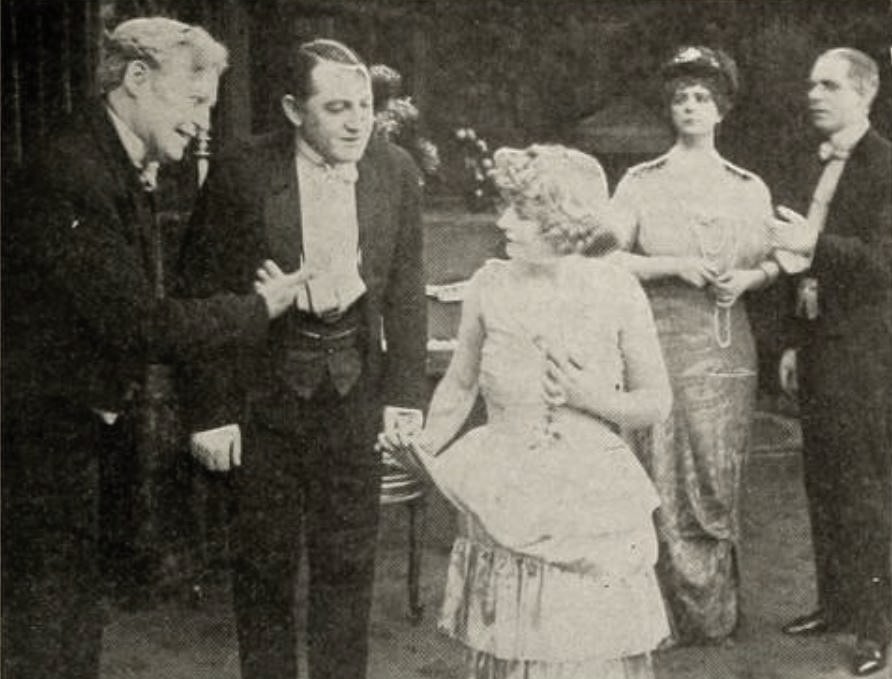
The denouement brings a satisfying resolution to the various threads of the narrative. Mr. O'Brien, ever the pragmatic and morally upright figure, rejoices at the exposure of the villain and the triumph of justice. Mary Ellen, whose intuition had guided her towards the true character of the 'stranger,' now slips her hand into his, a gesture of profound trust and affection, solidifying their genuine connection. It's a heartwarming conclusion for the young lovers, free from the constraints of social pretense. However, the film reserves its most poignant, and perhaps most cynical, commentary for Mrs. O'Brien. Her grand ambitions, built on the shifting sands of social perception and aristocratic titles, lie utterly shattered. The exposure of Lord Algy as a common criminal, far from being a noble match, is the ultimate humiliation. In a final, symbolic act, Mrs. O'Brien, thoroughly disgusted by the entire ordeal and the collapse of her carefully constructed social dreams, hurls her cherished volume of 'Who's Who in Society' into the waste basket. This act is a powerful visual metaphor for the film's central message: true worth and genuine happiness are not found in superficial titles or social registers, but in integrity, honesty, and authentic human connection. It's a moment that elevates the film beyond mere entertainment, offering a biting critique of societal values that remains relevant even today.
Fitzmaurice’s direction demonstrates a keen understanding of cinematic rhythm, balancing the comedic elements of Mrs. O'Brien's social climbing with the escalating tension of the mystery. The use of close-ups to convey emotion, the dynamic staging of the scuffles, and the subtle visual cues all speak to a filmmaker adept at harnessing the expressive power of silent cinema. The performances, particularly by Sergeantson and Power, anchor the film's emotional core, while Lester and Moyles (the 'stranger') deliver compelling portrayals of their complex characters. Dan Moyles, as the enigmatic agent, brings a quiet strength and moral conviction to his role, making his eventual reveal all the more impactful. The film's pacing, especially during the climactic sequences, is remarkably modern, keeping the audience engaged and on the edge of their seats. While it might lack the grand spectacle of some contemporary epics like With Our King and Queen Through India, its intimate focus and sharp narrative make it equally compelling.
Beyond its immediate narrative pleasures, Who’s Who in Society offers a fascinating glimpse into the social anxieties and entertainment preferences of early 20th-century America. It reflects a society grappling with rapid economic change, where new money constantly sought to integrate with old, and where the allure of European aristocracy still held considerable sway. The film cleverly uses these societal tensions as a backdrop for a universal story of deception and discovery. It's a reminder that beneath the veneer of polite society, human nature, with all its flaws and virtues, remains constant. The film's enduring appeal lies in its ability to blend genres seamlessly – from social satire to romantic drama to thrilling mystery – without ever losing its narrative focus or thematic coherence. It foretells the complex genre blending that would become a hallmark of later Hollywood productions.
Ultimately, Who’s Who in Society stands as a testament to the artistry of early cinema and the enduring power of well-crafted storytelling. It’s a film that, despite its age, speaks volumes about the timeless human pursuit of belonging, the often-misguided nature of aspiration, and the ultimate triumph of genuine character over superficiality. George Fitzmaurice, with the collaborative talents of Kate Sergeantson, Edward Lester, Dan Moyles, Della Connor, and William H. Power, delivers a cinematic experience that is both entertaining and thought-provoking. It's a film that deserves to be rediscovered, not just as a historical curiosity, but as a vibrant and relevant piece of cinematic art that continues to resonate with contemporary audiences. Its witty critique of social stratification and the unveiling of hidden truths make it a compelling watch, proving that some societal observations never truly go out of style. The subtle use of light and shadow, characteristic of the era, further enhances the dramatic tension, particularly in the library scene. The film manages to weave a tapestry of romance, intrigue, and social commentary into a coherent and engaging narrative, a feat that many modern films still struggle to achieve.
The film's exploration of identity, both assumed and authentic, is particularly poignant. Lord Algernon's carefully constructed persona crumbles under the weight of the secret agent's investigation, revealing the hollowness beneath the aristocratic veneer. This stark contrast between outward presentation and inner truth is a recurring motif, subtly woven throughout the narrative. Mary Ellen's ability to discern genuine character, despite her mother's superficial judgment, serves as the moral compass of the story. Her preference for the 'stranger,' a man whose social standing is initially ambiguous, over the seemingly impeccable Lord Algernon, underscores the film's central message about true value. This discernment speaks volumes about the film's progressive leanings, even within the confines of early 20th-century storytelling. It’s a narrative choice that champions individual intuition over societal pressure, a refreshing take for its time. Films like Barbara Frietchie, while different in plot, often explore similar themes of moral fortitude against social or political tides.
The climax, with its sudden revelations and swift justice, is executed with a brisk efficiency that belies the film's age. The satisfaction derived from seeing the conniving Lord Algy exposed and the heroic agent rewarded is immense. Mrs. O'Brien's final, petulant act of discarding her 'Who's Who in Society' is not merely a moment of comedic relief; it's a profound statement on the futility of chasing external validation at the expense of genuine human connection. It's a lesson learned the hard way, but a lesson nonetheless. The film, in its entirety, serves as a delightful and insightful journey into the complexities of human ambition and the enduring power of truth. It's a reminder that sometimes, the most extraordinary individuals are those who operate outside the rigid confines of societal expectations, revealing their true heroism when it matters most. The lasting impression is not just of a cleverly plotted mystery, but of a heartfelt affirmation of authentic relationships over superficial status. It's a film that, much like a well-played game of chess, reveals its intricate brilliance layer by layer, rewarding the attentive viewer with both entertainment and profound insight.
IMDb 8
1927
Community
Log in to comment.