DbcultAccessing Vault...
8.2/10
Senior Film Conservator
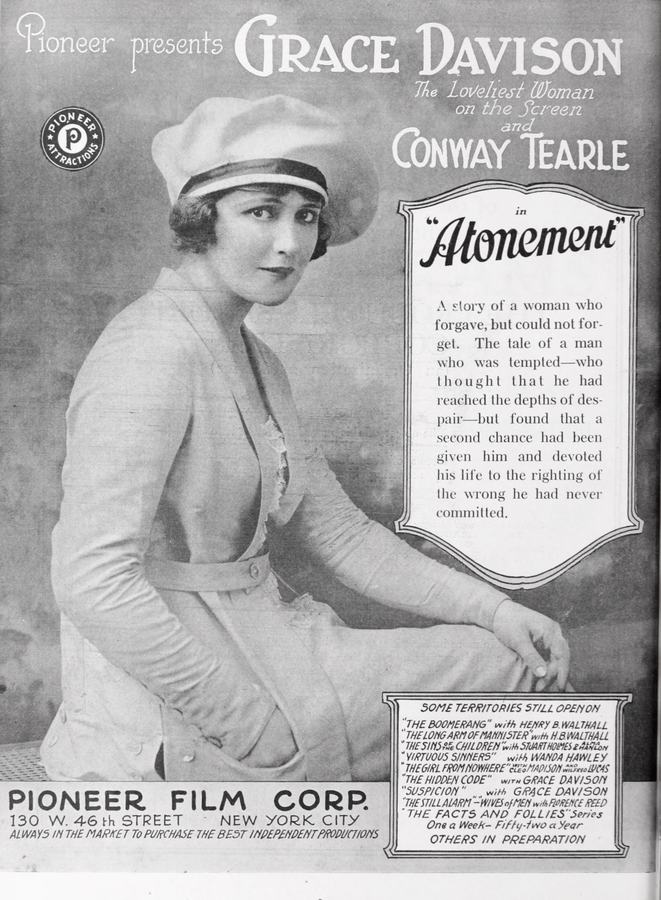
A definitive 8.2/10 rating for a film that redefined the boundaries of cult cinema. Atonement remains a cornerstone of transgressive art.
Step into the dramatic chiaroscuro of early cinema, where the silent screen, far from being a limitation, often amplified the raw emotional resonance of human struggle. William Humphrey's 1919 offering, Atonement, is a prime example of this powerful storytelling, a swirling vortex of ambition, love, and the crushing weight of consequence. This isn't merely a period piece; it's a timeless meditation on the fragile edifice of reputation and the desperate lengths to which individuals will go when faced with utter ruin. The narrative unfurls with a relentless, almost Greek tragic inevitability, drawing us into the lives of characters whose choices, however well-intentioned or misguided, ripple outwards to catastrophic effect. It compels us to confront the very nature of redemption, and whether true atonement is ever truly achievable amidst the wreckage of a life irrevocably altered.
At the heart of this intricate web of fate stands Theodore Proctor, portrayed with a compelling gravitas by Conway Tearle. Proctor is initially depicted as a man of stature, a respected bank president, whose life seems to embody the very ideals of early 20th-century success. He is, by all outward appearances, the epitome of stability, a stark contrast to the more romantic, perhaps less grounded, Vincent Carlson, whom Laura Hamilton initially spurns in favor of Proctor's perceived security. This foundational choice, Laura's decision to marry Proctor, is the first domino in a meticulously constructed chain reaction. Tearle conveys Proctor's initial confidence with subtle nods and a commanding presence, allowing us to feel the weight of his position even without spoken dialogue. His world, however, is not as impregnable as it appears. The fatal flaw, a thread of familial loyalty intertwined with professional hubris, emerges when his brother, ensnared by financial desperation, turns to him for aid. Proctor's subsequent decision to authorize a dubious loan, leveraging the bank's resources in a reckless act of fraternal support, proves to be his undoing. It's a decision born of pressure and perhaps a touch of arrogance – the belief that he, a man of his standing, could navigate any financial risk. This single, pivotal act of poor judgment doesn't just jeopardize his career; it detonates it. The bank, once a symbol of his power, becomes the instrument of his downfall, stripping him of his presidency and, more devastatingly, his honor.
The portrayal of Proctor's professional and personal collapse is masterfully executed, relying heavily on Tearle's nuanced facial expressions and body language, the hallmarks of silent film acting. We witness his despair deepen, a palpable descent into a psychological abyss. The loss of his position isn't merely a financial setback; it's an annihilation of identity, a public shaming that, in the social climate of the era, would have been almost unbearable. This public disgrace drives him to an extreme, almost theatrical act of self-erasure: he fakes his own suicide. This desperate gambit, a pretense of death, is his attempt to escape the unbearable shame and to perhaps, in a twisted way, spare his wife from the fallout of his ruined reputation. But as we know from classics like Ultus, the Man from the Dead, faking one's demise rarely leads to a clean slate. Instead, it propels him into a shadowy, subterranean existence, a life of crime that is both a consequence and a further perpetuation of his initial moral compromise. His transformation from respected pillar of the community to an outlaw is a stark, tragic testament to how quickly one's life can unravel, and it lays the groundwork for the profound ethical dilemmas that follow.
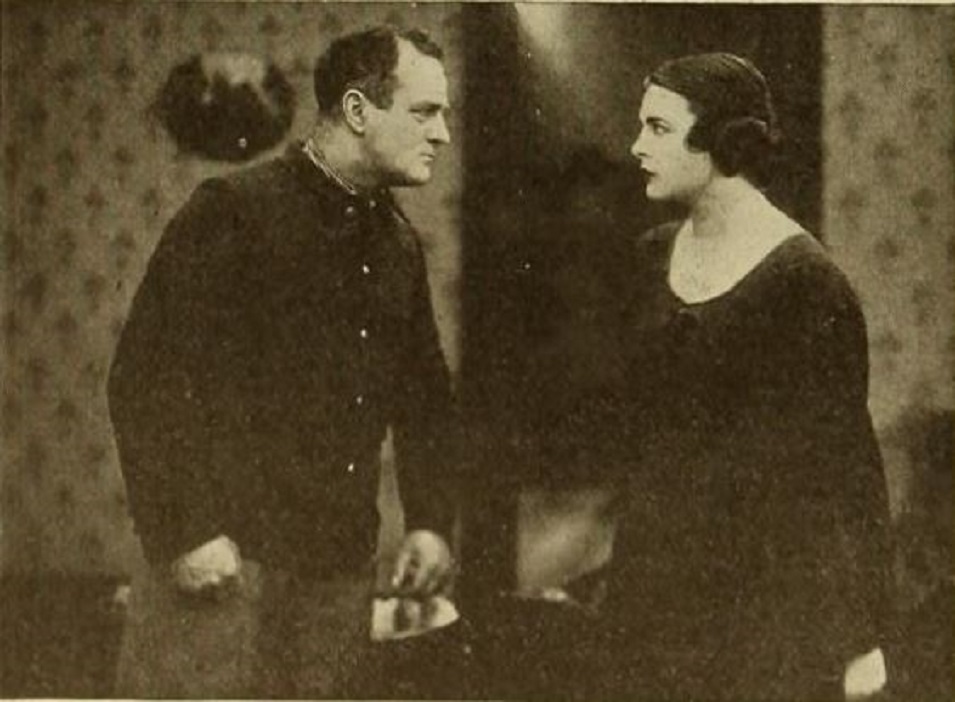
Gretchen Hartman, as Laura Hamilton, delivers a performance that is both delicate and resilient, embodying the quintessential silent film heroine caught in a maelstrom of circumstances beyond her control. Laura's initial choice, turning away from Carlson's steady affection for Proctor's perceived stability, is understandable within the societal context of the time. Women were often expected to marry for security and status. Her subsequent grief, believing Proctor to be truly dead, is portrayed with a heartbreaking sincerity. The silent screen, through Hartman's expressive eyes and gestures, conveys a profound sense of loss and isolation. In the wake of her husband's supposed death, Laura, as many women of her era would, eventually seeks companionship and stability again. Her remarriage to Vincent Carlson is not a betrayal, but an act of moving forward, a testament to the human need for connection and a return to normalcy. This second union, however, inadvertently ensnares her in a legal and moral quagmire far more complex than anything she could have imagined. The moment Proctor is discovered to be alive, a ghost returned from the past, Laura's world shatters anew. She is suddenly branded a bigamist, a charge that carried immense social stigma and severe legal repercussions in the early 20th century. The film masterfully exploits this dramatic irony: Proctor's attempt to spare her shame only plunges her into a deeper, more public disgrace. Her predicament resonates with the struggles faced by protagonists in films like When a Woman Strikes or Modern Husbands, where women often bore the brunt of societal judgment for circumstances not entirely of their making. Hartman's portrayal of Laura's mounting distress, her confusion, and her desperate attempts to navigate this impossible situation, is deeply affecting, making her a truly sympathetic figure.
Atonement, as its title suggests, delves deeply into the concept of making amends, but it does so with a nuanced hand, questioning the very possibility of true expiation when lives are so intertwined. Proctor's journey is one of continuous, albeit often misguided, attempts at redemption. His initial faked suicide is a desperate act to atone for his financial misdeeds and to spare Laura. His subsequent plan to commit actual suicide, once Laura is charged with bigamy, is a more profound, self-sacrificial gesture – a final, desperate attempt to liberate her from the legal and social fallout he inadvertently created. This echoes the intense moral quandaries found in the works of Lev Tolstoy, one of the credited writers, whose influence, even if indirect, can be felt in the film's exploration of guilt, moral responsibility, and the search for spiritual peace amidst worldly suffering. The film forces us to ponder: can one truly atone for past wrongs, or do new actions merely create new layers of consequence?
The narrative also explores the multifaceted nature of love. Is it the steadfast, unwavering devotion of Vincent Carlson, or the passionate, yet ultimately destructive, bond between Laura and Proctor? Proctor's love for Laura, though expressed through increasingly desperate and criminal acts, is undeniably powerful. It drives his every decision, from his initial attempt to protect her from his disgrace to his ultimate, planned self-sacrifice. This kind of intense, almost obsessive love, fraught with danger and moral compromise, is a recurring motif in cinematic melodrama, often creating compelling, if tragic, characters. The film doesn't shy away from depicting the messy, contradictory impulses that love can inspire, suggesting that it can be both a source of profound connection and a catalyst for profound suffering. The societal context further complicates these themes; the rigid moral codes of the era meant that bigamy was not just a legal infraction but a profound social disgrace, making Proctor's desire to 'fix' the situation for Laura all the more urgent and tragic.
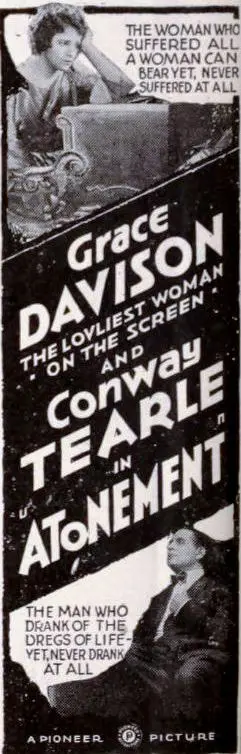
The brilliance of Atonement lies not just in its compelling narrative, but in its masterful utilization of silent film techniques to convey profound emotional depth. Director William Humphrey, alongside his cast, understood that in the absence of spoken dialogue, every gesture, every facial expression, every subtle movement had to communicate volumes. Conway Tearle, with his expressive eyes and commanding presence, perfectly embodies the internal turmoil of Theodore Proctor. His arc, from a man of dignified authority to a desperate fugitive and ultimately a self-sacrificial lover, is conveyed with remarkable clarity through his physical acting. Gretchen Hartman, as Laura, similarly excels at portraying a spectrum of emotions – from initial joy and quiet sorrow to profound shock and desperate resolve. Her ability to elicit empathy without uttering a single word is a testament to her skill and the power of the medium.
The visual storytelling is further enhanced by the film's cinematography and editing. Humphrey uses various techniques to build suspense and convey character motivations. The framing of shots, the use of close-ups to emphasize emotional states, and the pacing of the narrative through strategic intertitles all contribute to a rich and immersive experience. While we might compare the criminal elements to films like The Crime and the Criminal or The Master Crook, Atonement elevates its genre by embedding these elements within a far more intricate personal drama. The sheer audacity of Proctor's plan, and the subsequent legal entanglements, demanded a visual lexicon capable of conveying complex legal and emotional states, and the film delivers. The audience is invited to not just observe the plot unfold, but to actively interpret the characters' inner worlds, making for a deeply engaging viewing experience that transcends the limitations often mistakenly ascribed to silent films.
The narrative of Atonement builds towards a crescendo of self-sacrifice, with Proctor meticulously planning his actual suicide as the ultimate act of liberation for Laura. This decision, born of profound love and desperate guilt, is meant to be his final, definitive atonement. However, the film introduces a pivotal, unforeseen twist that negates all his carefully laid plans. This narrative device, a sudden intervention of fate or circumstance, is a common but effective tool in melodrama, serving to heighten the dramatic tension and often to provide a resolution that challenges the characters' agency. Without revealing the precise nature of this twist, its power lies in its ability to underscore the film's broader themes: that even the most meticulously planned acts of human will can be overturned by the capricious hand of destiny. It forces both the characters and the audience to reconsider the very definition of justice and redemption.
This unexpected turn of events not only alters the immediate trajectory of the characters' lives but also raises profound questions about the nature of free will versus predestination. Is Proctor truly in control of his atonement, or is he merely a pawn in a larger, cosmic game? The resolution, whatever its form, must grapple with the immense emotional and legal weight accumulated throughout the story. It challenges the audience to consider whether true peace can ever be found after such a tumultuous journey, and whether the concept of 'atonement' itself is a destination or an ongoing process. The film, in its final moments, leaves us contemplating the enduring power of human connection, the devastating ripple effects of a single fateful decision, and the enduring hope, however faint, for a measure of peace after profound suffering. It's a testament to the film's enduring power that such complex philosophical questions can be posed and explored within the framework of a silent drama, leaving a lasting impression long after the final frame.
Atonement stands as a compelling artifact from the golden age of silent cinema, showcasing the era's capacity for intricate plotting, profound character development, and potent emotional storytelling. It's a film that resonates not just for its historical significance, but for its enduring exploration of universal human themes: the pursuit of love, the burden of guilt, the desire for redemption, and the relentless march of fate. The performances by Tearle and Hartman are exemplary, demonstrating the nuanced artistry required to captivate an audience without spoken words. The film's narrative, with its unexpected twists and turns, keeps the viewer engrossed from beginning to end, proving that a century later, its dramatic power remains undiminished. For anyone interested in the evolution of cinematic storytelling, or simply in a deeply affecting human drama, Atonement offers a rich and rewarding experience, a powerful reminder of silent film's profound and often overlooked artistry. It's a testament to the early filmmakers' ability to craft tales that transcend time, speaking to the core of the human condition with an eloquence that requires no dialogue to be heard.
As we reflect on the intricate layers woven into this cinematic tapestry, it becomes clear that Atonement is more than just a story of crime and bigamy; it's an allegory for the human struggle against an unforgiving world, where good intentions can pave the road to personal hell, and where the quest for peace often leads through the most turbulent waters. The film's ability to evoke such strong emotions and provoke such deep thought, all through the medium of silent imagery and carefully crafted intertitles, is a powerful reminder of cinema's foundational strengths. It compels us to look beyond the surface, to understand the motivations, the fears, and the desperate hopes that drive its characters, making their plight feel as immediate and relevant today as it was over a hundred years ago. This is why films like Atonement are not merely historical curiosities but vital components of our collective cinematic heritage, offering profound insights into the human heart.
IMDb —
1917
Community
Log in to comment.