DbcultAccessing Vault...
7.4/10
Senior Film Conservator
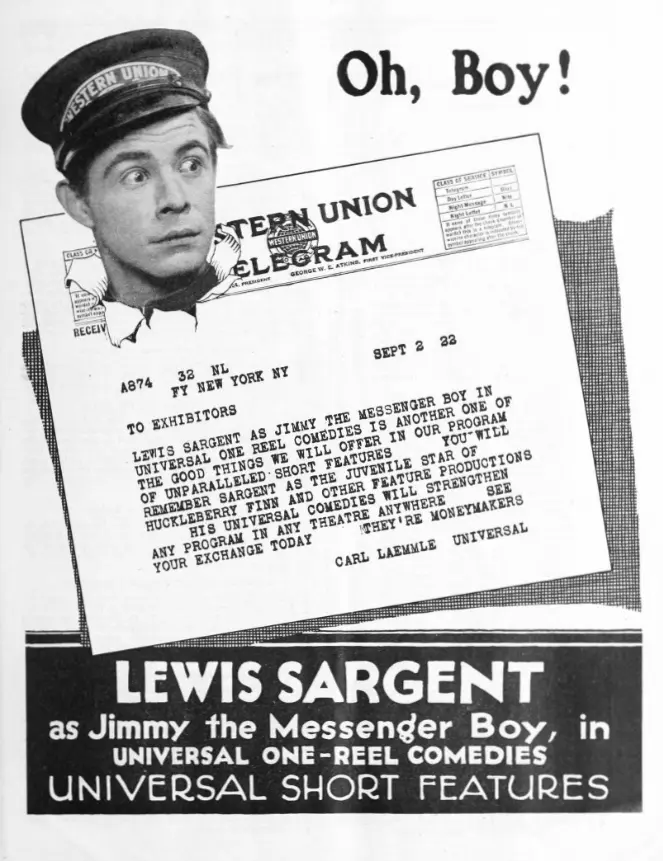
A definitive 7.4/10 rating for a film that redefined the boundaries of cult cinema. Peanuts remains a cornerstone of transgressive art.
The year 1919 stood as a temporal bridge between the scorched-earth trauma of the Great War and the impending hedonism of the Roaring Twenties. In this fragile interim, the cinematic landscape was increasingly fascinated by the intrusion of industrial complexity into the pastoral and the domestic. Peanuts, a short subject directed with a keen eye for the absurd, serves as a poignant, if ostensibly lighthearted, artifact of this era. Written by the prolific Scott Darling, the film eschews the grandiosity of the epic for the claustrophobic obsession of the inventor’s workshop. It captures a specific American zeitgeist: the belief that any problem, no matter how trivial, can be solved with enough gears, pistons, and gasoline.
At the center of this mechanical phantasmagoria is Lewis Sargent, an actor whose physicality was perfectly suited for the demands of silent-era slapstick. Sargent, perhaps best known for his portrayal of Huckleberry Finn around this same period, brings a grounded, rural sincerity to the role of Jimmy. Unlike the frantic, almost supernatural energy found in Anything Once, Sargent’s movements in Peanuts are methodical, reflecting the precision of the character’s engineering aspirations. He isn't merely a victim of his environment; he is the architect of his own chaotic ecosystem.
The central conceit—the creation of a peanut-shelling machine—is a masterstroke of Scott Darling’s narrative economy. The machine itself is a character, a sprawling, hissing entity that consumes space and resources with a gluttony that mirrors the larger industrial expansion of the time. While films like The Price of Progress might treat the encroaching modernity with a sense of existential dread, Peanuts finds the humor in the disproportionate effort required to achieve a minor result. The juxtaposition of high technology (for 1919) against the humble legume is a critique of a society increasingly obsessed with efficiency at the cost of common sense.
"The mechanical peanut-sheller stands as a monument to the American tinker, a figure caught between the agrarian past and the automated future."
The cinematography utilizes the tight confines of Jimmy’s workshop to create a sense of mounting pressure. As the gas usage escalates, the visual language shifts from the clarity of a hobbyist’s dream to the murky, smoke-filled atmosphere of a factory. This transition is crucial for the film’s narrative pivot. The excess of gas—a commodity that was becoming the lifeblood of the nation—serves as the catalyst for the conflict. It is not just a fuel; it is a signal of deviance in the eyes of the law.
When the revenue officers arrive, the film transcends simple slapstick and enters the realm of socio-political satire. In 1919, the United States was on the precipice of the Prohibition era, and the figure of the 'revenuer' was a looming shadow in rural communities. The irony that Jimmy’s innocent pursuit of agricultural efficiency is mistaken for the production of moonshine is a sharp commentary on the era's surveillance culture. Unlike the more traditional law enforcement tropes seen in The Vigilantes, the officers in Peanuts represent a bureaucratic intrusion into the private sphere of invention.
The tension between Jimmy and the officers is played for maximum comedic effect, yet it retains an undercurrent of genuine anxiety. The threat of being accused of having a 'still' was a serious matter, and the film uses this gravity to heighten the stakes of the physical comedy. This thematic weight is what separates the work of Scott Darling from the more ephemeral shorts of the time. There is a narrative density here that one might expect from a longer feature like Where Is This West?, yet it is compressed into a tight, rhythmic sequence of misunderstandings.
When analyzing Peanuts alongside its contemporaries, one can see the evolution of the 'town misfit' trope. In Village Cutups, the humor is often derived from interpersonal social friction. In Peanuts, the friction is man-versus-machine and man-versus-state. Sargent’s Jimmy is a more intellectualized version of the rural protagonist, a man whose primary conflict is with the limitations of his own tools. This reflects a shift in comedy from the purely situational to the thematic.
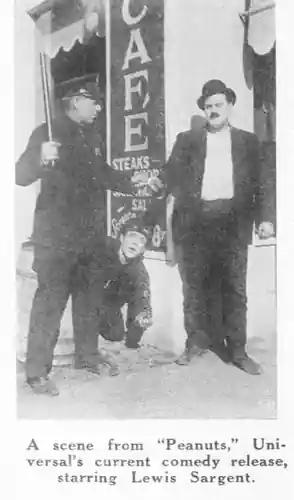
Furthermore, the film’s pacing shares a surprising kinship with the suspenseful editing found in Fantomas - On the Stroke of Nine. While the genres are vastly different, the use of a ticking clock—or in this case, a rising meter of gas consumption—creates a sense of inevitable collision. The audience knows the officers are coming; the humor lies in Jimmy’s oblivious dedication to his shelling machine as the 'evidence' of his supposed crime literally fills the room with fumes.
Darling’s ability to weave together the mundane and the criminal was a precursor to the sophisticated screwball comedies of the 1930s. His work here, while early in his career, shows a profound understanding of how to use a single location to tell a sprawling story of American ingenuity and its unintended consequences.
The visual gags in Peanuts are not merely for the sake of a laugh; they are deeply rooted in the character’s psychology. When Jimmy struggles with a particularly stubborn peanut, his frustration is a microcosm of the human struggle against the entropy of nature. This is a recurring theme in the work of the era, seen also in the athletic frustrations of Casey at the Bat. However, where Casey fails through human hubris, Jimmy’s "failure" is actually a success that is misinterpreted by a cynical world. He has perfected his machine, but the world is not ready for the atmospheric cost of his progress.
Lewis Sargent’s performance is a masterclass in silent communication. His eyes convey a mixture of scientific fervor and childlike wonder that makes the eventual arrival of the revenue officers feel like a genuine tragedy, despite the comedic framing. He possesses a vulnerability that is absent in the more stoic heroes of films like The Remittance Man. This vulnerability is essential for the film's success; we must believe in Jimmy's innocence for the farce to function.
The climax of the film, where the officers finally breach the workshop, is a cacophony of visual and thematic irony. The officers, expecting to find the copper coils of a still and the illicit flow of alcohol, are instead met with the relentless, rhythmic shelling of peanuts. The sensory confusion—the smell of gas and the sound of the machine—highlights the fallibility of human perception. It is a moment of pure cinematic joy, where the audience is in on the secret, watching as the authority figures are humbled by a pile of nut shells.
This resolution is far more satisfying than the moralistic endings often found in contemporary dramas like The Unveiling Hand. In Peanuts, the "unveiling" is not of a sin, but of a harmless, if eccentric, passion. It celebrates the individual’s right to be strange, to be obsessed, and to be inefficient in the eyes of a cold, regulatory state.
Ultimately, Peanuts is a testament to the power of the short film format. In a brief runtime, it manages to tackle themes of industrialization, government overreach, and the purity of the inventor’s spirit. It remains a vital piece of Lewis Sargent’s filmography and a shining example of Scott Darling’s wit. For modern viewers, it offers a window into a world where the future was being built one gear at a time, and where even a peanut could be the catalyst for a grand, gas-fueled adventure.
Archival Note: This review considers the 1919 release context and the surviving prints of the Sargent-Darling collaboration.
IMDb 6.3
1919
Community
Log in to comment.