DbcultAccessing Vault...
8/10
Senior Film Conservator
A definitive 8/10 rating for a film that redefined the boundaries of cult cinema. Bow Wow remains a cornerstone of transgressive art.
The year 1921 stood at a crossroads of cinematic innovation, where the raw energy of early nickelodeons began to coalesce into sophisticated narrative structures. Amidst this transition, Mack Sennett—the undisputed king of the 'Laughter Factory'—released Bow Wow. This isn't just a relic of the silent era; it is a vibrant, chaotic, and strangely moving exploration of the canine condition, anchored by the legendary Teddy the Dog. While contemporary audiences might dismiss animal-led comedies as kitsch, 'Bow Wow' demands a more rigorous aesthetic appraisal.
Teddy the Dog, a Great Dane of remarkable screen presence, performs with a stoicism that rivals the great Buster Keaton. In 'Bow Wow,' we are treated to a chronicle of his life—a 'humble beginnings to present day' arc that mirrors the quintessential American Dream. Teddy isn't merely a pet; he is the moral compass of the film. Unlike the melodrama found in Polly of the Storm Country, where the environment dictates the emotional stakes, 'Bow Wow' allows the animal's physical reactions to drive the narrative momentum.
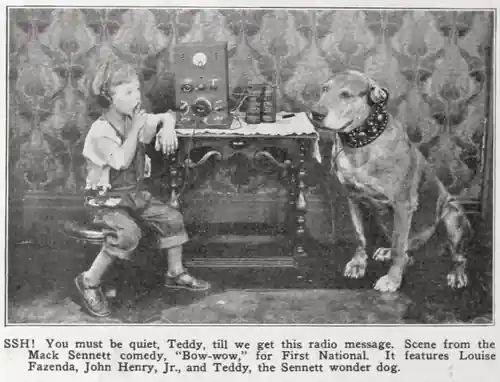
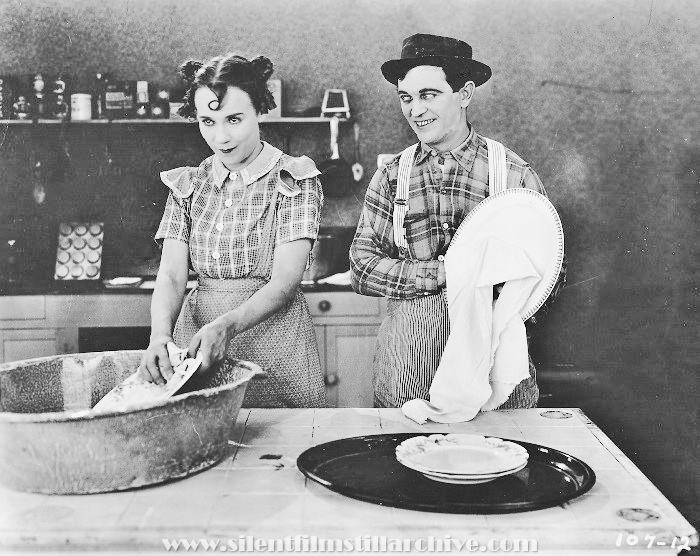
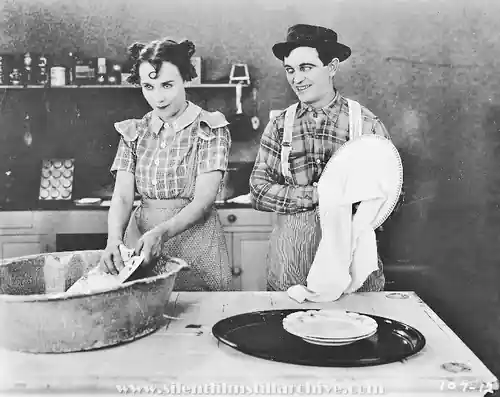
The film opens with a sequence that establishes the harsh realities of rural life. Here, we see the 'humble beginnings' mentioned in the synopsis. Teddy is not just a dog; he is a laborer, a guardian, and a silent witness to the follies of the human cast, which includes the likes of John Rand and the incomparable Louise Fazenda. Fazenda, with her elastic facial expressions and penchant for the grotesque, provides the perfect human antithesis to Teddy’s calm. Her performance here is a fascinating counterpoint to the more restrained roles seen in films like The House of Silence.
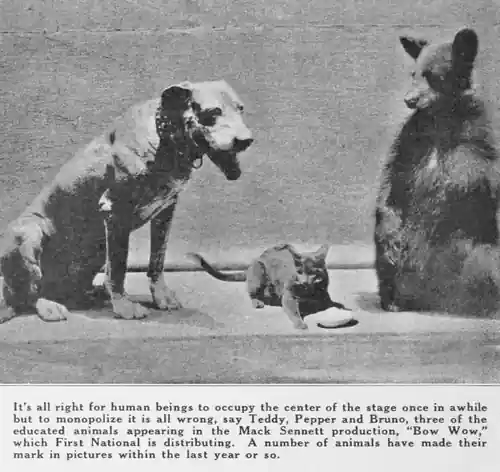
What distinguishes 'Bow Wow' from its contemporaries is the sheer density of its animal ensemble. We aren't just watching a dog; we are witnessing a cross-species ballet. The inclusion of Pepper the Cat and Bruno the Bear creates a layered comedic texture that feels almost modern in its unpredictability. In one particularly harrowing yet hilarious sequence, the tension between the domestic cat and the wandering bear creates a sense of peril that is far more visceral than the staged conflicts in In the Hands of the Law.
The 'advances' in Teddy's life are marked by his increasing integration into the human world. As he moves from the barnyard to the parlor, the film critiques the artifice of civilization. The human actors—Andy Clyde and George Cooper—often find themselves the butt of the joke, their elaborate social rituals dismantled by a wagging tail or a well-timed bark. The physicality of the comedy here is relentless. It shares a certain DNA with the kinetic energy of Don't Weaken!, though it replaces athletic human stunts with the unpredictable majesty of the animal kingdom.
"Bow Wow is a masterclass in silent timing, where the lack of dialogue is compensated for by the expressive soul of a Great Dane and the frantic energy of the Sennett troupe."
From a technical standpoint, the cinematography in 'Bow Wow' is surprisingly sophisticated for a 1921 comedy. The outdoor sequences utilize natural light to create a sense of expansive space, contrasting with the claustrophobic, gag-filled interiors. The editing is sharp, moving with a rhythm that suggests the filmmakers had a profound understanding of comic timing. This precision is what kept Sennett at the top of the industry, even when competing against the more high-brow dramatic offerings like War and Peace (though of a different era, the comparison of scale holds).
Consider the performance of Don Marion and Frank Coghlan Jr.. These child actors provide a sense of innocence that grounds the more outlandish animal antics. Their interaction with Teddy feels genuine, devoid of the forced sentimentality found in later Hollywood productions. It’s a groundedness that is often missing from films like Sheltered Daughters, where the child-parent dynamic is often overly stylized.
The 'present' section of the film's narrative serves as a culmination of Teddy’s journey. By the final reel, the dog has transcended his role as a mere animal and has become a hero in the most classical sense. He saves the day not through superhuman feats, but through the simple, dogged application of his nature. This thematic resolution is far more satisfying than the convoluted endings often found in silent mysteries like Het proces Begeer.
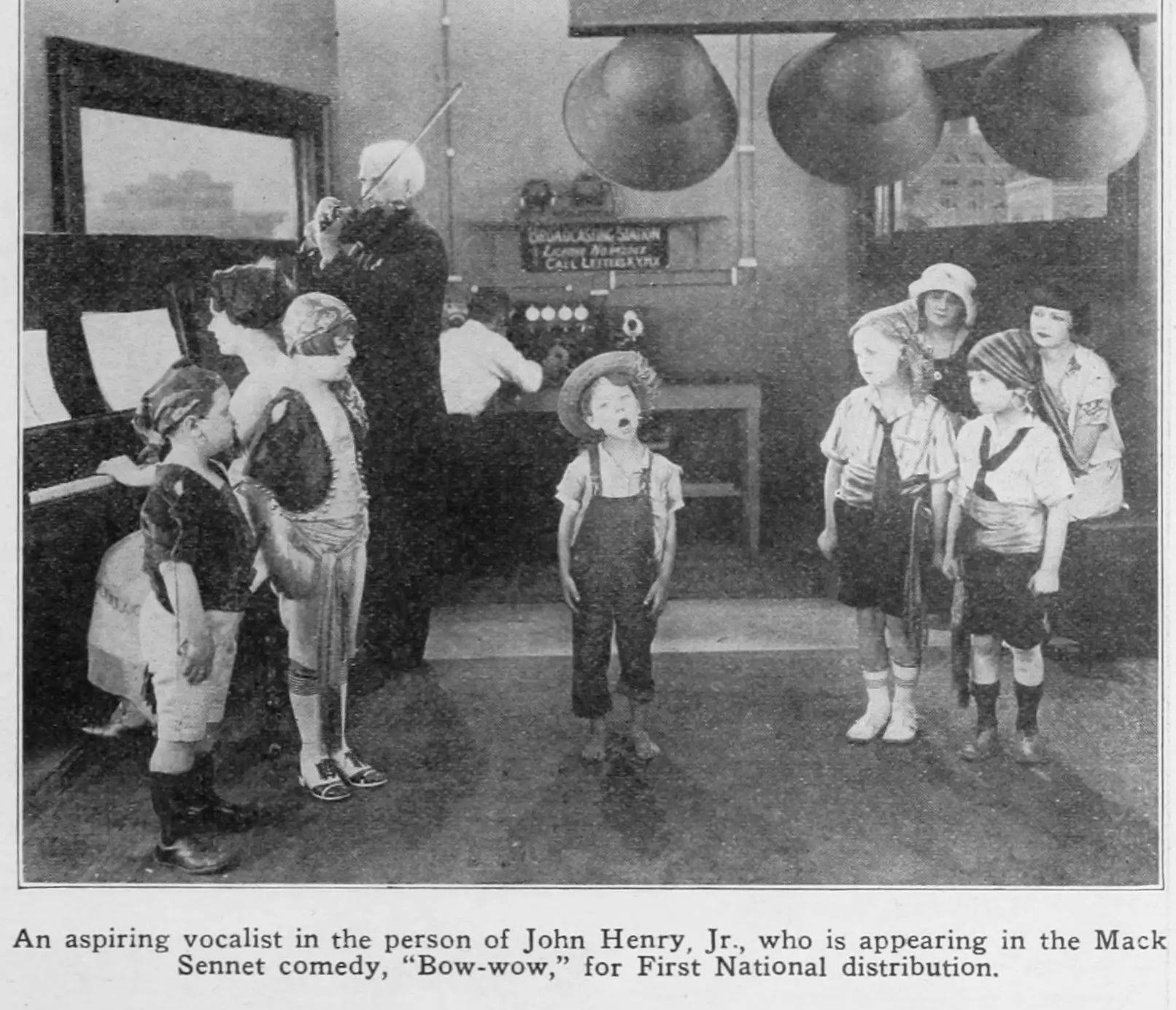
In 'Bow Wow,' we see the seeds of the entire 'animal star' genre, from Rin Tin Tin to Lassie. However, there is a grit and a lack of preciousness here that is refreshing. The film doesn't shy away from the inherent danger of the natural world—the bear is actually scary, and the cat is actually menacing. This realism, paradoxically, makes the comedy hit harder. It’s a delicate balance that few films of the era, perhaps with the exception of Yajîkita: zenpen, managed to achieve so effortlessly.
When examining the supporting cast, one cannot ignore the contribution of Kewpie Morgan and Albert Schaefer. These character actors were the glue that held Sennett’s productions together. Their ability to take a fall or react to a rampaging bear with perfectly timed terror is an undervalued skill. Their work here is as essential as the leads in Tangled Lives or His Wife, providing the necessary human stakes for the animal antics.
Furthermore, 'Bow Wow' shares a certain thematic kinship with Peladilla cochero de punto in its depiction of the working class (or working animal) navigating a world that is constantly in flux. Both films use humor to mask a deeper commentary on social mobility. Teddy’s 'advances' are, in a way, a silent protest against the limitations placed upon him by his species, much like the characters in A Change of Heart struggle against their own social confines.
To watch 'Bow Wow' today is to witness the birth of a specific kind of cinematic joy. It is a film that celebrates the chaotic, the furry, and the funny without ever losing sight of the technical craftsmanship required to make such mayhem look easy. It lacks the pretension of high-art dramas like Miss Beryll... die Laune eines Millionärs, yet it possesses a purity of purpose that is just as commendable. Whether it's the 'humble beginnings' or the 'present' triumphs, every frame of this film is a testament to the enduring power of silent comedy.
In the vast library of early 20th-century film, 'Bow Wow' stands out as a 'must see presentation.' It reminds us that before there were CGI spectacles or complex dialogue-heavy scripts, there was just a dog, a cat, a bear, and a group of people willing to fall down for a laugh. And sometimes, that is more than enough. It is an essential watch for anyone interested in the evolution of comedy, the history of animal training in Hollywood, or simply the sight of a very large dog outsmarting a very small man. It is, quite simply, a howling success.
Reviewer's Note: For those seeking more obscure silent treasures, consider exploring Who Goes There? or the gritty realism of Pay Dirt, though neither features a Great Dane quite as talented as Teddy.
IMDb 6.1
1929
Community
Log in to comment.