DbcultAccessing Vault...
5.8/10
Senior Film Conservator
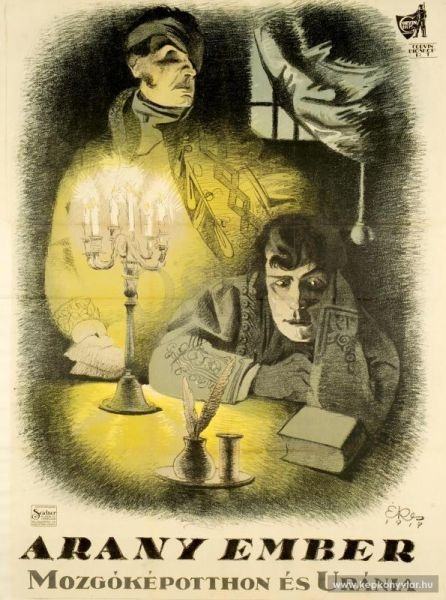
A definitive 5.8/10 rating for a film that redefined the boundaries of cult cinema. Az aranyember remains a cornerstone of transgressive art.
In the annals of cinematic history, certain films transcend their era, their narratives echoing through generations with undiminished resonance. Az aranyember, the Hungarian masterpiece born from Mór Jókai's seminal novel, stands as a towering example. This isn't merely a period piece; it's a profound meditation on the human condition, a lavish tapestry woven with threads of fate, fortune, and the relentless pursuit of an authentic existence amidst the glittering allure of societal expectations. Directed with an acute sensitivity to its source material, the film delves into the life of Mihály Tímár, a man whose destiny is irrevocably altered by a chance encounter on the majestic Danube, propelling him into a world of opulence, secrets, and an agonizing dichotomy of self.
From its opening frames, the film establishes a palpable sense of the river's omnipresence – a silent, powerful character in its own right, dictating currents of both water and fate. Captain Mihály Tímár, portrayed with a nuanced complexity by Oscar Beregi Sr., initially embodies the simple, honest virtues of a man connected to the natural world. His act of compassion, aiding a Turkish Pasha and his enigmatic daughter, Tíméa (Mari K. Demjén), in their perilous escape, sets in motion a chain of events that will redefine his very identity. The Pasha's subsequent death and the discovery of his vast, hidden fortune transform Mihály from an unassuming bargemaster into 'the golden man' – a moniker that perfectly encapsulates his newfound wealth, yet also hints at the gilded cage he inadvertently constructs around himself.
Mihály's ascent into the upper echelons of society is swift and seemingly effortless, yet it comes at a profound personal cost. His marriage to Tíméa, a woman of exquisite beauty and profound melancholy, is less a union of hearts and more a societal arrangement. Tíméa, with her quiet dignity and an almost ethereal sorrow that seems to cling to her like a fine veil, represents the tragic beauty of a life dictated by circumstance. Mari K. Demjén delivers a performance of remarkable restraint, conveying a deep well of unspoken longing and resignation. Their opulent home, while a symbol of Mihály's success, becomes a gilded prison, a space where two souls exist in close proximity yet remain emotionally distant, their interactions governed by decorum rather than genuine affection. It's a poignant exploration of how material wealth, far from guaranteeing happiness, can often erect insurmountable barriers between individuals.
The brilliance of Az aranyember lies in its unflinching portrayal of Mihály's internal conflict. He is 'the golden man' to the world, a paragon of success and influence, but beneath this polished exterior, a different man yearns for simplicity and authenticity. This yearning finds its manifestation in a secluded island, a verdant sanctuary on the Danube, where Mihály cultivates a second life. Here, away from the judgmental gaze of society, he finds solace and genuine connection with Noémi (Lili Berky), a woman of untamed spirit and natural grace, and their child. This dual existence is not merely a plot device; it's the thematic core of the film, a stark comparison between the suffocating artifice of high society and the liberating embrace of nature and unadorned love. It's a conflict that resonates with universal themes explored in films like The Right to Happiness, where characters grapple with the societal pressures dictating their paths versus their innate desires for personal fulfillment.
The ensemble cast delivers performances that are both period-appropriate and universally compelling. Oscar Beregi Sr. as Mihály Tímár masterfully navigates the complexities of a man torn between two worlds. His portrayal is not one of overt melodrama, but rather a subtle unfolding of a soul burdened by its own good fortune. The viewer witnesses his internal struggle through his eyes, his posture, and his quiet moments of introspection. Mari K. Demjén's Tíméa is a study in restrained sorrow, her beauty tinged with a tragic resignation that makes her an incredibly sympathetic figure. Lili Berky, as Noémi, provides the perfect counterpoint – vibrant, earthy, and embodying the freedom Mihály so desperately craves. The supporting cast, including Jenõ Horváth, József Kürthy, and Szeréna S. Fáy, contribute to a rich tapestry of characters, each meticulously crafted to populate Mihály's two disparate worlds.
Ladislaus Vajda's adaptation of Jókai's expansive novel is a testament to his keen understanding of narrative compression without sacrificing thematic depth. The film manages to capture the essence of the literary work, distilling its complex plot and rich characterizations into a cinematic experience that feels both epic and intimately personal. The pacing, though perhaps deliberate by modern standards, allows for a slow burn of emotional tension, enabling the audience to fully immerse themselves in Mihály's moral quandaries and the picturesque, yet often perilous, landscapes of the Danube.
Cinematically, Az aranyember is a marvel for its time. The use of natural light, the sweeping vistas of the Danube, and the meticulous attention to period detail create an immersive world. The contrast between the ornate interiors of Mihály's urban dwelling and the rustic, sun-drenched simplicity of the island retreat is not just visual; it’s deeply symbolic. These visual juxtapositions reinforce the central theme of duality – the external show versus the internal truth, the glittering façade versus the genuine heart. One might draw parallels to the visual storytelling in films like The Scarlet Car, where the setting itself often plays a crucial role in reflecting the protagonist's journey or internal state.
The film’s thematic depth extends beyond a simple critique of materialism. It explores the nature of identity, the compromises one makes in the name of security or societal approval, and the elusive nature of happiness. Mihály is not a villain; he is a man trapped by his own good fortune, constantly navigating the ethical tightrope between his responsibilities to his 'golden' life and his yearning for the unvarnished truth of his secret existence. This struggle makes him a profoundly human character, one whose journey prompts viewers to examine their own values and priorities.
The notion of a hidden life, a secret self, is a powerful motif that resonates across cultures and time periods. Much like the protagonists in The Invisible Power, who might be grappling with unseen forces or internal conflicts that shape their public and private personas, Mihály Tímár’s struggle is deeply personal yet universally understood. His attempts to reconcile these two irreconcilable halves of his life form the dramatic engine of the film, culminating in a resolution that is both poignant and inevitable.
Decades after its initial release, Az aranyember continues to captivate audiences, a testament to the enduring power of its narrative and the timelessness of its themes. It stands as a cornerstone of Hungarian cinema, showcasing a period when filmmakers were adept at translating complex literary works into compelling visual stories. The film's examination of class, morality, and the search for genuine contentment remains as relevant today as it was upon its release. It challenges us to consider what truly constitutes wealth and whether external riches can ever compensate for internal impoverishment.
The film doesn't offer easy answers or simplistic moralizing. Instead, it presents a nuanced portrait of a man caught in circumstances of his own making, yet also a victim of the very fortune that elevated him. It’s a powerful narrative that encourages introspection, urging viewers to ponder the true cost of success and the profound importance of living a life aligned with one's deepest values, rather than merely succumbing to the glittering illusions of societal acclaim.
In conclusion, Az aranyember is more than just a historical drama; it is an eloquent and deeply moving character study, a cinematic achievement that continues to provoke thought and stir the emotions. It’s a must-see for anyone interested in the rich tapestry of international cinema, for enthusiasts of classic literature brought to life, and for anyone who appreciates a story that delves into the profound complexities of the human spirit. Its golden sheen is not just in the fortune Mihály acquires, but in the timeless brilliance of its storytelling and the indelible mark it leaves on the viewer's consciousness.

IMDb 6
1918
Community
Log in to comment.