DbcultAccessing Vault...
6.5/10
Senior Film Conservator
A definitive 6.5/10 rating for a film that redefined the boundaries of cult cinema. Clash of the Wolves remains a cornerstone of transgressive art.
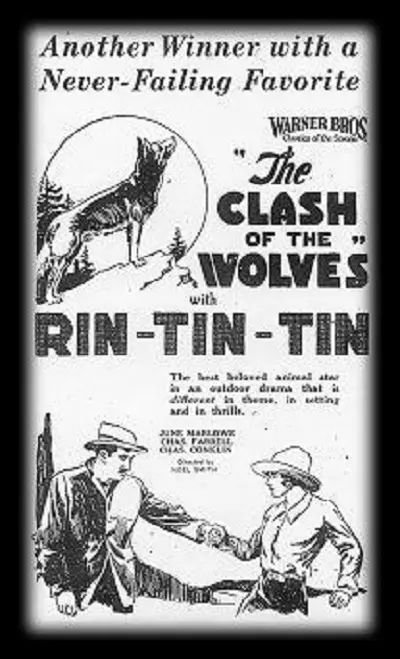
In the annals of early cinematic history, few stars commanded the sheer, unadulterated adoration and box office magnetism of Rin Tin Tin. His presence in Clash of the Wolves, a 1925 silent Western adventure penned by Charles Logue, is not merely a performance; it is a foundational pillar upon which the film's enduring appeal rests. This motion picture transcends its simplistic premise—a wolf pack displaced by fire terrorizing a desert community—to become a compelling study of instinct, loyalty, and the delicate, often brutal, balance between civilization and the untamed wild. It's a testament to the era's storytelling prowess, where narrative clarity and emotional resonance were paramount, conveyed through evocative visuals and the silent, yet profoundly expressive, artistry of its four-legged protagonist.
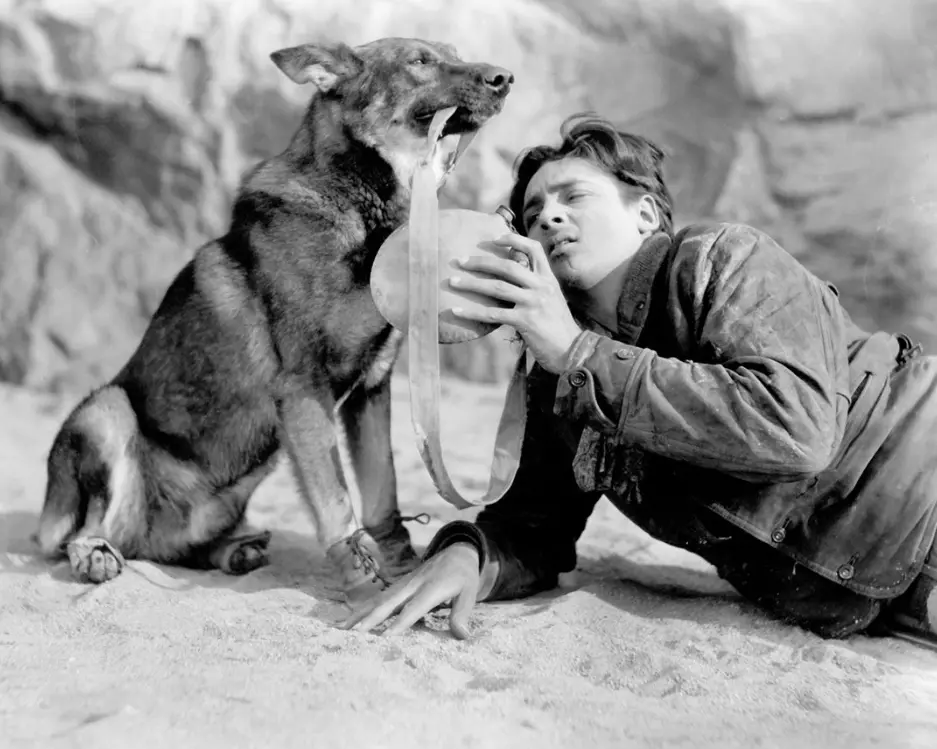
The film plunges its audience into a world teetering on the edge of ecological upheaval. A colossal conflagration, depicted with a surprisingly visceral intensity for its time, sweeps through the mountain ranges, annihilating the natural habitat of a formidable wolf pack. This isn't just a plot device; it's a profound environmental catalyst that sets the entire narrative in motion. The wolves, driven by an instinct far older than any human law, are forced to abandon their charred domain, seeking new hunting grounds and refuge in the desolate, sun-baked desert below. This migration is portrayed not as an act of malice, but of desperate survival, a primal response to an existential threat. Yet, their very existence in this new territory poses an immediate, tangible danger to the scattered human settlements, whose lives are already fraught with the challenges of frontier living. The ensuing 'terror' is less about orchestrated villainy and more about the inevitable collision of two worlds, each fighting for its right to exist, each perceiving the other as an encroacher.
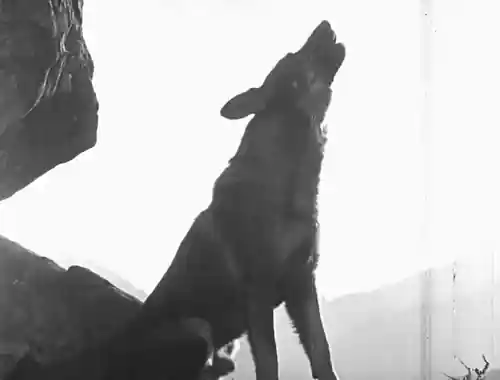
At the heart of this unfolding drama is Rin Tin Tin, whose portrayal of the lead wolf, 'Lobo,' is nothing short of legendary. Discovered as a puppy amidst the ruins of a World War I battlefield by American serviceman Lee Duncan, Rin Tin Tin possessed an uncanny ability to connect with the camera, conveying a range of emotions that often surpassed his human co-stars. In Clash of the Wolves, he is not merely an animal actor; he is a fully realized character, embodying both the savage majesty of the wilderness and an almost human capacity for loyalty and understanding. His nuanced performance transforms Lobo from a generic antagonist into a complex figure, a leader of his pack who is caught between the brutal necessities of survival and an emerging, almost inexplicable, bond with certain human characters. This duality is what elevates the film, providing a moral compass and a dramatic anchor that resonates deeply. Unlike the often one-dimensional depictions of animals in cinema of the period, Rin Tin Tin’s Lobo possesses agency and an inner life, making his journey from feared predator to a figure of reluctant admiration profoundly impactful. His actions, whether leading the hunt or displaying moments of surprising empathy, are central to the film’s exploration of nature’s intricate web.
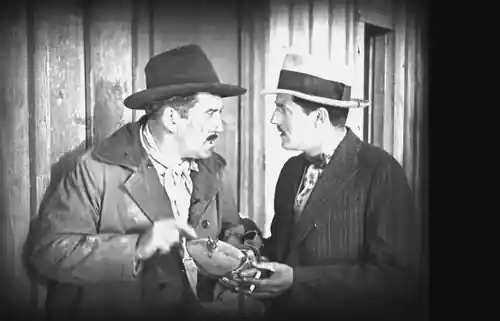
The charisma of Rin Tin Tin was a unique phenomenon, one that significantly shaped the trajectory of Hollywood itself. He wasn't just a novelty; he was a serious draw, capable of carrying entire features and ensuring massive box office returns. His success paved the way for other animal stars and solidified the Western genre's appeal, proving that compelling narratives could emerge from the stark beauty of the American frontier, even when the protagonist barked rather than spoke. His expressive eyes and powerful physique allowed directors to craft intricate sequences of action and emotional depth, relying on his natural instincts and meticulous training. This film is a prime example of how his star power was leveraged, showcasing his agility, intelligence, and a certain undefinable screen presence that transcended the silent medium. It’s no exaggeration to say that without Rin Tin Tin, the film would lose much of its magnetic pull, becoming a mere genre piece rather than a memorable cinematic experience. His portrayal of Lobo, a wolf torn between his wild nature and a burgeoning connection with humanity, is a masterclass in non-verbal communication, a skill that few human actors could match, let alone a dog.
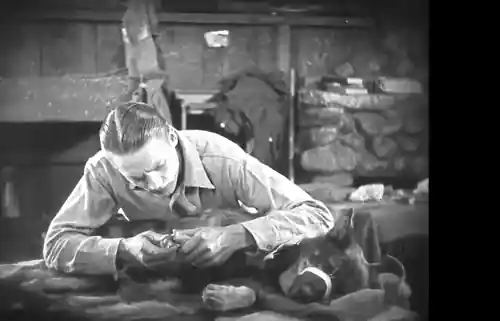
While Rin Tin Tin undeniably steals the show, the human cast provides the necessary dramatic framework for his exploits. Will Walling, a veteran of the silent screen, brings a grounded presence, likely as the stalwart protagonist or a figure of authority attempting to manage the escalating crisis. His performance, typical of the era, relies on broad gestures and expressive facial work to convey resolve and concern. Charles Farrell, a rising star at the time, likely embodies a more conflicted or perhaps even antagonistic role, adding layers of human intrigue to the man-versus-nature conflict. His youthful vigor would have contrasted effectively with Walling's seasoned demeanor. June Marlowe, known for her innocent charm, probably portrays the romantic interest or a vulnerable member of the community, whose safety is directly imperiled by the wolf pack's incursions. Her presence adds a personal stake to the broader struggle, making the threat feel more immediate and poignant. Nanette, another canine performer, might have served as Rin Tin Tin's mate or a loyal companion, further illustrating the intricate social dynamics within the wolf pack and their interactions with the human world. The ensemble, including Heinie Conklin and Pat Hartigan, rounds out the cast, providing the familiar archetypes of frontier life – the grizzled prospector, the concerned townsfolk, and perhaps even a villainous element seeking to exploit the chaos. Their performances, while secondary to Rin Tin Tin's, are crucial in establishing the stakes and the moral landscape of the desert community.

The narrative skillfully weaves the human drama with the primal struggle for survival. The 'terror' that the wolf pack inflicts is not just abstract; it manifests in tangible threats to livestock, isolated cabins, and the very fabric of the community's peace. This creates a compelling tension, as the residents are forced to confront an enemy that operates by a different set of rules, driven by hunger and instinct rather than reason or malice. The film explores the ethical dilemmas inherent in such a conflict: when does self-preservation tip into unwarranted aggression? How do humans respond when their perceived dominion over nature is challenged so directly? These questions, though perhaps not overtly articulated in the intertitles, are implicit in the unfolding drama, urging the audience to consider the complexities of coexistence. The human characters are not merely passive victims; they are active participants in this struggle, their actions and reactions shaping the fate of both their community and, ultimately, the wolf pack itself. The film avoids easy answers, instead presenting a nuanced portrayal of a conflict where both sides have legitimate claims to survival.
The technical aspects of Clash of the Wolves are a testament to the sophisticated filmmaking of the silent era. The cinematography, while constrained by the technology of the time, effectively captures the vast, desolate beauty of the desert landscape, making it a character in itself. The wide-open spaces emphasize the isolation of the human settlements and the wild freedom of the wolves. The action sequences, particularly those involving Rin Tin Tin, are remarkably well-staged, showcasing his agility and the skill of his trainers. The use of natural light and location shooting lends an authenticity that was crucial for Westerns, immersing the audience in the rugged reality of the frontier. The editing maintains a brisk pace, building suspense during the wolf attacks and allowing moments of quiet reflection to highlight the emotional beats. Intertitles, the textual explanations interspersed throughout silent films, are used judiciously to advance the plot, provide character insights, and convey dialogue, ensuring that the audience remains fully engaged despite the absence of spoken words. The implied musical score, which would have been performed live in theaters, would have further amplified the drama, shifting from thrilling crescendos during chases to melancholic melodies in moments of quiet contemplation. This symbiotic relationship between visual storytelling, textual exposition, and musical accompaniment created a rich, multi-sensory experience that was the hallmark of silent cinema.
Comparing Clash of the Wolves to other films of its era provides valuable context. While films like The West~Bound Limited might have offered high-stakes action within a different setting, Clash of the Wolves distinguishes itself through its focus on animal intelligence and the raw power of nature. Unlike the more introspective human dramas such as Eyes of Youth or Naked Hearts, where internal struggles dominate, this film externalizes conflict, pitting man directly against the untamed world. The thematic exploration of survival and territoriality finds echoes in Westerns like The Brand of Lopez, but the unique perspective offered by Rin Tin Tin's character elevates it beyond a typical genre piece. The suspense generated by the wolf pack's presence can be likened to the tension in films like The Danger Line, but here, the threat is primal, elemental, and deeply rooted in the natural order rather than human machinations. The film’s success lies in its ability to harness these genre conventions while infusing them with the unique star power of its canine lead, creating something that feels both familiar and refreshingly original.
The thematic undercurrents of Clash of the Wolves are surprisingly rich for a film of its type and era. At its core, it's an exploration of the eternal conflict between man and nature. The fire, a natural disaster, forces a confrontation that neither side explicitly sought, highlighting the fragility of human control over the environment. The wolves, driven by hunger and a need to protect their young, act purely on instinct, embodying the raw, unyielding power of the wilderness. Conversely, the human residents represent civilization's attempt to tame, cultivate, and impose order upon this wildness. Their struggle is not just for survival but for the very definition of their existence in this harsh landscape. This dynamic is a recurring motif in Western cinema, but here it's presented with a particular clarity, stripped down to its most fundamental elements. The film suggests that while humanity may build fences and establish towns, the untamed spirit of nature always lurks, ready to reclaim its territory when provoked.
Beyond the man-versus-nature dynamic, the film delves into themes of loyalty and understanding. Rin Tin Tin's Lobo eventually develops a complex relationship with certain human characters, demonstrating a capacity for loyalty that transcends species boundaries. This bond, forged in the crucible of conflict, challenges the simplistic notion of wolves as mere savage beasts. It suggests that even across the deepest divides, empathy and mutual respect can emerge. This aspect of the narrative adds a layer of emotional depth, preventing the film from becoming a mere action spectacle. It asks whether true heroism lies in conquering nature or in finding a way to coexist with it, to understand its rhythms and its inherent value. The film's resolution, without giving too much away, hints at a possibility of reconciliation, a fragile truce between the wild and the settled, mediated by the extraordinary intelligence and spirit of one particular wolf. This exploration of interspecies connection was groundbreaking for its time, offering a more nuanced perspective on animal behavior and the potential for shared understanding. It elevates the story from a simple adventure to a poignant commentary on the universal quest for belonging and mutual respect, even in the most challenging environments. The silent medium, paradoxically, enhances this, allowing the audience to project their own understanding onto the animals' actions and the humans' reactions, creating a deeply personal engagement with the narrative's ethical questions. The film's legacy is not just in its thrilling action, but in its subtle, yet powerful, advocacy for a more harmonious relationship with the natural world, a message that remains profoundly relevant today.
Clash of the Wolves is more than just a historical artifact; it's a vibrant, engaging piece of cinema that continues to captivate. Its success is a testament to the power of compelling storytelling, the magnetic charisma of its unique star, and the timeless appeal of the Western genre. For aficionados of silent film, animal lovers, and anyone interested in the foundational narratives of Hollywood, this film offers a fascinating glimpse into an era when imagination and ingenuity compensated for technological limitations. It stands as a powerful reminder of Rin Tin Tin's unparalleled legacy and the enduring allure of tales where the wild heart beats strong against the encroaching tide of civilization. A true gem that deserves to be rediscovered and appreciated for its artistic merit and historical significance, it continues to echo with the primal calls of the wild and the resilient spirit of those who dared to live on its edges.
IMDb —
1918
Community
Log in to comment.