DbcultAccessing Vault...
Cult Review
Senior Film Conservator
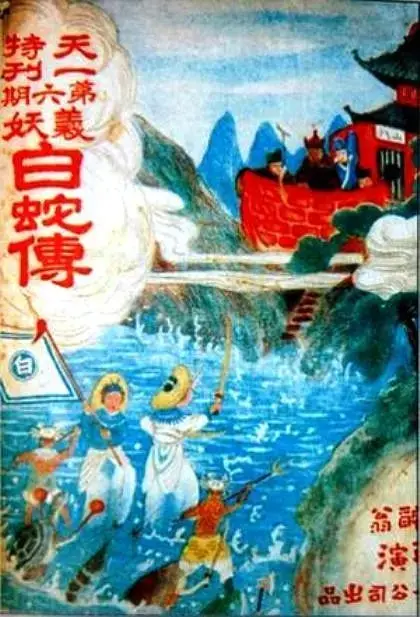
Short answer: Is this film worth watching today? No, because it is physically impossible to do so, but its historical shadow is essential for any serious cinephile. This film is for the archival obsessive and the historian of Asian pop culture; it is absolutely not for the casual viewer seeking a weekend distraction.
The 1926 production of Bai she zhuan (The Legend of the White Snake) is a ghost. In the world of film preservation, few things are as painful as a lost work from a foundational studio like Tianyi (the precursor to the Shaw Brothers empire). While we cannot sit in a dark room and watch the nitrate flicker, we can analyze the seismic shift it represented in 1920s Shanghai cinema. It was a moment where folk tradition collided with the mechanical greed of the motion picture industry.
1) This film works because it successfully translated a complex, multi-layered oral myth into a visual medium during a period of intense technological transition.
2) This film fails because its physical existence was sacrificed to the ravages of time, war, and poor preservation, leaving us only with production stills and contemporary accounts.
3) You should watch it if you are a scholar of the Shaw Brothers' evolution or if you want to understand how early Chinese cinema weaponized folklore to compete with Western imports.
If the question is whether the *idea* of this film is worth your time, the answer is a resounding yes. In 1926, the Chinese film market was being flooded with Western action and romance. By choosing the White Snake legend, Runme Shaw wasn't just telling a story; he was reclaiming the screen for local narratives. It is a tragedy that we cannot see Butterfly Wu's performance, as it likely set the template for the 'spirit-woman' archetype that would dominate Hong Kong cinema for the next seventy years.
Runme Shaw was not a poet. He was a shrewd businessman. Unlike the creators of Greed, who were obsessed with a singular, uncompromising artistic vision, Shaw understood that the audience wanted familiarity. He took a story every child in China knew and gave it the 'Tianyi' treatment: fast-paced, visually engaging, and unapologetically populist.
The production of Bai she zhuan was a calculated move. By using a story with built-in brand recognition, Shaw bypassed the need for expensive marketing. He relied on the spectacle of the supernatural. Imagine the 1926 audience seeing the flooding of the Jinshan Temple for the first time. Even with primitive practical effects, the sheer scale of the myth would have been overwhelming. It was the blockbuster logic of its day, executed with a fraction of the budget of a Hollywood epic.
The cast list is a 'who's who' of early Chinese cinema, but Butterfly Wu (Hu Die) is the name that echoes loudest. Though she appears in a supporting capacity here, her presence in these early Tianyi films was the spark of a legendary career. In Bai she zhuan, the acting style was still heavily influenced by Peking Opera—exaggerated gestures and heavy makeup were the norm.
However, contemporary reviews suggested that the film began to lean into the 'naturalism' that the camera demanded. When compared to the serial-style pacing of Les Vampires, the Chinese silent films of this era were often more grounded in theatrical structure. They weren't trying to reinvent the wheel; they were trying to put the wheel on a screen. The loss of Wu's early footage is a gap in our understanding of how screen acting evolved from the stage to the lens.
We have to piece together the cinematography from fragments. The 1920s Shanghai aesthetic was a blend of traditional Chinese architecture and the burgeoning Art Deco influence. In the scenes depicting the White Snake's home, the use of light and shadow would have been used to denote her dual nature. One moment a beautiful wife, the next a looming serpent.
Contrast this with the rigid, austere settings of the monk Fahai's temple. This visual dichotomy—the fluid, dangerous beauty of the snake versus the cold, unyielding stone of the monastery—is a classic cinematic trope. It’s a shame we can’t see how they handled the transition. Did they use double exposure? Stop-motion? The lack of these answers is what makes Bai she zhuan so frustratingly alluring.
When you look at other films from the mid-20s, like The Great Leap: Until Death Do Us Part, you see a similar fascination with the intersection of fate and physical action. Bai she zhuan, however, carried a heavier cultural burden. It wasn't just a drama; it was a cultural touchstone.
Unlike the experimental nature of Les Vampires, which thrived on the chaos of its narrative, Bai she zhuan followed a strict moral arc. The tragedy of the White Snake is that she is punished for her humanity. This is a recurring theme in early Chinese cinema: the individual crushed by the weight of societal or religious dogma. It’s a theme that remains painfully relevant.
Pros:
The film established the blueprint for the 'Wuxia' and 'Shenmo' genres that would define Chinese cinema for a century. It featured early performances by legends like Butterfly Wu. It represented a successful commercial counter-attack against foreign film dominance.
Cons:
The film is lost, meaning we can only engage with it intellectually, not viscerally. The theatrical acting style of the 1920s can feel dated or inaccessible to those not familiar with the history of the medium.
Why did we lose it? Nitrate film is a volatile lover. It is highly flammable and prone to decomposition. In the heat and humidity of Shanghai, without proper climate control, these films literally melted into vinegar or exploded into flames. Bai she zhuan is just one of thousands of silent films that vanished.
But there is a specific pain in losing this one. This wasn't just a random comedy like A Poor Fish. This was a foundational myth being born into a new age. It’s like losing the first printed copy of the Odyssey. We know what happened, we know who was in it, but the specific artistic choices—the flicker of an eye, the movement of a hand—are gone forever.
Bai she zhuan is a masterpiece of historical importance, even if it is a failure of preservation. It represents the shrewdness of the Shaw family and the enduring power of Chinese mythology. It works as a concept. It fails as a tangible object. If you ever find a canister in an old attic in Shanghai, you might just be holding the most important artifact in Asian cinema history. Until then, we are left to dream of the snake spirit in black and white.
IMDb —
1920
Community
Log in to comment.