DbcultAccessing Vault...
Cult Review
Senior Film Conservator
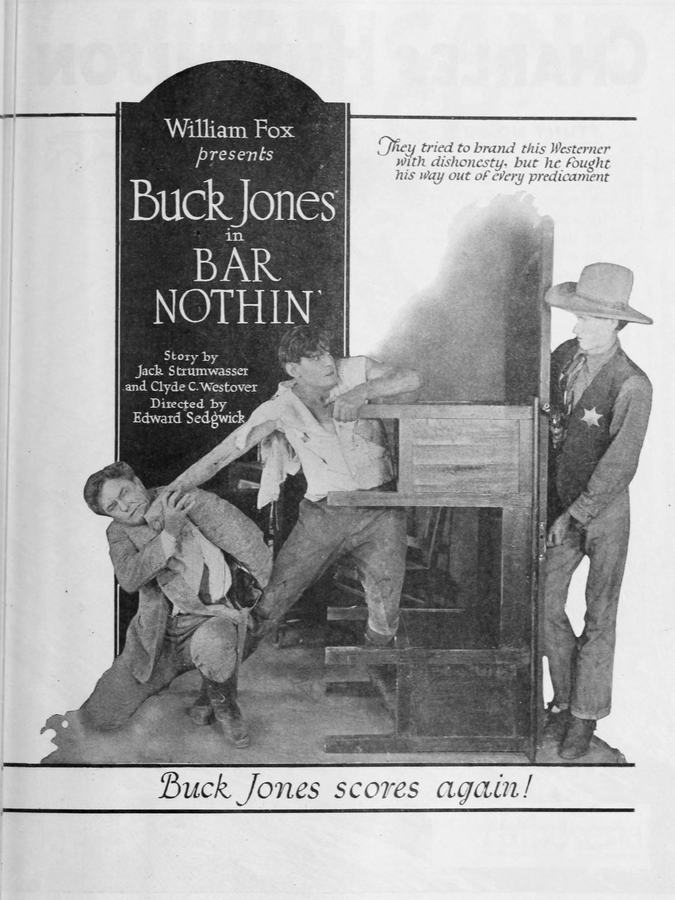
Somewhere between the last gasp of silent-era myth-making and the clatter of nickelodeon change, Bar Nothing plants its spurred heel and refuses to budge. What could have been a rote oater—good foreman versus crooked cattle broker—instead becomes, under the low-slung Arizona skies, a pocket-sized epic about liquidity: of water, of cash, of trust, of love. Clyde Westover and John Stone’s screenplay treats every transaction, romantic or economic, like a poker hand played with the sun in your eyes.
Buck Jones saunters through the frame as Duke with the loose-limbed confidence of a man who already knows the punch-line but savours watching the joke land on everyone else. His costume—frayed leather chaps, sweat-darkened neckerchief—reads less like wardrobe than topography, a map of every canyon he’s traversed. Jones’ physical lexicon is silent-cinema semaphore: a tilt of the Stetson equals sarcasm, the clench of a gloved fist foreshadows retribution, the half-smile that never blooms into full grin is promise enough.
Ruth Renick’s Bess Lynne is no ranch widow cliché waiting to be rescued. Watch the way she shoulders a Springfield rifle the way society dames hold clutch purses, or the flash of calculation behind her pupils when Stinson extols the securities of Beacon Hill. Renick lets the camera eavesdrop on the instant Bess realises that courtship itself is a branding iron—she can be seared by it or repurpose the heat.
Jim Farley’s Harold, anchored to chaise longue and oxygen flask, operates like the Greek chorus of the plains, coughing warnings the way oracle bones crack. His performance is calibrated to the edge of melodrama yet never topples over; the wheeze in his dialogue cards feels authentically pulmonary.
William Buckley plays Harliss with the oleaginous charm of a man who could sell sand to Saharans and still short-change them a handful. Note how he fingers the rim of his ten-gallon during negotiations, as though calculating interest on every second. Arthur Edmund Carewe’s Stinson supplies the velvet glove covering Harliss’s iron claw—his tailored waistcoat, town-bought and dust-free, signals cosmopolitan rot infiltrating frontier grit.
Director Robert DeLacey, mining the vein John Ford would soon claim, blocks scenes in depth: a distant dust plume foretells riders long before dialogue confirms them, while foreground cottonwoods slice the frame into anxious stripes. The eye adjusts to negative space the way lungs acclimatise to thin air.
George Brynstone’s cinematography drinks in mercury-light: moonlit sage looks submarine, dawn skies bruise from mauve to arterial orange, and when Duke crawls across the salt flat the crust crunches like shattered chandelier. These images, once thought lost, survive in a 16mm Show-At-Home print struck for rural exhibitors, now restored with 4K scans that reveal every cicada wing and splinter of wagon wheel.
The film’s moral ledger refuses Manichean arithmetic. Duke’s victory is less gun-powered than ledger-powered; he weaponises market knowledge, forcing Harliss to sign a cheque at rifle-point, an act that complicates our hero’s halo. The movie asks: in a rigged economy, is armed extortion restitution or replication of the con? It’s The Money Changers wearing chaps, a western that suspects capitalism itself is the rustler.
Compare the final train sequence to Johnny-on-the-Spot: both heroes sprint alongside steam engines, yet Duke’s pursuit is existential. He races not merely to recapture a damsel but to overtake the narrative that has already written him out as villain. When his gloved hand locks round Stinson’s throat, the locomotive’s whistle drowns the soundtrack—an aural exclamation mark that cinema has only recently learned to utter.
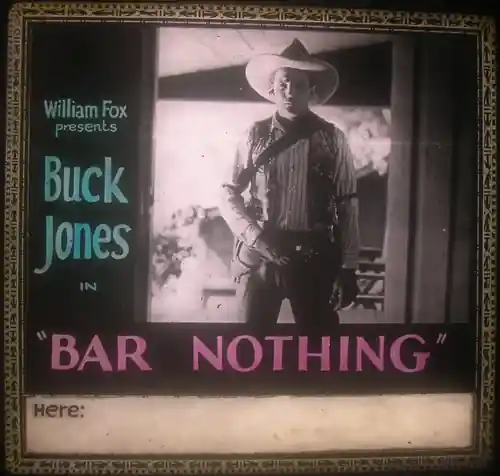
Gender dynamics feel surprisingly elastic. Bess’s agency peaks when she commandeers the caboose brake-wheel, forcing the engineer to decelerate so Duke can board. For 1925, this is proto-#MeToo horse opera: consent signalled via machinery. Their clinch, silhouetted against the furnace door, glows ember-orange, but Renick breaks first, turning her face toward the audience with a look that says partnership, not possession.
Yet the film is not flawless. Comic relief appears via a drunken telegraph operator whose pratfalls feel grafted from I’m Ringing Your Party—a tonal hiccup that jolts us out of the arid fatalism. Intertitles switch from laconic cowboy poetry to vaudeville puns, suggesting studio execs hedging bets between art and aisle-rolling.
Score survives only in cue sheets: “Bleak Prairie,” “Tumbleweed Lament,” “Love on the Hi-Line.” Contemporary festivals commission new compositions; last year’s Pordenone premiere paired it with a Balkan brass ensemble, whose minor-key oompah lent the cattle drive a gypsy-processional air—proof that silence, like the desert, invites mirage.
Film historians link Bar Nothing to the real-life 1910s Gadsden Purchase land frauds, when Eastern syndicates tried to swindle border ranchers. Westover, a former cowhand, claimed the script’s cattle-pricing scene was lifted verbatim from a Yuma courthouse transcript. If true, the movie doubles as micro-history, a celluloid court filing.
Restoration notes reveal a fascinating anomaly: the negative was processed at 22 fps while exhibitors projected at 24, meaning every performance is inherently 9% faster than intended. Modern digital re-timing restores Jones’ gait to unhurried swagger rather than Keystone panic.
In the cyclorama of early westerns, Bar Nothing nestles between the mythic grandeur of With Serb and Austrian (where landscapes also breathe like characters) and the claustrophobic psychodrama of The House of Temperley. But its true cognate is The North Wind’s Malice—both films pit environment as co-antagonist, a creditor exacting flesh for every overdue drop of water.
Contemporary relevance? Substitute cryptocurrency hype for cattle futures and you’ve got a 21st-century parable. Harliss could ICO a “BeefCoin” while Stinson live-streams FUD to tank legacy ranchers’ stock. Duke’s reprisal would be an open-source smart contract forcing payment at oracle price. The frontier merely swapped saddles for servers.
Arrow Academy’s forthcoming Blu-ray ports the 4K restoration alongside supplements: a commentary by western scholar Jenny Slopes, a video essay on Buck Jones’ transition from circus trick rider to megastar, and a 1919 short Downing an Uprising showcasing his rodeo chops. Package art uses ochre spot-colour on kraft board, mimicking distressed wagon canvas.
Bottom line: Bar Nothing is a fossilised lightning bolt, a film that proves silent cinema could interrogate capitalism while still delivering hoof-pounding thrills. It doesn’t merely endure; it accrues new cracks, new shadows every time we project it onto fresh sheets. Saddle up.
IMDb 5.2
1919
Community
Log in to comment.