DbcultAccessing Vault...
Cult Review
Senior Film Conservator
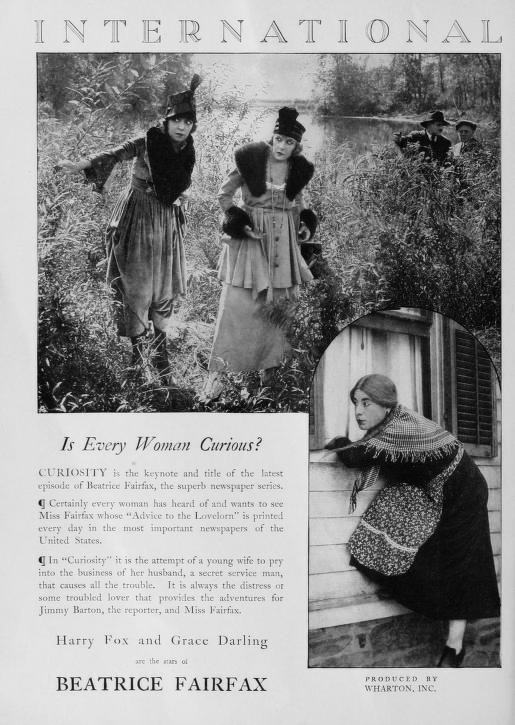
The silent film serials of the early 20th century often served as a pulsating mirror to the anxieties and aspirations of their era, and Beatrice Fairfax Episode 12: Curiosity is a particularly captivating exemplar. More than a mere chapter in a continuing saga, this installment delves into the very fabric of trust, deception, and the insatiable human urge to know. What begins as a seemingly innocuous domestic drama swiftly escalates into a high-stakes espionage thriller, all orchestrated with the masterful, if occasionally melodramatic, flair characteristic of the time. The narrative, while adhering to the serial format's episodic demands, manages to weave a surprisingly intricate web of intrigue, propelling its audience through a labyrinth of secrets and revelations.
At its core, Curiosity is a study in perception versus reality, a theme that resonates deeply within the confines of the newlywed Hanson household. Mrs. Hanson, portrayed with an earnest vulnerability by Evelyn Farris, finds herself in the unenviable position of loving a man whose professional life is an opaque enigma. This emotional void, this chasm of the unknown, becomes the fertile ground for suspicion. Her inability to penetrate the veil shrouding her husband Henry’s (George Connor) activities isn't just a minor marital quibble; it's a fundamental breach of intimacy, a challenge to the very foundation of their union. The film cleverly exploits this domestic tension, using it as the initial spark that ignites a much larger, more dangerous conflagration. It’s a compelling setup that immediately draws the viewer into Mrs. Hanson's emotional turmoil, making her subsequent actions not merely impulsive, but entirely empathetic.
The pivotal moment arrives with Henry’s clandestine late-night meeting. The furtive admission of a “disreputable looking man” into their home, immediately following Henry sending his wife to bed, is a classic cinematic trope designed to provoke unease. Mrs. Hanson’s decision to creep downstairs and eavesdrop isn't portrayed as a flaw, but rather as an inevitable consequence of her husband's secrecy. It’s a visceral, human reaction to a situation fraught with ambiguity. The fragments of conversation she overhears – specifically, Henry’s chilling declaration, “You needn’t fear me. I did two years in Atlanta prison and escaped” – are expertly deployed to send shivers down the spine, not just of Mrs. Hanson, but of the audience as well. This single line transforms Henry from a loving husband into a potentially dangerous enigma, shattering Mrs. Hanson's world and setting the entire convoluted plot into motion. Her subsequent letter to Beatrice Fairfax (Grace Darling), the titular advice columnist and amateur detective, is a cry for help, a desperate reach for clarity in a rapidly darkening personal landscape.
Beatrice Fairfax, as ever, embodies the pragmatic yet empathetic heroine. Her decision to personally intervene, rather than merely offer written advice, underscores her proactive nature and the gravity of Mrs. Hanson's predicament. This personal touch is a hallmark of the serial, establishing Beatrice as a tangible force for good, a figure of reassurance in a world often beset by shadowy figures and moral quandaries. Concurrently, Jimmy (Harry Fox), the intrepid reporter, is already on the trail, demonstrating how interconnected the underworld and the forces of justice often are. His assignment to investigate the mysterious gang provides a parallel narrative thread that eventually converges with Beatrice’s, showcasing the multi-pronged approach often necessary to unravel complex criminal enterprises. The narrative efficiency in setting up these two independent yet ultimately collaborative investigative paths is commendable for a film of this vintage.
The film then plunges us into the grimy reality of the criminal gang’s hideout. This transition is stark, moving from the domestic sphere to the underworld, a common juxtaposition in serials like The Mysterious Miss Terry, which also often pitted genteel society against subterranean threats. Henry’s infiltration, posing as a new recruit, is a masterstroke of dramatic irony. The audience is privy to his presumed criminal past, making his integration into the gang’s inner circle all the more tense. His “rigid examination” and subsequent acceptance into the fold are crucial moments, establishing his credibility with the villains while maintaining the audience’s suspense about his true allegiance. The revelation of the gang’s “big job” – the planned destruction of the steamship “Mandalay” with a powerful bomb – immediately elevates the stakes from a personal drama to a matter of national security, transforming a domestic spat into a potential international incident.
The detail of the “old hag” housekeeper and Doyle’s (Nigel Barrie) complaint about the disarray provides a moment of unexpected, almost mundane, realism within the high-tension plot. It’s a clever narrative device, as the subsequent “Strong Woman Wanted” sign becomes the perfect, albeit unlikely, entry point for Jimmy. His disguise as a Swedish girl is a delightful example of the era’s penchant for comedic subterfuge, reminiscent of the playful gender-bending seen in some early comedies, though here it serves a purely utilitarian, dramatic purpose. This plot point is executed with a certain charm, allowing Jimmy to slip into the gang's headquarters unnoticed, setting the stage for his heroic intervention. The swiftness with which Beatrice and Mrs. Hanson, having followed Henry, are captured and imprisoned in the cellar further tightens the narrative screws, placing the heroines in immediate peril and necessitating Jimmy’s quick thinking.
The scene involving the “long box resembling a coffin” being transported in a rough wagon and then transferred to an undertaker’s cart is rich with symbolic resonance. The coffin, traditionally a vessel for the dead, here becomes a chilling container for destruction, amplifying the macabre nature of the gang’s plot. This imagery, juxtaposed with the bucolic setting of a country wood, creates a powerful sense of dread, highlighting the insidious nature of the threat that lurks beneath the surface of everyday life. Such an inventive use of seemingly innocuous objects to conceal danger is a hallmark of effective serial storytelling, keeping the audience on edge and invested in the unfolding mystery. One might compare the cleverness of this concealment to the intricate deceptions found in other silent thrillers, where everyday items often harbored extraordinary secrets.
The narrative then meticulously builds towards its thrilling climax. Jimmy’s release of Beatrice and Mrs. Hanson from the cellar sets the stage for the inevitable confrontation. The ensuing battle, chaotic and visceral, is punctuated by Doyle’s desperate attempt to smoke out the prisoners with burning straw, a testament to the gang’s ruthless determination. It is during this melee that Henry Hanson finally sheds his guise, joining the fray alongside Jimmy and the women. But the true genius of the plot lies in the seemingly insignificant act of Henry throwing his cigar through the window. This isn't just a nervous habit; it's a precisely calculated move, a covert message in plain sight.
The discovery of the message inside the cigar by the passing operatives is a brilliant reveal, transforming a seemingly minor detail into the linchpin of the entire operation. This subtle, almost invisible, method of communication speaks volumes about the sophistication of Henry’s undercover work and the Secret Service’s operational protocols. The message, instructing the steamship “Mandalay” to jettison the bomb-laden coffin, is a race against time, a desperate attempt to avert disaster. The successful execution of this command, coupled with the timely arrival of the operatives to assist in the gang’s arrest, brings the multi-layered plot to a satisfying, if somewhat abrupt, conclusion. This kind of intricate planning and last-minute rescue often defined the excitement of serials, keeping audiences returning week after week, much like the cliffhangers in The Straight Way or The Vixen.
The ultimate revelation – that Henry Hanson is, in fact, the Chief of the Secret Service – is a moment of profound narrative satisfaction. It retroactively recontextualizes every suspicious act, every whispered conversation, transforming them from signs of betrayal into acts of profound patriotism. His explanation to his wife, “There would be no secrets in the Secret Service if we told them to our wives,” is a poignant, if somewhat antiquated, justification for his deception. It speaks to a bygone era’s perception of national security and the sacrifices demanded of those who served in covert capacities. While modern audiences might debate the ethical implications of such marital secrecy, within the context of the film’s time, it solidifies Henry’s heroic status and underlines the gravity of his mission. His character, initially perceived as potentially villainous, is elevated to that of a self-sacrificing hero, a man willing to endure personal anguish for the greater good.
The performances, though constrained by the conventions of silent film acting, are generally effective. Grace Darling imbues Beatrice Fairfax with her characteristic blend of intelligence and resolve. George Connor, as Henry Hanson, navigates the difficult tightrope of appearing suspicious yet ultimately heroic, a nuanced performance for the period. Evelyn Farris skillfully portrays Mrs. Hanson’s escalating anxiety and eventual relief. The supporting cast, particularly Nigel Barrie as the villainous Doyle, provides the necessary contrast, ensuring the stakes feel genuinely high. The direction, while not groundbreaking, is competent, effectively building suspense and orchestrating the action sequences with clarity. The use of intertitles is judicious, providing necessary exposition without bogging down the visual storytelling, allowing the actors’ expressions and physical actions to convey much of the emotional weight.
Beyond the thrilling plot, Curiosity touches upon several enduring themes. The titular curiosity itself is a double-edged sword: for Mrs. Hanson, it nearly leads to disaster, yet it is also the catalyst for the entire investigative process. For Beatrice, it is the engine of her detective work, a force for truth and justice. The film also subtly explores gender roles, with Mrs. Hanson initially relegated to a domestic sphere, only to be drawn into a larger, more dangerous world by her husband’s secrets. Beatrice, on the other hand, actively defies traditional limitations, embodying the independent, resourceful woman who was becoming increasingly prominent in popular culture, mirroring figures found in films like The Calendar Girl or even the more dramatic Her Sister, which often featured women navigating complex societal challenges.
The episode’s structure, with its escalating tension, multiple perspectives, and a climactic reveal, demonstrates a sophisticated understanding of serial storytelling. It manages to deliver a complete, satisfying narrative arc within its limited runtime while contributing to the larger Beatrice Fairfax mythos. The effective deployment of red herrings (Henry's supposed criminal past) and clever plot devices (the cigar message, the 'strong woman wanted' sign) ensures that the audience remains engaged and surprised. For enthusiasts of early cinema, Beatrice Fairfax Episode 12: Curiosity offers a rich tapestry of espionage, domestic drama, and thrilling action, all wrapped in the distinctive aesthetic of the silent era. It’s a testament to the enduring power of well-crafted suspense and the timeless appeal of a hero (or heroine) unraveling a complex mystery. This episode, in particular, stands out as a strong example of how these serials could blend personal stakes with grander, more perilous threats, leaving an indelible mark on the nascent art of cinematic storytelling.

IMDb 6.4
1936
Community
Log in to comment.