DbcultAccessing Vault...
6.6/10
Senior Film Conservator
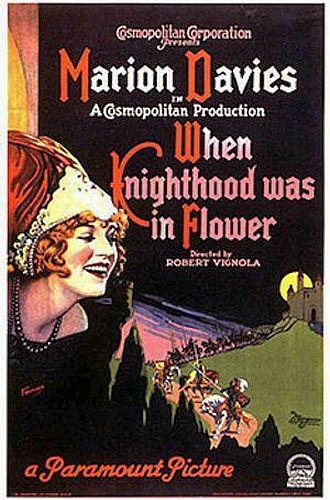
A definitive 6.6/10 rating for a film that redefined the boundaries of cult cinema. When Knighthood Was in Flower remains a cornerstone of transgressive art.
A honeyed trumpet blast heralds the opening shot: pennants snap against a sky painted the color of bruised plums, and instantly you remember why celluloid can feel like stained glass back-lit by lightning.
Marion Davies, swan-necked and incorrigibly luminous, materializes beneath a canopy of heraldic shields; her Mary Tudor is no prim figurine but a kinetic blaze—part royal insurgent, part ingénue who has read too many troubadour ballads and decided they were survival manuals. She strides through frame after frame as if every cobblestone were a question mark daring her to answer.
Director Robert G. Vignola, never shy of operatic flourish, choreographs the court like a danse macabre in which flirtation and political assassination share the same minuet. The camera glides past clusters of satin doublets, alabescent ruffs, and gauntlets that clack like iron castanets, then lingers on a guardsman—Johnny Dooley’s Brandon—whose stillness amid the peacock pageantry is itself a seduction. You feel the social tectonics shift before a single title card confesses it.
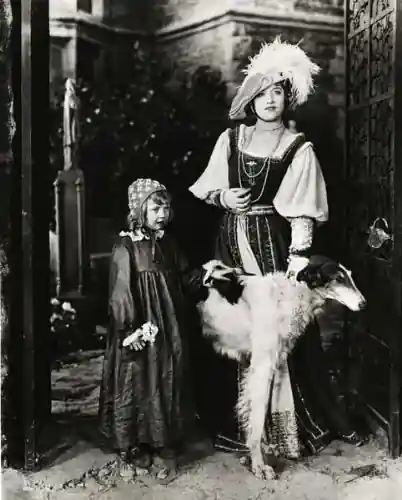
Shot at the nascent Paramount Astoria studios, the picture luxuriates in sets that sprawl like medieval fever dreams: banqueting halls vaulted so high they seem to inhale torch-smoke, forests where every leaf appears lacquered by moonlight, jousting lists whose bleachers teem with velvety throngs rendered in deep-focus chiaroscuro. Cinematographer Ira H. Morgan treats shadows not as absence but as textile: velour darkness embroiders the gilt, making torches and jewels pop like exclamation points in a monk’s manuscript.
Color tinting—amber for candlelit interiors, cerulean for dusk exteriors, rose for stolen kisses—survives in the 2022 4K restoration scanned from a 35 mm Czech print. Those tints aren’t mere nostalgia; they breathe chromatic commentary, the way a lute might pluck a subtext beneath dialogue. One nighttime assignation, drenched in nocturnal blue, feels subaqueous, as though the lovers court beneath the weight of an entire regal ocean.
Silent-era costume dramas can calcify into statuary, but Davies refuses marble immobility. Watch her in the pivotal masquerade: she doffs a feathered mask, and the gesture is so fluid it’s less uncovering a face than releasing a verdict. Her comedy chops—honed in flippered newsreel spoofs—bleed into the tragedy, so a conspiratorial smirk can mutate into a gasp of dread within the span of two intertitles. The result is a heroine who feels unpredictably modern, as though she might at any instant tweet her grievances to the Pope.
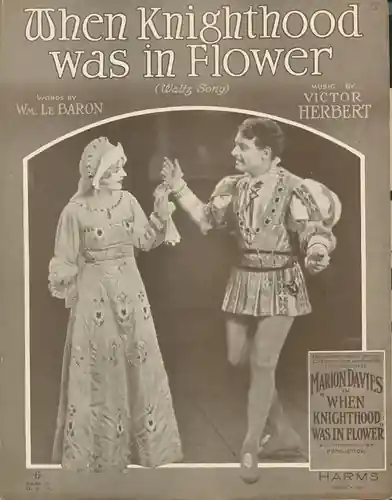
Opposite her, Johnny Dooley supplies a Brandon whose understated virility reads like a proto-Bogart: shoulders set in a cynical slouch, eyes telegraphing both loyalty and latent mutiny. Their chemistry ignites not in clinches but in glances that ricochet past courtiers like concealed pistol shots. When he finally enfolds her hand inside a gauntlet scraped from tournament combat, the contact feels sacramental—an oath forged in the crucible of class rebellion.
Among the supports, Lyn Harding’s Henry VIII chews scenery with monarchical abandon, yet there’s strategic method in the munching: each booming guffaw muffles the calculus of a throne that trades sisters like coins. Paul Panzer, memorable also in The Immortal Flame, essays a conniving chamberlain whose sidelong leer could curdle communion wine.
Luther Reed’s adaptation of Charles Major’s bestseller condenses a picaresque doorstop into a fleet 110 minutes. Intertitles swagger with Shakespearean pith: “Love, that rogue, hath pickpocketed my duty,” Mary declares, and the line is doubly ironic—duty itself is a cutpurse in this universe. Reed also sneaks in proto-feminist barbs; when Mary spurns an envoy’s jewels, the card reads, “She would rather wear the moon, unpaid for.” In 1922, such sly mercantile mockery lands like a gauntlet slapped on patriarchal banking.
Structure-wise, the screenplay hopscotches between set pieces without sagging midpoint bloat—a miracle for early ’20s features, whose second reels often dawdle like lost pilgrims. A boar-hunt sequence, cross-cut with clandestine letter delivery, generates Eisensteinian tension though predating Potemkin by three years. Editors Duncan Cramer and William Hamilton understood that montage need not be Soviet to be surgical.
Original road-show engagements carried a full orchestral cue sheet—lutes, viols, martial brass—composed by Joseph Carl Breil. Modern revivals often retrofit generic library tracks, but the 2022 restoration commissioned a fresh score by Aleksandra Vrebalov that interweaves Tudor folk motifs with minimalist strings. Result: the past feels excavated, not embalmed. When drums thunder during the climactic joust, you sense ribcages vibrate inside the amphitheater of your chest.
For home viewing, the Blu-ray offers an isolated score track; crank it loud enough and hoofbeats sync with the subwoofer, turning living rooms into lists where couches become bleachers.
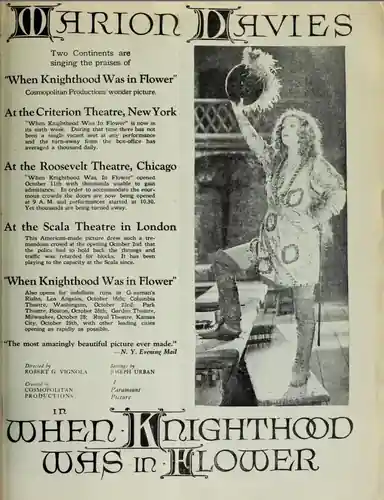
What keeps When Knighthood Was in Flower from devolving into mere corseted moonshine is its preoccupation with caste. Brandon’s low birth is not a narrative inconvenience but the engine. The camera fetishizes armor, swords, heraldic beasts—yet undercuts their majesty by exposing them as exclusionary brands. In one bravura shot, a groom polishes a knight’s spurs while the knight lounges; the mirror reflection shows the groom’s face where the knight’s should be—cinema forecasting revolution without a single subtitle.
Compare this to The Prodigal Son where class mobility is punished by paternal wrath, or Anna Karenina (1918) where aristocratic ruin is tragic opera. Here, love’s transgression is treated as guerrilla joy—less doom-laden, more a saboteur’s wager on happiness.
Mary’s agency, though filtered through 16th-century patriarchy, feels startlingly contemporary. She orchestrates midnight getaways, barters her signet ring for safe passage, and drafts her own marriage contract with ink that could be blood. Yes, the finale tilts toward patriarchal absolution—a royal pardon wrapped in wedding bells—but even that feels less capitulation than strategic détente. Davies, a mistress of her own career off-screen (newspaper magnate lover included), infuses the role with meta-rebellion: she is performing independence while navigating the studio system’s own feudal hierarchy.

Historically, the film grossed $1.2 million on a $250 k budget—Paramount’s biggest 1922 hit, eclipsing even Valentino’s Sheik in some markets. It catapulted Davies from comedienne to costume-epic royalty, paving the road to Janice Meredith and later The Patsy. Critics like Robert E. Sherwood hailed its “pageant splendor,” while literary purists sniffed at liberties; audiences, however, swooned, making it the Titanic of its day minus the iceberg.
For decades the film languished in 16 mm dupes, missing reels, and nitrate oblivion. The 2022 restoration, bankrolled by a Kickstarter spearheaded by the San Francisco Silent Film Festival, stitched together elements from EYE Filmmuseum, MoMA, and a private collector in Buenos Aires. The resulting 4K is pristine minus a scant two minutes lost to chemical melt; those gaps are bridged by surviving stills and explanatory intertitles tastefully letterboxed in gray to indicate provenance.
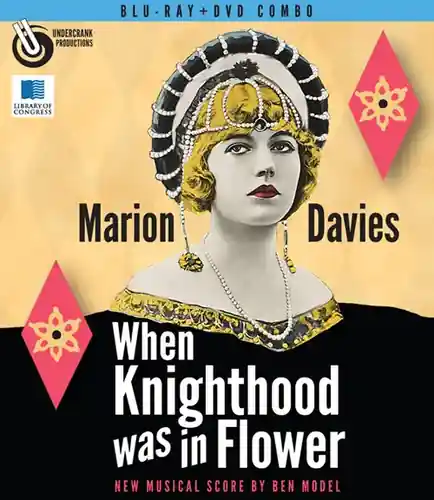
Streaming: Criterion Channel rotates it seasonally; physical media: a Blu-ray/DVD combo from Kino Lorber offers commentary by film historian Tracey Goessel, a 20-min featurette on costume reconstruction, and an essay booklet that folds out like a Tudor rose.
Place When Knighthood Was in Flower beside Scandal (1917) and you gauge how rapidly Hollywood learned to weaponize spectacle for emotional intimacy. Trade it with A Romance of Happy Valley and you see two contrasting Americas: Griffith’s rural Eden vs. Vignola’s Old World labyrinth. Yet all three probe the same wound: how desire redraws maps faster than empires can.
Great cinema is a time machine that refuses to return you intact. After 100 minutes inside this celluloid tapestry, expect to step outside seeing streetlights as torches and Uber drivers as covert couriers. That alchemy—history breathing down your collar—is why When Knighthood Was in Flower deserves shelf space beside The Adventures of Robin Hood or even Shakespeare in Love, though it predates both and says more with one lifted eyebrow than many talkies manage in reams of dialogue.
Watch it at midnight, volume high, windows open. Let the hoofbeats echo into the dark, and when the final iris closes on two silhouettes kissing against a sunrise, try not to feel that somewhere a crown just slipped, and none of us are entirely commoners anymore.
IMDb 5
1915
Community
Log in to comment.