DbcultAccessing Vault...
Cult Review
Senior Film Conservator
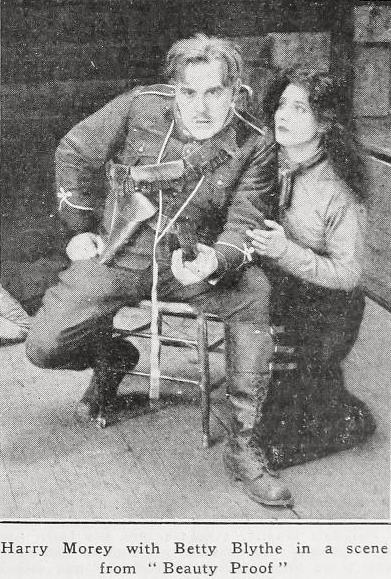
In the vast, untamed expanse of the Northwest, where duty often carves deeper lines than the harshest winds, emerges a cinematic relic that, despite its age, still pulsates with a raw, human drama. Beauty-Proof, a silent film from 1924, is not merely a tale of pursuit and capture; it is a profound exploration of human prejudice, the corrosive nature of past trauma, and the unexpected blossoming of affection in the most unlikely of circumstances. It introduces us to Corporal Philip Steele, a man whose very moniker suggests an impenetrable resolve, further underscored by his reputation as a notorious woman-hater – a man, indeed, purportedly 'beauty-proof.' This is not a mere character quirk; it is the central pillar of his identity, a self-imposed fortress against the perceived vulnerabilities of emotional entanglement. The film immediately sets a fascinating psychological premise, challenging the audience to anticipate the precise force that could possibly dismantle such a formidable emotional barrier.
The narrative, deftly crafted by Edward J. Montagne and James Oliver Curwood, wastes no time in propelling Steele into a maelstrom that will test every fiber of his being. His assignment: to apprehend Thorpe, a fugitive accused of the attempted murder of a man known as Hodge, or Garson – an alias that immediately signals an undercurrent of deceit and hidden identities. The seemingly straightforward nature of this mission, however, is but a thin veil over a much more intricate web of personal vendettas and desperate measures. The film, even in its silent grandeur, masterfully builds suspense, painting a vivid picture of a frontier where justice is often a subjective concept, and survival dictates a harsh code of ethics. The stark landscapes, though perhaps implied rather than explicitly shown in detail by the surviving prints, serve as a metaphorical backdrop to the equally stark emotional terrain of its protagonists.
The true catalyst for Steele's transformation, and indeed the film's dramatic core, arrives in the formidable person of Carol, Thorpe's sister. Far from a damsel in distress, Carol embodies a fierce agency, a woman driven by an unshakeable conviction in her brother's innocence and a steely resolve to clear his name. Her method is audacious: she orchestrates the abduction of Corporal Steele himself, a bold move that immediately subverts expectations and places her in a position of power. The image of the 'beauty-proof' Mountie, bound and confined within a box, hidden in the very cabin of the man her brother sought to harm, is a potent visual metaphor. It speaks volumes about the reversal of fortunes, the precariousness of power, and the impending unraveling of Steele’s carefully constructed prejudices. This daring act is not mere villainy; it is a desperate gambit born of love and a profound sense of injustice, setting the stage for a confrontation of seismic proportions.
The scene within Hodge's cabin is the film's undeniable dramatic fulcrum, a masterclass in silent film storytelling that relies on intense expressions, gestures, and intertitles to convey a maelstrom of emotion. Carol, aware of Steele's hidden presence, confronts Hodge with a blistering honesty, peeling back the layers of deception to reveal the true nature of her brother's actions. Thorpe, she asserts, was not a cold-blooded attempted murderer, but a protector, driven to violence by Hodge's unwelcome and predatory efforts to seduce her. This revelation not only reframes Thorpe’s actions but also forces Steele to reassess his initial judgment, challenging the black-and-white morality he has so rigidly adhered to. The tension is palpable, a tightrope walk between revelation and renewed danger. As Hodge, emboldened by his perceived control, makes yet another advance on Carol, the carefully balanced tableau explodes.
In a cathartic burst of raw power, Philip Steele shatters his confinement, emerging from the box not just as a lawman, but as a man possessed by a deeply personal fury. The moment of recognition is swift and devastating: Hodge, the man he was ordered to arrest, is revealed to be the very same villain who, in a cruel twist of fate, had earlier robbed Steele of his own wife. This revelation transforms the entire narrative, shifting it from a duty-bound pursuit to a deeply personal quest for vengeance and justice. The 'beauty-proof' exterior crumbles, revealing a core of profound, unhealed pain. This sudden, visceral connection to his past imbues Steele's character with an extraordinary depth, transforming him from a stoic figure of authority into a protagonist driven by a potent cocktail of duty, rage, and a desperate need for closure. The film brilliantly uses this plot twist to elevate the stakes, making the ensuing chase not just a matter of law enforcement, but a race against a personal demon. Such a profound and sudden shift in motivation, where a character’s past violently collides with their present mission, is a powerful narrative device, reminiscent of the intricate backstories that often fuel the dramatic tension in films like The Man Who Came Back, where hidden histories dramatically alter the course of justice and redemption.
Steele's determination to capture Hodge alive, despite the overwhelming urge for immediate retribution, speaks volumes about his underlying commitment to a higher form of justice, even as his personal demons rage. He thwarts all other attempts on Hodge's life, not out of mercy, but out of a desperate need for a reckoning, a face-to-face confrontation that only a living capture could provide. This internal conflict – the battle between raw vengeance and the principles of law – adds another layer of complexity to Steele's character, preventing him from becoming a simplistic hero. He is a man wrestling with his own demons, his past trauma threatening to overwhelm his professional integrity. The ensuing pursuit across the rugged terrain, though perhaps depicted with the stylistic conventions of silent cinema, would have conveyed a relentless energy, a cat-and-mouse game fraught with danger and escalating tension.
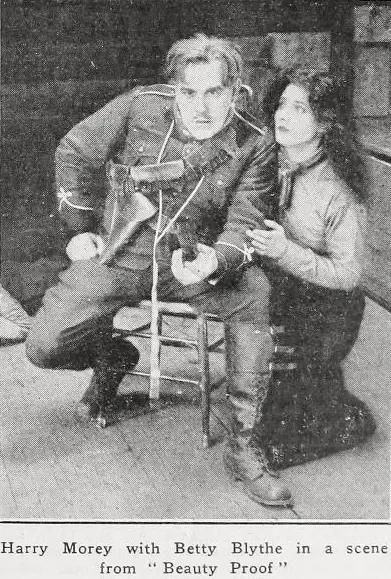
The chase culminates in a brutal, visceral fight, a final, desperate struggle between Steele and Hodge. In the chaotic maelstrom of blows and desperate maneuvers, Hodge meets his end. The film, in its silent eloquence, likely portrays this final confrontation with a raw intensity, emphasizing the physical and emotional toll it takes on Steele. The death of Hodge, while bringing an end to the immediate threat and a measure of justice, denies Steele the direct, cathartic confrontation he so desperately sought. Yet, in the aftermath of this violence, amidst the dust and the fading echoes of conflict, a new, unexpected emotion begins to stir within the corporal's hardened heart. The rigid, 'beauty-proof' facade, so meticulously maintained for so long, finally shatters completely.
It is in these quiet, reflective moments following the storm that Philip Steele discovers a profound and undeniable truth: he has fallen in love with Carol. This realization is not a sudden, saccharine shift, but the culmination of a journey marked by prejudice challenged, trauma confronted, and an unlikely alliance forged in the crucible of shared danger. Carol, with her courage, her unwavering loyalty, and her fierce determination, has not only exonerated her brother but has also, inadvertently, healed a wound in Steele's soul that he believed beyond repair. Her strength, far from being a weakness, becomes the very force that allows him to reconnect with his own humanity, to shed the armor of his misogyny. The film's conclusion, therefore, is not just about justice served, but about a personal metamorphosis, a testament to the transformative power of love and empathy, even in the harshest of environments. The narrative arc, from initial disdain to profound affection, echoes the emotional journeys found in other compelling dramas where characters overcome deep-seated biases through unexpected connections, much like the evolving relationships explored in Find the Woman or even the complex human dynamics in Thirty a Week.
Beauty-Proof, as a product of its era, likely relied heavily on the nuanced performances of its cast, particularly Betty Blythe as Carol and the actor portraying Philip Steele. Silent film acting, with its emphasis on exaggerated expressions, grand gestures, and the power of the gaze, would have been crucial in conveying the complex emotional arcs of these characters. Blythe's portrayal of Carol would have needed to balance vulnerability with an unyielding strength, making her both sympathetic and formidable. Steele's actor, on the other hand, would have had the formidable task of slowly chipping away at his character's hardened exterior, allowing the audience to witness the internal struggle and eventual surrender to emotion. The contrast between Steele's initial rigid posture and his final, tender gaze towards Carol would have been a powerful visual statement, a testament to the enduring power of human connection.
The film's exploration of misogyny, though perhaps presented through the lens of early 20th-century storytelling, remains remarkably relevant. Philip Steele's initial 'woman-hater' status is not simply a plot device; it serves as a commentary on the societal prejudices that can blind individuals to the true nature of others. Carol's character directly challenges this prejudice, not through overt confrontation but through her actions, her courage, and her inherent goodness. She forces Steele to confront his preconceived notions, demonstrating that strength, intelligence, and moral conviction are not gender-specific. This thematic depth elevates Beauty-Proof beyond a simple adventure tale, imbuing it with a social consciousness that resonates even today. The raw, untamed frontier setting further amplifies these themes, presenting a world where societal norms are often stripped away, revealing the raw essence of human character. The moral ambiguity surrounding Thorpe's initial act, and Steele's eventual understanding of it, speaks to the complexities of justice in a world far removed from the pristine halls of law.
The craft of silent cinema, often underestimated in modern discourse, shines through in narratives like Beauty-Proof. The reliance on visual storytelling, on the evocative power of intertitles, and on the sheer talent of its performers to convey intricate emotions without a single spoken word, is a testament to its artistry. The film's pacing, its use of dramatic irony (Steele being trapped in Hodge's cabin), and its powerful character transformations all contribute to a compelling cinematic experience. While we may not have the luxury of experiencing its full visual grandeur in pristine condition today, the narrative's blueprint, its emotional architecture, remains robust and impactful. It serves as a reminder that fundamental human stories – of love, loss, revenge, and redemption – transcend the limitations of technology and time. The film's ability to weave together elements of a Western, a romance, and a psychological drama into a cohesive whole speaks to the sophisticated storytelling capabilities of early Hollywood. It's a journey into the heart of a man, a woman, and a wild frontier, leaving an indelible mark long after the final frame.
In conclusion, Beauty-Proof stands as a fascinating example of early cinema's capacity for complex character development and thematic richness. It challenges its protagonist, and by extension its audience, to look beyond superficial judgments and to embrace the unpredictable nature of human connection. Corporal Philip Steele’s journey from a self-proclaimed 'beauty-proof' woman-hater to a man capable of profound love is both a compelling character arc and a timeless exploration of personal growth. The film's blend of thrilling frontier action, deeply personal drama, and an unexpected romance makes it a noteworthy entry in the annals of silent film. It reminds us that even in the absence of spoken dialogue, the human heart speaks volumes, and some stories, like the untamed wilderness they depict, possess an enduring, captivating power that transcends generations. Its narrative ingenuity and emotional depth position it as a film that, if given the chance, could still resonate deeply with contemporary audiences, proving that true beauty in storytelling is indeed 'proof' against the ravages of time.
IMDb —
1923
Community
Log in to comment.