DbcultAccessing Vault...
6/10
Senior Film Conservator
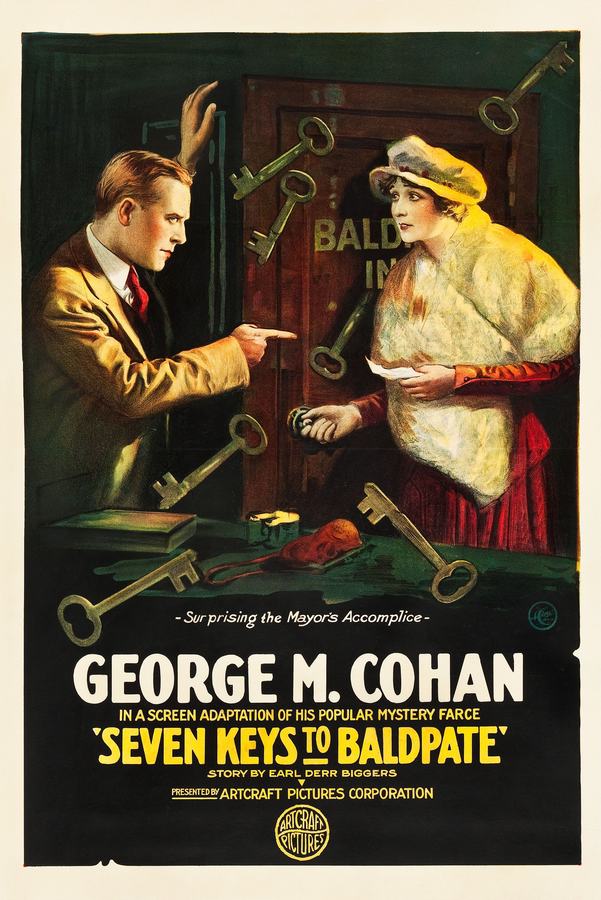
A definitive 6/10 rating for a film that redefined the boundaries of cult cinema. Seven Keys to Baldpate remains a cornerstone of transgressive art.
In the annals of early cinema, few films manage to capture the sheer audacious spirit of theatrical adaptation and genre-bending quite like George M. Cohan’s 1917 silent marvel, Seven Keys to Baldpate. A cinematic translation of Earl Derr Biggers' wildly popular novel and Cohan's own successful stage play, this film stands as a fascinating artifact, not merely for its historical significance but for its surprisingly enduring capacity to entertain. It’s a narrative experiment, a meta-commentary on storytelling itself, wrapped in the guise of a thrilling, farcical mystery. To truly appreciate its genius, one must contextualize it within an era where the language of cinema was still very much in its nascent stages, yet already capable of sophisticated narrative trickery.
The film pivots on an irresistibly simple yet utterly compelling premise: William Hallowell Magee, a playwright portrayed by Cohan himself, wagers his friend that he can pen a 10,000-word novel in a mere twenty-four hours. The friend, seemingly amused by Magee's hubris, offers him the Baldpate Inn, a grand, isolated resort supposedly locked tight for the winter, as his sanctuary. The promise is absolute seclusion, an unblemished canvas for creative fervor. Magee arrives, key in hand, anticipating nothing but the rhythmic clack of his typewriter and the solitary pursuit of literary glory. What he receives, however, is a dizzying descent into a labyrinth of mistaken identities, clandestine meetings, and outright criminal shenanigans, all orchestrated by a succession of individuals who, against all logic, also possess keys to the 'deserted' inn.
This foundational conceit, a writer's quest for solitude spectacularly derailed, immediately establishes a delightful tension between expectation and reality. The audience is drawn into Magee's initial smug confidence, only to witness it unravel with each new, perplexing arrival. It’s a theatrical setup that translates remarkably well to the silent screen, relying on expressive performances and clever staging to convey the escalating absurdity.
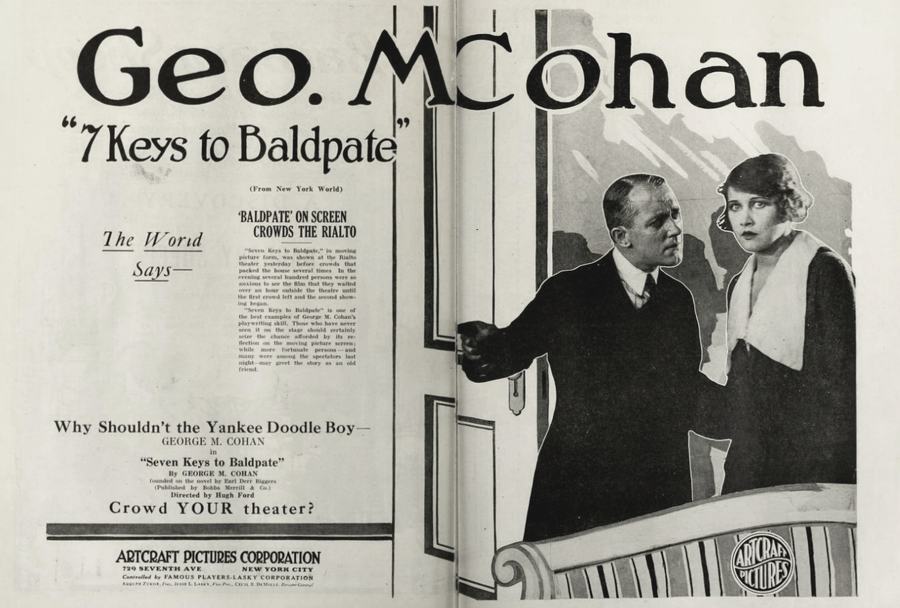
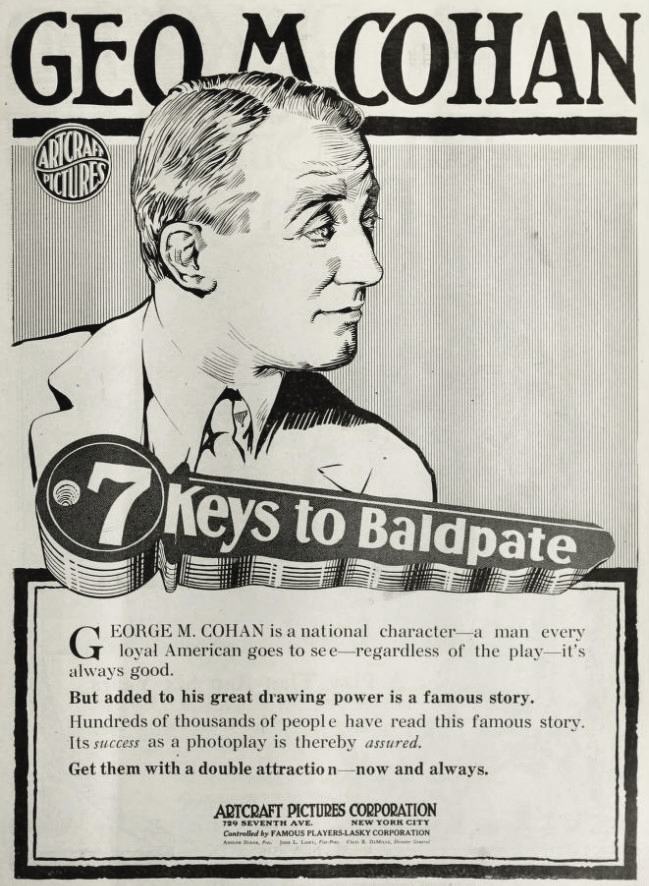
George M. Cohan, a titan of Broadway, brings his inimitable stage presence to the silver screen. His performance as Magee is a masterclass in silent film acting, conveying a spectrum of emotions from determined focus to bewildered frustration with remarkable clarity. Cohan, who also adapted the screenplay from his own play, understood intrinsically how to translate the heightened reality of the stage to the more intimate, yet still grand, canvas of cinema. He doesn't merely act; he embodies the very spirit of the narrative's self-aware wit. His gestures, his facial expressions, and his reactions to the increasingly bizarre circumstances are perfectly calibrated, allowing the audience to feel every nuance of his character's escalating predicament.
The film's success owes much to Cohan’s understanding of pacing and dramatic irony. He orchestrates the entrances and exits of the various characters with the precision of a seasoned conductor, ensuring that each new arrival amplifies the confusion and propels the narrative further into delightful chaos. This meticulous attention to rhythm is a hallmark of his theatrical background, seamlessly integrated into the cinematic medium. For those familiar with Cohan's work, it’s a treat to see his distinctive blend of patriotism, wit, and showmanship translated through the silent film's unique demands.
The true charm of Seven Keys to Baldpate lies in its relentless procession of eccentric characters, each arriving with their own key and their own convoluted agenda. First comes Mary Johnson (Hedda Hopper), a beautiful journalist seemingly seeking a scoop, whose presence immediately shatters Magee’s peace. Then, more shadowy figures emerge: a corrupt politician, a gangster, a mysterious woman named Myra Thornhill (Anna Q. Nilsson), and even a detective. The inn, far from being a desolate retreat, becomes a bustling hub of intrigue, a veritable Grand Central Station of clandestine dealings and hidden motives.
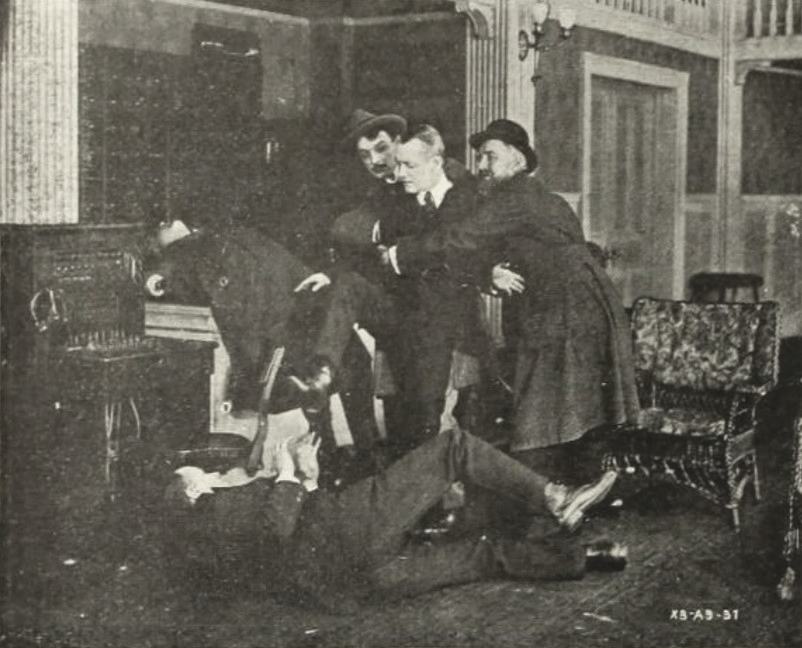
Each new character introduces a fresh layer of complexity to the already convoluted plot. There are stolen bonds, secret safe combinations, blackmail, and even a murder. Magee, initially a detached observer, quickly finds himself enmeshed in the very fabric of this unfolding drama, his writer's instinct for observation giving way to genuine fear and confusion. The narrative expertly plays with the audience's expectations, constantly shifting allegiances and revealing new twists that keep viewers on the edge of their seats. The film's ability to maintain this level of intricate suspense and comedic timing in the silent era, relying solely on visual storytelling and intertitles, is truly commendable.
While Cohan is undoubtedly the gravitational center of the film, the supporting cast delivers performances that are equally vital to its success. Hedda Hopper, later to become a formidable gossip columnist, shines as the enigmatic Mary Johnson, bringing a captivating blend of charm and cunning to her role. Anna Q. Nilsson, as Myra Thornhill, adds another layer of sophisticated mystery, her presence often signaling a new turn in the complex web of deceit. Corene Uzzell, though perhaps less prominent, contributes to the overall tapestry of quirky characters that populate the inn. Each actor, through their nuanced expressions and physical comedy, contributes to the tapestry of confusion and intrigue, ensuring that the audience remains captivated by the increasingly farcical proceedings.
The ensemble’s ability to maintain distinct personalities and motivations despite the rapid-fire plot developments is a testament to the directorial guidance and the strength of the original material. Their interactions with Cohan’s Magee are often hilarious, sometimes tense, and always engaging, preventing the single setting from ever feeling stagnant. This dynamic interplay is crucial for a film that relies so heavily on character-driven plot twists.
Beyond the surface-level thrills and comedic escapades, Seven Keys to Baldpate delves into intriguing meta-narrative territory. The film constantly blurs the lines between reality and fiction, making the audience question what is genuinely happening to Magee and what might be a product of his own fertile imagination, or perhaps even a deliberate setup. This self-referential quality was quite ahead of its time, inviting viewers to ponder the nature of storytelling itself. Is Magee merely experiencing an elaborate prank, or has he stumbled into a real-life thriller that mirrors the very narratives he seeks to create?
The film’s ultimate resolution, which cleverly ties back to the initial wager, elevates it beyond a simple mystery. It becomes a commentary on the power of narrative, the immersive nature of the creative process, and the fine line between authorial control and the unpredictable unfolding of events. This thematic depth gives Seven Keys to Baldpate a resonance that transcends its genre, cementing its place as more than just a forgotten silent film. It’s a playful exploration of how stories are made and how they can, at times, consume their creators.
While silent films often relied on theatrical blocking, Seven Keys to Baldpate demonstrates a keen understanding of cinematic language, even in its early form. The use of close-ups to emphasize character reactions, the strategic placement of objects within the frame to build suspense, and the dynamic editing to quicken the pace during moments of high drama all contribute to its effectiveness. The single setting of the Baldpate Inn, rather than feeling restrictive, becomes a character in itself, its shadowy corridors and dimly lit rooms enhancing the atmosphere of mystery and claustrophobia.

The direction ensures that the audience is always aware of the inn's layout, making the entrances and exits of the various key-holders all the more impactful. The visual storytelling is precise, communicating complex plot points and emotional states without the aid of spoken dialogue. This required a heightened sense of visual literacy from both the filmmakers and the audience, a skill that Seven Keys to Baldpate rewards handsomely. Compared to some of its contemporaries, which might have felt more like filmed stage plays, this film exhibits an early grasp of how to leverage the unique capabilities of the motion picture camera.
Seven Keys to Baldpate, in its original literary, theatrical, and cinematic forms, proved to be immensely popular, spawning multiple remakes throughout the decades. This enduring appeal speaks volumes about the strength of its core concept. It established a blueprint for the 'locked-room mystery' combined with comedic elements, influencing countless thrillers and farces that followed. Its innovative use of a meta-narrative structure, where the protagonist's reality is intertwined with his fictional creation, can be seen as a precursor to more sophisticated narrative experiments in later cinema.
While not directly comparable in plot, the film shares a spirit of suspense and intrigue with other early thrillers like The Power of Evil or even the more dramatic The Tarantula, in its ability to generate tension from confined spaces and mysterious circumstances. However, Baldpate differentiates itself by injecting a pervasive sense of humor and self-awareness, making it less a grim exercise in dread and more a delightful rollercoaster of confusion. It's a testament to the ingenuity of early filmmakers that they could craft such engaging and complex narratives with the limited tools at their disposal. Its influence, though perhaps subtle, rippled through the burgeoning film industry, demonstrating that audiences were eager for stories that challenged their perceptions and blended genres in exciting new ways.
Ultimately, Seven Keys to Baldpate remains a vibrant and engaging piece of cinematic history. It's a film that asks us to suspend our disbelief, only to playfully pull the rug out from under us, leaving us both amused and impressed by its narrative dexterity. George M. Cohan’s vision, both as a performer and as an adapter of his own work, shines through every frame, delivering a delightful blend of suspense, comedy, and meta-commentary that feels surprisingly modern even today. For anyone interested in the evolution of film narrative, the unique challenges and triumphs of silent cinema, or simply a good old-fashioned mystery with a side of farce, this film is an absolute must-see. It's a reminder that truly inventive storytelling knows no temporal bounds, captivating audiences then as it continues to do now.
The intricate dance between the writer's solitude and the chaotic intrusions, the layering of fictional scenarios upon what appears to be reality, all contribute to a viewing experience that transcends mere passive entertainment. It’s an invitation to participate in Magee's bewilderment, to unravel the threads of the mystery alongside him, and to ultimately appreciate the sheer theatricality of life itself. The film’s lasting charm is its unwavering commitment to its own cleverness, executed with a panache that only a master showman like Cohan could deliver. It stands as a beacon for how early cinema, far from being primitive, was already exploring complex narrative structures and engaging with its audience on multiple intellectual and emotional levels.
IMDb 5.3
1919
Community
Log in to comment.