DbcultAccessing Vault...
Cult Review
Senior Film Conservator
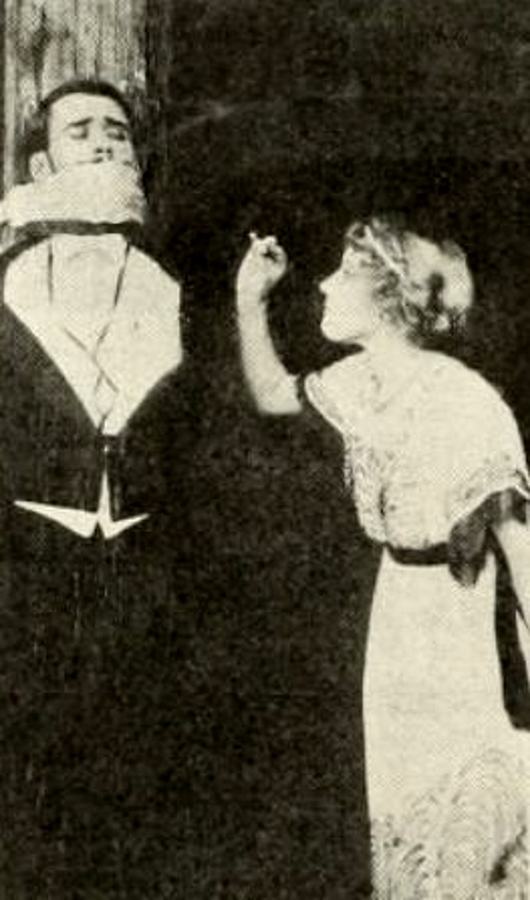
Somewhere between the first scream of the knout and the last cough of dynamite, Alice Guy-Blaché’s Beneath the Czar detonates the polite notion that early narrative cinema was merely theatrical tableaux with captions.
The film, shot in the chill winter of 1913–14 and released into a world twitching toward Sarajevo, is a 42-minute nerve-storm whose very emulsion seems impregnated with cordite. What we witness is not a story but a crucible: a daughter’s filial devotion distilled into the pure acid of espionage, a prince’s idealism scorched into reckless martyrdom, and an empire’s marble façade cracked by the tap-tap-tap of a woman’s heel on flagstone.
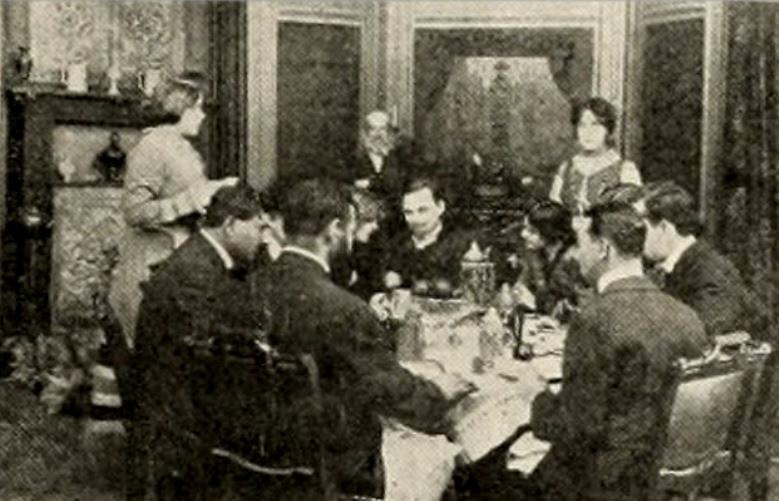
Guy and her cameraman, the unsung magician John W. Brown, stage interior terror with chiaroscuro that prefigures Caligari by half a decade. Watch the sequence where the heroine—never named, only referred to in intertitles as “the girl” (Claire Whitney)—descends a spiral staircase into the prince’s subterranean print-shop. The camera holds at medium height, immobile, while her silhouette corkscrews downward, each step eclipsing more candle-flame until the screen is nearly swallowed by black. The effect is proto-Lang: the viewer becomes the peephole through which autocracy spies on its own paranoia.
Conversely, the exterior sequences are all mercury and wind.
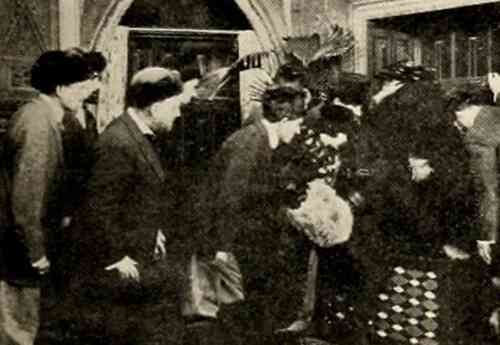
Cossacks gallop through birch forests whose trunks strobe past the lens like prison bars shot at 16 fps. A low sun flares off crossed sabers, turning every blade into a heliograph that signals doom. The film’s tinting strategy—cyanide-blue for night exteriors, bruise-magenta for interiors—was not mere sales-catalog ornamentation but a semantic code: cold governance vs. fevered resistance.
Fraunie Fraunholz’s Prince Cyril carries the languid elegance of a man who has read Byron by candelabra and expects the world to oblige his tragic pose. Yet watch his shoulders when the girl confesses her betrayal: they sag not with heartbreak but with the sudden recognition that history has no starring roles, only walk-ons. Whitney responds with micro-gestures worthy of a Dreyer close-up: a tremor along the left cheekbone, the almost imperceptible retraction of her lower lip as if tasting iron. Because the film denies everyone a name, the actors must etch identity onto their pores.
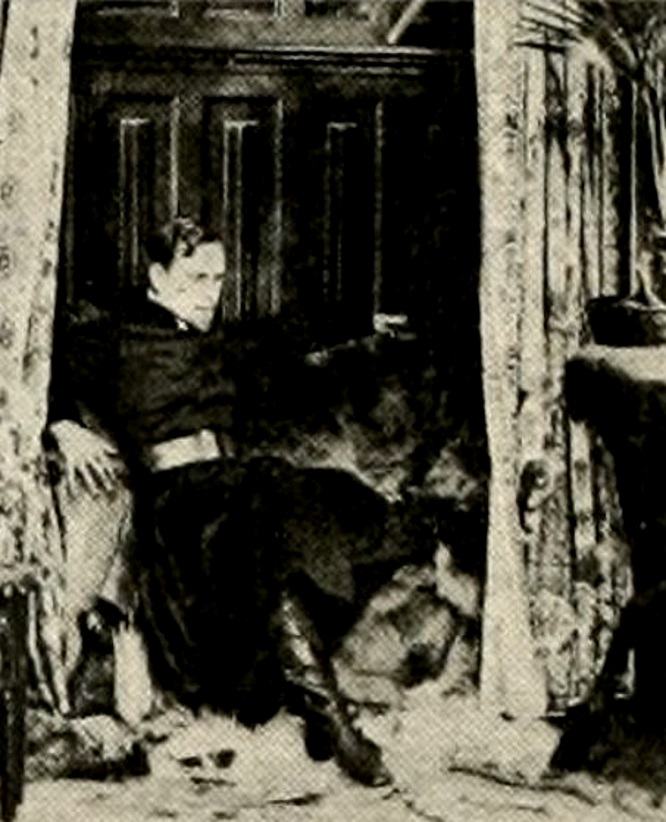
Critics still treat Guy as a footnote to Méliès or a maternal figure to Lois Weber, yet here she anticipates Eisenstein’s montage of collision by staging conflict inside a single frame. In the torture-cellar, father and daughter occupy opposite thirds; center frame stands the brass samovar used to heat the branding iron. The samovar’s curved belly reflects both faces, warping them into a single anguished mask—family and state fused into one bruised icon. The mise-en-abyme is revolutionary: it suggests that Tsarist power does not merely oppress subjects; it incestuously merges with them, making every patriot complicit in the knout’s arc.
Compare this to the comparable domestic entrapment in The Mail Order Wife where surveillance is marital, not state-orchestrated; the ideological stakes feel microscopic beside Guy’s macrocosmic terror.
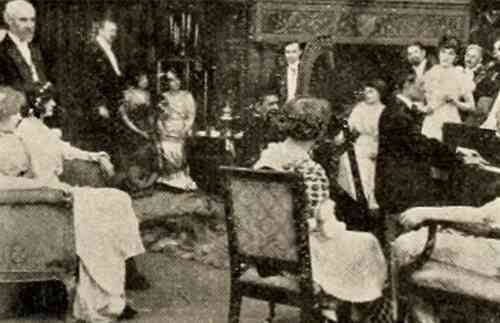
The film’s most audacious cut leaps from the girl’s hand secreting documents beneath her corset to an extreme insert of a prison rat gnawing a discarded boot. The graphic match—hand/boot, both leathery objects—implies that the Okhrana’s clerks and the rodent are siblings under the skin. Such associative montage prefigures the socio-surreal shocks of The Leap of Despair, yet Guy dispenses with Expressionist distortion; her horror is documentary, the rat is not a metaphor but an extra paid in cheese.
Unlike the serial perils of What Happened to Mary where the heroine’s escapes are commodified cliff-hangers, the girl’s agency here is dialectical. Each victory tightens the noose: her theft of the prince’s letters buys her father a day without thumbscrews, but also brands her a double agent in the eyes of the radicals. The film refuses catharsis; even her final dash to America is shot from the deck of a steamer whose smokestack belches soot that drifts back toward Europe like an inerasable accusation.
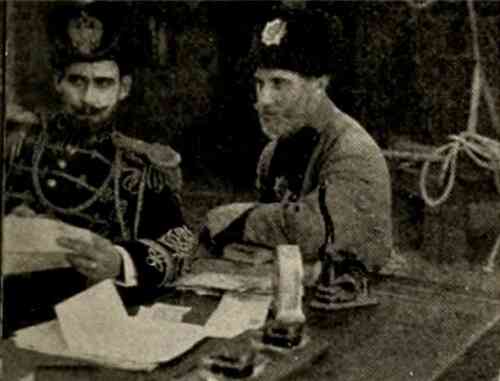
In 1914 the film toured with a live score for brass and timpani; surviving cue sheets indicate a leitmotif for the father based on the Orthodox hymn “Otche nash.” When the prince’s carriage is overtaken by Cossacks, the musicians were instructed to invert the hymn into a minor key, transforming prayer into a death-rattle. Contemporary reviewers complained the effect was “sacrilegious,” proving the film had already begun to corrode the gilt from imperial icons.
For decades the only known element was a 9.5 mm Pathé-Baby abridgment in a Romanian convent archive. Then in 2018 a 35 mm nitrate positive surfaced at an estate sale outside Lyon—half the footage dissolved into honey-colored glue, but enough remained for Lobster Films to reconstruct the narrative using digital inpainting and a newly-discovered continuity script in Alice Guy’s hand. The restoration premiered at Bologna’s Il Cinema Ritrovato, earning a standing ovation that lasted until the projectionist raised the house lights to reveal half the audience in tears—proof that a century-old propaganda-thriller can still feel like a premonition.
Where The Keys to Happiness aestheticizes suffering through orientalist opulence, Beneath the Czar strips glamour to the bone. Its violence is not ornamental but existential, closer to the documentary bluntness of Nelson-Wolgast Fight yet narrativized with the pulp drive of Sentenced for Life. The result is a hinge-film between Meliesian illusion and Eisensteinian agit-prop, between Victorian melodrama and modernist montage.
To watch Beneath the Czar today is to feel the floorboards of history creak beneath your feet. Every close-up is a wanted poster, every dissolve a forged passport. The film ends not with triumph but with a question mark scrawled across the Atlantic: Can democracy offer refuge to those whose moral ligaments have been stretched on the rack of realpolitik? The answer flickers out with the final reel, yet the after-image—an ember of dark orange, sea-blue, and ash—lingers like the taste of bromide and blood.
Verdict: A molotov cocktail of emotional precision and political fury, Beneath the Czar proves that silent cinema could be as razor-sharp as any secret policeman’s stiletto.
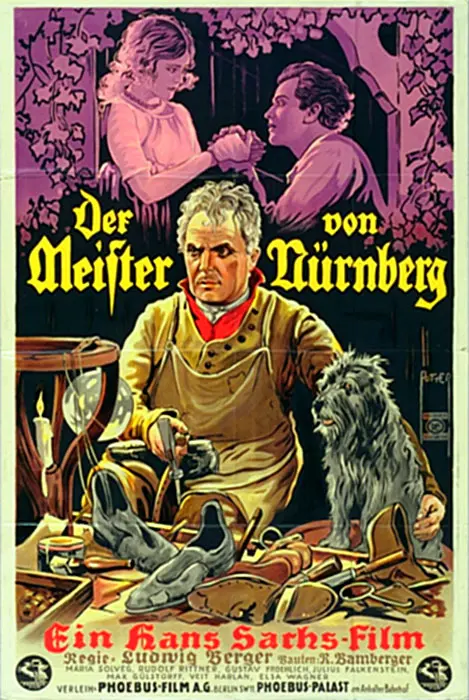
IMDb 7.1
1927
Community
Log in to comment.