DbcultAccessing Vault...
6/10
Senior Film Conservator
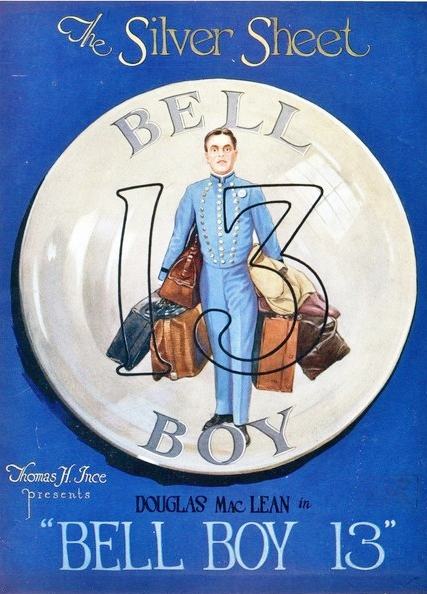
A definitive 6/10 rating for a film that redefined the boundaries of cult cinema. Bell Boy 13 remains a cornerstone of transgressive art.
Stepping back into the cinematic landscape of 1923, one encounters a fascinating tapestry woven with nascent storytelling techniques, burgeoning star power, and a palpable sense of experimentation. Amidst this vibrant era, a delightful gem emerged: 'Bell Boy 13'. This picture, often overshadowed by its more grandiose contemporaries, offers a compelling window into the comedic sensibilities and social dynamics of the Jazz Age. It's a film that, despite its relatively modest profile today, showcases the enduring allure of a well-told story and the magnetic charisma of its cast, particularly Douglas MacLean, who navigates a precipitous fall from grace with an endearing blend of bewilderment and burgeoning resilience. The silent era, frequently mischaracterized as merely a precursor to 'talkies', was in fact a complete art form, rich with visual nuance and gestural eloquence. 'Bell Boy 13' stands as a testament to this, proving that even without spoken dialogue, a narrative could be imbued with profound emotional depth and uproarious humor. Its enduring appeal lies not just in its historical significance, but in its ability to transcend the limitations of its medium, delivering a timeless tale of reinvention and unexpected romance.
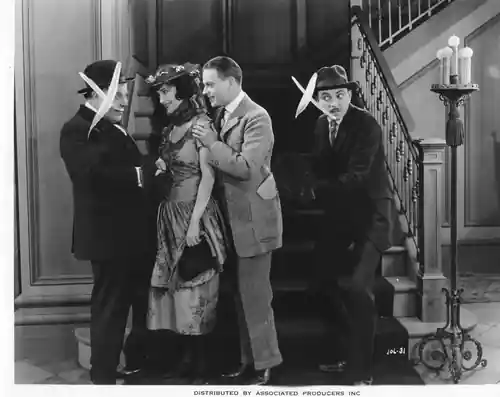
At the heart of 'Bell Boy 13' lies the precipitous journey of Harry Elrod, a character whose initial presentation is one of genteel comfort and inherited privilege. He is, to all appearances, a young man destined for a life of ease, cushioned by the considerable wealth of his uncle. However, the narrative swiftly pulls the rug from under him, disinheriting him in a stroke of familial disapproval that shatters his idyllic existence. This sudden reversal of fortune isn't merely a plot device; it serves as the foundational catalyst for Harry's entire transformation, stripping him bare of his societal standing and forcing a confrontation with the stark realities of self-reliance. It’s a classic comedic setup: the fish out of water, the high-born brought low, but executed here with a surprising degree of empathy. Harry’s initial bewilderment and awkwardness in his new circumstances are not played for cruel mockery, but for a gentle, observational humor that invites the audience to root for his eventual triumph. His predicament is further complicated by a romantic entanglement that mirrors his financial woes. His earnest, yet ultimately unsuccessful, attempt to elope with the spirited actress Kitty Clyde adds another layer of comedic pathos to his character. The failure of this grand romantic gesture, born of youthful impetuosity and perhaps a touch of naiveté, underscores his lack of practical experience in navigating life's more arduous currents. This dual blow – financial destitution and romantic disappointment – propels Harry into the most unlikely of roles, setting the stage for the film's central comedic premise.
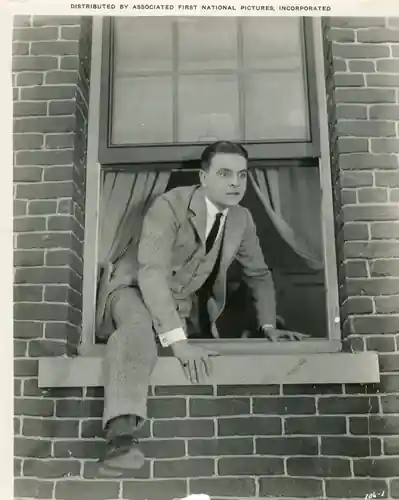
Kitty Clyde, portrayed with vivacious charm by Margaret Loomis, is far more than a mere romantic interest; she is the vibrant, independent counterpoint to Harry's initially sheltered existence. As an actress, she embodies the glamour and dynamic energy of the burgeoning entertainment world of the 1920s, a stark contrast to Harry's staid aristocratic background. Her willingness to elope with him, despite his recent financial woes, speaks volumes about her character – a woman driven by affection rather than material gain, possessing a spirit of adventure that Harry desperately needs to cultivate. Their failed elopement, while a moment of comedic tension, also highlights the societal pressures and class distinctions that often dictated romantic pursuits of the era. Kitty's continued presence in Harry's life, even as he dons the bellboy's uniform, serves as a constant reminder of his past aspirations and a beacon for his future hopes. She represents a different kind of wealth – one of spirit, resilience, and genuine affection – which ultimately proves far more valuable than any inheritance. Her interactions with Harry, often tinged with playful exasperation and underlying affection, provide some of the film's most heartwarming and genuinely funny moments, cementing her role not just as a love interest, but as an essential catalyst for Harry's personal growth.
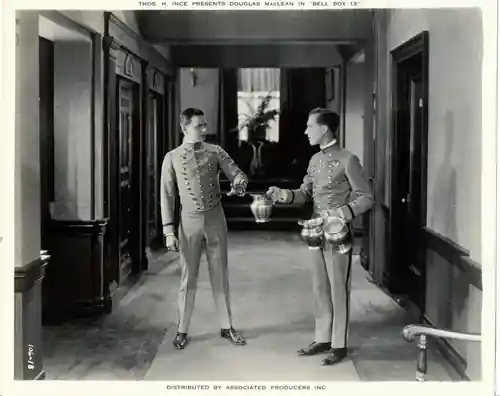
The transformation of Harry Elrod from a gentleman of leisure to 'Bell Boy 13' is where the film truly blossoms into a comedic tour de force. The hotel setting becomes a microcosm of society, a bustling stage where disparate lives intersect and class distinctions are both emphasized and comically subverted. Harry's initial ineptitude in his new role is a source of considerable amusement. His unfamiliarity with the demands of menial labor, his awkward attempts to navigate the labyrinthine corridors with luggage, and his often-misguided attempts at efficiency provide a continuous stream of visual gags and situational humor. This isn't merely slapstick; it’s a nuanced exploration of character, as Harry grapples with the indignity of his position while simultaneously learning valuable lessons about humility and hard work. The uniform itself becomes a symbol of his lost status, yet also a uniform of opportunity for growth. He encounters a diverse array of hotel guests and staff, each interaction presenting a new challenge or comedic opportunity. The film cleverly exploits the contrast between Harry's refined upbringing and the gritty realities of his new profession, illustrating how adversity can strip away pretension and reveal true character. This central premise, of a privileged individual forced into a service role, resonated strongly with audiences then and continues to do so, tapping into universal themes of social mobility and the human capacity for adaptation. It's in these moments, as Harry fumbles and eventually finds his footing, that 'Bell Boy 13' truly shines, crafting a narrative that is both entertaining and subtly profound.
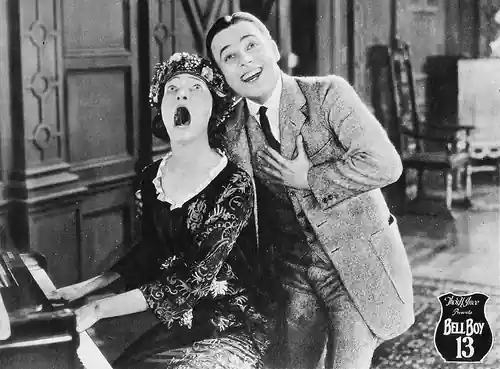
The success of 'Bell Boy 13' rests heavily on the shoulders of its talented cast, who, through expressive pantomime and nuanced physicality, bring their characters to vivid life. Douglas MacLean, as Harry Elrod, delivers a performance that is both earnest and surprisingly agile. He masterfully conveys Harry's initial haughtiness, his subsequent bewilderment, and his eventual earnestness as he adapts to his new station. MacLean's ability to communicate complex emotions without dialogue is commendable, making Harry a sympathetic and relatable protagonist despite his privileged background. His comedic timing, particularly in scenes where he struggles with the mundane tasks of a bellboy, is impeccable, eliciting genuine laughs rather than mere chuckles. Margaret Loomis, as Kitty Clyde, is equally captivating. Her portrayal exudes a spirited independence and charm that makes her a compelling romantic lead. She avoids the trope of the damsel in distress, instead presenting a woman of agency and warmth, whose affection for Harry feels earned and authentic. Loomis's expressive eyes and engaging gestures perfectly capture Kitty's feisty yet tender nature, making their on-screen chemistry palpable and believable. The supporting cast also contributes significantly to the film's richness. William Courtright, a veteran character actor, brings a seasoned presence to his role, likely as a hotel manager or a figure of authority, providing a foil or a mentor to Harry's fledgling career. Arthur Millett and Larry Steers, often seen in a myriad of silent productions, undoubtedly lend their reliable comedic or dramatic gravitas, rounding out the ensemble with well-defined, if sometimes brief, appearances. Jean Walsh and Emily Gerdes, likely playing fellow hotel staff or guests, contribute to the bustling atmosphere, each adding a touch of authenticity to the hotel's vibrant ecosystem. And then there's the inimitable Edgar Kennedy, whose distinctive physical comedy and often exasperated expressions could elevate any scene, likely providing some of the film's broadest laughs as a gruff superior or a bewildered customer. Even Billy Engle and John Steppling, seasoned performers of the era, would have added their unique flavors to the comedic mix. The collective effort of this ensemble ensures that 'Bell Boy 13' is not just a vehicle for its lead, but a robustly populated world where every character, no matter how minor, contributes to the overall charm and comedic rhythm of the narrative, making it a truly engaging viewing experience that showcases the power of ensemble acting in the silent era.
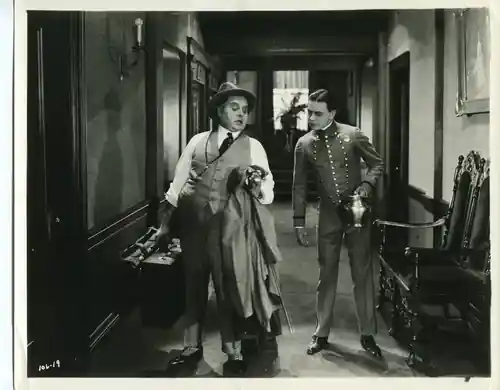
The brilliance of 'Bell Boy 13' also lies in the astute craftsmanship of its writers, Violet Clark and Austin Gill, whose screenplay deftly balances humor with heart. Their narrative structure is remarkably effective, establishing Harry's privileged world before dramatically dismantling it, then rebuilding it through his experiences as a bellboy. This arc allows for both comedic exaggeration and genuine character development, ensuring that Harry's journey feels earned. The pacing of the film is a testament to their understanding of silent comedy; scenes are allowed to breathe, building up to visual gags or emotional beats with precision. Director William Seiter (uncredited in the prompt but often associated with MacLean's comedies of this era) would have been instrumental in translating this script into dynamic visuals. The visual storytelling is paramount, relying on exaggerated expressions, physical comedy, and well-staged scenarios to convey the plot. The writers skillfully weave in moments of romantic tension with the broader comedic strokes, ensuring that Kitty Clyde's presence is not merely decorative but integral to Harry's motivation and eventual redemption. The dialogue cards, though minimal, are pithy and effective, punctuating the action without interrupting its flow. This thoughtful construction by Clark and Gill elevates 'Bell Boy 13' beyond simple farce, imbuing it with a narrative intelligence that belies its lighthearted premise. Their ability to craft a story that is both entertaining and subtly insightful into human nature speaks volumes about their talent and the sophistication of silent film writing during this period.
'Bell Boy 13' is more than just a series of comedic mishaps; it’s a surprisingly poignant exploration of several enduring themes. At its core, the film delves into the fluidity of class identity during a rapidly changing era. Harry's disinheritance forces him to confront the arbitrary nature of inherited wealth and the societal prejudices attached to menial labor. His journey challenges the notion that one's worth is solely defined by their social standing, suggesting instead that character is forged through adversity and honest effort. This theme of social mobility, or rather, the forced descent and subsequent re-evaluation, resonates with a particularly American ideal of self-made success. Furthermore, the film beautifully navigates the complexities of romantic love in the face of societal expectations. Harry and Kitty's relationship is tested by his financial ruin, yet their bond proves resilient, prioritizing genuine affection over material security. This emphasizes a progressive outlook on love, one that values partnership and shared experience above all else. The pursuit of happiness in 'Bell Boy 13' is not about regaining lost fortune, but about finding contentment in self-sufficiency and authentic connection. It’s a narrative that champions resilience, reminding audiences that true fulfillment often lies beyond the superficial trappings of wealth and status, found instead in integrity and genuine human connection. The film, therefore, acts as a subtle commentary on the values of the Roaring Twenties, a period often characterized by its materialistic exuberance, by offering a counter-narrative of personal growth and intrinsic worth.
Placing 'Bell Boy 13' within the broader context of 1923 cinema reveals much about the popular tastes and evolving storytelling conventions of the time. The early 1920s were a golden age for silent comedies, often featuring charming leads navigating farcical situations. Films like 'Bell Boy 13' capitalized on the audience's appetite for lighthearted entertainment that offered both escapism and a touch of social commentary. The trope of the 'fish out of water' protagonist was a particularly fertile ground for comedic exploration, as seen in many contemporary films. While perhaps not as celebrated as some of the grander spectacles or dramatic epics of its day, 'Bell Boy 13' contributes to a rich lineage of silent-era romantic comedies. It shares a certain thematic kinship with films exploring unexpected romantic entanglements and social misunderstandings. For instance, the comedic predicaments of a hurried elopement and the subsequent identity shift might draw parallels to the spirited chaos found in a film like The Chased Bride, where matrimonial plans often go awry in spectacular fashion, or even the domestic farces like Her Bridal Night-Mare, which similarly explores the humorous side of marital anxieties and misadventures. The film's emphasis on Harry's struggle with a new, manual job also brings to mind the physical comedy and character-driven humor of films focusing on working-class life or unusual occupations, such as the delightful antics often seen in works featuring performers like Charlie Chaplin or Buster Keaton, though 'Bell Boy 13' maintains a distinctly more romantic-comedy tone than pure slapstick. The narrative's exploration of class distinctions and the humorous challenges of adapting to a new social stratum could also be subtly compared to the intricate social dances depicted in Mixed Twixt Wives, where romantic and social misunderstandings drive much of the plot. These comparisons aren't to diminish 'Bell Boy 13' but to highlight its place within a vibrant cinematic ecosystem, demonstrating how it both embraced and contributed to the prevailing trends of its time, offering its own unique flavor of romantic comedy and social observation. The visual storytelling, characteristic of the era, relies on exaggerated expressions and physical gags to convey meaning and emotion, a universal language that transcended cultural barriers and made silent films an international phenomenon.
Beyond its narrative and performances, 'Bell Boy 13' offers a fascinating glimpse into the visual aesthetics of early 1920s cinema. While not a film renowned for groundbreaking cinematography, it employs the visual language of the silent era with competence and charm. The sets, likely modest but effective, would have established the contrasting worlds of Harry's former opulence and the bustling, functional environment of the hotel. Costumes would have played a crucial role in defining character and social status, from Harry's initial dapper attire to his humble bellboy uniform, and Kitty Clyde's fashionable stage wear. The film's visual humor often stems from these contrasts, alongside well-timed physical gags that require careful staging and editing. The surviving prints, if any, would undoubtedly reveal the characteristic visual texture of nitrate film, with its unique glow and depth, adding another layer to the historical experience. Its legacy, though not as loudly proclaimed as that of some of its contemporaries, lies in its representation of a popular and enduring subgenre: the romantic comedy of errors. It reminds us that even films that aren't 'blockbusters' of their time often hold significant artistic and historical value, contributing to the rich tapestry of cinematic history. For film historians and enthusiasts alike, 'Bell Boy 13' serves as a charming relic, a testament to the power of simple, well-executed storytelling, and a delightful encapsulation of the spirit of the Roaring Twenties.
In conclusion, 'Bell Boy 13' stands as a charming, if sometimes overlooked, testament to the enduring appeal of silent film comedy. Its narrative, though seemingly straightforward, is imbued with layers of social commentary and character development that resonate even a century later. Harry Elrod's journey from disinherited playboy to earnest bellboy, guided by the vivacious Kitty Clyde, is a delightful exploration of personal growth, resilience, and the true meaning of happiness. The film's success is a direct result of its well-crafted screenplay by Violet Clark and Austin Gill, and the compelling performances of its cast, particularly Douglas MacLean and Margaret Loomis, whose expressive acting transcends the absence of dialogue. It’s a movie that, without relying on grand spectacle, manages to capture the audience's imagination and elicit genuine smiles. While it may not rewrite the rules of cinema, it masterfully executes the conventions of its genre, delivering a heartwarming and genuinely funny experience. For those with an appreciation for the artistry of silent cinema and a penchant for classic romantic comedies, 'Bell Boy 13' is an absolute must-watch. It serves as a gentle reminder that some stories, particularly those about finding oneself and true love amidst life's unexpected turns, are truly timeless, transcending the eras and technologies of their creation.
IMDb 6.6
1929
Community
Log in to comment.