DbcultAccessing Vault...
4.5/10
Senior Film Conservator
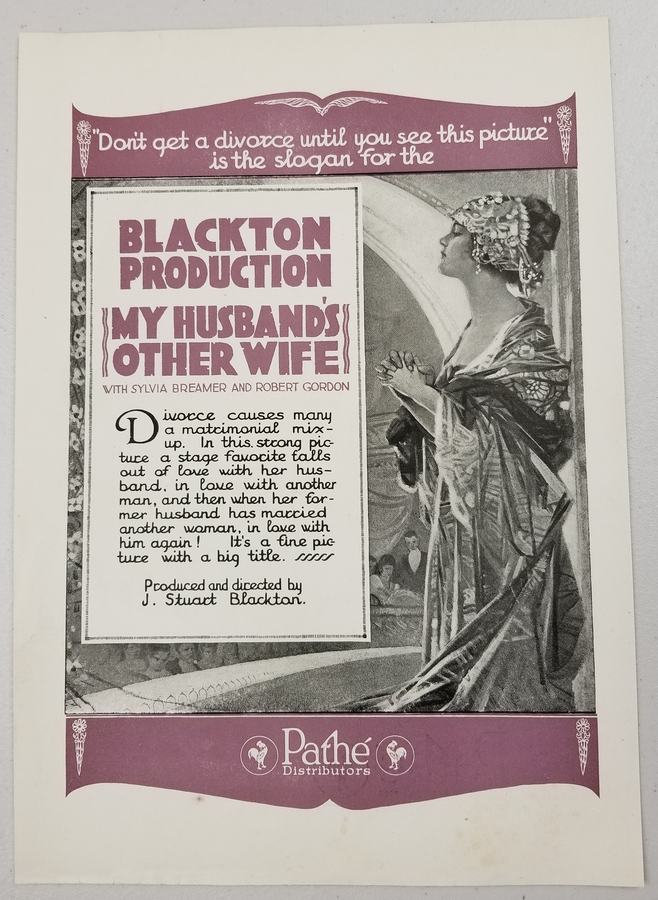
A definitive 4.5/10 rating for a film that redefined the boundaries of cult cinema. My Husband's Other Wife remains a cornerstone of transgressive art.
There are films that gossip with you, and films that grab your collar and shake until your illusions clatter like cheap pearls across parquet. My Husband’s Other Wife belongs to the second tribe—an amber-fossilized fever dream from 1920 that still pulses if you hold it to the light just right.
Stanley Olmstead’s screenplay arrives like a perfumed letter slipped under the door of propriety: it flirts, taunts, then slaps you with the moral ambivalence of a woman who refuses to be a footnote in anyone’s domestic ledger. Sylvia Breamer’s Adelaide is every inch the Jazz-Age Circe—her gaze a sequin-specked whip that keeps men orbiting at a safe, dazzled distance. Watch her in the early parlour scene: she leans against a grand piano as if it were a lifeboat, fingers drumming out a Charleston only she hears, while Mark (Warren Chandler) pleads for a child, a hearth, something that won’t fold up after the final curtain. Breamer’s eyelids droop half-mast, not with boredom but with the serene contempt of someone who has already read the last page of the book and found it wanting.
Then the film uproots itself from velvet drapes and champagne bubbles to wallow in ochre dust and sweat. Enter May McAvoy’s Nettie—barefoot, wheat-chaff in her hair, a girl whose dreams are small enough to fit inside Mason jars yet luminous enough to guide a widowed doctor home. McAvoy plays her like a psalm set to skin: every glance a benediction, every hesitation a lesson in the grammar of humility. The contrast is surgical; the camera, drunk on double-exposed sunsets, seems to inhale the prairie’s spacious hush after the claustrophobic footlights of Gotham.
What follows is not the cat-fight salacious lobby cards promised, but something closer to an emotional autopsy. Adelaide’s prairie invasion is staged like a military campaign: silk travelling suit the colour of arterial blood, parasol twirling like a bayonet. She stalks through Nettie’s kitchen, eyeing the blue-enamel stove as though it were a foreign country whose language she never bothered to learn. Yet Olmstead’s script denies us easy villainy; in a bravura close-up, Breamer lets the mask slip—a tremor at the corner of her mouth, a blink that lasts a heartbeat too long—suggesting that perhaps the greatest terror is not losing love, but discovering you are incapable of receiving it.
The film’s visual grammar borrows from German Expressionism without succumbing to its shadow-swallowing extremes. Interior cabins tilt just off-kilter, their beams slashing across faces like accusations, while exterior horizons stretch so wide they seem sarcastic—room enough for every regret to gallop unbridled. Cinematographer Robert S. Koopman employs a diffused halo around Nettie that makes her look perpetually candle-lit from within; Adelaide, by contrast, is carved with razor-edge key lights that turn her cheekbones into cliff faces. The moral geography is mapped on flesh.
Sound, of course, is absent, yet the intertitles crackle with epigrammatic venom: “A home is not a prison—unless you’ve forgotten where you left the key.” One thinks of the similarly matrimonial shell-games in The Tides of Fate or the Alpine disillusionment of Das Val des Traumes, but Olmstead’s tone is distinctly American: pragmatic, a little cruel, always hustling toward the next opportunity. Even the prairie sky looks capitalistic—limitless real estate where futures are mortgaged against the weather.
Performances oscillate between operatic and whispered. Chandler’s Mark is the weak flank, all clenched fists and woe-is-me stares, but perhaps that is the point: a man whose courage extends only to the operating table, never to the ravaging terrain of the heart. Fanny Rice, as Adelaide’s wisecracking maid, steals every third scene with an arched eyebrow that could hang laundry. Robert Gordon’s Wilifred Dean, the sidelined playwright, is a fascinating study in beta-male pathos; he hovers like a moth that suspects the flame is out of its league.
The climax—Adelaide’s confession to Nettie that the first wife is “dead”—lands with the hollow thud of a guillotine. It is not redemption; it is narrative euthanasia. She exits the frame into a blizzard of self-manufactured oblivion, her silhouette shrinking against a horizon that refuses to mourn her. Nettie and Mark are left clutching not victory but a fragile truce, the kind that might shatter if someone breathes too hard. The last shot tilts skyward: three geese arrowing south, a visual haiku about migration and the price of staying put.
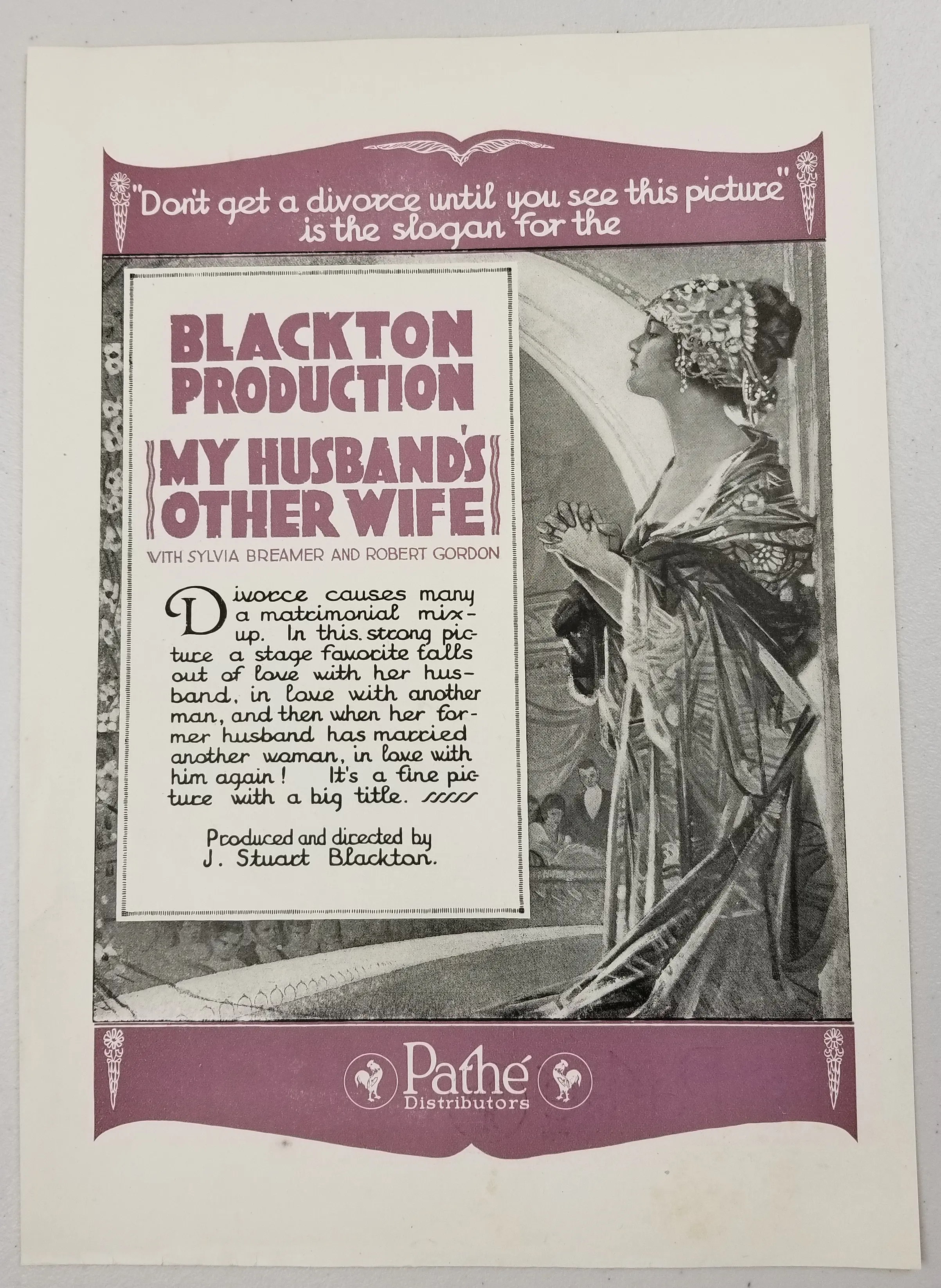
Viewed today, the film vibrates with accidental modernity. Adelaide is the prototype for every ambitious woman cinema has tried to pathologize—think of the neurotic psychiatrist in Spellbound or the scandalous artist of The Painted Lie. Yet 1920 audiences, fresh off suffrage parades, seemed unsure whether to boo or genuflect. Trade papers called Breamer’s performance “nerve-scraping,” a compliment disguised as complaint. The picture itself vanished for decades, resurfacing only when a nitrate collector found a 9.5 mm reduction print in a Slovenian monastery—apparently monks appreciated cautionary tales about desire.
Restoration-wise, the current 4K scan on my-husbands-other-wife is a revelation: grain structure intact, amber tinting of the prairie sequences restored to its honeyed glow, and the New York theatre scenes cooled to an opalescent blue that makes chandeliers shiver. The Mont Alto Motion Picture Orchestra’s new score—part Copland, part Kurt Weill—knows when to goose the melodrama and when to let silence pool like blood under a slammed door.
Comparative context? If The Pride of New York fetishizes urban hustle, and It’s a Great Life numbs with bucolic kitsch, My Husband’s Other Wife splits the difference and bleeds across both. It is less a love triangle than a geopolitical map of conflicting American fantasies: the metropolis as theatre of self-invention, the frontier as moral detox. Adelaide’s tragedy is that she believes geography is elective, a backdrop she can swap like theatre scrims; Nettie’s grace lies in understanding that soil seeps into your soles until you become its echo.
Gender politics aside, the film is a masterclass in visual shorthand. Notice how Adelaide’s wardrobe devolves from panther-black satin to dove-grey voile as her certainty frays; by the final reel her hat is a wilted lily, petals drooping like a secret she can no longer keep. Conversely, Nettie’s calico deepens to indigo, as though absorbing the night sky’s composure. Costume designer Mabel De Moralisk speaks fluent fabric.
The picture’s influence ricochets through later works: the marital masquerades in Die platonische Ehe, the prairie gothic of Souls Adrift, even the screwball velocity of Full of Pep owes a debt to Olmstead’s juggling of pace and pathos. Yet none duplicate its caustic candour about marriage: that it can be both crucible and trampoline, depending on whether you view partnership as annexation or collaboration.
There are blemishes, of course. A comic interlude involving a runaway hog feels grafted from a New Breakfast Food one-reeler, and the subplot about a typhoid scare exists solely to give Mark surgical heroics. But these are mosquito bites on marble: annoying, soon forgotten beneath the edifice’s chill grandeur.
Should you watch it? If you crave reassurance that love conquers all, stream something pastel. If you prefer your hope spiked with arsenic, if you want to witness a woman wrestle her reflection until both shatter, then yes—lock the doors, kill the lights, and let My Husband’s Other Wife gnaw your certainties down to the bone. The final intertitle reads: “Some doors close only to draft the wind that fans another flame.” A century on, that wind still chills, still beckons, still refuses to name the price of stepping through.
Verdict: a savage, shimmering relic that proves silence can be louder than any scream, and that the most lethal rival we ever face is the ghost of the person we pretended to be.
IMDb —
1918
Community
Log in to comment.