DbcultAccessing Vault...
Cult Review
Senior Film Conservator
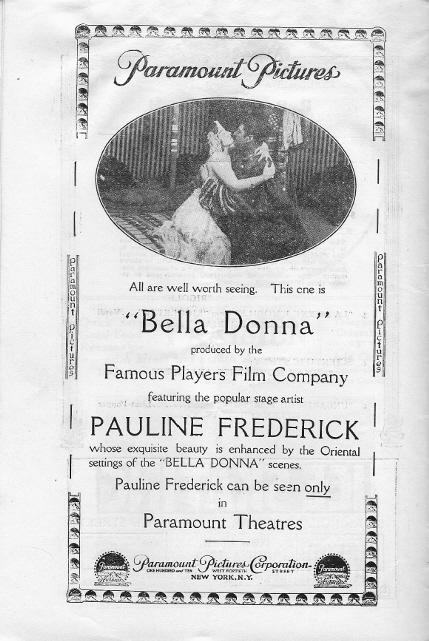
In the annals of early cinema, certain narratives emerge with an enduring potency, their themes resonating far beyond the flickering frames of their initial exhibition. Among these, the 1915 rendition of Bella Donna stands as a fascinating artifact, a silent film that speaks volumes about human nature's darker inclinations, the intoxicating pull of forbidden romance, and the societal strictures that often fuel such transgressions. Directed with a keen eye for dramatic tension and featuring a cast whose emotive performances transcend the absence of spoken dialogue, this cinematic venture plunges viewers into a world of opulent deceit set against the exotic backdrop of colonial Egypt. It’s a film that demands close scrutiny, unraveling layers of character psychology and moral ambiguity with a finesse that belies its nascent cinematic techniques. The very essence of its appeal lies in its audacious portrayal of a woman unmoored by convention, driven by a relentless pursuit of her desires, however destructive they may prove.
At its core, Bella Donna is a cautionary tale, a psychological drama that explores the profound disquietude lurking beneath a façade of civility and marital contentment. It introduces us to the titular character, a woman whose beauty is matched only by her profound dissatisfaction with her circumstances. Her marriage to Sir Nigel Armine, portrayed with a sympathetic earnestness by Thomas Holding, is one of convenience and societal expectation rather than genuine affection. Sir Nigel, a man of good intentions and perhaps a touch of naiveté, believes he can offer Bella Donna a life of comfort and respectability. Yet, for Bella Donna, this life is nothing more than a gilded cage, its comforts suffocating, its respectability utterly devoid of the passion and excitement her restless spirit craves. The film’s brilliance lies in its ability to paint this internal turmoil without a single spoken word, relying instead on the nuanced expressions and gestures of its lead performers, particularly Pauline Frederick in the role of Bella Donna, whose command of silent emoting is simply masterful.
The narrative truly ignites when Sir Nigel, in an attempt to rekindle his wife's flagging interest and perhaps escape the social pressures of England, relocates them to Egypt. It is here, amidst the ancient sands and vibrant culture, that Bella Donna encounters Baroudi, a charismatic and enigmatic Egyptian businessman, brought to life with dangerous allure by Julian L'Estrange. Baroudi represents everything Sir Nigel is not: exotic, passionate, and dangerously unconstrained by Western morality. Their encounter is a spark to tinder, igniting an immediate and intense mutual attraction that swiftly escalates into a clandestine affair. This illicit relationship becomes Bella Donna’s obsession, her perceived pathway to genuine freedom and thrilling self-actualization. However, her husband remains an inconvenient obstacle, a persistent anchor to a life she despises. Driven by a chilling resolve, Bella Donna begins to systematically poison Sir Nigel, a slow, insidious act designed to free her without direct culpability. The tension is palpable as the audience watches her meticulous planning, her outward composure a stark contrast to the venomous intent simmering beneath. The film meticulously charts the tragic consequences of unchecked desire, weaving a tapestry of longing, betrayal, and the corrosive power of ambition.
The strength of Bella Donna lies significantly in its carefully constructed characters, each serving as a vital cog in this intricate machine of moral ambiguity and emotional turmoil. The writers, James B. Fagan and Robert Hichens, adapted Hichens' novel with a keen understanding of the psychological depths required to sustain such a dramatic narrative, translating complex motivations into visually compelling actions.
Pauline Frederick, as Bella Donna, delivers a performance that is nothing short of iconic for its era. Her Bella Donna is not merely a villainess; she is a deeply complex woman, perhaps a victim of her own desires and societal expectations. Frederick imbues her with a captivating blend of fragility and ruthless determination. Her eyes, even in the silent medium, convey volumes – the boredom of her domestic life, the spark of illicit passion, the cold calculation of her murderous intent. She is a woman who refuses to be confined, even if her path to liberation is paved with poison. Her character challenges contemporary notions of femininity, presenting a protagonist who is neither purely good nor evil, but profoundly human in her flawed pursuit of happiness.
Thomas Holding's portrayal of Sir Nigel Armine is crucial in grounding the narrative with a sense of tragic innocence. He is the quintessential English gentleman – honorable, trusting, and utterly devoted to a woman who is systematically destroying him. Holding masterfully conveys Sir Nigel's gradual decline, the slow erosion of his health and spirit, without ever fully grasping the malevolence at its source. His character serves as a poignant counterpoint to Bella Donna's ambition, highlighting the devastating impact of her selfish actions. The quiet dignity with which Holding approaches the role makes Sir Nigel's suffering all the more heartbreaking.
Julian L'Estrange, as Baroudi, embodies the allure of the 'other' that so captivates Bella Donna. His character is a force of nature, a symbol of unbridled passion and freedom from Western societal constraints. L'Estrange projects a potent magnetism, making it entirely believable why Bella Donna would risk everything for him. However, Baroudi is not without his own complexities; his charm is tinged with a predatory edge, and his motivations, while initially appearing to be genuine affection, gradually reveal a more self-serving undercurrent. Other cast members, including George Majeroni, Eugene Ormonde, Edmund Shalet, and Helen Sinnott, contribute to the rich tapestry of the film, providing essential supporting roles that flesh out the colonial setting and the intricate social dynamics at play.
The silent era demanded a unique kind of acting, one where facial expressions, body language, and carefully choreographed gestures conveyed the entirety of a character's inner world. Pauline Frederick's performance as Bella Donna is a masterclass in this art form. Her ability to shift from languid boredom to simmering desire, from deceptive tenderness to cold malevolence, is breathtaking. Every subtle tilt of her head, every flutter of her eyelids, every calculated movement of her hands tells a story. Thomas Holding's portrayal of Sir Nigel is equally compelling, his gentle demeanor and eventual physical deterioration conveyed with heartbreaking realism. Julian L'Estrange, as Baroudi, commands the screen with an undeniable presence, his gaze alone capable of conveying both passion and danger. The ensemble cast, including the contributions of George Majeroni and Eugene Ormonde, provides robust support, creating a believable and immersive world that underscores the central drama. These performances ensure that even over a century later, the emotional core of Bella Donna remains profoundly impactful.
Bella Donna is a rich tapestry of themes, each thread contributing to its enduring resonance. The most prominent, of course, is the destructive power of betrayal, explored not just in the marital sense but also in the betrayal of one's own moral compass. Bella Donna's actions represent a complete abandonment of conventional ethics in pursuit of personal gratification. This film also delves into the complexities of colonialism, using Egypt as more than just an exotic backdrop; it becomes a crucible where European sensibilities clash with perceived 'oriental' mystique and danger. Baroudi, as an indigenous character, embodies both the allure and the potential threat seen through a colonial lens, challenging the rigid social structures brought by the British. The film subtly critiques the hypocrisy inherent in a society that champions propriety while its members harbor scandalous secrets.
Central to the narrative is the theme of unchecked desire and its corrosive effects. Bella Donna's longing for a life beyond her husband's quiet affection manifests as a dangerous ambition, culminating in a calculated act of murder. This ambition, fueled by a potent cocktail of boredom and lust, serves as a stark warning about the perils of allowing personal gratification to override all moral considerations. Her actions, while driven by a desire for freedom, ultimately lead to her entrapment in a web of her own making, a psychological prison far more constricting than her initial marriage.
The film's setting in Egypt is not merely incidental; it is integral to its thematic fabric. The 'exotic' East serves as a space where conventional Western morality can be discarded, where passions can run wild, and where danger lurks beneath a veneer of ancient mystique. Baroudi, as the embodiment of this exoticism, is both desired and feared, representing a dangerous freedom that ultimately proves destructive. This portrayal, while perhaps problematic by modern standards, offers a fascinating glimpse into early 20th-century perceptions of cultural 'otherness' and its role in fueling forbidden fantasies.
The craftsmanship behind Bella Donna, particularly in its direction, is commendable for its time. The use of lighting, sets, and early cinematic techniques effectively builds atmosphere and heightens dramatic tension. The screenplay, penned by James B. Fagan, skillfully adapts Robert Hichens' novel, distilling its complex plot and psychological nuances into a visually engaging narrative. The pacing is deliberate, allowing the audience to fully absorb the unfolding tragedy and the subtle shifts in character dynamics. The film manages to convey the suffocating heat of Egypt and the oppressive weight of Bella Donna's internal conflict, creating an immersive experience that draws the viewer into its morally ambiguous world. The silent film format, far from being a limitation, enhances the film's poetic quality, forcing a reliance on visual storytelling that is both elegant and impactful.
While Bella Donna stands as a unique creation, its thematic explorations find resonance in other cinematic works, both contemporary and subsequent. The idea of a character ensnared in a dangerous situation, perhaps by their own making or by external forces, echoes in films like In the Python's Den, where circumstances conspire to create a perilous trap. Similarly, Bella Donna's relentless pursuit of her own desires, even at great cost, can be seen as a precursor to narratives focusing on female agency and self-determination, albeit in a darker vein, reminiscent of the drive seen in films like Her Own Way, which explores women forging their own paths. The stark contrast between moral purity and corruption, a theme subtly explored through Sir Nigel's innocence versus Bella Donna's depravity, finds parallels in works like A Child of God, which often juxtapose innocence against a harsh, morally ambiguous world. The film also invites comparison to narratives featuring individuals driven by self-interest and a wandering, often destructive, spirit, much like the titular character in Peer Gynt, whose journey is defined by his often-selfish pursuits. These connections highlight Bella Donna's place within a broader cinematic conversation about human nature, morality, and the consequences of our choices.
More than a century after its release, Bella Donna remains a compelling piece of cinematic history. It's a testament to the enduring power of classic storytelling and the magnetic performances of its cast, particularly Pauline Frederick's captivating turn as the titular femme fatale. The film serves as a window into the social anxieties and moral debates of its time, while simultaneously exploring timeless themes of love, betrayal, and the human capacity for both tenderness and cruelty. For enthusiasts of early cinema and those fascinated by the evolution of dramatic narrative on screen, Bella Donna offers a rich, thought-provoking experience, cementing its place as an important, if sometimes overlooked, entry in the silent film canon. Its dark romanticism and psychological depth continue to captivate, proving that some stories, much like certain characters, simply refuse to fade into obscurity.
IMDb 6.9
1936
Community
Log in to comment.