DbcultAccessing Vault...
5.2/10
Senior Film Conservator
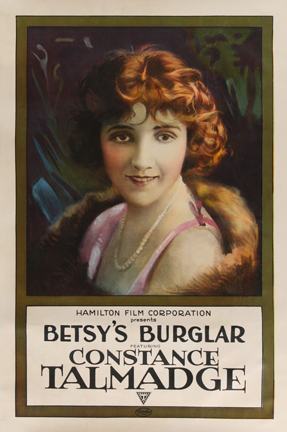
A definitive 5.2/10 rating for a film that redefined the boundaries of cult cinema. Betsy's Burglar remains a cornerstone of transgressive art.
In the bustling, innovative landscape of early 20th-century American cinema, where the silent screen was rapidly evolving from mere novelty to a sophisticated art form, Betsy's Burglar (1917) emerges as a delightful, if occasionally overlooked, testament to the era's narrative prowess. This particular feature, a vibrant blend of comedy, mystery, and a surprising dash of social commentary, stars the effervescent Constance Talmadge, a performer whose magnetic screen presence and nuanced comedic timing consistently elevated the material she touched. Produced during a period of prolific output for the Talmadge sisters, this film, penned by the prolific Frank E. Woods, offers more than just a simple caper; it provides a fascinating glimpse into the aspirations and anxieties of its time, wrapped in an engaging tale of deception and unexpected twists.
At its core, the film introduces us to Betsy Harlow, portrayed with an infectious blend of earnestness and spirited ambition by Talmadge. Betsy is not your typical silent film ingénue; she's a hard-working maid in a bustling boarding house, a profession that grounds her firmly in the realities of working-class life. Yet, beneath the practicality of her daily chores lies a vibrant, almost romantic, yearning for something more: the thrilling life of a detective. This dream, a delightful subversion of conventional female roles of the era, is shared with her devoted boyfriend, Oscar (Joseph Singleton), a humble delivery boy whose devotion is as steadfast as his understanding of Betsy’s adventurous spirit. Their shared aspiration forms a charming bedrock for the narrative, establishing Betsy not merely as a character to be acted upon, but as an individual with agency and a distinct inner world. Talmadge's performance here is crucial; she imbues Betsy with a vivacity that makes her dreams palpable, her determination admirable, and her eventual entanglement all the more compelling.
The tranquil, if somewhat monotonous, rhythm of Betsy's life is shattered by the arrival of Harry Brent, a mysterious and undeniably charming new lodger, played with a captivating blend of suave menace by Monte Blue. Blue, a prominent figure in both the silent and early sound eras, brings a sophisticated, almost predatory, allure to Brent, making it entirely plausible that Betsy, despite her budding detective instincts, would fall prey to his rather shady charms. Brent, sensing Betsy's guileless nature and her nascent romantic inclinations towards him, masterfully manipulates her. He persuades her to assist him in a daring scheme: to acquire a box of jewels supposedly owned by the Jaspers, an elderly couple residing across the hall. The setup is classic: a seemingly innocent protagonist drawn into a criminal enterprise by a charismatic antagonist. However, what sets Betsy's Burglar apart is the intricate layering of its deception, a complexity that recalls the subtle machinations found in more morally ambiguous narratives like Dzieje grzechu, though rendered here with a lighter, more comedic touch.
As the plot thickens, the audience, much like Betsy, is led down a garden path of misdirection. Harry Brent, it turns out, is not merely a charming rogue, but a character with a far more intricate agenda than simple theft. His true identity and motives are carefully concealed, providing the narrative with its central mystery. But the film’s true genius lies in its further subversion of expectations: the Jaspers, initially presented as the unsuspecting victims, are themselves revealed to be far from what they seem. This double layer of deceit transforms the narrative from a straightforward crime story into a clever game of cat and mouse, where the lines between perpetrator and victim, hero and villain, are delightfully blurred. The screenplay by Frank E. Woods, known for his keen understanding of dramatic structure and character development, shines brightest in these twists, ensuring that the audience remains perpetually on the edge of their seats, eager to uncover the next revelation.
Constance Talmadge's performance as Betsy Harlow is, without a doubt, the beating heart of Betsy's Burglar. Talmadge, with her sparkling eyes and expressive face, possessed a unique ability to convey a wide range of emotions without resorting to theatrical excess, a common pitfall in early silent cinema. Her Betsy is endearing, spirited, and utterly believable. We witness her journey from an ambitious dreamer to a bewildered participant in a criminal plot, and finally, to a more enlightened individual. Her interactions with Monte Blue’s Harry Brent are charged with a palpable, if misguided, chemistry, making her vulnerability to his charms entirely understandable. Yet, even in her moments of naiveté, Talmadge imbues Betsy with an underlying intelligence and resilience that hints at her burgeoning detective skills. It’s a performance that solidifies her status as one of the silent era’s most engaging and versatile actresses, capable of handling both comedic lightness and dramatic intrigue with equal aplomb. Her portrayal stands in stark contrast to the often one-dimensional heroines of some contemporary films, offering a glimpse into the evolving complexity of female characters on screen.
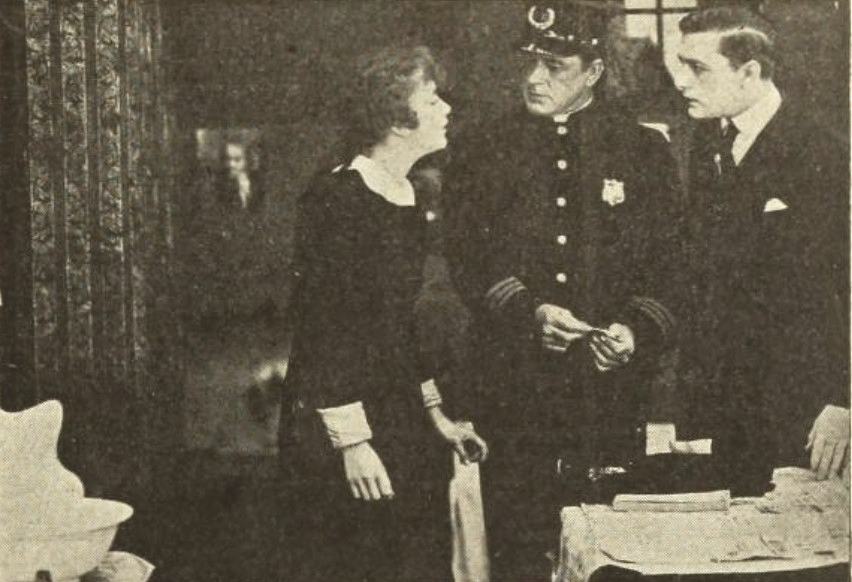
The supporting cast, while perhaps less prominent than Talmadge, also contributes significantly to the film's overall charm and narrative coherence. Joseph Singleton as Oscar, the earnest and loyal boyfriend, provides a grounding presence, his unwavering affection for Betsy serving as a moral compass amidst the shifting sands of deceit. Monte Blue, as mentioned, is perfectly cast as the deceptive Harry Brent, exuding an air of sophistication that makes his manipulative actions all the more insidious. The film also benefits from the contributions of Clyde E. Hopkins, Elmo Lincoln, Hal Wilson, Josephine Crowell, Kate Bruce, and Kenneth Harlan, each adding texture and depth to the ensemble. While often confined to more archetypal roles, their presence helps to build the vibrant, bustling world of the boarding house and the intrigue that surrounds it. The collaborative spirit of early Hollywood, where ensemble work was often key, is evident here, enhancing the immersive quality of the storytelling.
Frank E. Woods' screenplay is a masterclass in silent film construction. He understands the power of visual storytelling, crafting a narrative that relies heavily on character expressions, gestures, and well-placed intertitles to convey complex plot points and emotional nuances. The pacing is brisk, keeping the audience engaged through a series of escalating reveals and comedic misunderstandings. The film’s direction, though often uncredited or attributed to a collective effort in this early period, demonstrates a keen eye for framing and staging, effectively utilizing the confined spaces of the boarding house to amplify the sense of clandestine activity and simmering tension. The use of close-ups on Talmadge’s expressive face, for instance, allows for a deeper connection with Betsy’s internal struggles and burgeoning suspicions.
"Betsy's Burglar isn't just a period piece; it's a vibrant illustration of how silent cinema, even in its relative infancy, could weave tales of intricate human deception and aspiration with remarkable dexterity. It’s a testament to the power of visual storytelling and the enduring appeal of a well-crafted mystery, proving that sometimes, the most captivating stories are those where everyone wears a mask."
Beyond its immediate plot, Betsy's Burglar also touches upon broader societal themes pertinent to its era. Betsy's ambition to transcend her working-class status as a maid and become a detective speaks to a growing desire for social mobility and, for women, a yearning for roles beyond domesticity. This aspiration, while framed within a comedic mystery, reflects the burgeoning feminist movements and changing societal expectations of the early 20th century. The film subtly critiques the superficiality of appearances and the ease with which individuals can be deceived by charisma and a veneer of respectability. It highlights the stark contrast between the lives of the working class and the seemingly opulent (or cleverly concealed) wealth of others, a theme also explored, albeit with more dramatic intensity, in films like The Money Master. The film asks us to question who truly holds power and who truly deserves our trust, making it more than just a lighthearted romp.
The unraveling of the truth about Harry Brent and the Jaspers is executed with a satisfying series of revelations, culminating in a resolution that is both clever and emotionally resonant for Betsy. Without giving away the intricate details of the climax, suffice it to say that Betsy's journey through this web of deceit ultimately hones her observational skills and provides her with a real-world education in the art of detection, far more valuable than any textbook could offer. Her initial naiveté gives way to a sharper understanding of human nature, fulfilling her detective dreams in a most unexpected fashion. The film's conclusion, while offering closure, also leaves a lasting impression about the complexities of human motivation and the often-surprising ways in which our aspirations can be met, or at least redirected.
In retrospect, Betsy's Burglar stands as a testament to the artistry and entertainment value of silent cinema. It showcases Constance Talmadge at the height of her powers, delivering a performance that is both charming and intelligent. Frank E. Woods' screenplay is a model of tight plotting and engaging character development, proving that even a seemingly simple premise can yield a rich and multifaceted narrative. While it may not possess the epic scope of some of its contemporaries, its focused storytelling and memorable characters ensure its place as a significant, albeit perhaps underappreciated, entry in the canon of early American film. It reminds us that the silent era was a fertile ground for diverse storytelling, capable of producing films that were not only entertaining but also subtly thought-provoking, paving the way for the cinematic language we understand today. For those eager to explore the foundational narratives of film, and to witness the captivating presence of a true star like Constance Talmadge, Betsy's Burglar remains a highly rewarding cinematic experience, offering a glimpse into a bygone era where ambition, intrigue, and a touch of mischief made for truly compelling screen magic. It’s a film that, much like a cleverly disguised clue, reveals more layers upon closer inspection, solidifying its status as a delightful discovery for any classic film enthusiast. Its enduring charm lies in its ability to transport us to a simpler yet equally complex world, where the pursuit of a dream, however unconventional, can lead to the most extraordinary adventures, much like the journey one might find in another tale of unexpected twists and turns, such as A Change of Heart, where characters undergo significant transformations when faced with unforeseen circumstances. The film’s ability to blend comedic elements with a genuine sense of suspense and revelation speaks volumes about the sophisticated storytelling techniques being honed during this pivotal period in cinematic history.
IMDb —
1926
Community
Log in to comment.