DbcultAccessing Vault...
Cult Review
Senior Film Conservator
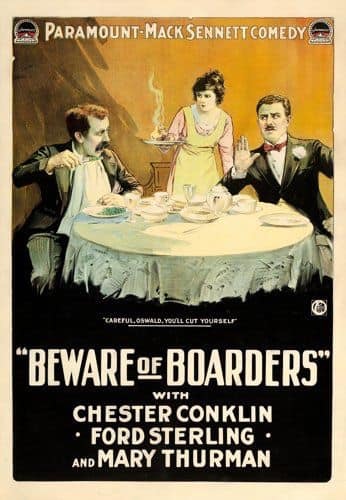
The year 1918 stood as a pivotal juncture in the evolution of cinematic comedy, transitioning from the raw, unbridled energy of the early nickelodeon shorts to a more sophisticated, though no less frantic, narrative structure. Beware of Boarders, featuring the incomparable Ford Sterling, serves as a quintessential artifact of this era. It is a film that weaponizes the concept of spatial confusion, turning a single household into a labyrinthine stage for criminal incompetence and domestic insecurity. While films like The Unpardonable Sin explored the depths of human tragedy during the same period, Sterling and his cohort were perfecting the art of the 'near-miss'—a trope that remains a foundational element of comedic timing today.
At the heart of this farce is a dualistic irony that would make a playwright blush. We have the burglar and the spy—two archetypes of the shadows—who are fundamentally ill-suited for their respective goals. The burglar’s quest for wealth is constantly subverted by the acquisition of intelligence, while the spy’s quest for state secrets is derailed by the material weight of stolen gems. This inversion of the MacGuffin creates a narrative tension that is both hilarious and rhythmically satisfying. Unlike the heavy moralizing found in The World for Sale, this film cares little for social commentary, opting instead for a pure, distilled exploration of human frustration.
Ford Sterling’s performance in this film is a masterclass in silent-era physical acting. Known for his tenure as the chief of the Keystone Cops, Sterling brought a manic, high-velocity energy to every frame. In Beware of Boarders, his portrayal of the jealous husband is not merely a character study but a physical manifestation of anxiety. Every twitch of his mustache and every frantic glance toward a closet door communicates a narrative of perceived betrayal. It is a performance that contrasts sharply with the more stoic or melodramatic styles found in contemporary dramas like Rebecca the Jewess or the religious gravitas of From the Manger to the Cross.
The supporting cast, featuring the likes of Harry McCoy and the legendary Chester Conklin, provides a solid foundation for Sterling’s histrionics. Each 'boarder'—whether they are there by choice or by criminal necessity—operates with a distinct physical vocabulary. The way they utilize the verticality of the set—climbing through windows, hiding under beds, and scaling walls—converts the domestic sphere into an obstacle course. This use of space is reminiscent of the technical ambition seen in Balettprimadonnan, though directed toward laughter rather than aesthetic grace.
The brilliance of the screenplay lies in its claustrophobia. The husband’s claim that he lives in a 'house full of lovers' is a wonderful piece of dramatic irony. The audience knows that the men hiding in the shadows are not there to woo his wife, but are instead caught in a web of their own making. This misunderstanding elevates the stakes from a simple crime caper to a domestic comedy of errors. The detectives, the spy, and the burglar are all terrified of one another, creating a hierarchy of fear that drives the pacing toward its inevitable, explosive climax.
One cannot discuss this film without mentioning the presence of Pepper the Cat. Animal actors in early cinema often provided a grounded, chaotic element that human actors could react to, and Pepper is no exception. The cat’s nonchalance in the face of the humans' frantic movements adds a layer of surrealism to the proceedings. It’s a subtle touch that highlights the absurdity of human behavior, a theme explored with far more grim intensity in Erich von Stroheim’s Greed years later.
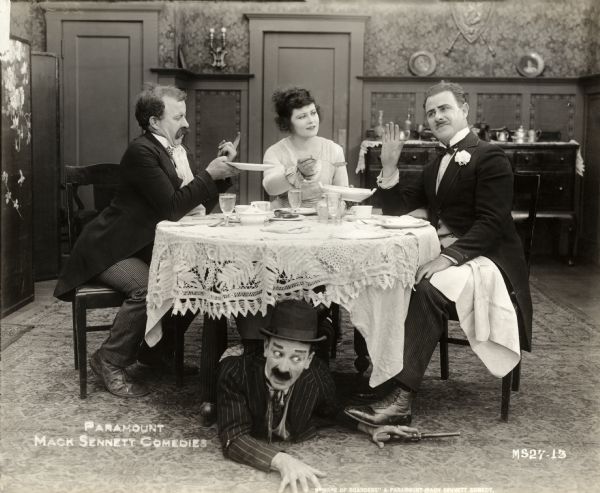
Technically, the film utilizes the limited camera movements of 1918 to its advantage. By keeping the frame relatively static, the director allows the actors to move in and out of the 'stage' with the precision of a clockwork mechanism. The editing is sharp, ensuring that the 'pearls vs. papers' gag is never lost in the shuffle. This clarity of action is something that many modern comedies struggle to achieve with their over-reliance on rapid cuts. There is a visual honesty here, a commitment to the physical gag that demands our respect. It lacks the sweeping epic feel of Marc'Antonio e Cleopatra, but it replaces scale with an incredible density of action.
In comparison to films like The Masqueraders, which deals with social identity and artifice, Beware of Boarders strips away the pretense. It is a movie about the fundamental human desire to not get caught. Whether it's a wife trying to hide a perceived indiscretion or a spy trying to hide from a detective, the core motivation is universal. This universality is what has allowed the film to remain watchable over a century later.
While often overshadowed by the later works of Chaplin or Keaton, the performers in Beware of Boarders were the pioneers who mapped the territory those giants would later inhabit. The film’s relentless pace and clever use of irony paved the way for the sophisticated screwball comedies of the 1930s. It shares a certain thematic DNA with The Mysterious Miss Terry in its play with identity and hidden motives, yet it remains firmly rooted in the slapstick tradition.
Even when compared to the more rugged, outdoor energy of One Shot Ross or the social tensions of The Wasp, this film stands out for its sheer density of gags. It doesn't need the vast horizons of the West or the high-stakes drama of the courtroom; it only needs a house, a few doors, and a group of people who are all in the wrong place at the wrong time. It is a testament to the power of a simple premise executed with maximum effort.
To watch Beware of Boarders today is to witness the birth of the modern sitcom. The 'misunderstanding' plot, the 'hiding in the closet' trope, and the 'wrong object' gag are all present and accounted for in their most primal forms. It is a joyous, breathless experience that reminds us that while technology changes, the mechanics of humor remain remarkably consistent. It lacks the moral weight of Enlighten Thy Daughter or the romantic yearning of Hungry Heart, but it possesses something perhaps even more valuable: the ability to make an audience laugh through the sheer audacity of its movement.
In the grand pantheon of 1918 cinema—a year that gave us everything from The Golden God to Revenge—this film remains a bright, flickering light of pure entertainment. It is a reminder that sometimes, the most profound thing a film can do is show us a man frantically trying to hide a string of pearls while holding a stack of useless papers, all while a cat watches on in silent judgment. It is cinema at its most fundamental, its most kinetic, and its most humanly ridiculous.
IMDb —
1920
Community
Log in to comment.