DbcultAccessing Vault...
Cult Review
Senior Film Conservator
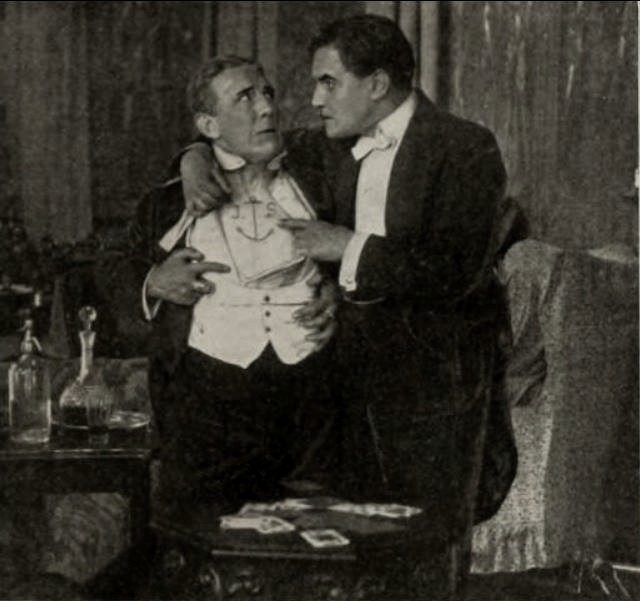
In the annals of early British cinema, few films capture the tectonic shifts of social hierarchy with the same understated poignancy as the 1915 adaptation of Brother Officers. Directed with a surprisingly modern sensitivity toward character interiority by Bannister Merwin, this work stands as a testament to an era where the celluloid medium was just beginning to grasp its power as a mirror to the soul.
The narrative engine of Brother Officers is fueled by the transformation of John Hinds, portrayed with a rugged yet vulnerable dignity by Frank Stanmore. Hinds is not merely a protagonist; he is a symbol of the burgeoning meritocracy that the Great War accelerated, though the film's source material predates the conflict's end. When Hinds, a common private, ascends to the officer class through a combination of battlefield heroism (the Victoria Cross) and financial independence (the sweepstakes), he enters a space governed by unwritten codes and ancient lineages. Unlike the swashbuckling vengeance found in The Count of Monte Cristo, Hinds’ journey is one of integration rather than destruction.
Stanmore’s performance is a masterclass in silent-era subtlety. He avoids the histrionic gesticulations common in the period, opting instead for a quiet stoicism that highlights the character's internal conflict. He is a man caught between two worlds, belonging fully to neither. This theme of the 'outsider' trying to navigate a closed system is a recurring motif in British art, but here, under Merwin's direction, it takes on a specifically cinematic quality. The camera lingers on Hinds' face as he observes the effortless grace of his fellow officers, capturing a sense of longing that dialogue would only diminish.
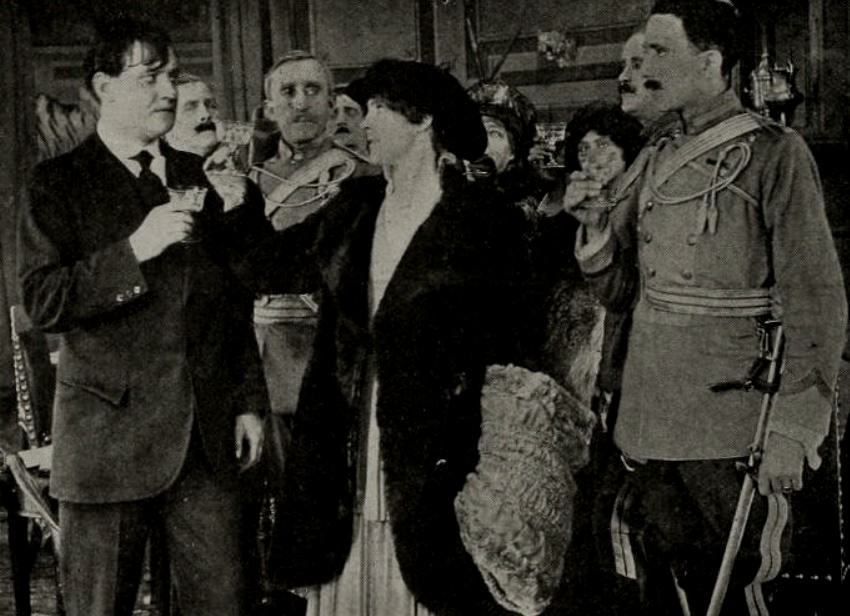
Every great melodrama requires a catalyst of chaos, and in Brother Officers, that role is filled by the sinister cardsharp. This character serves as a bridge to the protagonist's traumatic past, linking the sophisticated drawing rooms of the present to the ruinous poverty of Hinds’ childhood. The revelation that this gambler is the same man who drove Hinds’ father to his grave adds a layer of Shakespearean gravity to the plot. It elevates the film from a simple social drama to a high-stakes morality play.
The tension in the gambling scenes is palpable, reminiscent of the gritty underworld depicted in The Rogues of London. However, where The Rogues of London revels in the squalor of the criminal element, Brother Officers focuses on the psychological warfare of the card table. The stakes are not merely financial; they are existential. When Hinds intervenes to save his friend from the gambler's clutches, he is not just protecting a comrade; he is exorcising his own familial demons.
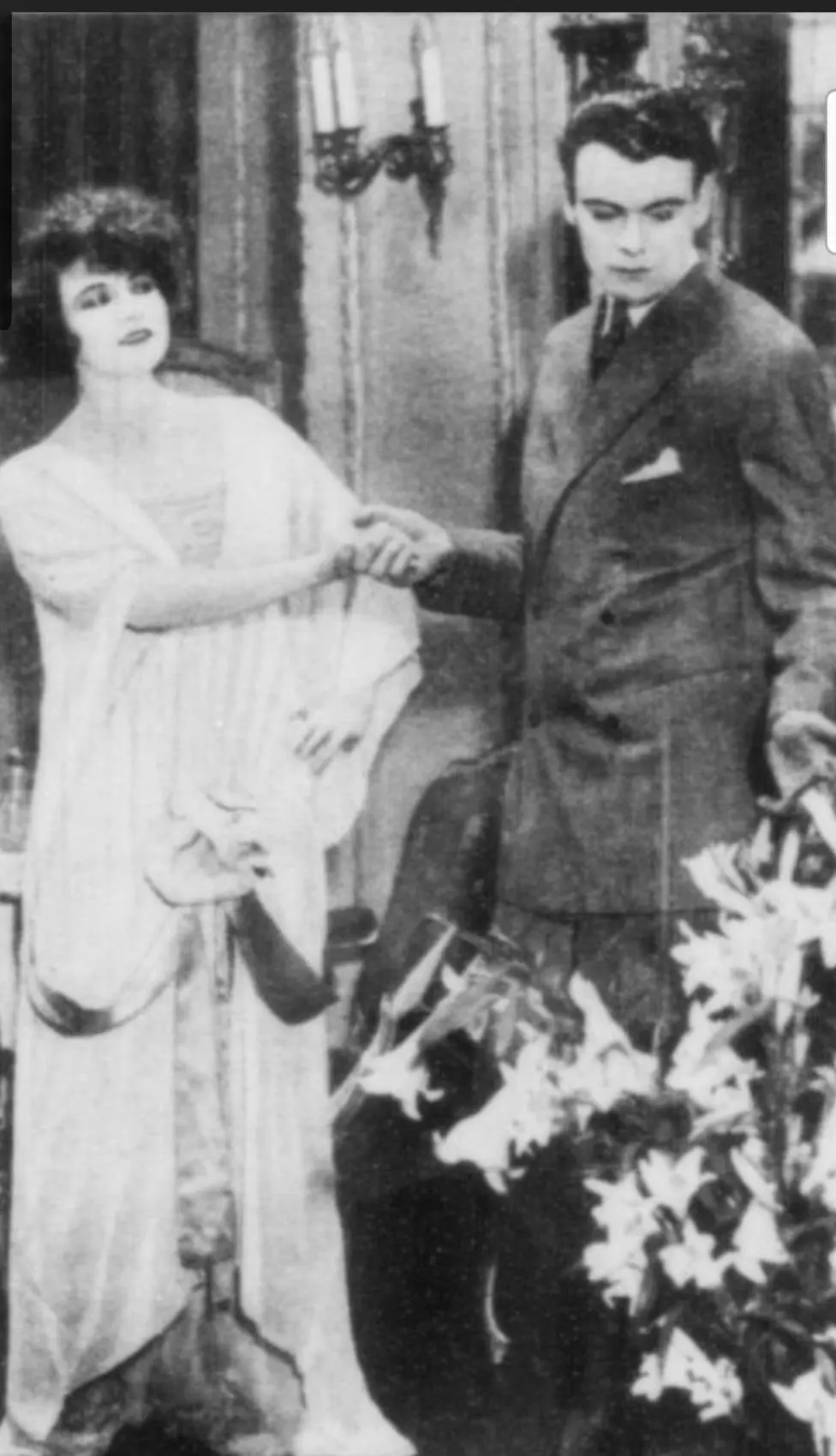
Perhaps the most enduring aspect of the film is its treatment of romance. Lettice Fairfax delivers a luminescent performance as the object of Hinds’ affection. The romantic subplot is handled with a restraint that is almost painful to witness. Hinds realizes that despite his medals and his money, the cultural chasm between him and the aristocratic world remains wide. His decision to step aside and allow his friend (played by the incomparable Henry Ainley) to marry the woman he loves is the film's emotional anchor.
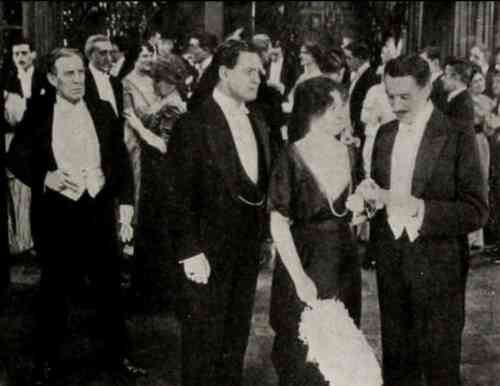
This act of self-abnegation marks Hinds as the true 'officer' of the title—not by rank, but by character. It is a subversion of the typical romantic resolution. While films like Love Everlasting might lean into the melodrama of unrequited passion, Brother Officers treats Hinds’ sacrifice as a noble, albeit tragic, necessity of his social ascension. He pays for his new status with the currency of his own happiness.
Bannister Merwin, working alongside the prolific writer Leo Trevor, utilizes the frame to emphasize isolation and camaraderie. The use of deep focus—or as close as 1915 technology allowed—frequently places Hinds on the periphery of social gatherings, visually reinforcing his status as an observer. The lighting, while primitive by modern standards, effectively differentiates between the warm, inviting spaces of the officer's mess and the cold, stark reality of the gambling dens. This visual storytelling is far more advanced than contemporary works like One Hundred Years Ago, which often relied more heavily on intertitles to convey emotional states.
The pacing of the film is deliberate, allowing the audience to soak in the atmosphere of the era. There is a texture to the costumes and the set design that speaks to a high production value. The uniforms are crisp, the drawing rooms are cluttered with the bric-a-brac of the Edwardian elite, and the contrast with the sparse, utilitarian world of Hinds’ origins is stark. This attention to detail anchors the film in a specific reality, making the stakes feel grounded and authentic.
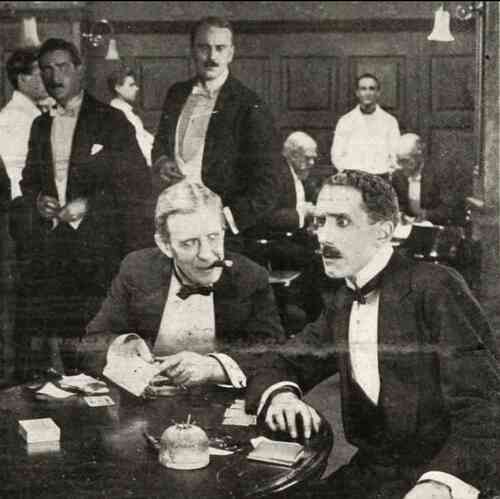
When we look at Brother Officers in the context of its peers, its sophistication becomes even more apparent. For instance, Monsieur Lecoq offers a more traditional detective narrative, focusing on the mechanics of the mystery. In contrast, Brother Officers uses its 'detective' element—the discovery of the cardsharp's true identity—as a vehicle for character development. Similarly, while In the Clutches of the Paris Apaches explores the intersection of high society and the criminal underworld through action and suspense, Merwin’s film approaches the same intersection through the lens of social ethics and personal honor.
The film also avoids the exoticism found in The Hindu Nemesis or the pastoral sentimentality of Gypsy Love. It is a resolutely British film, concerned with British problems: class, duty, and the stiff upper lip. This cultural specificity is what gives the film its lasting power. It is a snapshot of a nation in transition, grappling with the idea that a man’s worth might be measured by something other than his birthright.
The supporting cast deserves significant praise for creating a fully realized world. Wyndham Guise and Gerald Ames provide the necessary social context, representing the establishment that Hinds must navigate. Their performances are nuanced, avoiding the caricature of the 'snooty aristocrat' and instead portraying men who are genuinely conflicted by their changing world. Gwynne Herbert and Charles Rock add further depth, ensuring that every scene feels populated by real people with real histories.
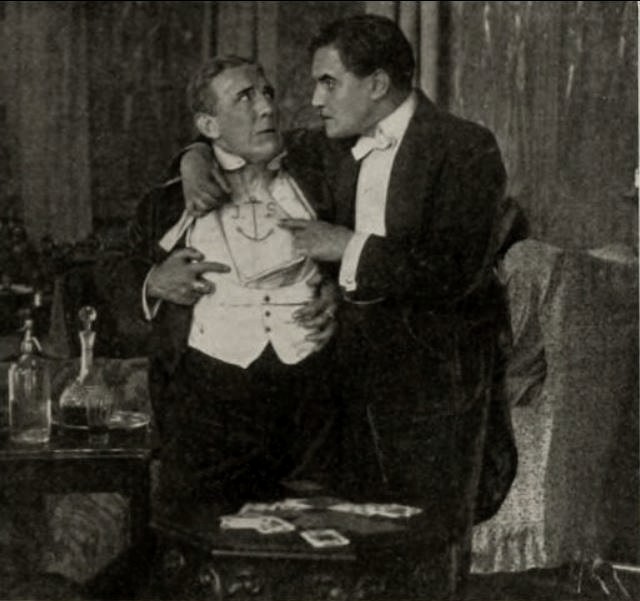
Even smaller roles, like those played by George Bellamy, contribute to the film's rich tapestry. The chemistry between the 'brother officers' is palpable, making the central conflict—the love triangle and the debt of honor—feel deeply personal. This ensemble work is a precursor to the great British character acting traditions of the mid-20th century, showing a level of professional polish that was rare in 1915.
Why does Brother Officers remain relevant over a century later? Perhaps because the questions it asks are still unanswered. The tension between earned merit and inherited privilege remains a central friction in modern society. Hinds’ struggle to be seen for who he is, rather than where he came from, is a universal human experience.
In terms of film history, it serves as a vital link between the stage-bound dramas of the early 1900s and the cinematic realism that would follow. It shares some DNA with the social critiques found in Europäisches Sklavenleben, though it is far more focused on the individual than the collective. It lacks the sweeping scale of When Rome Ruled, but it gains an intimacy that those epics often lack.
The final scenes, where Hinds confronts the cardsharp, are masterfully edited to build tension. The resolution is satisfying not because it ends in a grand spectacle, but because it ends in a quiet, moral victory. Hinds does not need to kill his enemy to defeat him; he simply needs to unmask him. This preference for psychological resolution over physical violence is a hallmark of Merwin’s sophisticated directorial style.
Ultimately, Brother Officers is a film of profound decency. It celebrates a man who, despite being given every reason to be cynical or vengeful, chooses instead to be honorable. In the dark, flickering light of a 1915 cinema, John Hinds must have seemed like a new kind of hero—one who didn't just win the war, but won the peace within himself. It is a work that deserves to be rediscovered, not just as a historical curiosity, but as a deeply moving piece of narrative art.
IMDb —
1916
Community
Log in to comment.