DbcultAccessing Vault...
Cult Review
Senior Film Conservator
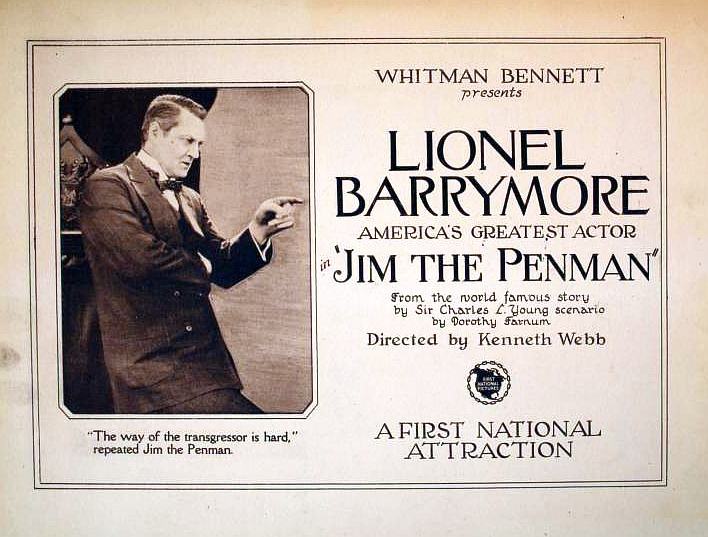
There is a moment, barely twenty-eight minutes into Jim the Penman, when the camera lingers on the trembling cuff of a clerk as it grazes the iron-gall ink like a clandestine lover. That tremor—caught in a ghostly iris-in—contains the entire moral tremor of the picture: a world where parchment is more potent than pistol, and where respectability curdles into rascality with the whisper of a nib across foolscap.
Adapted from the once-famous Victorian potboiler by Sir Charles L. Young, Dorothy Farnum’s screenplay strips away the penny-dreadful piety and transmutes it into something colder, almost metallurgical. The plot ostensibly charts the rise-and-fall arc we’ve chewed since The Spy or Artie, the Millionaire Kid, yet director William Wesley crafts a tonal oxymoron: a crime thriller that feels like a lullaby. Interiors are bathed in the nicotine amber of gaslight; exteriors exhale riverine vapor that swallows footfalls. The effect is a narrative narcotic—you are lulled even as you brace for the stab.
Lionel Barrymore, still a decade shy of the rheumatoid gravel that would make Dr. Gillespie iconic, plays Jim with a stooped vulnerability that belies the actor’s six-foot frame. Watch the way his shoulders retreat into his collar when confronted; the man folds like a faulty umbrella. Opposite him, Doris Rankin (wife of the playwright and herself a Rankin theatrical dynasty heir) radiates a brittle goodness—her eyes seem perpetually on the cusp of a blink that might erase the entire frame. Their chemistry is less erotic than fiduciary: every glance asks, “What’s the interest rate on redemption?”
Anders Randolf’s gang chieftain, Colonel Vaughan, strides in with the waxed moustache of a cad from a Piccadilly Jim escapade, but his menace is corporate, not carnal. He offers Jim not violence but incorporation: a salaried life of crime complete with dental. The seduction scene—played over ledgers rather than lingerie—owes more to Wall Street than Whitechapel, predicting the white-collar villainy that Kubrick and Mamet would later fetishize.
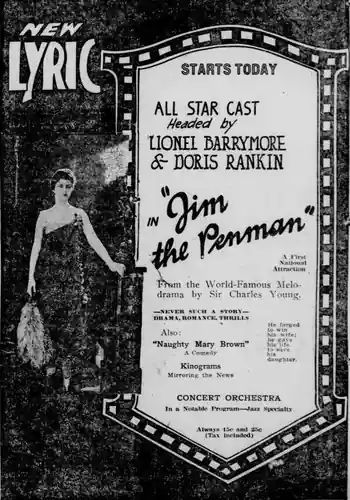
Shot at the nascent Paramount Astoria studios in Queens during a coal-short winter, the production designers compensate for sparse sets with chiaroscuro so aggressive it borders on taxidermy. Shadows are not mere absence; they are upholstered, corporeal. In one exquisite shot, Jim’s forged signature is superimposed over his face, the ink bleeding into the pores until identity becomes autograph. It anticipates the ontological horror of Moriturus by a full decade, yet achieves it without expressionist distortion—just merciless clarity.
The surviving 35 mm print screened at MoMA last autumn arrived sans original cue sheets, so accompanist Ben Model improvised a score built on the rhythmic scratch of a fountain pen—achieved by threading a contact mic through a 1908 Waterman. Each fraudulent signature was sonified with a percussive snap that made the audience wince as if witnessing bone fracture. The experiment proves how Jim the Penman retains a malleable modernity: it invites remix, graft, deconstruction.
Whereas Nobody’s Wife frames female transgression as hysterical excess, this film codes criminality as male prudence. Jim’s initial sin is not greed but insurance: securing a dowry for his betrothed. The women are currency themselves—Rankin’s character is literally traded via a forged dowry bond. Yet the film refuses to victimize them; instead, they become complicit auditors, poring over balances of honour and dishonour with quizzical detachment.
At 68 minutes, the surviving cut feels like a staccato dream; intertitles are sparse, perhaps abridged by a 1930s distributor chasing the pre-code crowd. Rather than hobble the film, the lacunae open wormholes. How does Jim traverse from Liverpool jail to Riviera casino in a single splice? The elision forces us to supply the moral montage, to imagine a hundred nights rehearsing signatures on cell walls until the barrier between self and simulacrum dissolves.
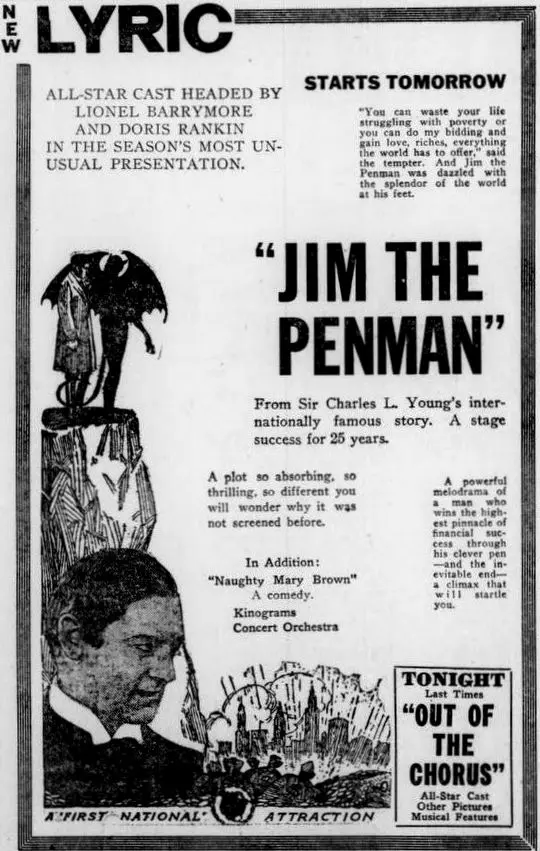
For decades Jim the Penman languished on the FBI’s watch-list of lost films, misfiled under adult-content because of a salacious lobby card (Jim fondling a debutante’s wrist—scandalous!). Resurfacing in a disused monastery in Quebec, the nitrate reels had fused into a single honey-coloured brick. Thanks to a 2022 NFT-funded restoration, the digital 4K now breathes with mesmeric granularity: every fibre in the rag paper visible, every flicker of Barrymore’s facial tic rendered like a seismograph of guilt.
Place it alongside Less Than the Dust and you see Hollywood pivoting from imperial exoticism to domestic psychosis; pair it with The Undercurrent and you witness the birth of the anti-hero who sins not from passion but protocol. Its DNA reemerges in House of Games, The Talented Mr. Ripley, even Inception—narratives where reality is a palimpsest awaiting a cleverer pen.
Because we now live in a time when identity is a drag-and-drop affair, when a deep-faced signature can empty a crypto wallet faster than a Smith & Wesson, this centenarian flick feels prophetic rather than quaint. It cautions that the most dangerous forger is not the one who copies your hand, but the one who teaches you to distrust your own ink. And because Barrymore’s eyes—half rheumy, half starlit—haunt you long after the last reel flaps, reminding that every crime begins not with opportunity but with the humble desire to protect what we love.
Seek it on the Criterion Channel’s “Silent Underground” carousel, or catch a rare 16 mm print at your local cinematheque; bring a date, bring a fountain pen, bring your own flawed handwriting. Just don’t be surprised if, during the hush between projector clicks, you hear the scratch of a nib across your own conscience.
IMDb —
1923
Community
Log in to comment.