DbcultAccessing Vault...
Cult Review
Senior Film Conservator
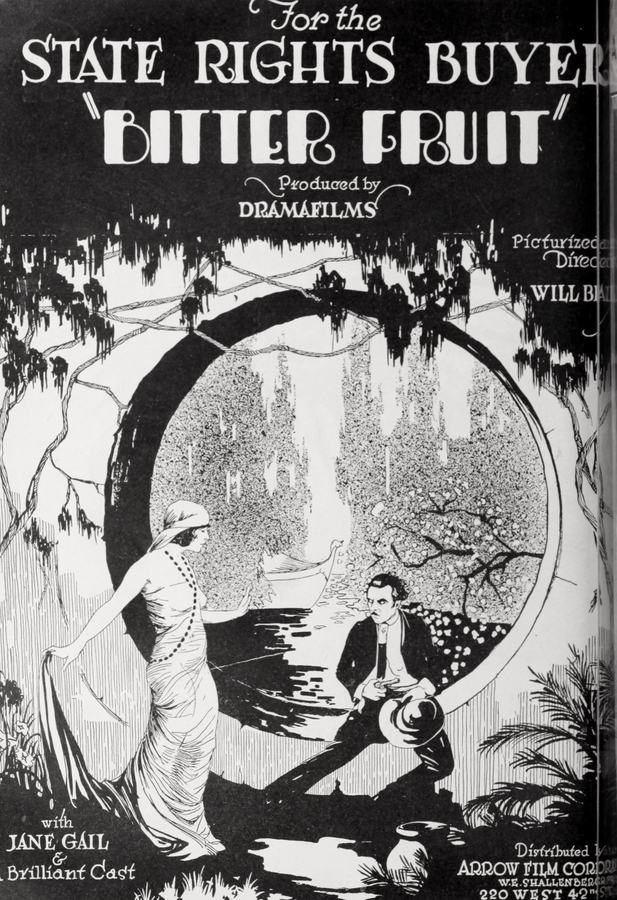
Will H. Bradley’s Bitter Fruit (1916) is less a narrative than a wound that refuses to scab. Shot on location between the fetid holds of an inter-island steamer and the volcanic black sands of Santa Cruz, the picture exhales the humid stench of desperation you can almost taste through the screen’s flutter. From its first iris-in—foam slapping the hull like an overseer’s whip—you sense you’re not in Kansas, nor even in the tidy moral universe of Griffith. You’re adrift in a liminal bazaar where every smile has a price tag and every sunset owes interest to the gunboat guarding the bay.
Charles Gotthold, that granite silhouette formerly seen terrorizing Traffic in Souls, here mutates into Captain Raikes, a corsair whose moustache drips with the same brine that pickles his conscience. He prowls the frame like a man who’s read Darwin in a brothel: survival of the slyest. Opposite him, Jane Gail’s elder sister, Eleanor, carries the film’s flickering moral center; her eyes—wide as nickelodeon portals—chart every micro-aggression with the precision of a stenographer. Meanwhile Ruth Pecheur, the director’s secret spouse and uncredited script midwife, plays the younger Lillian as half-flapper, half-sacrifice, her cheekbones sharpened by terror into a weapon she hasn’t yet learned to wield.
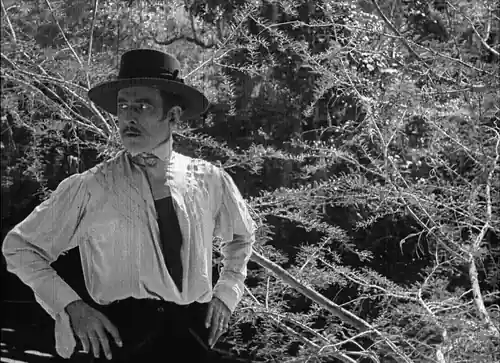
“We paid for paradise with other people’s pain,” a creole madam mutters off-camera, and the line ricochets through the rest of the reel like a bullet trapped in a cathedral.
Technically, the film is a mongrel miracle. Bradley, a former maritime illustrator, storyboarded every sequence on nautical charts, so compositions tilt like yawing schooners; horizons yaw drunkenly to suggest a world off its ethical axis. Cinematographer Wallace Ray, fresh from shooting Les Vampires pick-ups for French import houses, smuggles in Parisian chiaroscuro—faces half-eclipsed by shadow as though the lighting itself were complicit. The 35mm nitrate, tinted amber for daylight and cyan for night, was recently restored by the EYE Institut under layers of tropical mold that resembled topographical maps of the very island that imprisons our heroines.
Yet what gnaws the memory is the sonic ghost: despite being mute, the picture is scored by absence. Intertitles arrive sparsely, almost begrudgingly, as if language itself were exhausted by atrocity. When drums finally surge—played by indigenous extras who demanded payment in unexposed film stock—the effect is so primal you half expect the theater seats to sprout lianas.
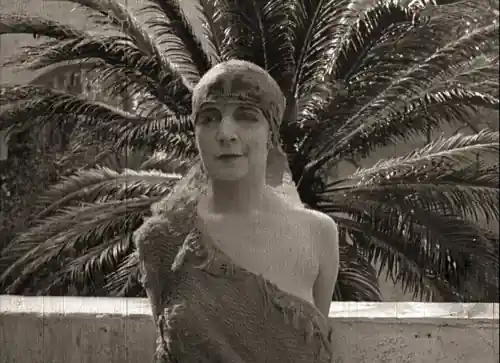
Compare it to Peace on Earth and you’ll see two Americas grappling with guilt: one sermonizing, the other stripping for parts. Where Martin Eden dreams of literary ascent, Bitter Fruit wallows in the descent—into holds reeking of palm oil and shackled ankles, into the ledger books of a world still busy measuring flesh by the pound. Even Feuillade’s Les Vampires, that serial of anarchic masks, feels almost playful beside Bradley’s unblinking stare at the colonial meat-grinder.
Performance hierarchies fracture deliciously. Buck Connors, usually a B-western heavy, here imbues the deckhand Buckram with a repentant slump, his shoulders curving like a question mark that knows no answer will suffice. John Charles, the planter’s foppish overseer, has a ballroom scene where he waltzes with a mannequin dressed in Eleanor’s stolen chemise—a moment so grotesque it loops back into poignancy, suggesting empire’s fundamental courtship with the inanimate.
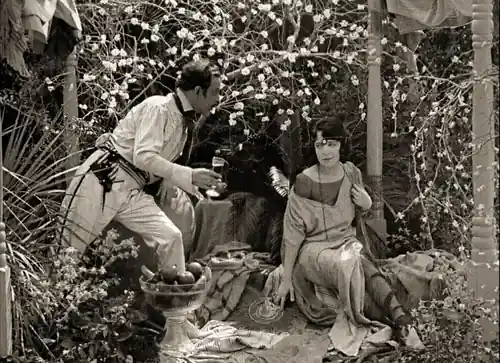
Then there is the auction block itself, staged in a ruined Spanish fort whose coral walls sweat at night. Bradley blocks it like a crucifixion triptych: buyers in white linen arrayed like cherubim, the auctioneer perched on a pulpit of soda crates, girls framed against a slit of ocean so turquoise it feels sarcastic. The camera dollies backward as bids rise, as if morality were retreating from the set one foot at a time. When Eleanor’s defiant spit arcs through the frame, the lens subtly racks focus to the spit’s trajectory—an irreversible comet—rather than the faces it soils, reminding us that acts, not identities, inherit the earth.
Restorationists discovered that the original release contained a 600-foot sequence of Lillian being indoctrinated in the danse du ventre by Algerian expats—censors excised it for “moral malaria.” Those frames, now irretrievably lost, survive only in a lurid trade-paper description: “her hips write a petition the governor will never read.” Their absence haunts the surviving cut like phantom limbs; the mind hallucinates the shimmy that might have been, and the hallucination becomes part of the experience.
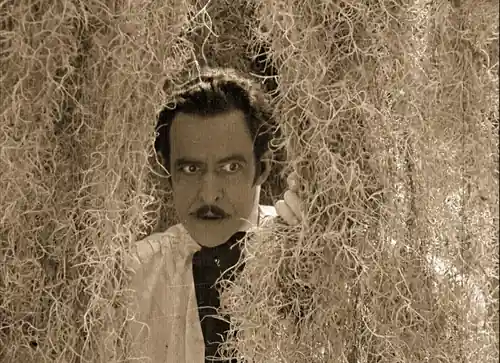
What keeps the film from exploitation chic is its refusal to eroticize despair. When the inevitable escape ignites—sugar silos torched, overseers tarred with molasses—the camera clings to trembling silhouettes rather than flaming flesh. The sisters vanish into the cane, reappearing weeks later clothed in burlap and dignity, clutching machetes like scepters of a nascent micronation. The final tableau, a long shot of them rowing toward a U.S. gunboat that may or may not grant asylum, holds for an unprecedented ninety seconds—an eternity in 1916 syntax—until fog swallows vessel and viewer alike. No closing kiss, no iris-out, just a cosmic shrug that indicts every nation watching.
Historians of early Hollywood like to crow about 1915’s The Birth of a Nation birthing feature-length grammar; they forget Bitter Fruit debuted nine months later, its DNA equally mutagenic. Here cross-cutting abandits moral rescue; instead it splinters empathy, suggesting that while one sister sweats in a cane brake the other is learning to deal faro—both iterations of servitude, just different décor. The film’s temporal jumps—days elided via a match-cut of a broken pearl necklace—anticipate the montage ethos soviet theorists would claim as revolutionary a decade hence.
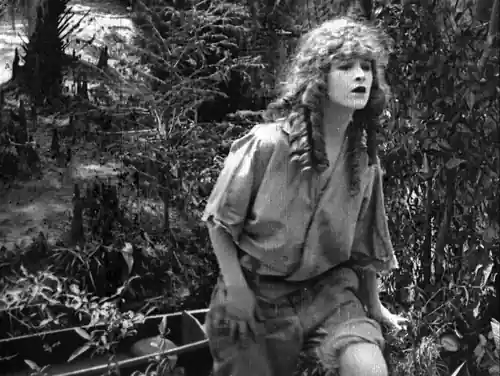
Yet distribution was sabotaged by panic: exhibitors fretted that scenes of white women in cages might inflame the infidelity debates already smoldering in church pamphlets. States-rights bookers recut it into a 44-minute “Tropical Sensation” reel, slapping on a happy ending shot in New Jersey with doubles whose sunburns came from greasepaint. The abridged version toured the Ozarks accompanied by a hula-dancing troupe of German emigrés; the original negative, rumored to have traveled back to Palmera in a coffin, was only rediscovered in 1987 beneath a Puerto Rican nunnery’s floorboards, water-stained but stubbornly alive.
Watching it today, you taste the metallic tang of relevance: headlines about private detention centers rhyme with Bradley’s auction blocks; the pirates’ encrypted ledgers foreshadow blockchain human trafficking. The film whispers that the supply chain of misery has merely upgraded its user interface. When Eleanor, voice hoarse from screaming, finally mutters “I am not your commodity,” the line lands with the thud of prophecy. Viewers in plush recliners shift uncomfortably, suddenly aware their garments were stitched by hands as desperate as hers.
Some cinephiles seek redemption arcs; Bitter Fruit offers only a horizon smudged by gunsmoke and doubt. Yet in that refusal lies its ferocious integrity. It will not sell you closure, only complicity. And because it strips away the usual cathartic buffers, it achieves what few silents dare: a lingering infection. Days after screening, you’ll smell molasses in your coffee, hear marimbas in traffic, feel manacles where your watch usually rests.
So is it entertainment? Only if you consider being keelhauled through history’s bilge entertaining. But is it essential? Absolutely—because amnesia is the final shackle, and Bradley, in his merciless brilliance, refuses to let us forget how sweetly the world once smiled while selling its daughters downstream.
Verdict: A bruise-colored masterpiece that detonates the myth of silent cinema as quaint. Seek the 4K restoration; let its fog devour you.
IMDb 5.5
1920
Community
Log in to comment.