DbcultAccessing Vault...
5.5/10
Senior Film Conservator
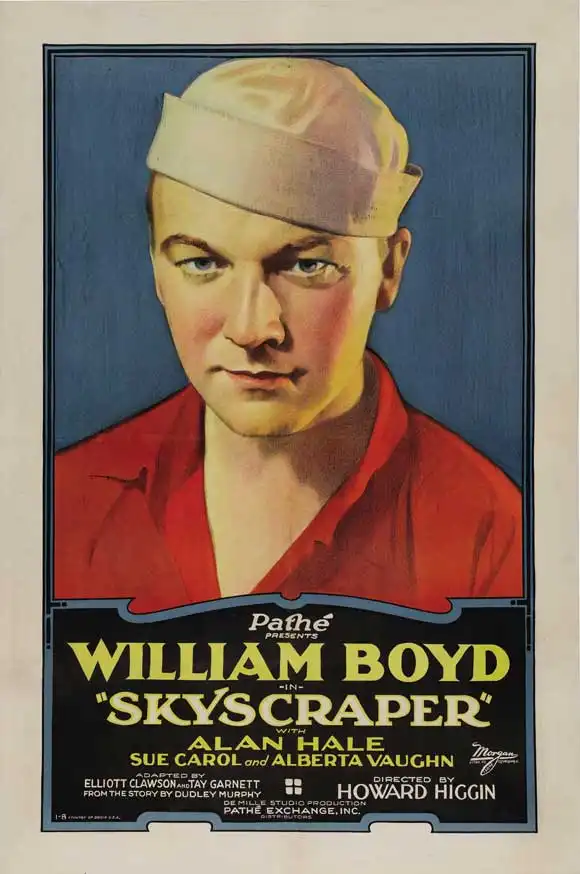
A definitive 5.5/10 rating for a film that redefined the boundaries of cult cinema. Skyscraper remains a cornerstone of transgressive art.
Look, if you’re not already someone who actively seeks out silent films, Skyscraper (1928) probably isn't going to be your entry point. It's a charming enough melodrama, sometimes surprisingly effective, but it demands a certain patience and a willingness to meet it on its own terms. For those who appreciate the era, though, there are some really interesting bits here, particularly in its depiction of the early 20th-century urban landscape and the perils of the working man. Anyone looking for a fast-paced, modern narrative will absolutely bounce off this one. It’s got a rhythm all its own, which often means things move… deliberately.
The premise itself is peak silent-era drama: Buddy (William Boyd) falls into a deep funk, and his pal Slim (Alan Hale) decides the best cure is to fake a romance with Buddy’s sweetheart, Mary (Sue Carol), to make Buddy jealous enough to snap out of it. It’s a classic 'noble lie' setup, and you can practically hear the dramatic organ swells in your head as the title cards appear. The film never quite interrogates the sheer manipulative nature of this plan, which is a bit of a shame, but it does lead to some genuinely awkward, almost uncomfortable, moments of romantic tension.
William Boyd, who would later become Hopalong Cassidy, brings a sort of earnest, almost stiff charm to Buddy. His 'depression' is mostly conveyed through a lot of slumped shoulders and staring blankly into the middle distance. There’s a scene early on where he just sits by a window, unshaven, and the camera just holds on him for what feels like an eternity. You get the sense the director, Howard Higgin, wanted to convey profound sadness, but it just kind of… drags. You can almost feel the movie trying to convince you this moment matters, but it just feels like waiting for something to happen.
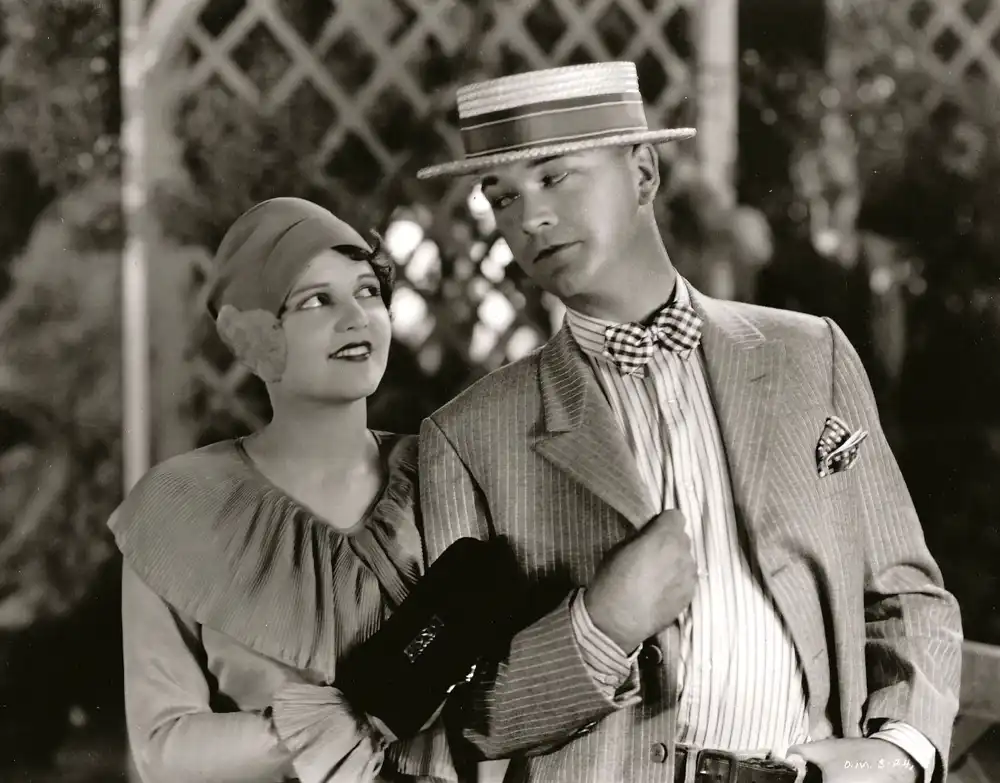
Sue Carol as Mary is probably the most natural performance in the whole thing. She has this wide-eyed innocence, but also a hint of steel that makes her believable as someone two men would literally risk their lives and friendships over. Her reactions to Slim’s advances are a highlight; she’s not entirely sure what to make of him, and you see that flicker of confusion and then, maybe, something else in her expressions. It's subtle for a silent film, which is saying something.
The actual skyscraper itself, the 'third character' as they say, is a marvel. The shots of the steelworkers high up on the girders are genuinely breathtaking, even today. You feel the scale, the danger. There’s one particularly impressive sequence where a crane lifts a massive beam, and the workers are just scrambling around it like ants. It’s a testament to the practical effects and the sheer bravery (or foolhardiness) of early filmmaking. No green screen here, just real heights and real dizzying perspectives. Though, I did notice in one of those wide shots, a worker in the background seems to briefly look directly at the camera. A tiny, blink-and-you-miss-it moment, but it pulled me out for a second.
Then there’s the whole subplot with Kusell's Dancing Debutantes. Seriously, they're in the cast list. And yes, there's a scene. Out of nowhere, in a film about steelworkers, depression, and a love triangle, we get a full-blown song-and-dance number in what looks like a cabaret. It's utterly baffling. It feels like it was shoehorned in from another movie entirely, a desperate attempt to inject some 'pep' into the proceedings. The tonal whiplash is real. One minute, Buddy's contemplating his miserable existence; the next, a chorus line is high-kicking their way across the screen. It’s one of those oddities that makes you wonder what was going on in the editing room that day.
The dialogue, conveyed through title cards, is fairly standard for the era. Lots of exclamation points. Lots of dramatic declarations. "She means nothing to me!" followed by a close-up of a clenched jaw. It gets the job done, but it rarely elevates beyond functional storytelling. There's a particular card where Slim dramatically says, "I'll make him fight for you!" and the earnestness of it is almost comical, like he's rehearsing a speech rather than having a conversation.
The ending, when it finally arrives, feels a little rushed after all the slow build-up. The resolution of the love triangle, and Buddy’s recovery, happens with surprising speed, almost as if the filmmakers suddenly realized they were running out of reel. It’s neat and tidy, perhaps too much so, given the emotional entanglement they’d spent an hour building. You don't quite feel the full weight of the reconciliation; it's more implied than truly earned.
Despite its quirks and uneven pacing, Skyscraper does stick with you, mostly for those incredible construction scenes and Sue Carol’s surprisingly nuanced performance. It’s a historical curiosity with flashes of genuine cinematic ambition, but it's definitely a niche watch. If you're a silent film devotee, give it a shot. Otherwise, there are probably more accessible ways into the era. It's not The City That Never Sleeps in terms of sheer energy, but it has its moments of quiet charm.
IMDb 7.4
1933
Community
Log in to comment.