DbcultAccessing Vault...
Cult Review
Senior Film Conservator
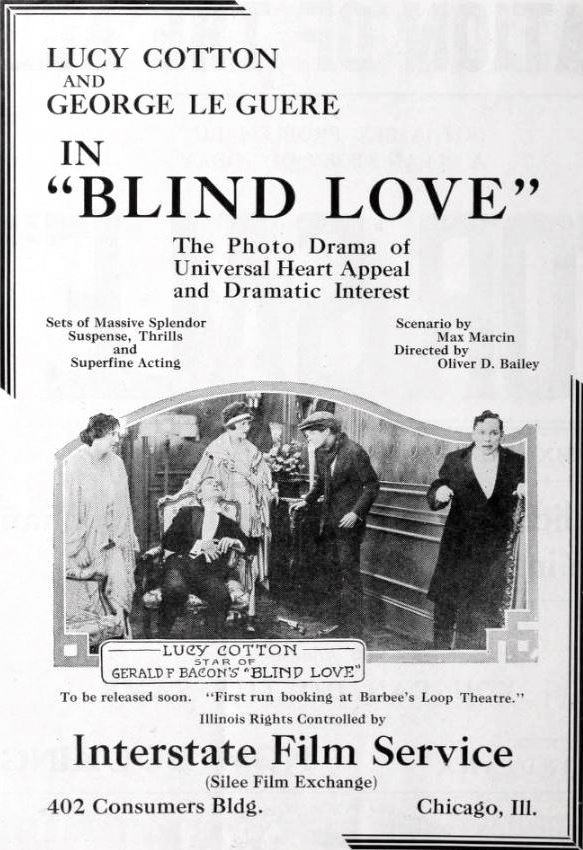
The first time we see Josephine Burden, she is a negative-image heiress: all porcelain silhouette against a casino’s argent glare, her wealth erased by dim light and deliberate anonymity.
Director Charles M. Seay understands that in 1920, opulence reads loudest when half-submerged. Thus the picture opens inside a kaleidoscope of roulette marbles clacking like hail on glass, champagne flutes catching chandelier prisms, and croupiers whose moustaches look forged from leftover noir. Enter Horace Beard—gambler, flâneur, self-mythologizer—played by Morgan Coman with the slouch of a man who has already lost several versions of himself at cards. Coman’s eyes telegraph a hunger that is not merely for coins but for narrative: he wants a story worth going broke for. Josephine, lithe Lucy Cotton exuding Gish-adjacent ethereality, becomes that story.
The screenplay, stitched from the pulp imaginations of Basil Dickey and serial-thriller maestro Max Marcin, flirts with the transactional ethos found in The Madonna of the Slums yet tilts closer to sentimental redemption than sociological expose. Its hinge is a drunken IOU—an intoxicated covenant that feels almost Jacobean in its moral absurdity. George Collins, essayed by Thurlow Bergen with a hyena grin, is the intermediary devil who monetizes courtship itself. When he brandishes the crumpled promissory note, the film’s core question clangs like a dropped tray: is love nullified the moment it is brokered?
Cinematographer Frank G. Killion opts for chiaroscuro interiors that prefigure German Expressionism without abandoning American sunshine. Observe the sequence where Horace, desperate to recover the contract, tiptoes through Collins’s drawing room: venetian-blind shadows stripe his face, turning him into a barcode of guilt. The camera lingers on a wall clock whose pendulum slices time into audible beats even without the Vitaphone. One realizes, with gooseflesh, that silence itself has become the film’s score—a metronome of dread.
Intertitles arrive sparingly, often in cursive that resembles hurried fountain-pen ink. The most devastating card simply reads: “Love, once weighed in gold, finds itself counterfeit.” That aphorism stings because the preceding montage has shown us the private language of infatuation: Josephine’s gloved hand brushing Horace’s sleeve, the pair feeding swans stale cake beneath a rotunda, their footprints forming calligraphy on wet sand. We have beheld intimacy; we are told it may be forged currency.
Lucy Cotton operates within the flutter-and-collapse school of silent emoting, yet her micro-gestures—an eyelid fluttering like a trapped moth, a breath caught so hard the shoulders answer—grant Josephine interior corridors. Opposite her, Morgan Coman’s Horace is a revelation of controlled dissolution. In the casino’s early reels he swaggers; by the final pier scene his shoulders confess bankruptcy without a single title card. The chemistry is less combustible than companionate, a slow osmosis of loneliness that makes the annulment feel surgical.
Edouard Durand’s Collins, though secondary, supplies the picture’s nicotine hit of villainy. His entrance—leaning against a balustrade while twirling a silk cord like a hangman’s noose—announces him as the archetypal parasite of leisure culture. Yet Marcin’s script gifts him a soliloquy (delivered via intertitle) that betrays self-loathing: “A man who sells love must buy back his own soul at usury.” For 1920, such moral self-awareness nudges the character past melodrama toward something almost tragic.
Read as cultural palimpsest, Blind Love is a trenchant critique of the Gilded Era’s commodification of wedlock. Josephine’s initial anonymity—vacationing under the surname “Gray”—places her among the Progressive Era’s proliferating “New Women” testing freedoms outside patriarchal surveillance. Yet the film refuses triumphalism; once her fortune surfaces, she becomes property exchanged between male signatories. The annulment she decrees is less heartbreak than repossession of self.
Compare the picture to De Luxe Annie, where female agency is similarly filtered through sartorial metamorphosis, or to One More American, where immigrant identity complicates upward mobility through marriage. Blind Love’s uniqueness lies in foregrounding contract law as erotic antagonist, anticipating 1930s screwball comedies that hinge on divorce decrees and remarriage negotiations.
The 2022 4K restoration by EyeFilmlight rescues a near-complete 35mm nitrate print struck from the original camera negative. Scratches endemic to seaside exteriors—sand, salt, emulsion cracks—have been digitally sedated without plastic over-smoothing. Of particular note is the tinting schema: amber for interiors (lamp-lit romance), viridian for nocturnal exteriors (jealousy), and rose for the reconciliation shot—a chromatic grammar that would have been hand-painted on exhibition prints in 1920.
The new score, composed by Bernd Brunnhölzl for the Brussels Philharmonic, eschews quaint salon pastiche for propulsive minimalist strings. During Horace’s burglary sequence, a low ostinato mimics blood pulse; woodwinds enter only when Josephine’s forgiveness is glimpsed, as though breath itself is restored to the narrative.
Where The Narrow Trail moralizes through western vistas and equine sacrifice, Blind Love keeps its wilderness internal, a moral Badlands behind corseted ribs. Conversely, Golgofa zhenshchiny’s Russian orthodox anguish externalizes guilt via snow-storm iconography; Seay’s film finds purgatory in drawing-room drapery.
Aficionados of The Man of Shame will recognize the trope of signature-as-betrayal, yet Blind Love complicates the device by making the victim both author and debtor. Meanwhile, The Lily of Poverty Flat shares the motif of concealed affluence, but replaces Seay’s cynicism with populist optimism.
Viewed today, Blind Love plays like a missing link between the sentimental melodramas of the mid-1910s and the psychologically fraught love stories that Lubitsch would soon perfect. Its flaws—an over-reliance on coincidence, a denouement that restores status quo with minimal cost—are endemic to its era. Yet within those constraints, it locates surprising emotional granularity, interrogating whether love can survive the marketplace that produces it.
The restoration invites both cinephiles and casual viewers to witness a moment when American cinema still believed morality could be negotiated in candle-lit parlors rather than courtrooms. In an age where dating apps algorithmically monetize affection, Seay’s century-old fable feels less antique than prophetic. We are all, perhaps, signing invisible promissory notes in the currency of attention. Blind Love whispers back through nitrate and neon: caveat emptor—let the buyer beware of love.
Verdict: 8.7/10 — Essential viewing for silent-era enthusiasts; a seductive curio for modern romantics willing to read between the flickers.

IMDb 6.8
1936
Community
Log in to comment.